


Shared planter and individual succulents
Plant 34 / 45 Shared planter and individual succulents
 Plant 34 / 45
 Kalanchoe luciae / K. thyrsiflora complex — species unresolved
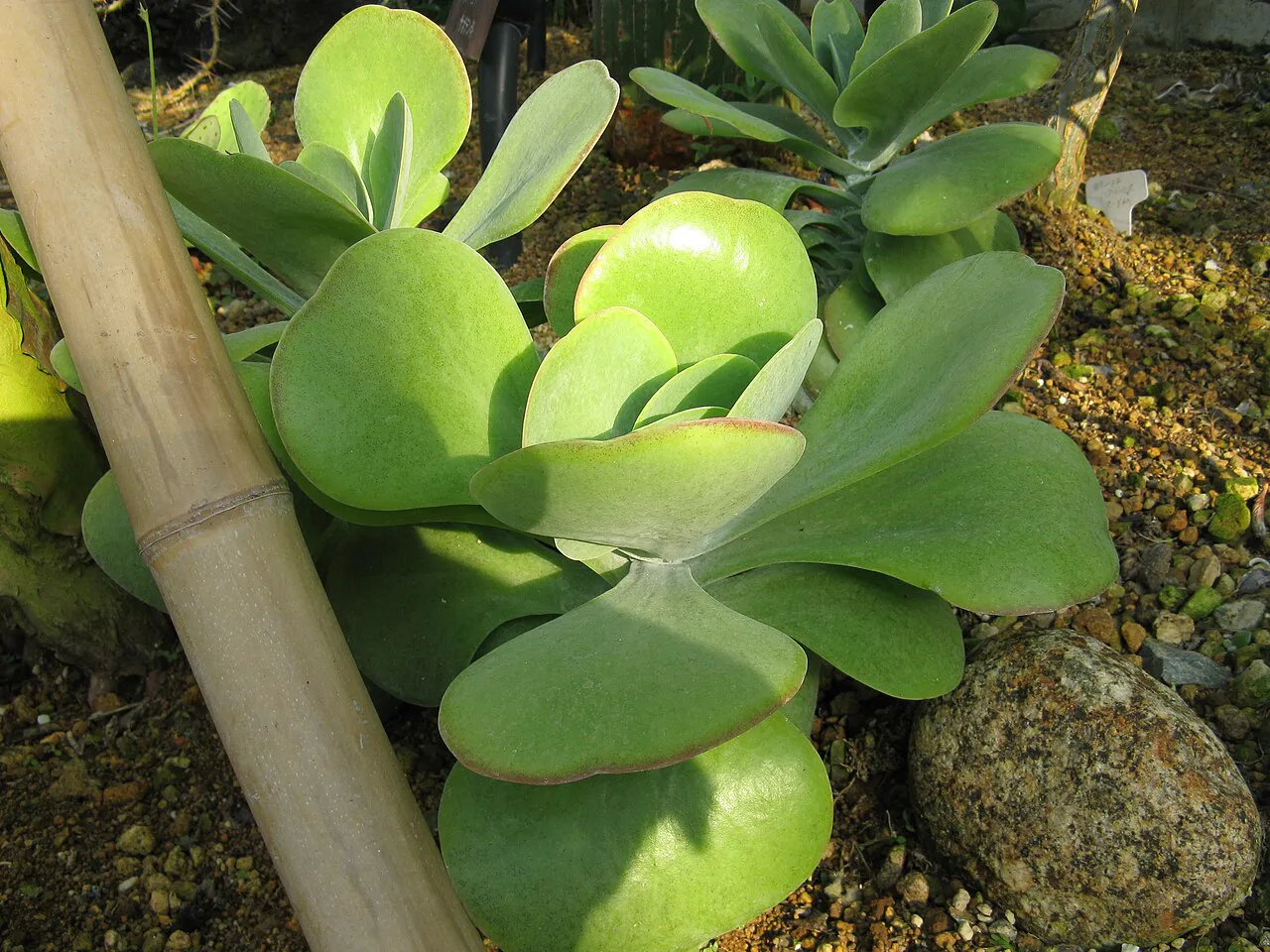
Paddle kalanchoe


Species reference · KENPEI · CC BY 3.0 · Photo Source ↗
Shared container · P30 · #6
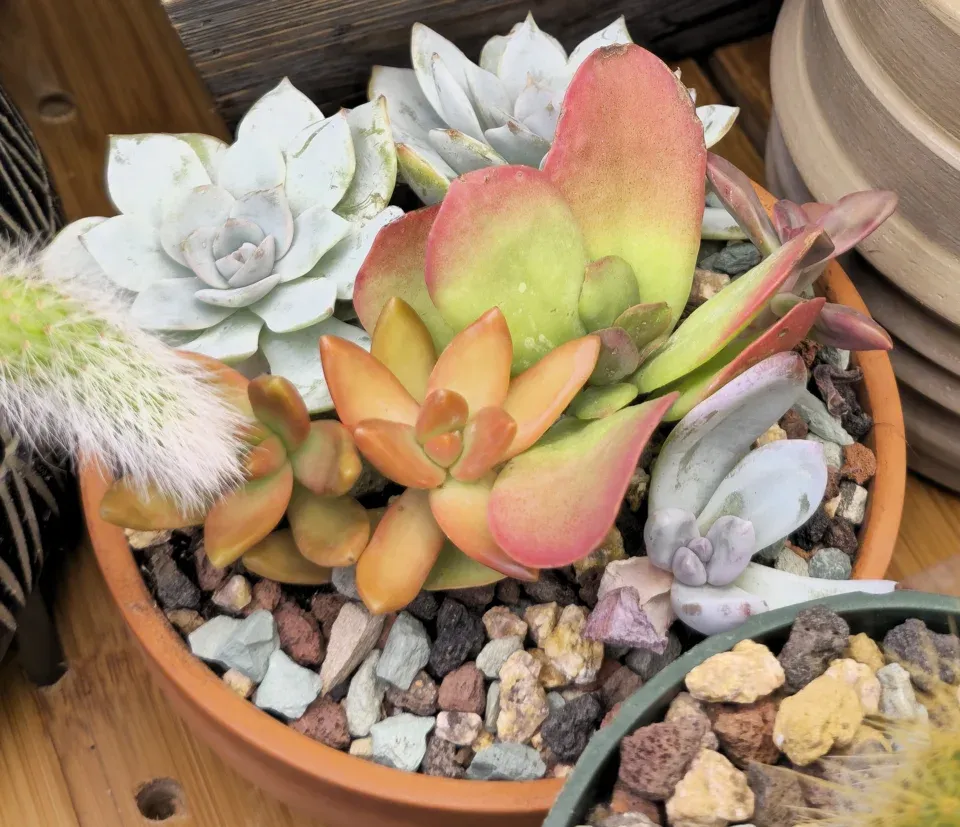
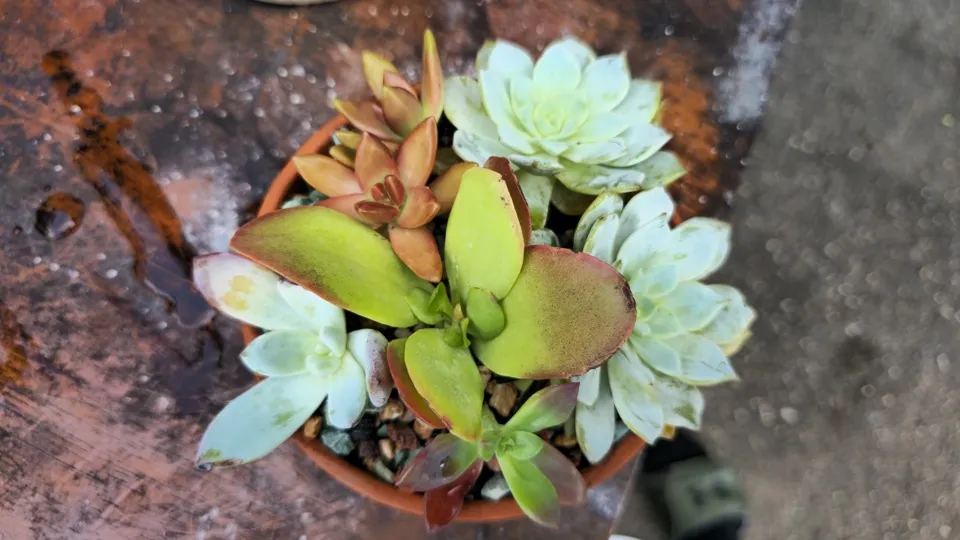
Tiny mixed succulent planter · P30
3 botanical profiles · one container history
 Pale rosette echeveriaEcheveria sp. — species and cultivar unresolvedTentative Genus
 Coppertone-type sedumProbable Sedum adolphi / S. nussbaumerianum complexTentative Foliage Match
- Paddle kalanchoeKalanchoe luciae / K. thyrsiflora complex — species unresolvedTentative Foliage MatchThis profile
Three visible botanical groups share this container. Judge the shared root volume by full dry-down and whole-pot weight; do not repeatedly wet the pot for one component while the others remain firm.
One care record: log watering, feeding, weighing, and repotting once for P30. Include a plant's name when an observation concerns just that member.
 Collection Record
- Succulent-10C
 Permanent Label
#6 Identification
 Status
 Acquired From
- Home Depot as part of the Smart Planet Home / Altman Plants mixed succulent garden
 Acquired On
- 2026-09-02
 Google Sheets ID
- P30 ↗
 Photo History
- 6 captures · newest ↓
Measurements and Care History
 Measurements and Care History
Weights, watering, events, and charts for P30.
Spot it
 Spot it
What it looks like
Broad upright green paddle-shaped leaves with red margins rise above the smaller rosettes in the tiny shared planter.
One curious thing
 One curious thing
Did you know?
A paddle-kalanchoe rosette flowers once and then dies, but offsets can carry the plant onward; flowering would also help distinguish the two candidate species here.
Explore This Plant
A closer look
How this plant works
 How this plant works
Opposite pairs of fleshy paddles rise from a short central stem, with offsets forming at the base.
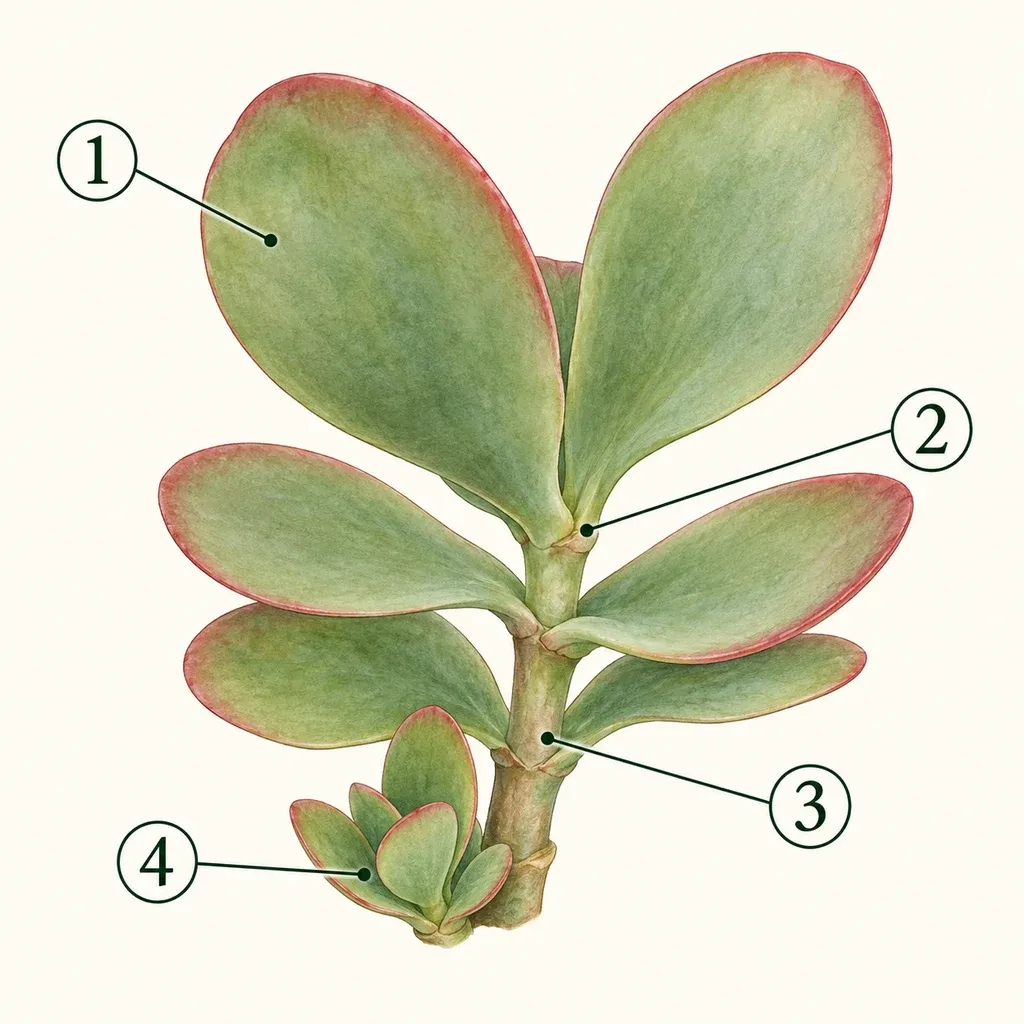
Habitat and origins
 Habitat and origins
The Kalanchoe luciae–thyrsiflora group comes from southern Africa. K. luciae occupies rocky slopes and hilltops in grassland and bushveld, including Eswatini. Upright paddles present their narrow edges to the midday sun, reducing the broad surface exposed to its strongest rays.
What growth can look like
 What growth can look like
- Stage 1
Leaf rosette
Young paddles enlarge around the central stem.
- Stage 2
Flowering rosette
A mature rosette can send up a much taller flower stalk.
- Stage 3
Offset renewal
The flowering rosette dies, while surviving offsets can carry on.
A flowering rosette completes its life cycle while its offsets can continue the clump.
Growth sources: [1]
Flowers
K. luciae has pale flowers with narrow lobes, while K. thyrsiflora has bright yellow flowers with broader lobes. These floral details help distinguish the two similar paddle plants.
Sources: [1]
As it matures
Flapjack rosettes commonly reach about 12–18 inches tall, with flower stalks several feet taller. Their broad leaves can shade smaller neighbors well before the flowering stage.
Sources: [1]
Behind the name
The common name flapjacks refers to the stacked paddle leaves, like a loose pile of pancakes.
Sources: [1]
Similar plants, useful clues
Kalanchoe thyrsiflora
Usually chalkier, with smaller leaves and yellow flowers; it is most easily separated from K. luciae when flowering.
Comparison sources: [1]
This plant in the collection
Its story so far
Joined the collection
Acquired in the Smart Planet Home mixed succulent garden from Home Depot.
Collection record ↗Repotted together
The rosettes, copper-toned shoots and broad paddles stayed together in the terra-cotta planter.
Collection record ↗
Then and now
Explore the sources
 Explore the sources
Names and identification
| Kind | Record |
|---|---|
| Common reference name | Paddle kalanchoe |
| Scientific name | Kalanchoe luciae / K. thyrsiflora complex |
| Seller evidence | Mixed garden label only; no component-specific botanical name |
| Profile scope | One recognizable foliage group in the shared planter |
The broad paired paddles and red margins support the existing Kalanchoe luciae / K. thyrsiflora working group. Red margins favor K. luciae; flower color and lobe shape provide a stronger distinction from K. thyrsiflora.
Collection evidence and shared history
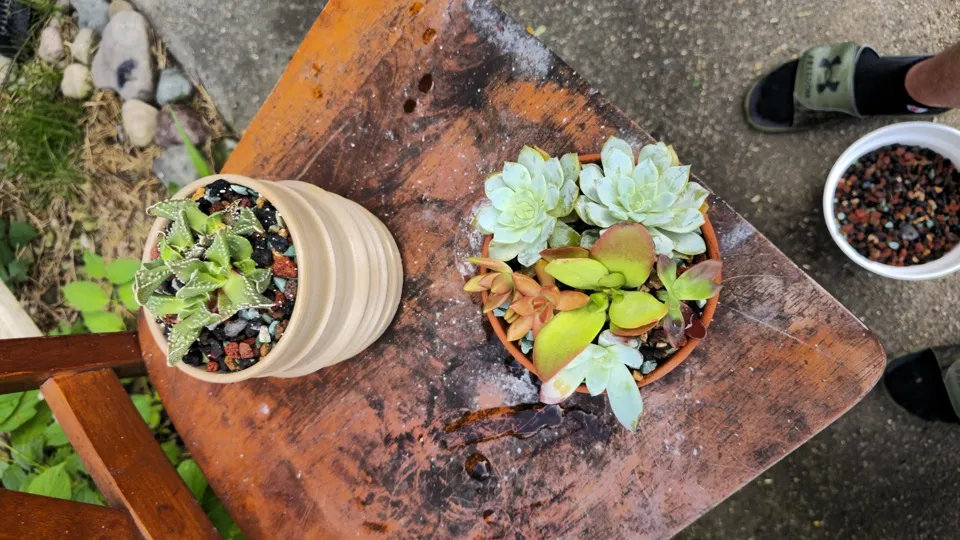
This component belongs to the tiny mixed succulent planter, acquired and repotted on September 2, 2026. The September 2 top view and September 16 close view show three recognizable foliage groups within the seller's five-plant garden.
The other component pages are pale rosette echeveria and coppertone-type sedum. All share #6 / P30, one root volume, and one watering and weight history.
Botanical context

University of Wisconsin Extension explains that these two South African species are often confused, with growth conditions affecting appearance; flowering characters help separate them. It recommends bright sun, well-drained soil, and watering after drying for both. Their flowering rosettes can die after blooming while leaving offsets.
Care in this collection

| Topic | Practical approach |
|---|---|
| Position | Remains inside P30, at the photo-matched front of the rear zone between #1 and #5. See the current placement guide. Exposure at individual leaf height remains unmeasured. |
| Light and neighbors | Check the paddles at their own height because they stand above the pale rosettes. Keep them from shading those smaller neighbors. Use new growth and measured exposure to guide any lighting adjustment, with gradual acclimation. |
| Water | Follow the shared-pot watering strategy: assess dryness throughout the pot, the weight trend, and all three foliage groups before watering and draining the container. |
| Weighing | Weigh the complete P30 planter using the adaptive weighing strategy. |
| Feeding | Use the shared planter's fertilizer schedule during a normal watering; the dose applies to the whole pot. |


Growth and watch points

The broad leaves can shade their neighbors and make the shared container crowded before its smaller rosettes appear large. Follow the P30 whole-pot watering decision. A change in one paddle leaf cannot establish that every root in the planter is dry.
Watch around the leaf bases for small offsets as the plant develops. If it flowers, photograph the color and shape of the individual blooms to distinguish the two species.
Sources

- University of Wisconsin Extension: Flapjacks, Kalanchoe spp. — species confusion, flowering distinctions, shared culture, and life cycle.
- Owner's September 2 top view and September 16 close view — original collection appearance; copyright Nick, all rights reserved.
- Shared-planter acquisition and nursery-label evidence — source of acquisition, seller, and repot context.
Through the seasons
Plant Photo History
Recent photographs of this plant. Open a photo or its collection for the complete history.
From the nursery
Nursery Labels
Original nursery labels and packaging.




Botanical reference photos
Reference Gallery
Kalanchoe luciae and K. thyrsiflora comparisons
Form and growth
_in_Athens_on_May_19,_2023.jpg)


.jpg)
.jpg)

Look closer


.jpg)
