


Cactus collection
Plant 17 / 45 Cactus collection
 Plant 17 / 45
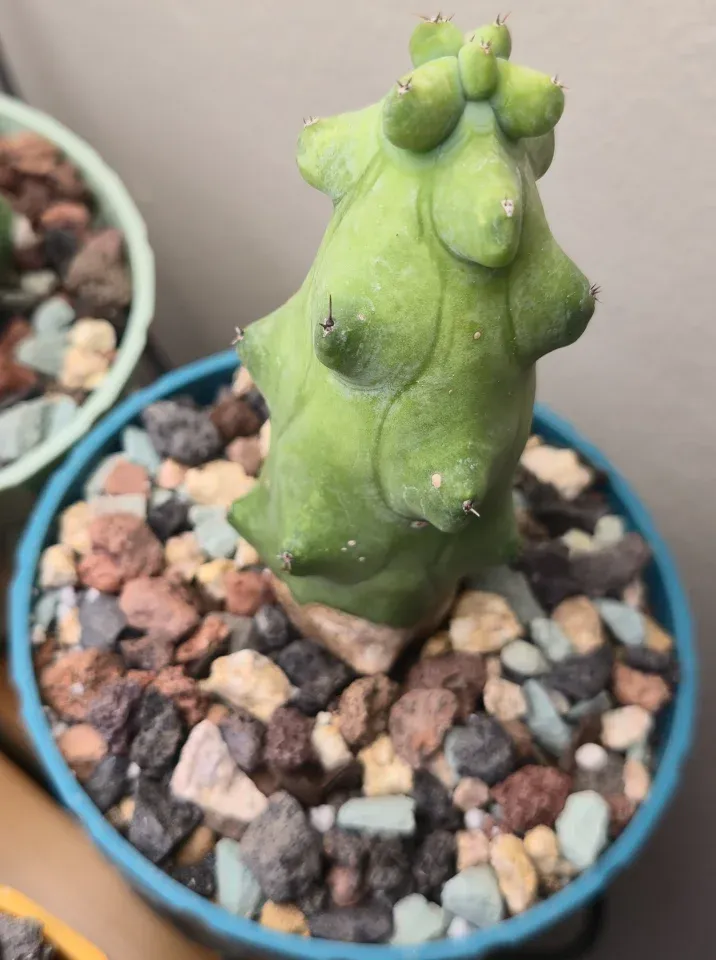
 Myrtillocactus geometrizans 'Fukurokuryuzinboku'
Boobie cactus


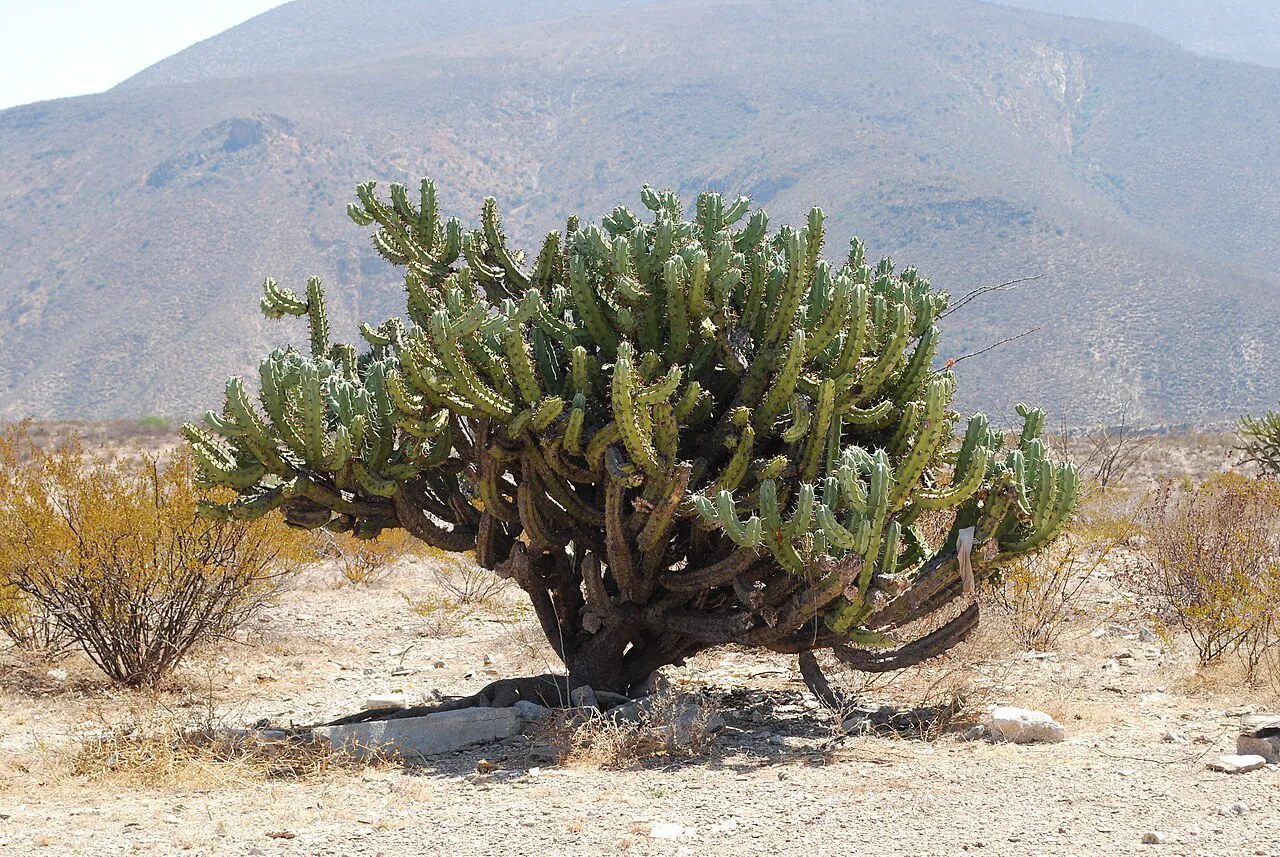
Species reference · AlejandroLinaresGarcia · CC BY-SA 4.0 · Photo Source ↗
 Collection Record
- Cactus-05
 Permanent Label
F2 Identification
 Status
 Acquired From
- Carlsons' Greenhouse, Torrey Road, Fenton, Michigan
 Acquired On
- 2026-08-10
 Google Sheets ID
- P17 ↗
 Photo History
- 3 captures · newest ↓
Measurements and Care History
 Measurements and Care History
Weights, watering, events, and charts for P17.
Spot it
 Spot it
What it looks like
A blue-green upright column whose ribs swell into repeated rounded, breastlike knobs, creating the stacked sculptural form sold as 'Fukurokuryuzinboku'.
One curious thing
 One curious thing
Did you know?
Beneath the odd cultivated shape is Myrtillocactus geometrizans, a species whose normal form bears sweet edible garambullo berries sold in Mexican markets.
Explore This Plant
A closer look
How this plant works
 How this plant works
Rounded swellings reshape the ribs, while the spine cushions remain recognizable along the blue-green column.
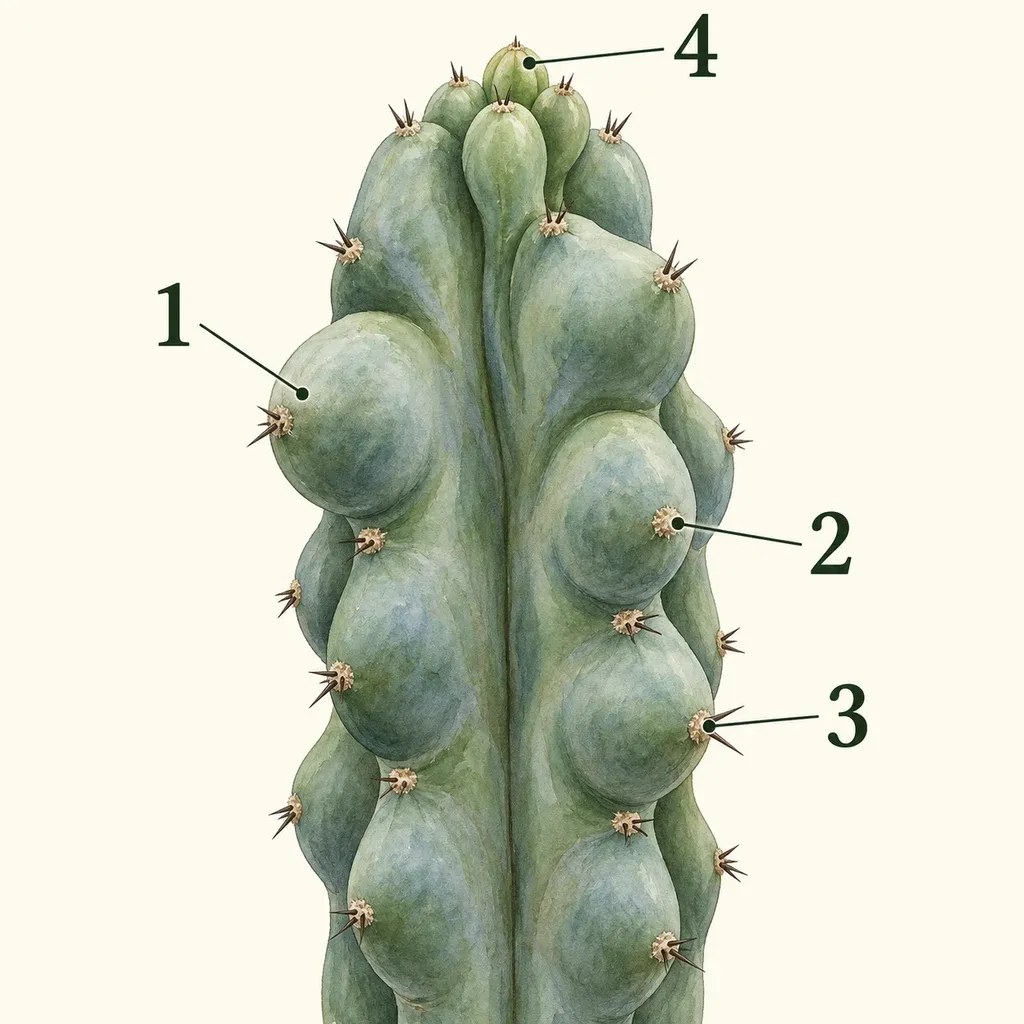
Rounded lobe
An unusually swollen section of rib creates the cultivar's distinctive shape.
Areole
This small cushion carries the short spine cluster.
Short spine
Spines defend the otherwise exposed succulent surface.
Growing tip
New stem tissue extends the column and continues its lumpy rib pattern.
Habitat and origins
 Habitat and origins
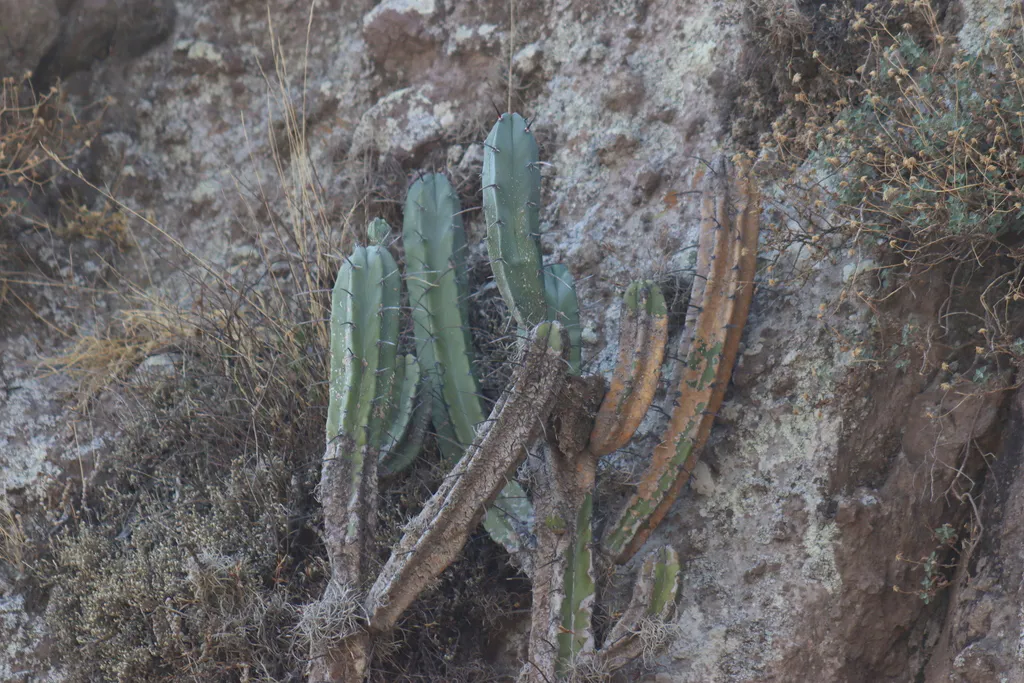
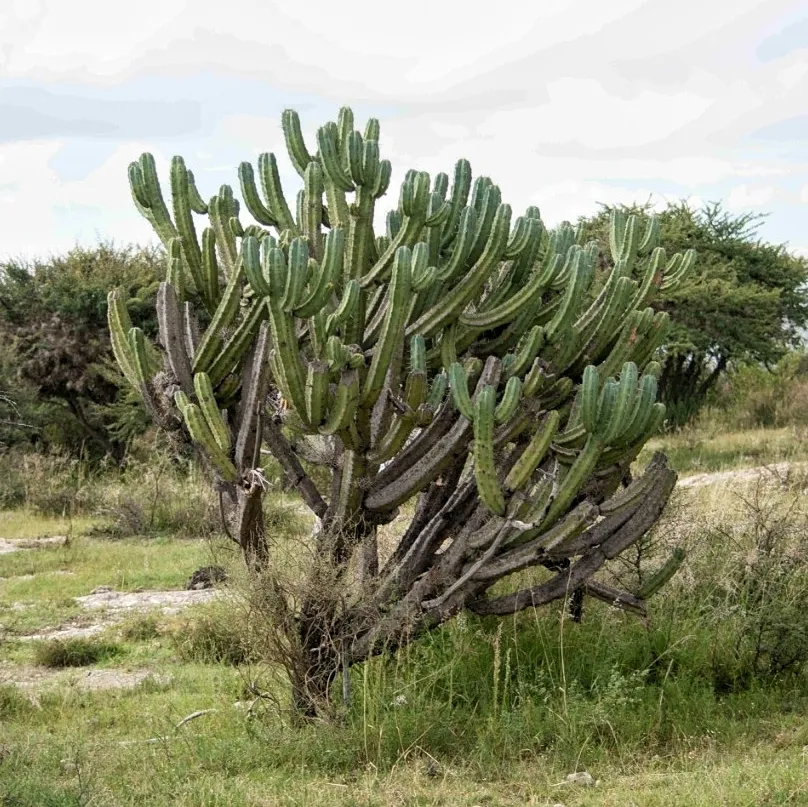
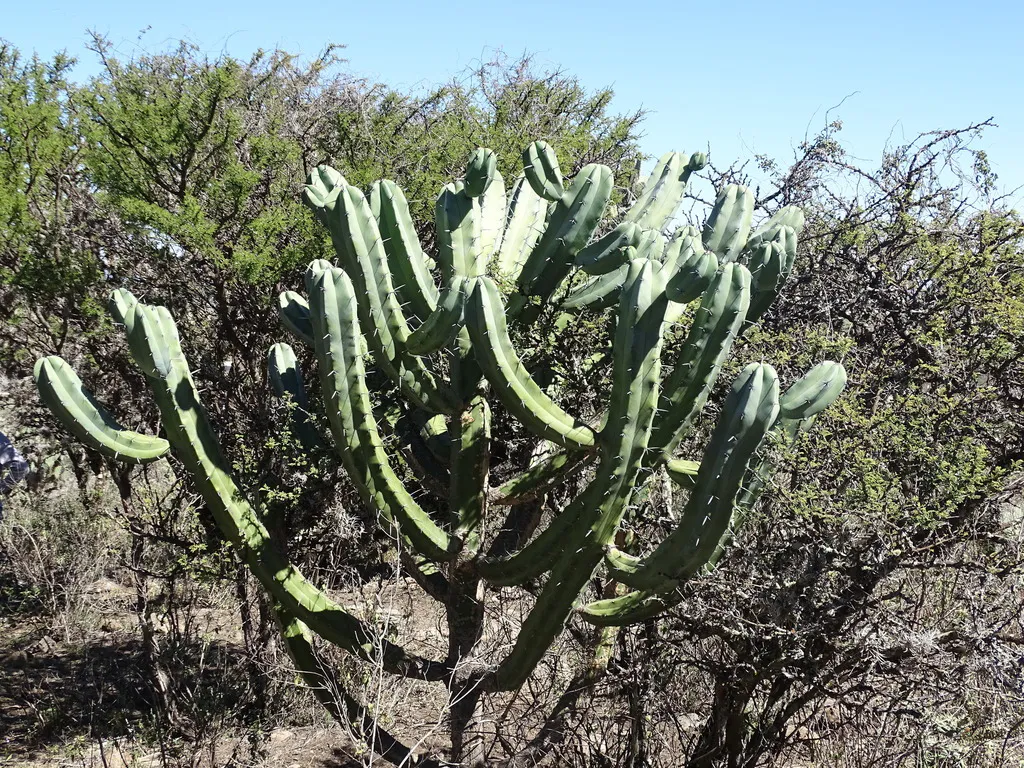
Myrtillocactus geometrizans is a Mexican tree cactus of desert and dry shrubland. The normal species has blue-green ribs and clusters of 5–9 spines at each areole. In the cultivated 'Fukurokuryuzinboku' form, rounded swellings reshape those ribs into its distinctive knobby outline.
What growth can look like
 What growth can look like
- Stage 1
Short rooted column
A young plant displays only a few swollen rib sections.
- Stage 2
Repeated lobes
Upward growth adds successive rounded projections.
- Stage 3
Larger framework
Older stems can thicken and branch into a more substantial plant.
The cultivar adds irregular lobes as the tip extends; branches can make the outline increasingly asymmetrical.
Growth sources: [2]
Flowers
Greenish-white flowers about 2.5–3.7 cm across contrast with the exaggerated stem shape.
Sources: [2]
As it matures
The normal species becomes a branching tree around 4 m tall in its native Mexico. This cultivated monstrose form develops a more irregular, knobby framework.
Behind the name
The species was described as Cereus geometrizans in 1837 and moved to Myrtillocactus in 1897; the cultivated shape is a later horticultural selection.
Sources: [1]
Similar plants, useful clues
Variegated blue torch ↗
Blue torch keeps comparatively straight ribs, with pale cream color sectors. This cultivar's key feature is swollen rib shape.
This plant in the collection
Its story so far
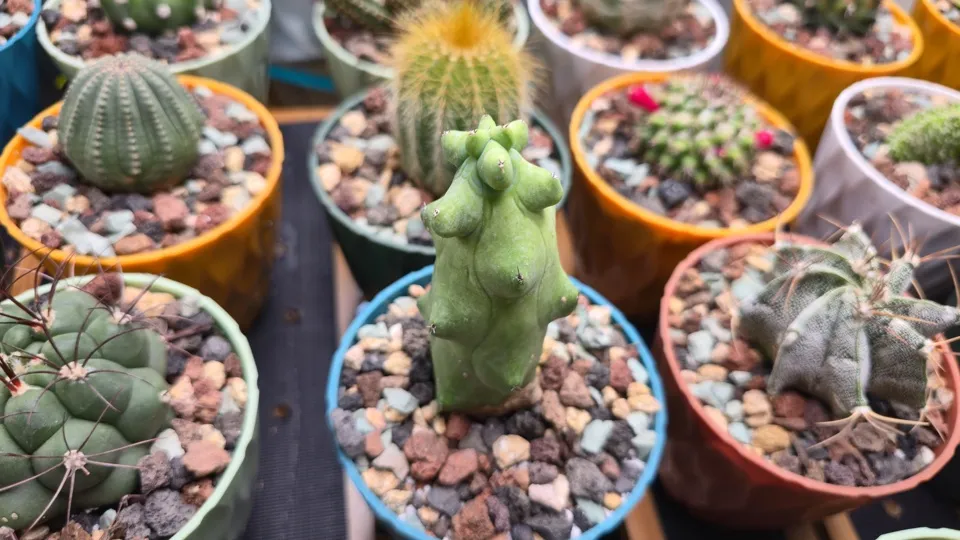
Current pot size corrected
The owner confirmed F2 / P17 is in a normal 4-inch pot like the other cacti, correcting the earlier 3-inch description. No new repot or physical setup change was reported.
Collection record ↗
Then and now
Explore the sources
 Explore the sources
Names and identity
| Kind | Name |
|---|---|
| Cultivar | Myrtillocactus geometrizans 'Fukurokuryuzinboku' |
| Common names | Boobie cactus, breast cactus |
| Growth form | Knobby monstrose column with rounded lobes |
| Cultivar origin | Horticultural; no wild range |

The cultivar's monstrose growth turns the ribs into rounded lobes. The underlying species is a blue-green Mexican tree cactus.
Origin, form, and publication
Kew places Myrtillocactus geometrizans throughout Mexico's dry regions. The species was first published as Cereus geometrizans in 1837; the current Myrtillocactus combination dates to 1897. The cultivar's breeder and release year are not reliably documented.
The ordinary species produces sweet edible berries known as garambullos and sold in Mexican markets. The treatment history of this nursery plant is unknown, so its fruit or tissue should not be used as food.
Care in this collection

| Topic | Practical approach |
|---|---|
| Grow-light position | Photo-matched R1C6 · Gentler. September 15, 2026 photo reference: six-column/four-row front grid, facing the window. Front-right corner. Light at its growing tip may differ from light at the tabletop; acclimate the exposed lobes gradually. See the current placement guide. |
| Water | Soak and drain, then let the 4-inch pot dry fully. Keep water from sitting in deep folds. |
| Pot and mix | Keep the confirmed 4-inch pot until roots justify upsizing; use a stable draining mix. |
| Handling | Hold the pot, not the lobes; rubbing removes the protective wax and leaves permanent marks. |


Rotation, propagation, and watch points
- Rotate 90° clockwise on the normal Sunday schedule.
- Stem cuttings can root after the cut surface calluses.
- Inspect folds for scale, mealybugs, or trapped damp debris.
- The short plant may need a riser after its actual tabletop-to-tip height is measured.
Sources

Through the seasons
Plant Photo History
Recent photographs of this plant. Open a photo or its collection for the complete history.
Botanical reference photos
Reference Gallery
Myrtillocactus geometrizans species forms
Form and growth

Look closer
_I.jpg)
Flowers and buds
,_polinizaci%C3%B3n.jpg)
.jpg)

In the landscape


Research Trail
- Collection Notes on GitHub
- Complete Photo Archive and Credits
- iNaturalist Observations — Myrtillocactus species forms