Cactus collection
Plant 01 / 45 Cactus collection
 Plant 01 / 45
 Gymnocalycium mihanovichii
Variegated moon cactus


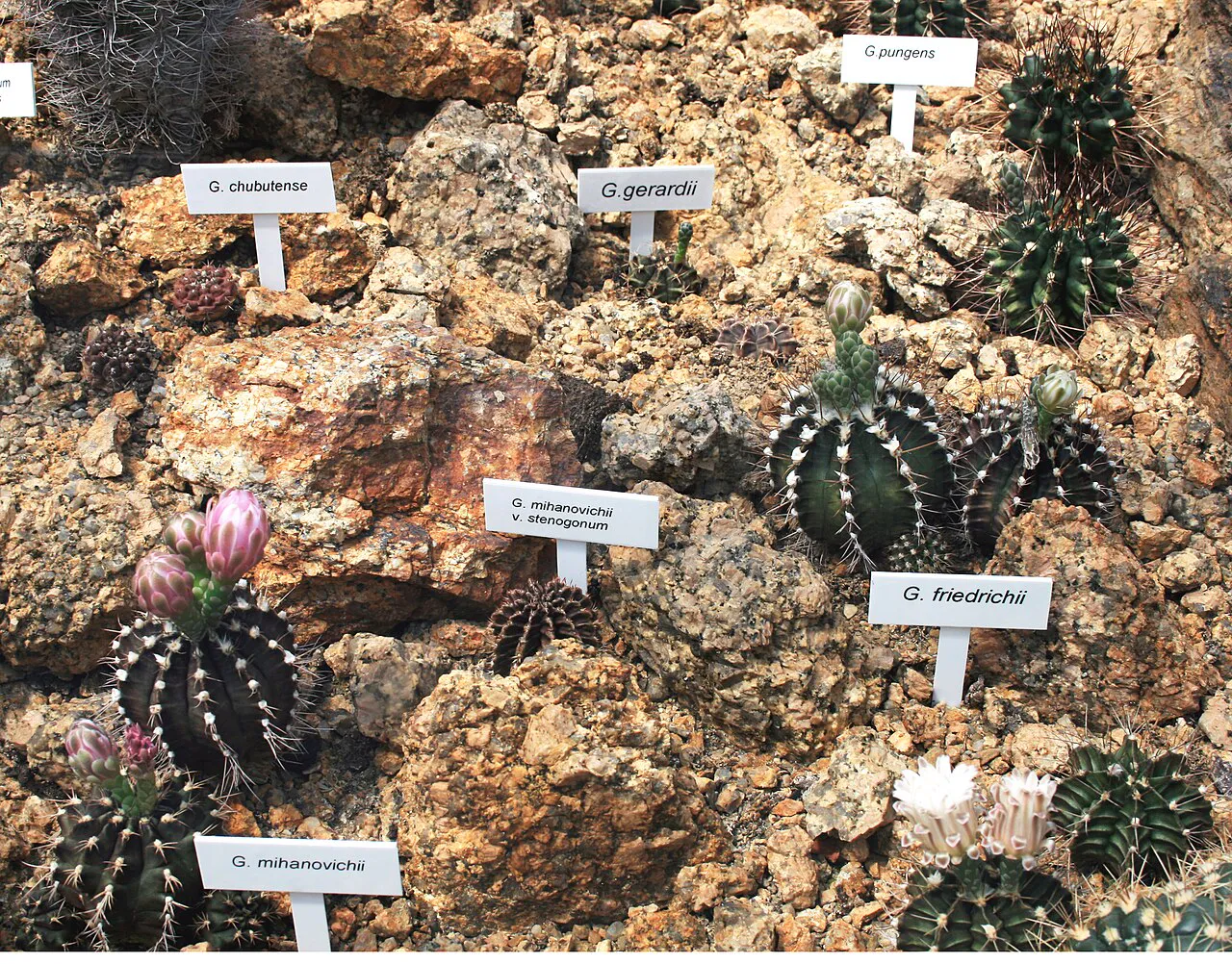
Species reference · Karelj · Public domain · Photo Source ↗
 Collection Record
- Starter-07
 Permanent Label
A1 Identification
 Status
 Acquired From
- Costa Farms
 Acquired On
- 2026-07-23
 Google Sheets ID
- P01 ↗
 Photo History
- 4 captures · newest ↓
Measurements and Care History
 Measurements and Care History
Weights, watering, events, and charts for P01.
Spot it
 Spot it
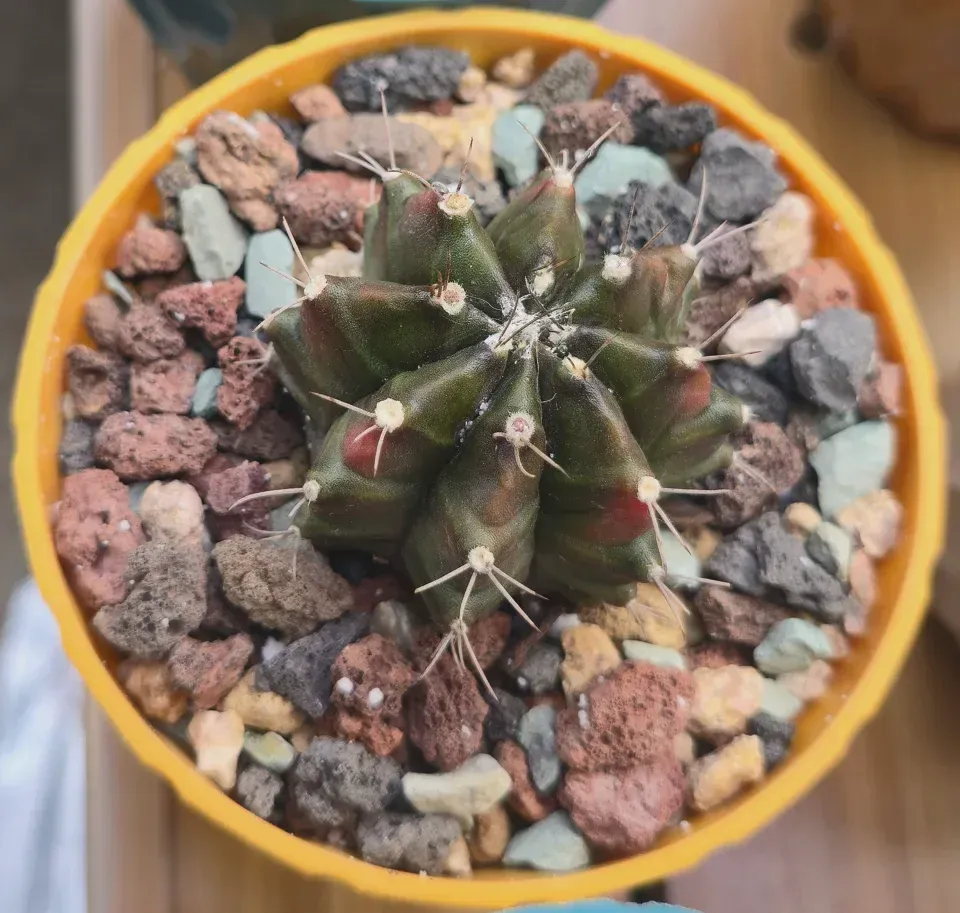
What it looks like
A flattened ribbed globe marbled in green, bronze, yellow, and blush pink, with the strongest color changes following individual ribs and leaving a visibly green photosynthetic base.
One curious thing
 One curious thing
Did you know?
Unlike the chlorophyll-free neon “moon cacti” commonly grafted for sale, this variegated plant retains enough green tissue to live and grow on its own roots.
Explore This Plant
A closer look
How this plant works
 How this plant works
Green and variegated sectors share the same notched, ribbed stem.
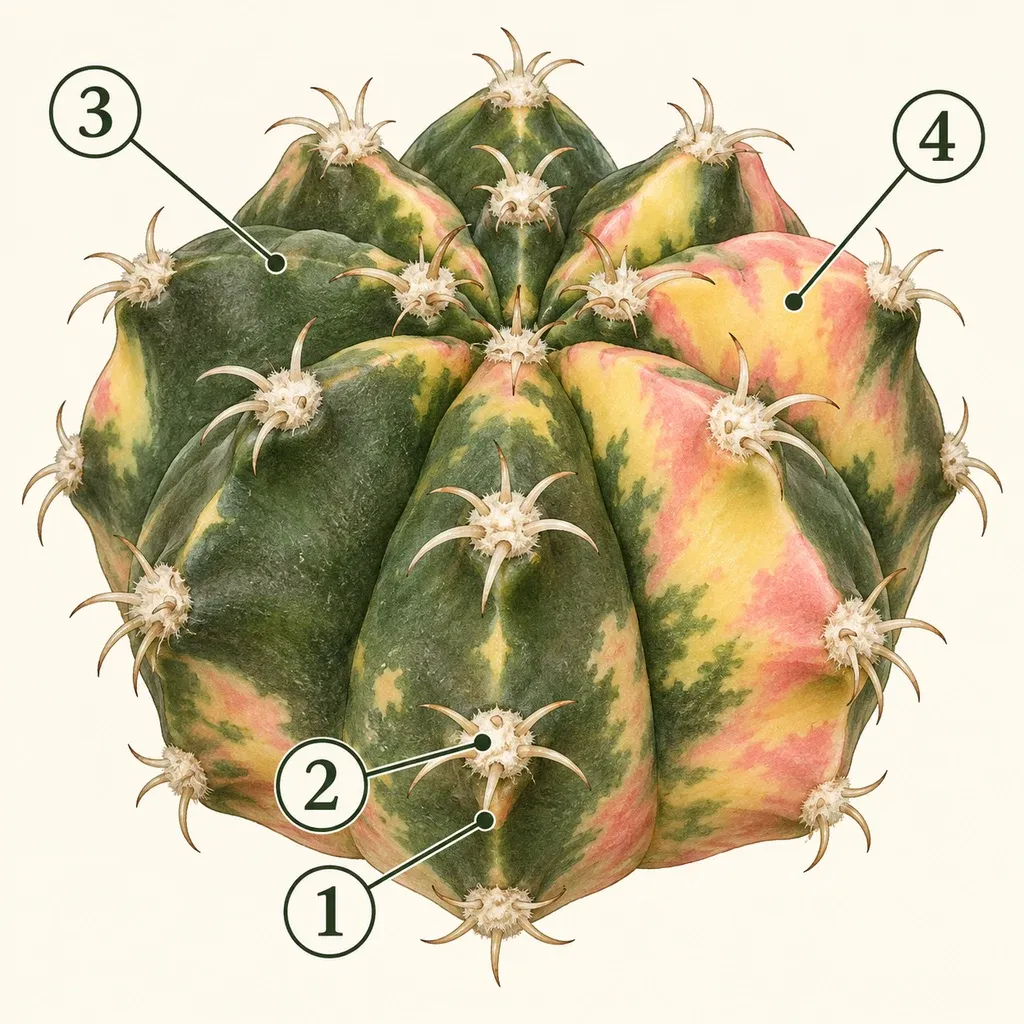
Chin-like rib
A notch beneath an areole gives the rib its characteristic chin-shaped projection.
Areole
This cushion bears the short, curved spine cluster.
Green sector
Green tissue contains chlorophyll used to capture light for photosynthesis.
Variegated sector
Lighter yellow and pink sectors interrupt the green pattern across the stem.
Habitat and origins
 Habitat and origins
The wild species grows in rocky places in Paraguay and northeastern Argentina. This cultivated variegated form combines green tissue with yellow and pink sectors and grows on its own roots.
What growth can look like
 What growth can look like
- Stage 1
Small globe
A compact stem already displays rib notches and patches of color.
- Stage 2
Wider body
Growth enlarges the globe; the exact distribution of colored sectors varies.
- Stage 3
Established plant
A mature stem may produce flowers or offsets while retaining a compact habit.
The notches beneath the areoles give each rib a row of small chin-like projections, the feature behind the common name chin cactus.
Flowers
Costa Farms describes creamy to pinkish flowers for this variegated selection. The species produces fleshy fruits that ripen from gray-green to red and contain small black seeds.
As it matures
Costa Farms gives about 15 cm tall or wide for its variegated selection, with a compact rounded body.
Sources: [2]
Behind the name
Gymnocalycium means naked calyx: its flower buds lack the spines and hairs found on many other cactus flower tubes. The name refers to flowers, not a completely spineless body.
Sources: [1]
Similar plants, useful clues
Grafted neon moon cactus
A graft has a colored scion visibly joined to a separate green rootstock. This collection plant retains green tissue in its own body and is recorded on its own roots.
This plant in the collection
Its story so far
Then and now
Explore the sources
 Explore the sources
Names and identity
| Kind | Name |
|---|---|
| Accepted botanical name | Gymnocalycium mihanovichii (Frič ex Gürke) Britton & Rose |
| Common and trade names | Moon cactus, chin cactus, plaid cactus, Hibotan |
| Collection form | Variegated, with green tissue and growing on its own roots |
| Name history | The species honors shipping magnate and plant patron Nicolás Mihanovich |

Most neon “moon cacti” in stores are chlorophyll-free colored tops grafted onto a green rootstock. This plant retains green sectors that support growth on its own roots. The orange, yellow, and bronze areas are reduced chlorophyll, not automatically sunburn or rot.
Gymnocalycium means “naked calyx.” The flower tube and outer floral parts lack the hairs and spines seen on many other cactus genera. This smooth flower tube is a useful recognition feature.
Origin and horticultural history
The wild species comes from Paraguay and northeastern Argentina, including seasonally dry Chaco vegetation on open, rocky or sandy ground. It is a small, flattened cactus with broad ribs divided into chin-like bumps beneath the areoles. Flowers arise near the crown, followed by fleshy fruits that ripen from gray-green to red and contain small black seeds.
The spectacular colored forms are a human selection story. Arkansas Cooperative Extension summarizes the Japanese history: Eiji Watanabe imported seed in 1937, raised thousands of seedlings by 1940, found two reddish mutants, and continued selection through grafting. Completely chlorophyll-free descendants survive only on a photosynthesizing stock. Partly green Hibotan-nishiki forms can remain on their own roots, which is the more relevant comparison for this collection plant.
Kew accepts G. mihanovichii and traces the combination to Britton and Rose in 1922. The species was originally described in Echinocactus.
Care in this collection

| Topic | Practical approach |
|---|---|
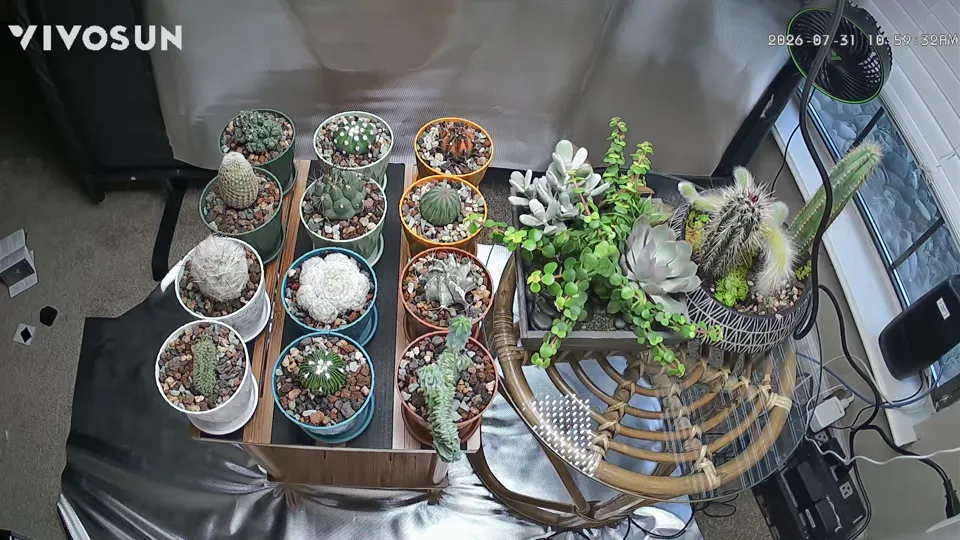
| Grow-light position | R3C1 · Bright. September 15, 2026 photo layout, facing the window (six columns, four rows). Left shoulder between Feather and Grass-Blade. Preserve useful light for this rooted, chlorophyll-bearing variegated selection. See the current placement guide. |
| Why gentler | Reduced-green tissue has less photosynthetic capacity and often burns before fully green high-light cacti. |
| Water | Soak, drain, and allow a full dry-down. Do not keep it wet to compensate for slow growth. |
| Pot and mix | The current small drained pot is appropriate. Keep the colored lower body visible above the top dressing. |
| Temperature | Warm growing conditions and a bright, drier winter suit it better than cold wet treatment. |
| Feeding | Very dilute feeding during active growth; variegation makes slower growth normal. |


Use the green portions as the best health indicator. Stable colored panels with firm tissue are normal. A newly bleached, papery patch on the lamp-facing side is sun stress; a spreading translucent or soft patch is a water/rot concern.
Propagation and watch points
- Green-containing offsets may root on their own. An offset with no green tissue needs a compatible grafting stock to survive.
- Seedlings will not reliably reproduce the exact variegation pattern.
- Spider mites can scar the relatively bare skin; inspect the recessed crown and rib valleys.
- Keep a dated overhead photo. Variegated patterns make slow growth surprisingly easy to track.
Sources

- Costa Farms: small variegated moon cactus seller listing
- Kew Plants of the World Online: Gymnocalycium mihanovichii
- LLIFLE cactus encyclopedia: Gymnocalycium mihanovichii
- NC State Extension: moon cactus
- University of Arkansas Extension: history of grafted moon cacti
- CITES proposal with taxonomic and trade background
Through the seasons
Plant Photo History
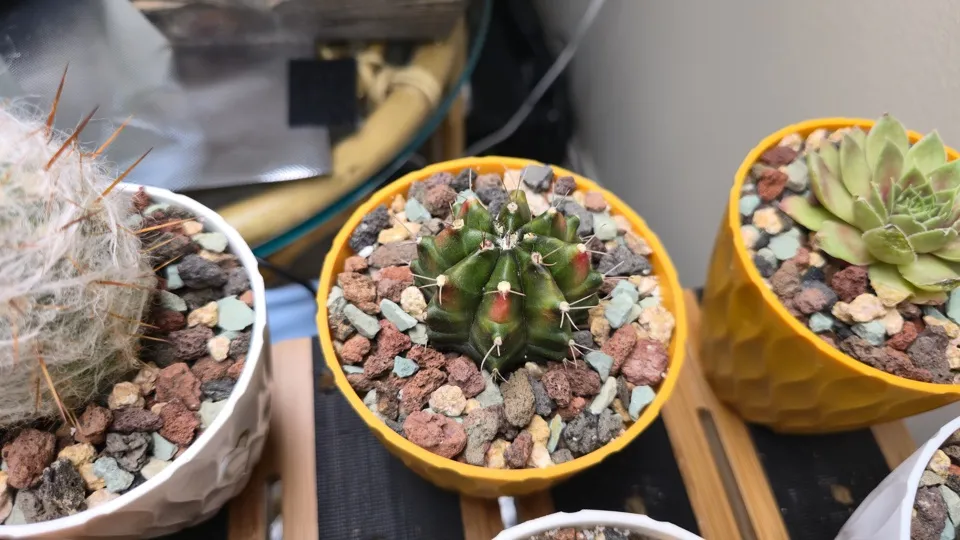
Recent photographs of this plant. Open a photo or its collection for the complete history.
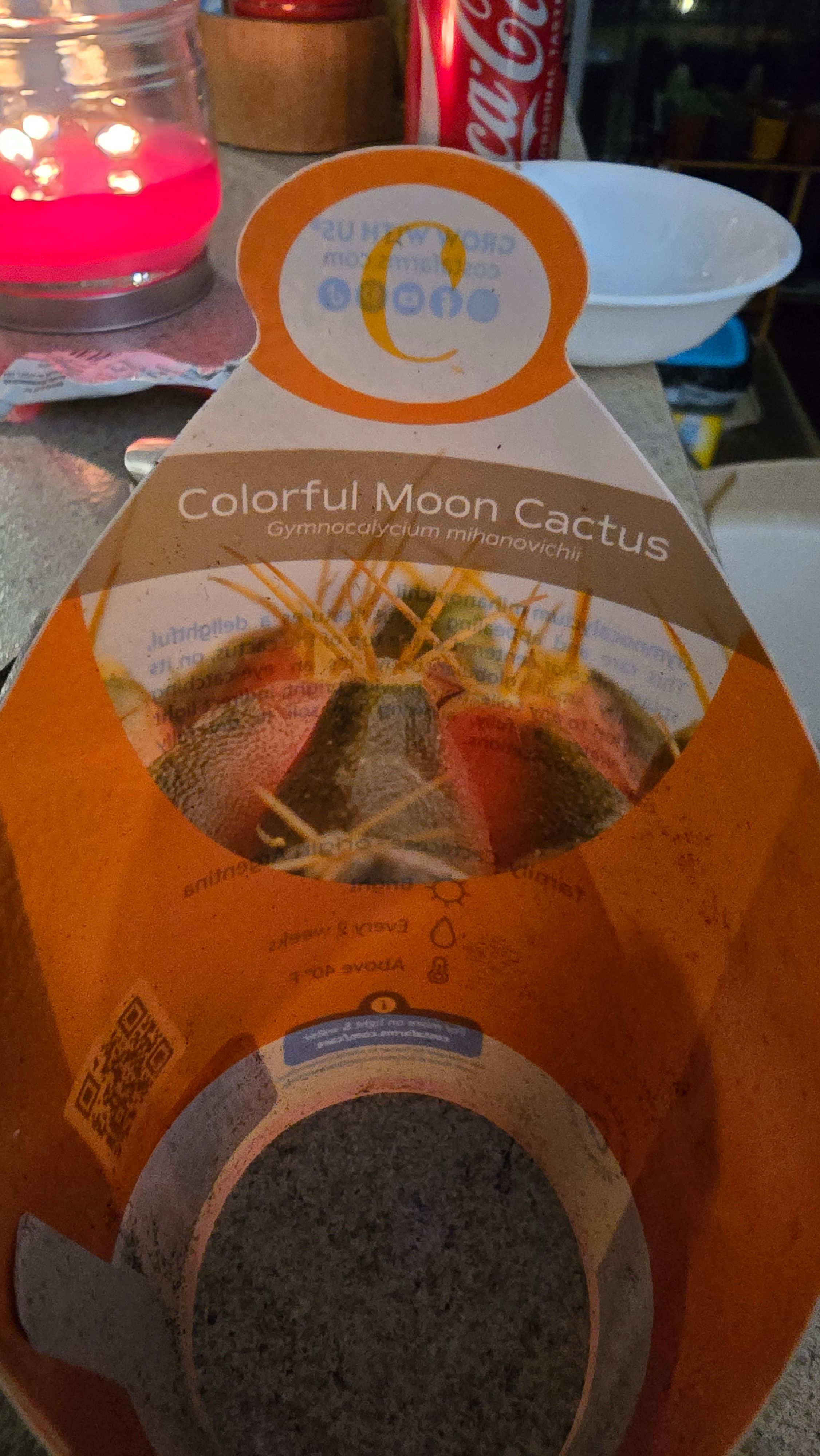
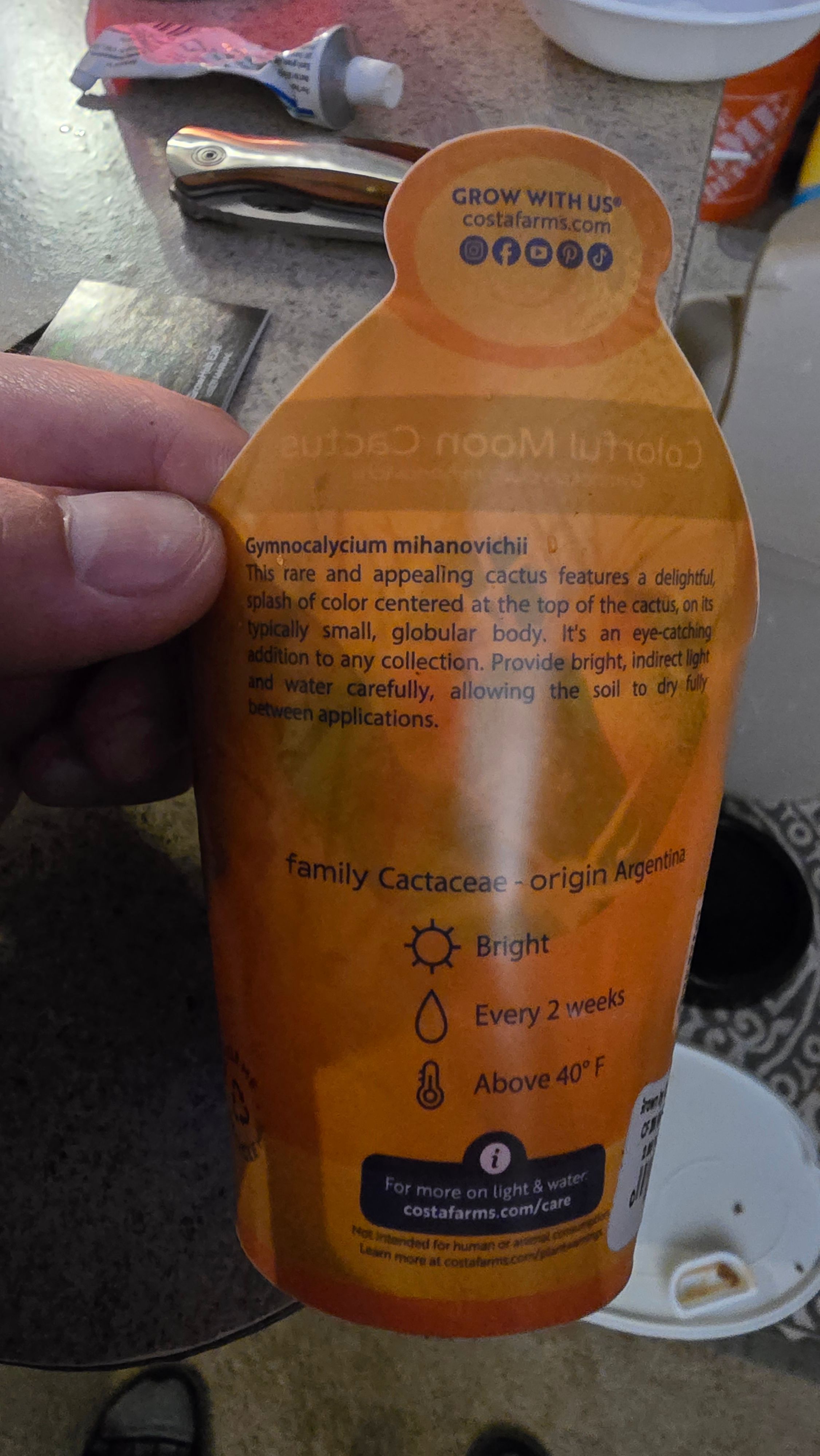
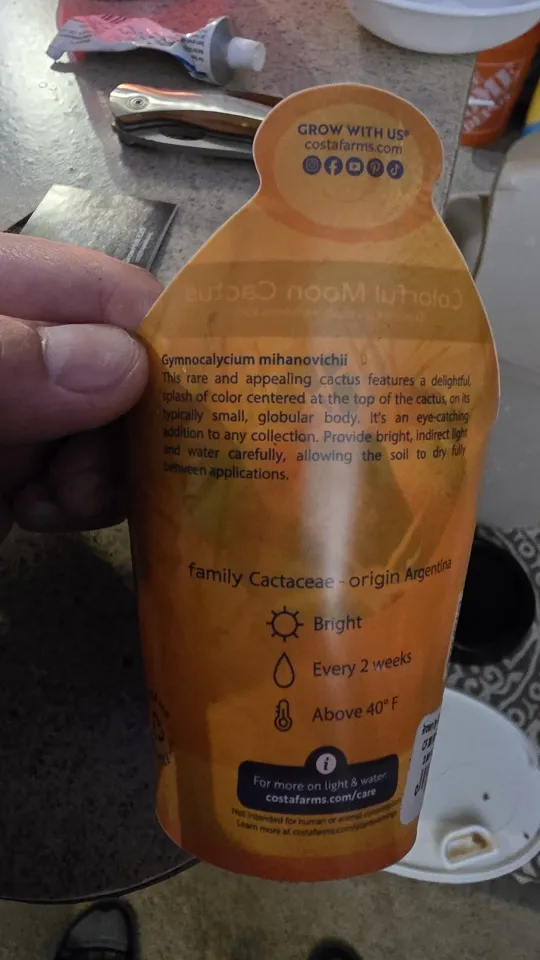
From the nursery
Nursery Labels
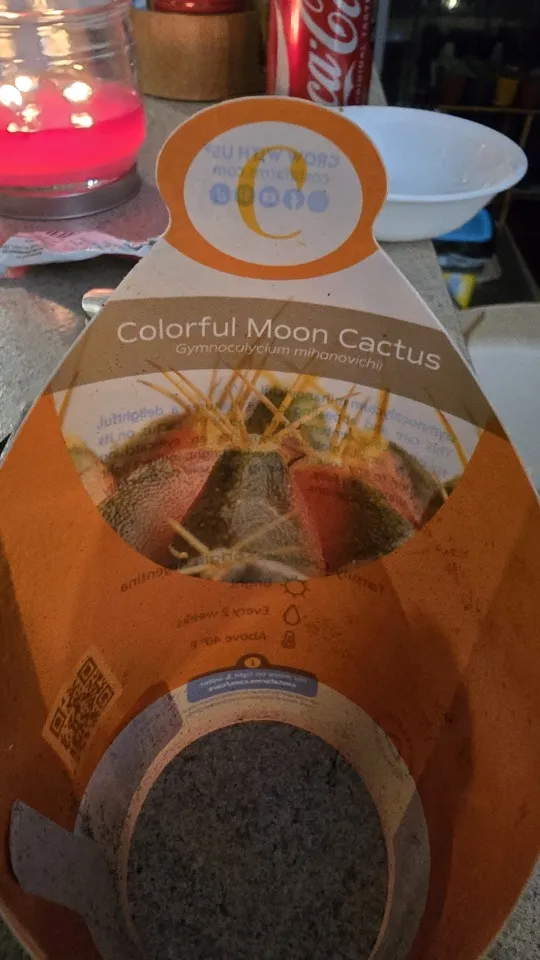
Original nursery labels and packaging.
Botanical reference photos
Reference Gallery
Gymnocalycium mihanovichii: green and variegated forms
Form and growth

Look closer


Flowers and buds
.jpg)
In the landscape

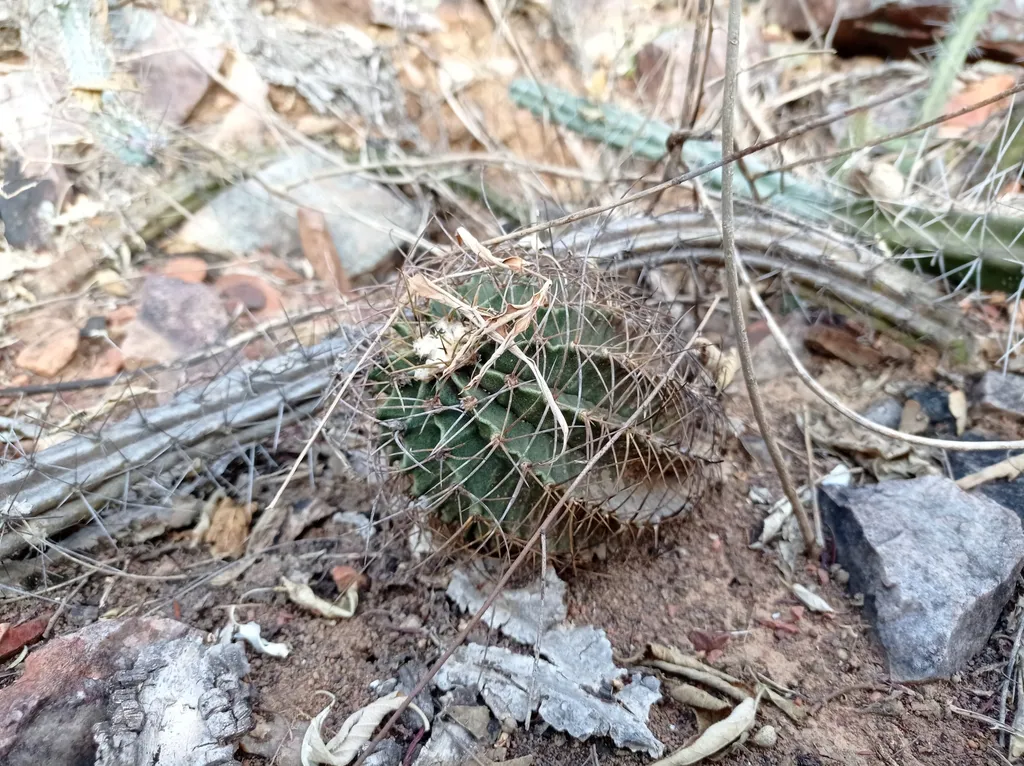
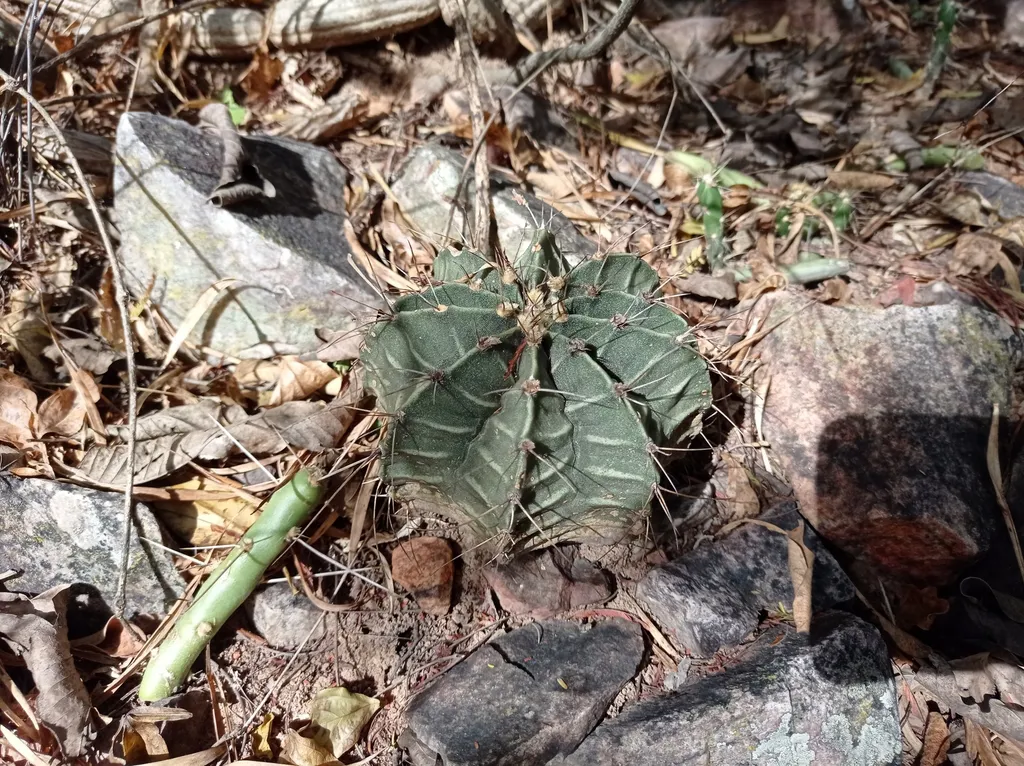
Research Trail
- Collection Notes on GitHub
- Complete Photo Archive and Credits
- Costa Farms: small variegated moon cactus seller listing
- iNaturalist Observations — Species and cultivated color forms
 Costa Farms: small variegated moon cactus seller listing