


Shared planter and individual succulents
Plant 31 / 45 Shared planter and individual succulents
 Plant 31 / 45
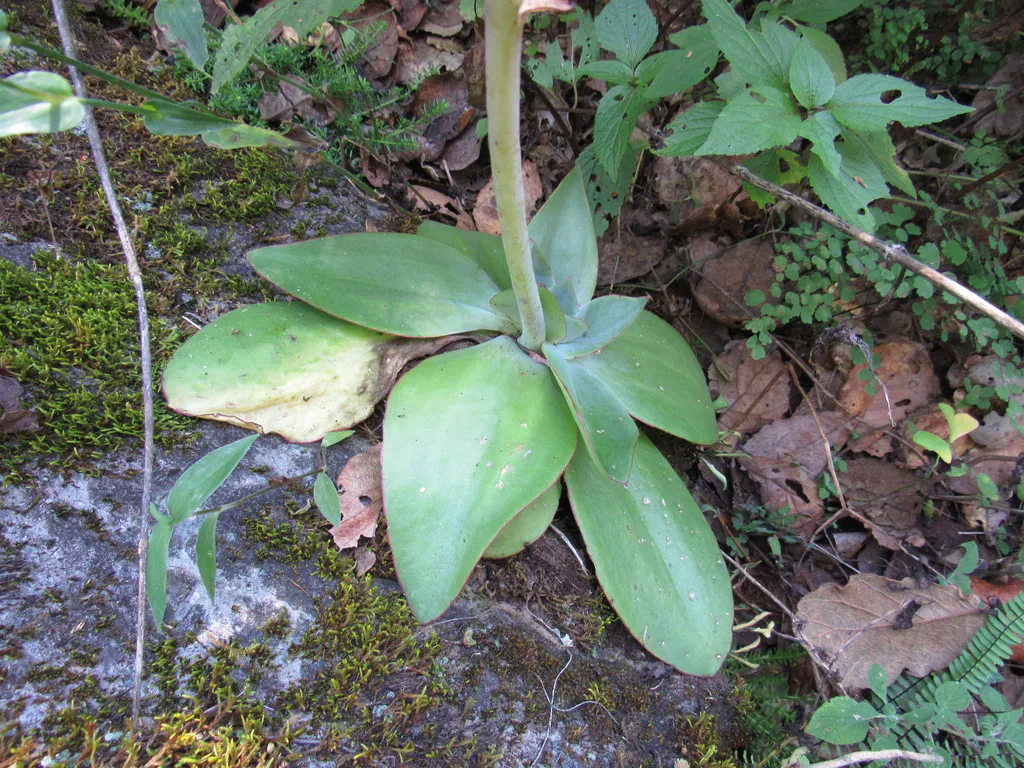
 mixed succulent planter; component taxa unresolved
Tiny mixed succulent planter


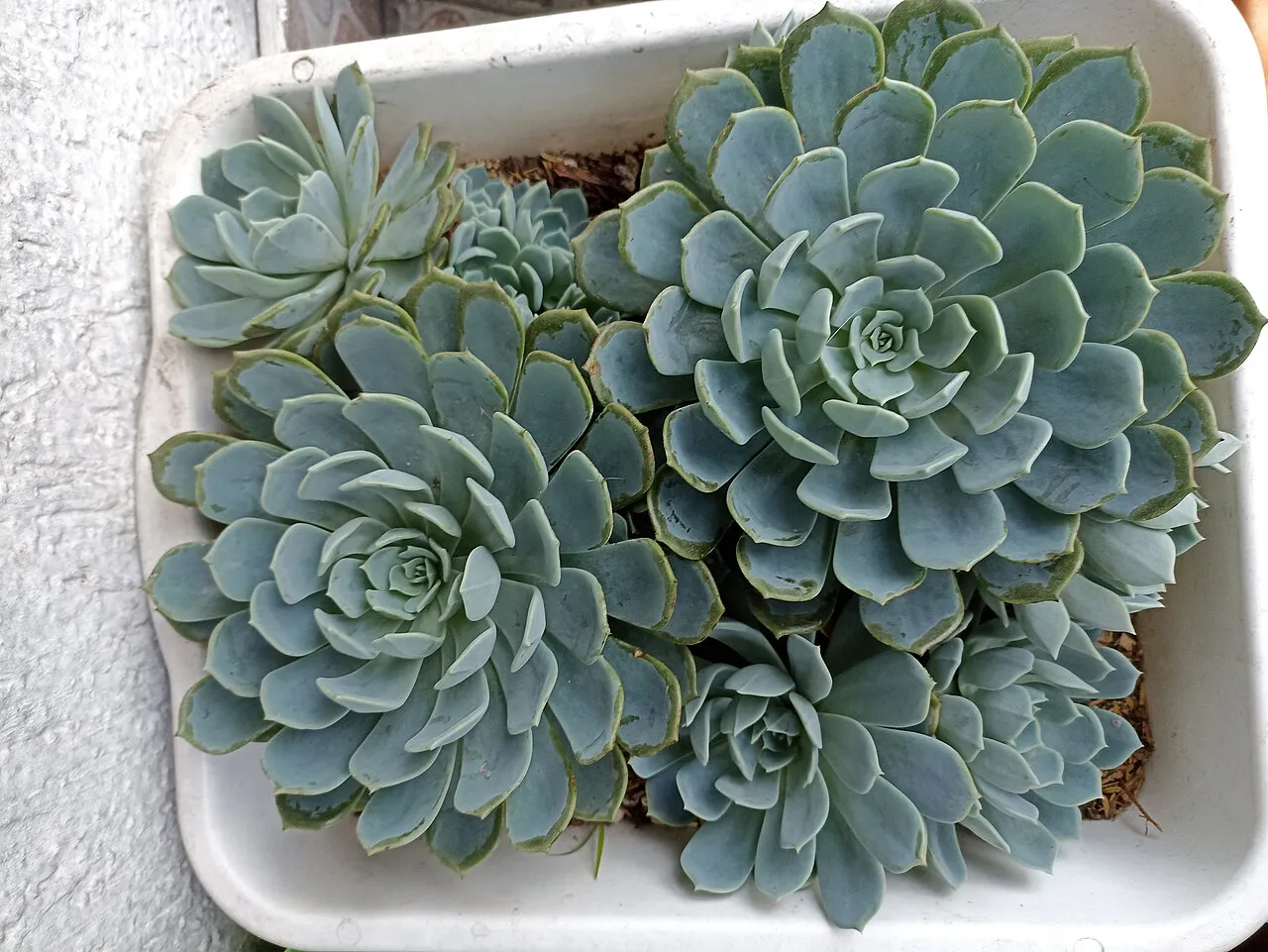
Species reference · ProfeAnita · CC BY-SA 4.0 · Photo Source ↗
Shared container · P30 · #6
Tiny mixed succulent planter · P30
3 botanical profiles · one container history
 Pale rosette echeveriaEcheveria sp. — species and cultivar unresolvedTentative Genus
 Coppertone-type sedumProbable Sedum adolphi / S. nussbaumerianum complexTentative Foliage Match
 Paddle kalanchoeKalanchoe luciae / K. thyrsiflora complex — species unresolvedTentative Foliage Match
Three visible botanical groups share this container. Judge the shared root volume by full dry-down and whole-pot weight; do not repeatedly wet the pot for one component while the others remain firm.
One care record: log watering, feeding, weighing, and repotting once for P30. Include a plant's name when an observation concerns just that member.
 Collection Record
- Succulent-10
 Permanent Label
#6 Identification
 Status
 Acquired From
- Home Depot; grown by Altman Plants under Smart Planet Home branding; exact store not recorded
 Acquired On
- 2026-09-02
 Google Sheets ID
- P30 ↗
 Photo History
- 6 captures · newest ↓
Measurements and Care History
 Measurements and Care History
Weights, watering, events, and charts for P30.
Spot it
 Spot it
What it looks like
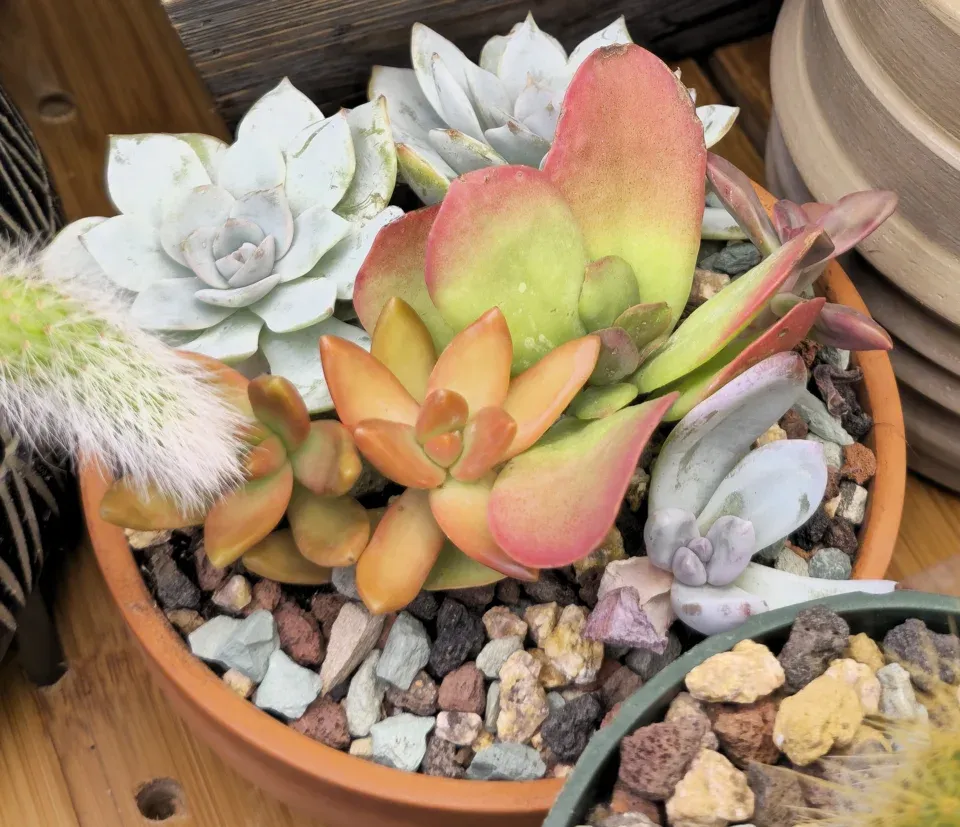
A small shared planter combining pale powdery rosettes, copper-orange narrow-leaved rosettes on short stems, and broad green paddle leaves with red margins.
One curious thing
 One curious thing
Did you know?
One small planter brings together powdery rosettes, copper-toned stems, and broad red-edged paddles, each with a different growth habit.
Explore This Plant
A closer look
How this plant works
 How this plant works
Low rosettes, branching shoots and upright paddles build three layers within one shared planter.
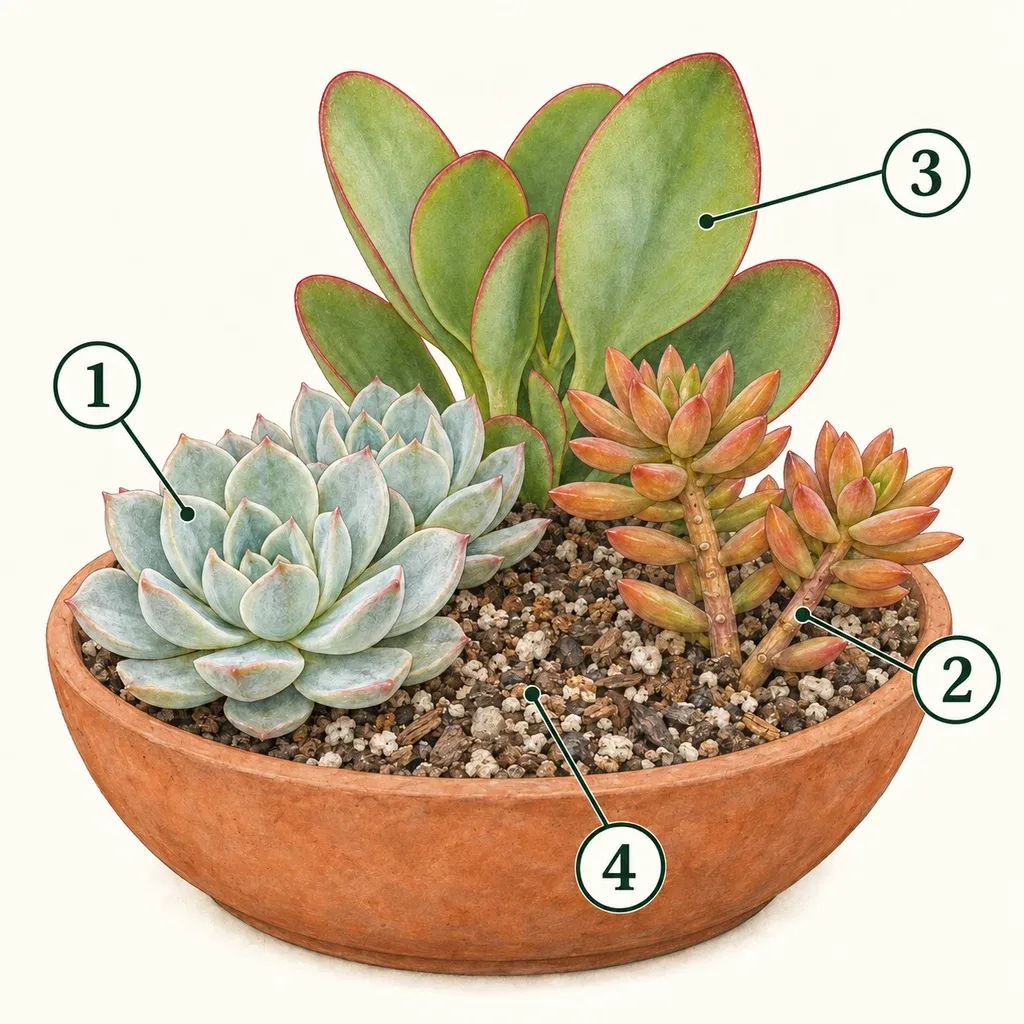
Powdery rosette
Overlapping fleshy leaves form the low Echeveria-type crown.
Branching shoot
Sedum-type stems carry narrower leaves outward.
Upright paddle
Broad Kalanchoe-type leaves rise above their smaller neighbors.
Shared medium
The same potting volume serves all components, so watering affects the whole arrangement.
Habitat and origins
 Habitat and origins
This nursery composition brings together American Echeveria, Mexican coppertone sedum and South African paddle kalanchoe. All three working groups belong to Crassulaceae, the stonecrop family, yet their contrasting leaf arrangements give the planter its varied shape.
What growth can look like
 What growth can look like
- Stage 1
Small arrangement
Separate foliage groups fit together within the shallow planter.
- Stage 2
Uneven expansion
Stem extension, wider rosettes and taller paddles change the balance.
- Stage 3
Established display
Offsets or flowering may develop independently in the different groups.
Compare photographs as the plants expand, watching where neighboring leaves begin to overlap or cast shade.
Flowers
Each component brings a different display: Echeveria flowers stand above the rosettes, sedum carries white stars in clusters, and paddle kalanchoe sends up a tall flowering spike.
As it matures
The display changes as each component grows: paddle leaves can rise above the rosettes while sedum branches spread sideways. A small dish garden can gradually become a layered scene, with individual plants needing more room at different times.
Similar plants, useful clues
Lithops shared planter ↗
Both share one pot history, but Lithops renew paired leaf bodies instead of extending ordinary leafy stems.
This plant in the collection
Its story so far
Joined the collection
Acquired in the Smart Planet Home mixed succulent garden from Home Depot.
Collection record ↗Repotted together
The rosettes, copper-toned shoots and broad paddles stayed together in the terra-cotta planter.
Collection record ↗
Then and now
Explore the sources
 Explore the sources
Names and identification
| Kind | Name |
|---|---|
| Collection record | Smart Planet Home five-plant succulent garden; one tracked pot |
| Visible seller label | 5" CLAY TERRACOTTA C&S GDN; Home Depot product 1002971690; Altman Plants |
| Pale powdery rosettes | Echeveria sp.; species and cultivar unresolved |
| Copper-orange narrow rosettes | Probable Sedum adolphi / Sedum nussbaumerianum horticultural complex |
| Broad red-edged paddle leaves | Kalanchoe luciae / Kalanchoe thyrsiflora complex |
| Identification caution | Working matches are based on foliage; the retail label names the garden only |

Three foliage groups give this garden its layered appearance: powdery Echeveria-type rosettes, orange-toned sedum shoots and broad red-edged paddle-kalanchoe leaves. Their different shapes also make each group easy to follow as the shared planting grows.
The planter is Succulent-10, label #6, and tracker P30. Its three component profiles describe recognizable foliage groups; the number of separately rooted individuals is unverified.
Component pages

| Profile record | Component group | Shared label / tracker |
|---|---|---|
| Succulent-10A | Pale rosette echeveria — species and cultivar unresolved | #6 / P30 |
| Succulent-10B | Coppertone-type sedum — probable adolphi / nussbaumerianum complex | #6 / P30 |
| Succulent-10C | Paddle kalanchoe — luciae / thyrsiflora complex | #6 / P30 |
The component pages describe each group's appearance and care within the same shared planter.
Acquisition and photo evidence
This discounted planter was purchased at Home Depot on September 2, 2026.
The photographed reverse label records Smart Planet Home branding, Altman
Plants as grower, a $7.98 price, 5" CLAY TERRACOTTA C&S GDN, Home Depot
product 1002971690, and 11 oz / 325 mL as the printed container-capacity
marking. Home Depot's matching product page describes a five-inch deep-dish
terra-cotta garden containing five plants. The retail label does not identify the individual components.
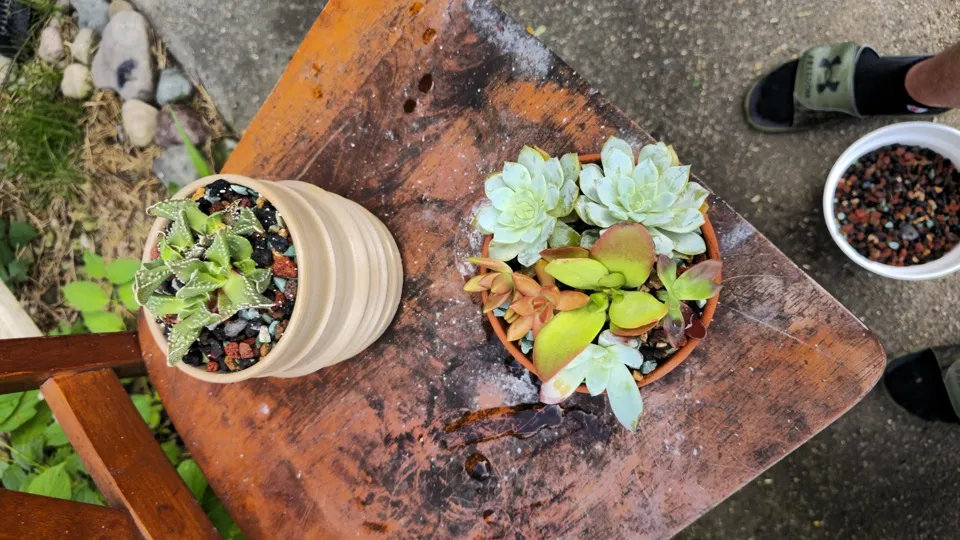
Source-quality photographs preserve receipt context, three current angles, a top view, and the shared post-repot context. These views provide a visual record of each component's growth.
The components were kept together during the September 2 repot in the purchased five-inch-class terra-cotta planter. The repot was logged at September 3, 2026, 12:18 a.m. EDT, with “5 inch shallow” and “Nursery cacti soil and my top dressing” as its setup-2 descriptions. Exact depth and ingredient proportions remain unmeasured. All plants share the same root volume, watering, and whole-pot weight.
Why the component names stay broad
Echeveria includes many species and cultivated hybrids, while the two paddle-kalanchoe species are often confused in the nursery trade. Flowers and mature growth offer useful distinguishing features. The component pages explain those comparisons alongside each group's growth habit.
Care in this collection

| Topic | Practical starting approach |
|---|---|
| Arrival | Use the September 2 views as the visual baseline. Watch each component for collapse, translucence, pests, or poor rooting even though observations are saved against one planter. |
| Grow-light position | Photo-matched front of rear zone, between #1 and #5 · Bright. September 15 rear wooden tables, facing the window. Compare the low rosettes and paddle leaves for shadows from the large pots. See the current placement guide; exact exposure remains unmeasured. |
| Water | Judge the shared root volume by full dry-down and whole-pot weight. Water thoroughly and drain, but do not repeatedly wet the pot for one component while the others remain firm. |
| Pot and mix | Setup 2 records “5 inch shallow” with “Nursery cacti soil and my top dressing.” Exact depth and ingredient proportions remain unrecorded; the pot description alone does not verify drainage performance. |
| Mixed growth | Prune or separate only if one component begins shading, crowding, or demanding a materially different watering rhythm. |
| Feeding | Use the collection's dilute succulent product only during an ordinary active-growth watering. Avoid feeding stressed or poorly rooted components. |


Rotation and watch points
- Photograph the same side with
#6visible so component loss, stretching, and crowding are easy to compare. - The pale rosettes may carry protective farina; avoid handling or wiping it merely to improve appearance.
- Red or orange coloration can change with light and temperature. Treat a rapid shift together with texture and growth, not color alone, as evidence.
- If one plant rots, isolate the affected component and inspect adjoining roots; do not assume the whole planter needs more water.
Sources

Through the seasons
Plant Photo History
Recent photographs of this plant. Open a photo or its collection for the complete history.
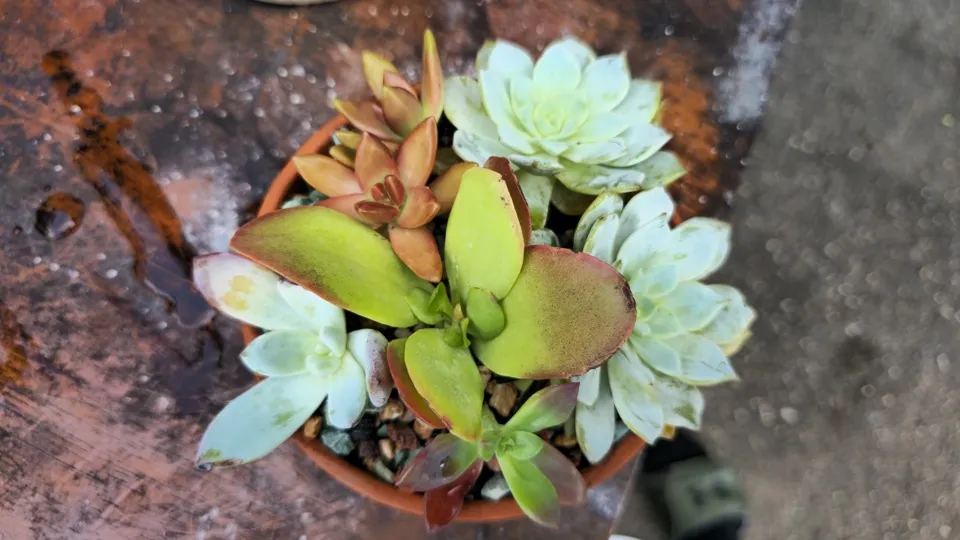
From the nursery
Nursery Labels
Original nursery labels and packaging.




Botanical reference photos
Reference Gallery
Echeveria, coppertone sedum, and paddle kalanchoe comparisons
Form and growth

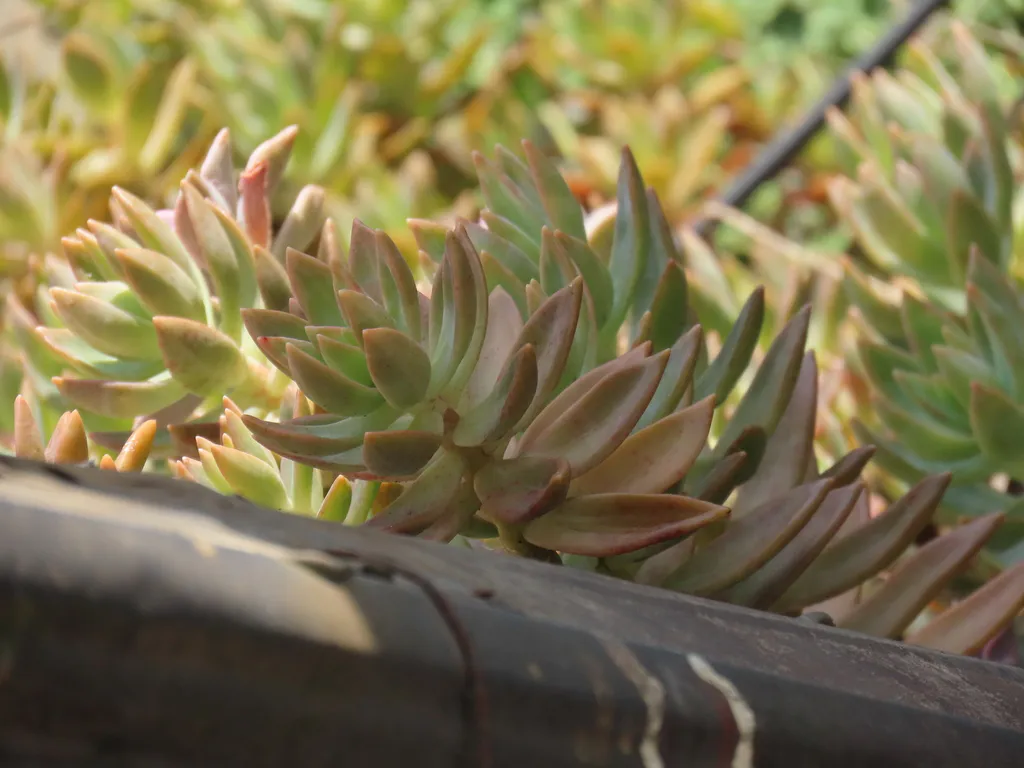
.jpg)
.jpg)
Look closer
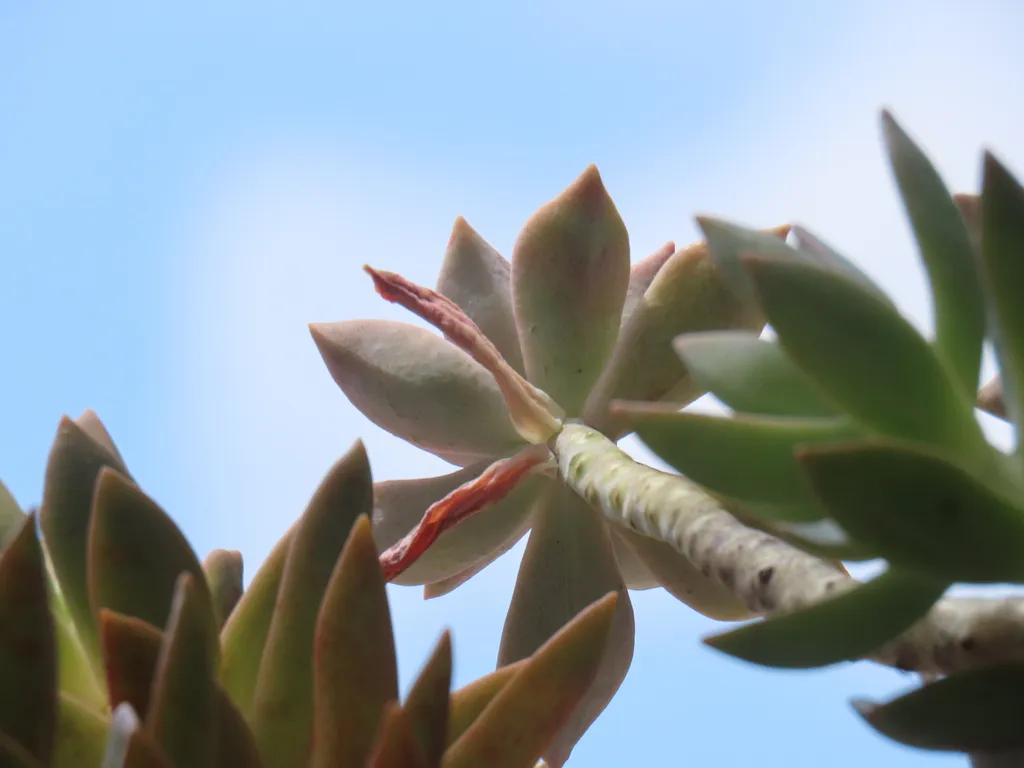
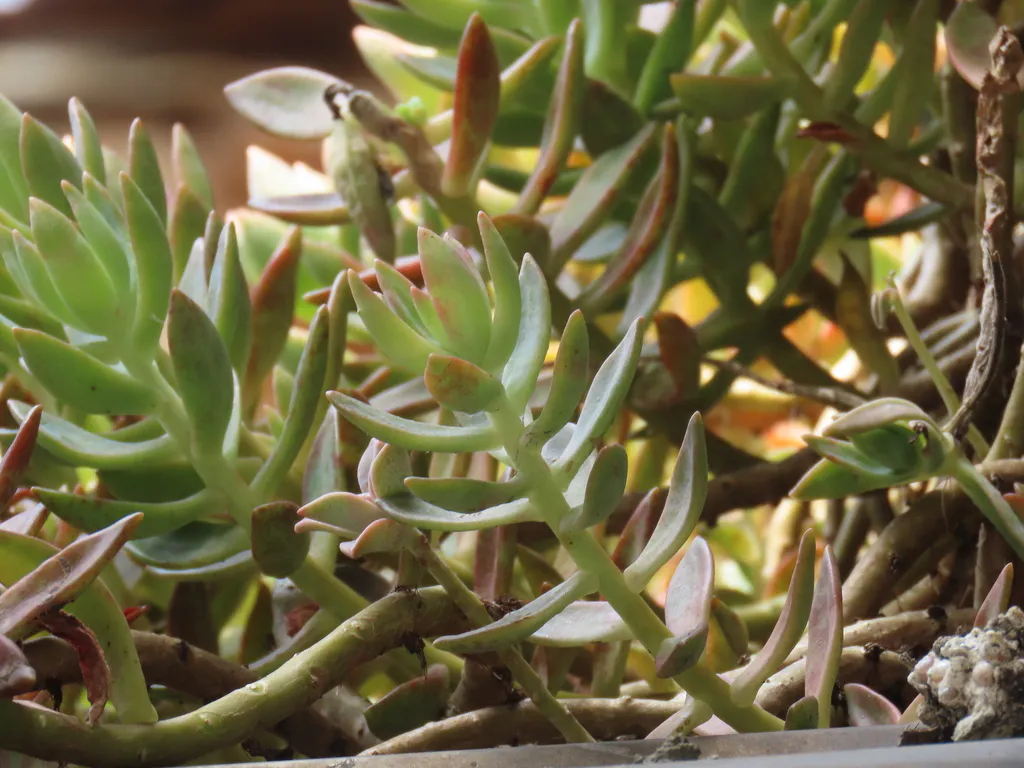
.jpg)
Flowers and buds


In the landscape
Research Trail
- Collection Notes on GitHub
- Complete Photo Archive and Credits
- iNaturalist Observations — Echeveria component comparisons