


Older planter and archive
Plant 42 / 45 Older planter and archive
 Plant 42 / 45
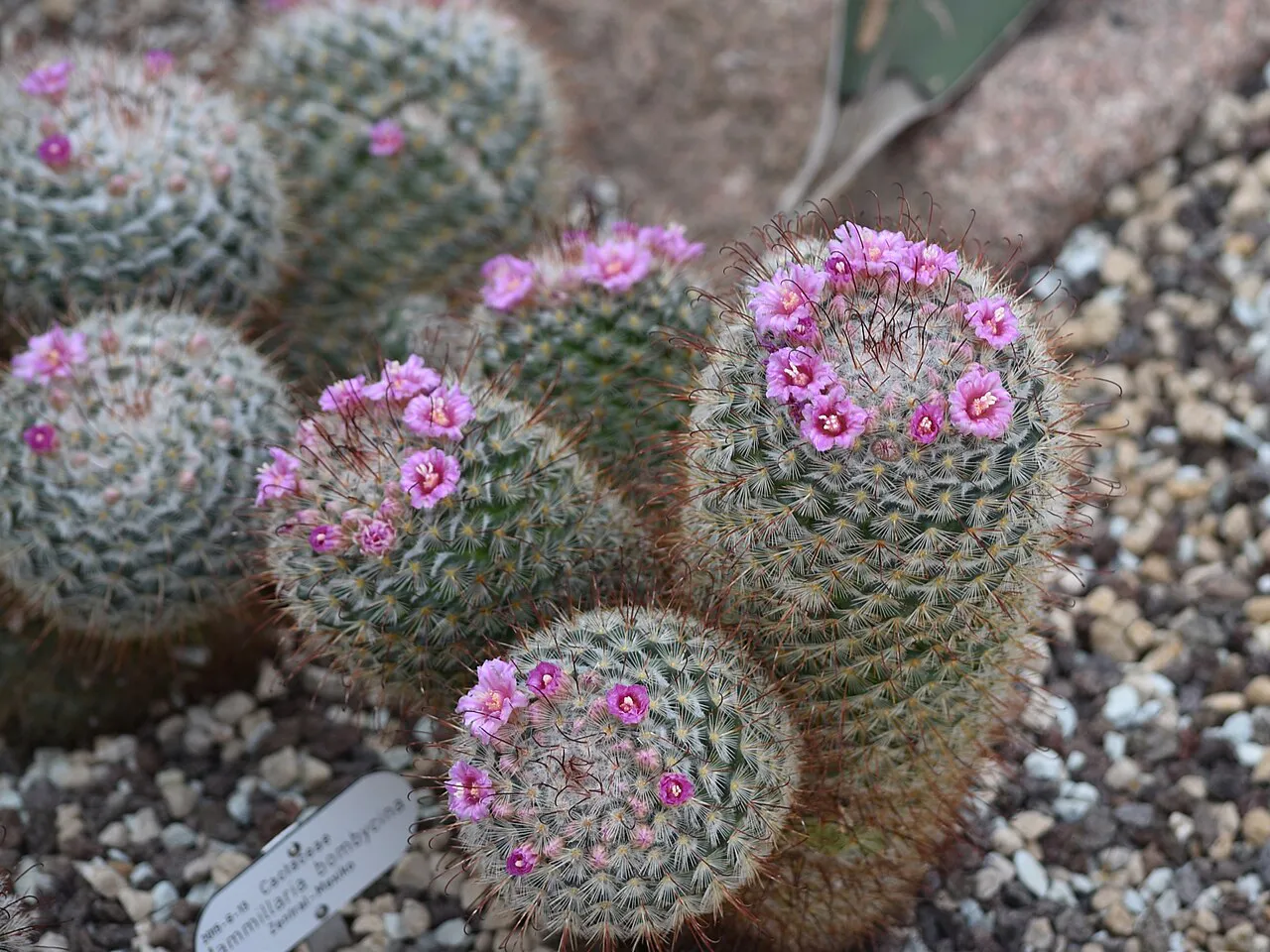
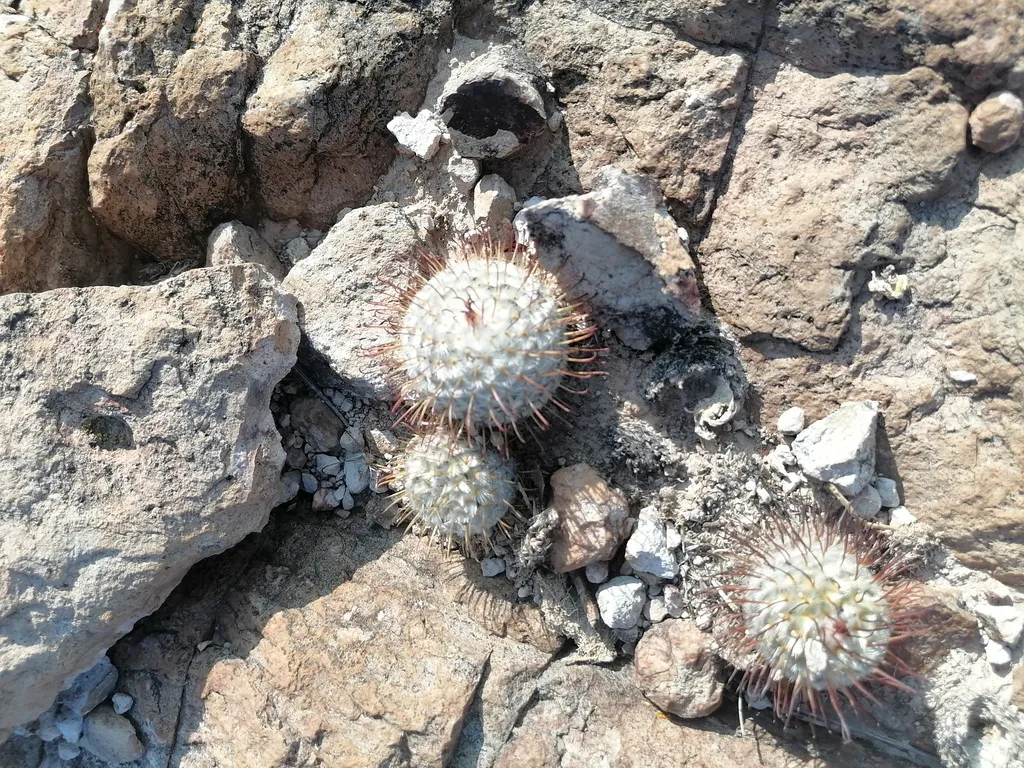
probable Mammillaria bombycina
Silken pincushion cactus
 Historical Record
Species reference · NasserHalaweh · CC BY-SA 4.0 · Photo Source ↗
 Collection Record
- Rehab-04
 Permanent Label
- none
 Identification
 Status
 Acquired From
- Not recorded
 Acquired On
- Not recorded
 Google Sheets ID
- No active pot · historical record
 Photo History
- No collection photos yet ↓
Spot it
 Spot it
What it looks like
The historical plant was a small brown-green globe so densely covered with pale radial and reddish central spines that little stem tissue remained visible by the time it was removed.
One curious thing
 One curious thing
Did you know?
The species name means silky or cottony, referring to the wool and fine pale spines that cover living plants.
Explore This Plant
A closer look
How this plant works
 How this plant works
White radial spines and wool form a pale coat around the longer brown central hooks.
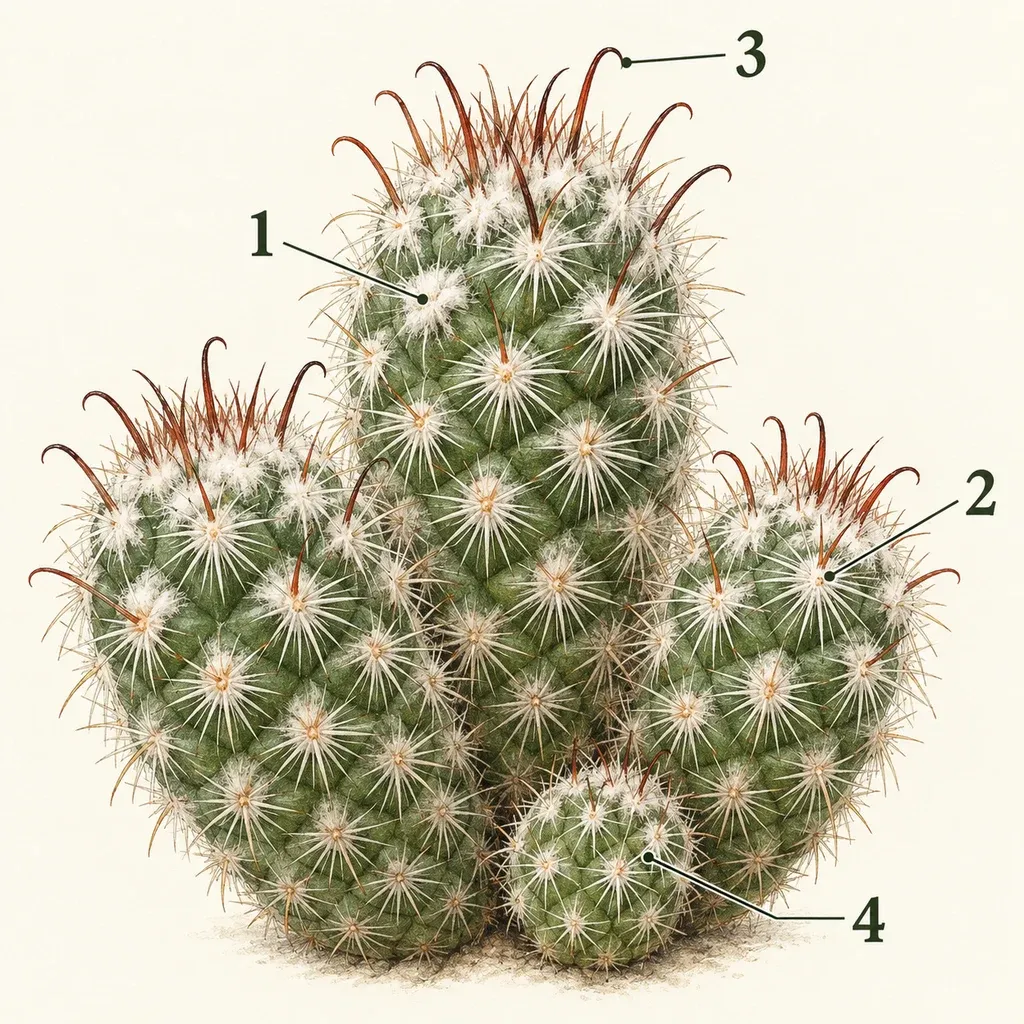
White wool
Fine covering between the tubercles helps create the silky appearance.
Radial spines
Pale spreading spokes surround each spine-bearing areole.
Hooked central spine
A stronger reddish-brown hook projects through the white covering.
Basal offset
A young side head can develop into another cylinder within the clump.
Habitat and origins
 Habitat and origins
Mammillaria bombycina is native to southwestern Aguascalientes and northeastern Jalisco, Mexico, where it grows in dry shrubland.
Habitat sources: [1]
What growth can look like
 What growth can look like
- Stage 1
Young head
A living juvenile begins as a small spiny globe.
- Stage 2
Longer cylinder
The stem lengthens and develops a dense pale coat.
- Stage 3
Cluster of heads
Offsets can gather into a spreading group.
Heads lengthen into short cylinders as basal offsets build a mound around them.
Growth sources: [2]
Flowers
Deep rose-pink flowers about 1.5 cm across form near the crown. As in other Mammillaria, they emerge between tubercles, separate from the spine clusters.
As it matures
Living plants develop clustered cylindrical stems about 20 cm tall, with offsets gradually widening the mound.
Sources: [2]
Behind the name
Kew records the species name as first published by Quehl in 1910.
Sources: [1]
Similar plants, useful clues
Mammillaria cf. rekoi ↗
Both may have hooked central spines; the rekoi candidate has more exposed green tissue and a less heavily woolled appearance.
This plant in the collection
Its story so far
Removed from the collection
Final inspection found only a tiny surviving green patch; no offset was retained. The page preserves the plant's history.
Collection record ↗
Explore the sources
 Explore the sources
Names and identification
| Kind | Name |
|---|---|
| Best historical photo match | Mammillaria bombycina Quehl |
| Common names | Silken pincushion cactus, silky pincushion |
| Name clue | bombycina means silky or cottony |

An older photograph, no longer available, showed a clustered green Mammillaria with white radial spines, wool around the areoles, and longer reddish-brown central spines. That is a good match for M. bombycina.
Species background

The species is native to a small area of west-central Mexico, principally southwestern Aguascalientes and northeastern Jalisco. It grows in dry rocky habitat and is assessed as Vulnerable. Leopold Quehl published it in 1910.
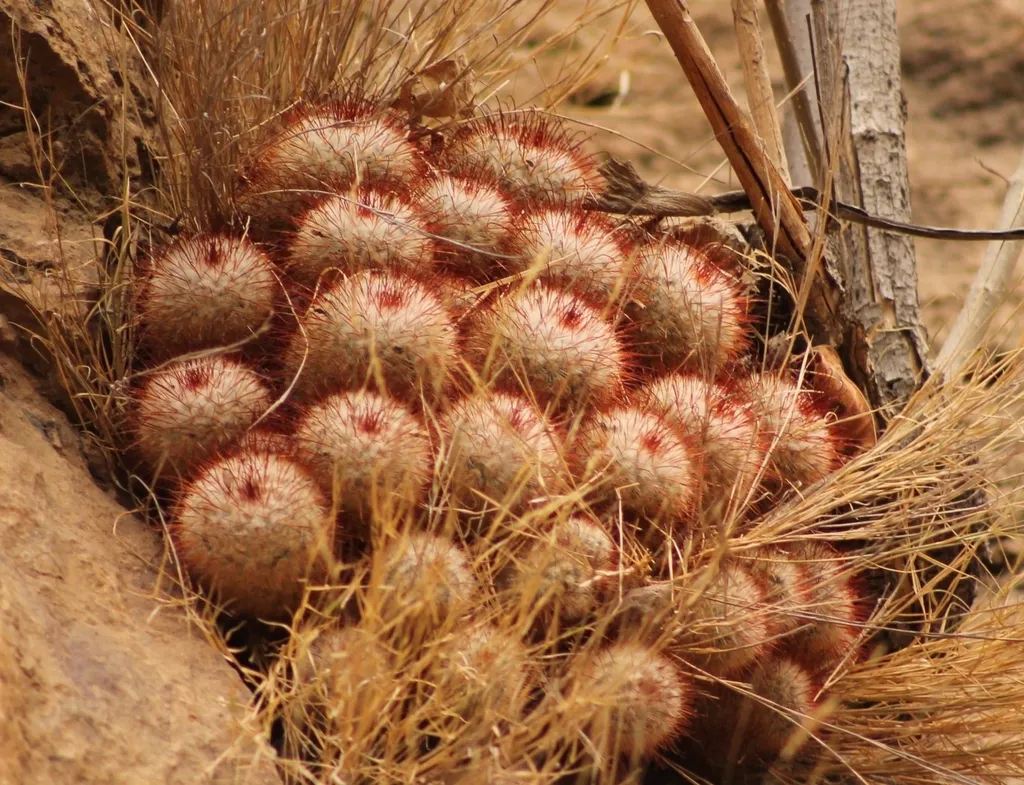
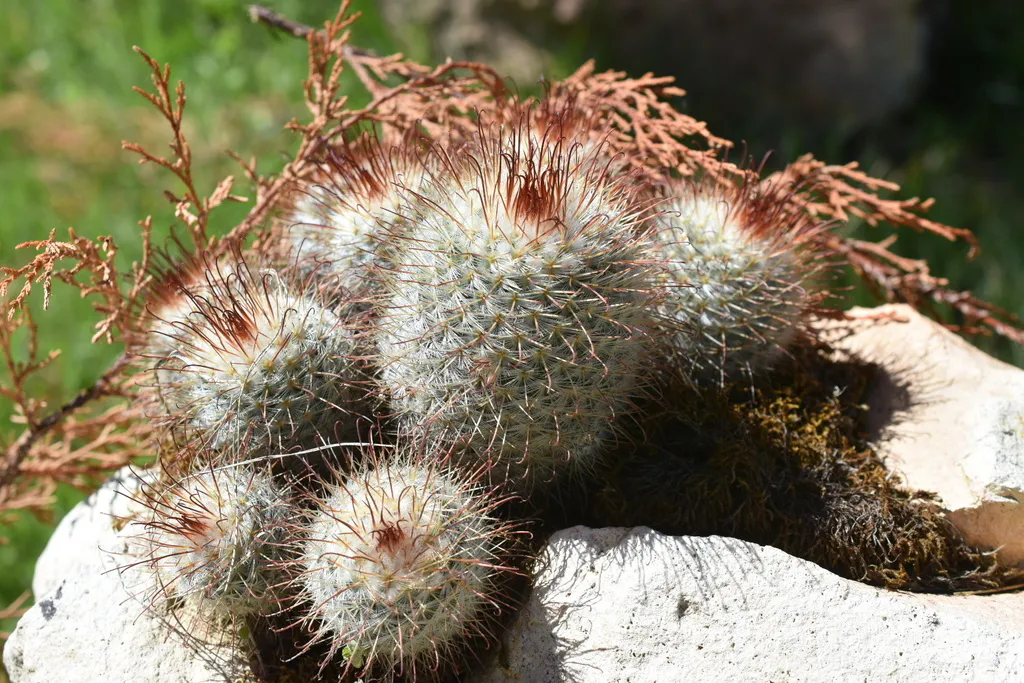
Living heads begin round and become short cylinders up to roughly 20 cm tall, branching to form a mound. Each tubercle carries fine white radial spines, silky wool, and longer brown central spines, some hooked. Deep rose-pink flowers form a ring near the crown.
Collection history and removal
This plant formerly grew in the shared cactus planter. Its acquisition source and date were not recorded. It was removed on July 24, 2026, after final inspection of the almost-black, shrunken plant found only a tiny patch of green flesh near the top and too little viable tissue to salvage. No offset or cutting was retained, and no photograph of the final inspection is available.
The remaining three plants continue in the shared planter. This historical record has no active pot or watering schedule.
Reference care for a future replacement

For a future replacement or a healthy cutting:
| Topic | Practical approach |
|---|---|
| Isolation | Separate it from dead tissue with a sterile blade and let the cut dry fully. |
| Rooting | Rest it on dry, airy cactus mix; introduce water cautiously only after the wound is sealed and roots begin. |
| Light | Bright filtered recovery light, then a gradual ramp toward roughly 10–18 mol/m²/day DLI. |
| Water | Never compensate for missing roots with frequent water. Until roots exist, wet soil mainly feeds rot. |


Sources

Through the seasons
Plant Photo History
No collection photos yet. Explore the reference gallery below.
Botanical reference photos
Reference Gallery
Form and growth


Look closer


Flowers and buds


.jpg)
In the landscape
Research Trail
- Collection Notes on GitHub
- Complete Photo Archive and Credits
- iNaturalist Observations — Species reference for the historical plant