


Cactus collection
Plant 14 / 45 Cactus collection
 Plant 14 / 45
 Echinopsis hybrid, Chamaelobivia Group
Chamaelobivia / peanut cactus hybrid


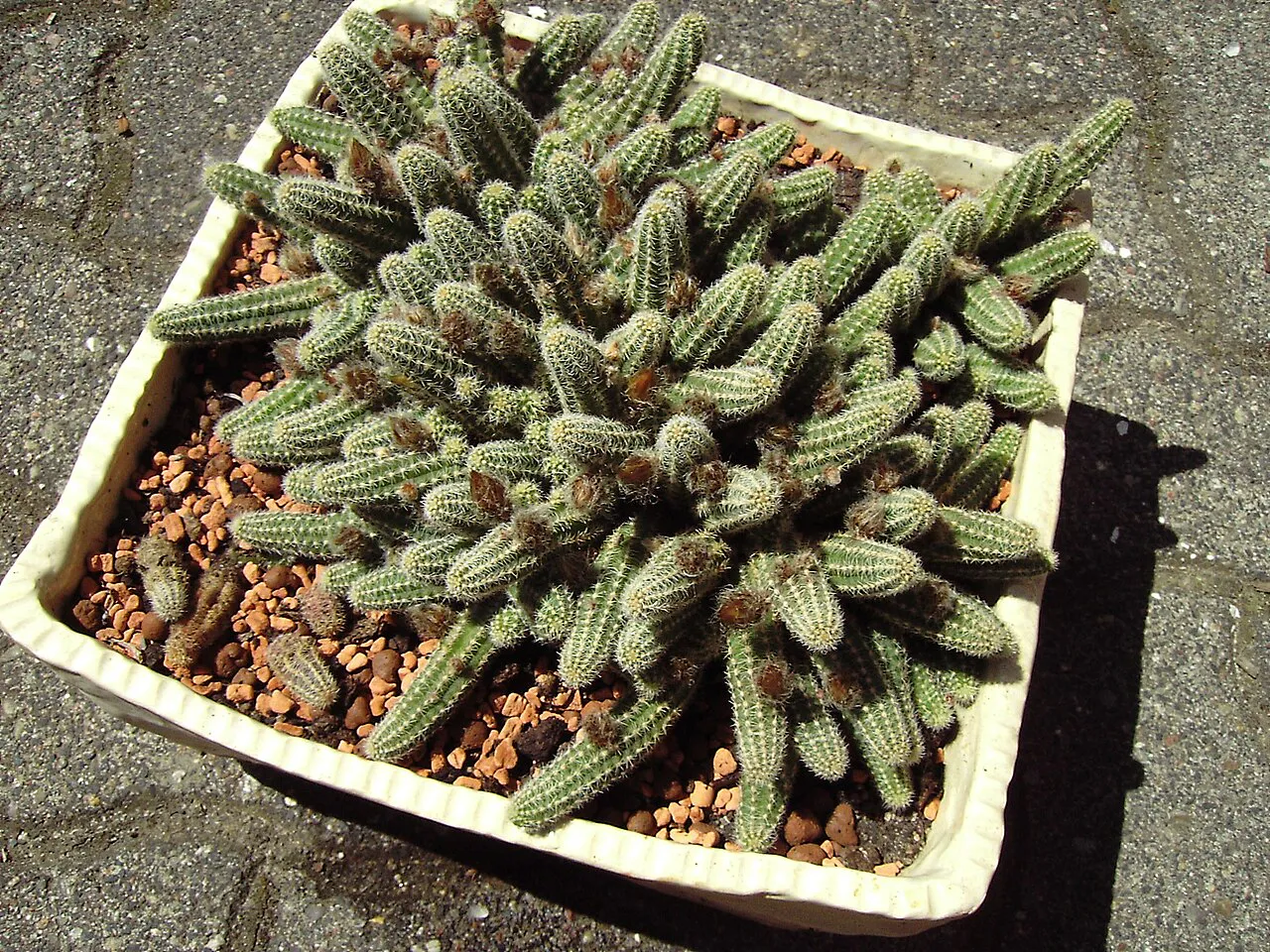
Species reference · Dieter Weber ( User:Uellue ) · CC BY-SA 3.0 · Photo Source ↗
 Collection Record
- Cactus-02
 Permanent Label
E2 Identification
 Status
 Acquired From
- Carlsons' Greenhouse, Torrey Road, Fenton, Michigan
 Acquired On
- 2026-08-10
 Google Sheets ID
- P14 ↗
 Photo History
- 3 captures · newest ↓
Measurements and Care History
 Measurements and Care History
Weights, watering, events, and charts for P14.
Spot it
 Spot it
What it looks like
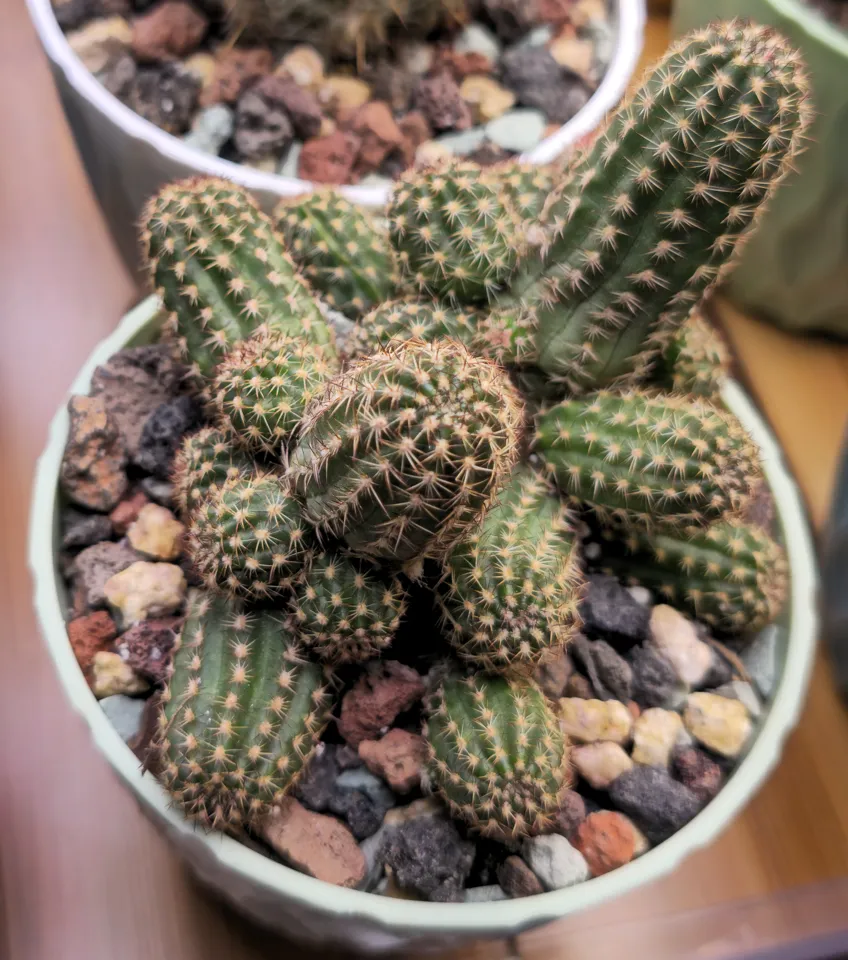
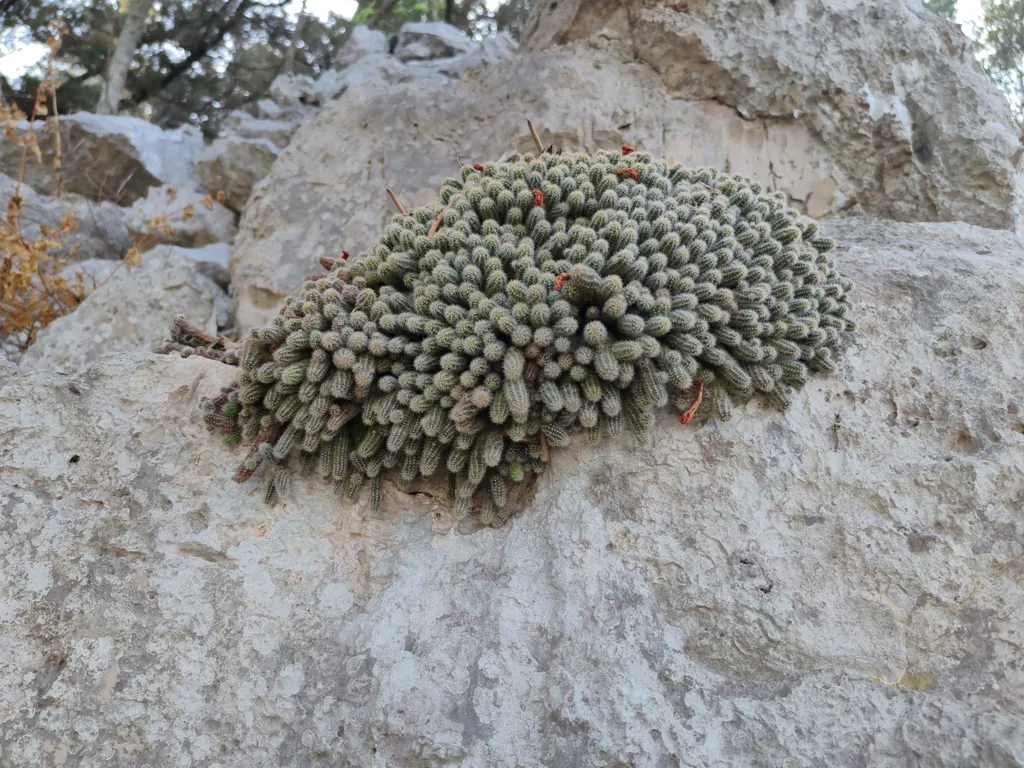
A crowded cushion of short, peanut-shaped green stems, each divided into shallow ribs and dotted with small pale areoles; offsets make the mound look fuller than any single stem.
One curious thing
 One curious thing
Did you know?
Chamaelobivia hybrids were selected for an unusually broad flower palette, so genetically related plants can open vivid yellow, orange, red, or pink blooms above nearly identical green clumps.
Explore This Plant
A closer look
How this plant works
 How this plant works
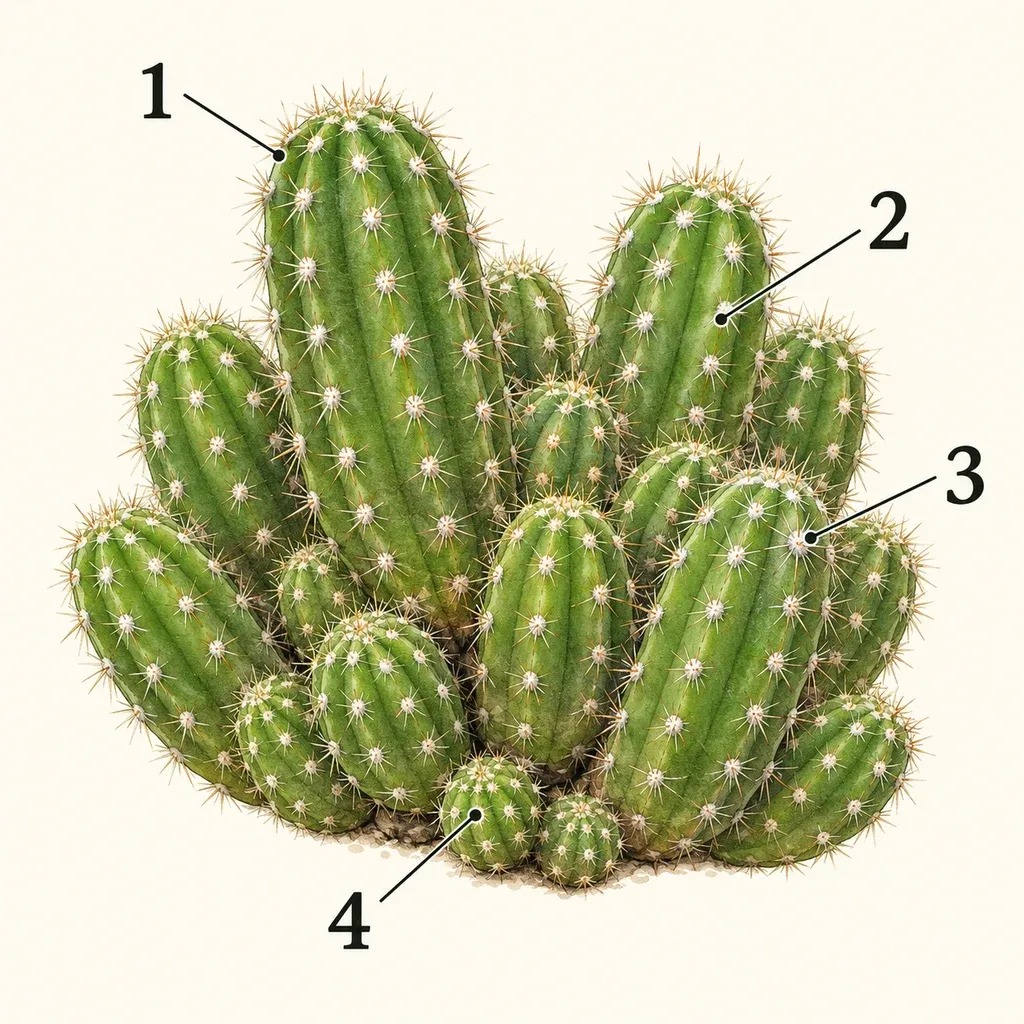
Each peanut-shaped stem repeats a simple pattern of shallow ribs, small spine cushions, and side shoots.
Habitat and origins
 Habitat and origins
Chamaelobivia hybrids combine peanut-cactus ancestry with other Echinopsis or Lobivia lines. The peanut-cactus ancestor, Echinopsis chamaecereus, comes from northwestern Argentina and grows as a low mat of slender, sprawling stems.
What growth can look like
 What growth can look like
- Stage 1
Small cluster
Short stems establish a compact starting group.
- Stage 2
Spreading offsets
New fingers enlarge the plant sideways.
- Stage 3
Flowering clump
Mature stems can bear flowers much broader than the stems themselves.
The clump fills outward through offsets, so increasing spread can be more noticeable than increasing height.
Growth sources: [2]
Flowers
The peanut-cactus ancestor has funnel-shaped vermilion-red flowers 5–7 cm long. Hybrid flowers span a wider color palette, which makes the first open bloom especially interesting.
Sources: [2]
As it matures
Expect a low, spreading clump of many fingerlike stems. Hybrids vary in stem size and vigor.
Sources: [2]
Behind the name
The familiar peanut shape belongs to a species now listed by Kew as Echinopsis chamaecereus; Chamaecereus survives widely in horticultural hybrid names.
Sources: [1]
Similar plants, useful clues
Golden ball cactus ↗
Parodia leninghausii develops a denser golden coat and an upright column; peanut hybrids spread as many fingerlike stems.
This plant in the collection
Its story so far
Joined the collection
Purchased at Carlsons' Greenhouse in a 4-inch individual pot.
Collection record ↗
Then and now
Explore the sources
 Explore the sources
Names and identity
| Kind | Name |
|---|---|
| Botanical label | Echinopsis hybrid — Chamaelobivia Group |
| Common names | Chamaelobivia hybrid, peanut cactus hybrid |
| Wild ancestor | Echinopsis chamaecereus |
| Cultivar | Unknown until flowers or a nursery label narrow it |
The dense clump of short ribbed stems gives the group its peanut-cactus appearance. Chamaelobivia hybrids combine peanut-cactus ancestry with other Echinopsis or Lobivia lines and have been selected for vivid yellow, orange, red, and pink flowers.
Origin, form, and publication
Kew places Echinopsis chamaecereus in northwestern Argentina, specifically north-northwestern Tucumán. The ancestor was first published as Cereus silvestrii in 1905.
Care in this collection

| Topic | Practical approach |
|---|---|
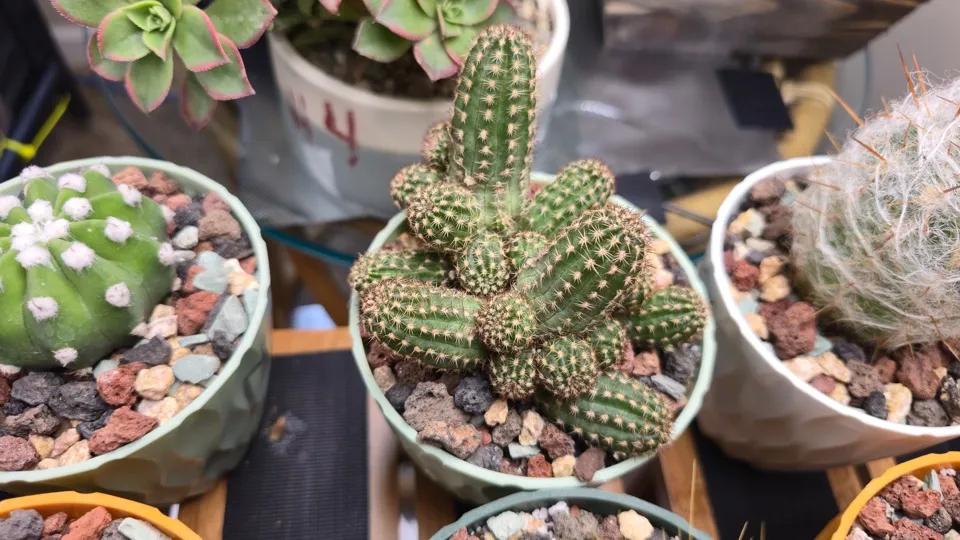
| Grow-light position | Photo-matched R1C2 · Bright. September 15, 2026 photo reference: six-column/four-row front grid, facing the window. Front row, second from the Mylar. See the current placement guide. |
| Water | Soak and drain, then let the small pot dry. Active clumps may use water sooner than woolly columnar cacti. |
| Pot and mix | The small 4-inch pot is fine until offsets pack the rim or water stops penetrating evenly. |
| Flowers | Strong light, active growth, and a cooler dry winter rest can support flowering. |


Rotation, propagation, and watch points
- Rotate 90° clockwise on the ordinary Sunday schedule.
- Offsets separate and root easily once large enough to handle.
- Watch crowded stem bases for trapped moisture, scale, or mealybugs.
- Photograph open flowers from above and the side to capture both color and the shape of their funnel-shaped tubes.
Sources

Through the seasons
Plant Photo History
Recent photographs of this plant. Open a photo or its collection for the complete history.
Botanical reference photos
Reference Gallery
Peanut-cactus ancestry comparisons
Form and growth


Flowers and buds
.jpg)


In the landscape
Research Trail
- Collection Notes on GitHub
- Complete Photo Archive and Credits
- iNaturalist Observations — Peanut-cactus ancestry comparisons