


Cactus collection
Plant 05 / 45 Cactus collection
 Plant 05 / 45


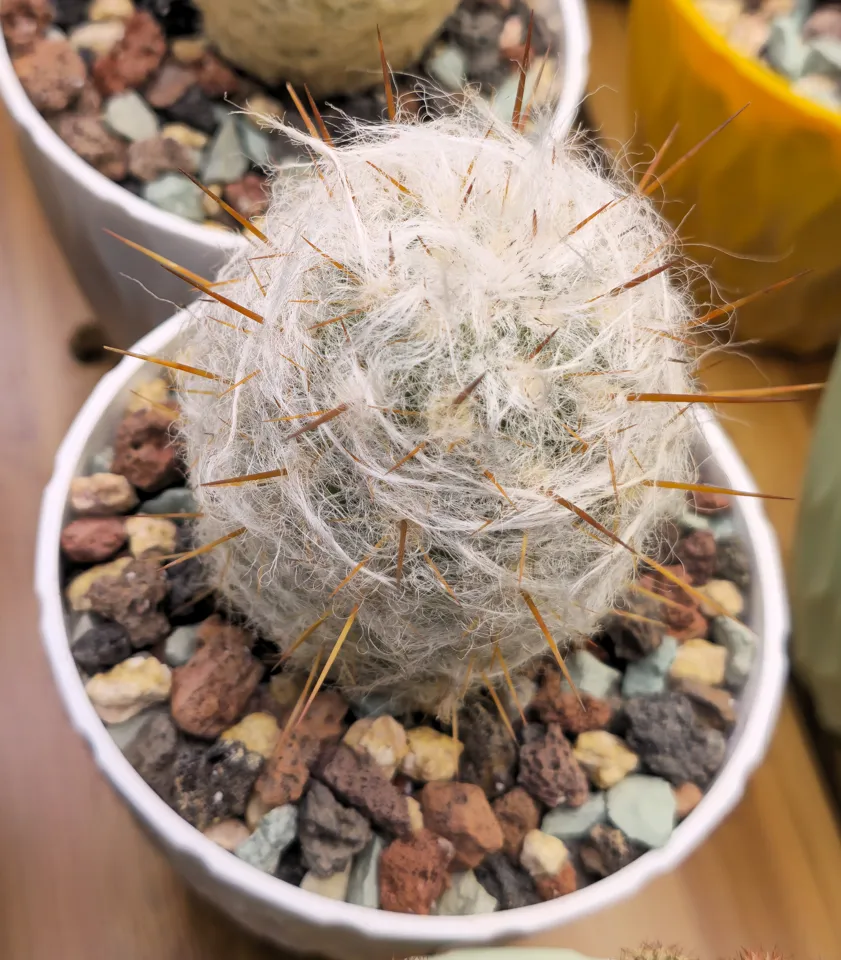
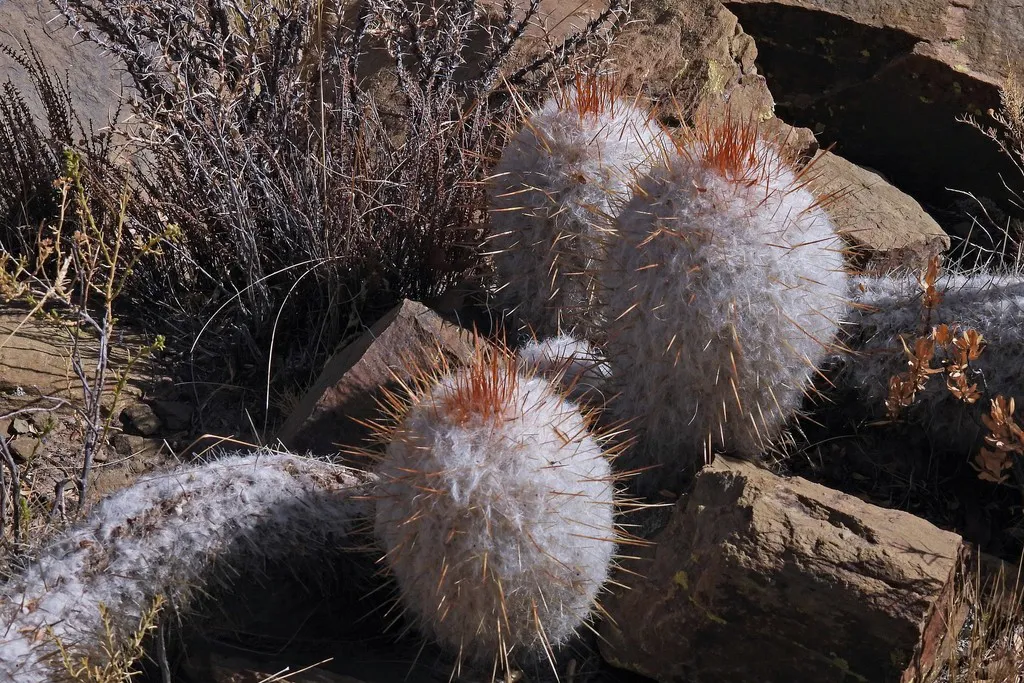
Species reference · Frank Vincentz · CC BY-SA 3.0 · Photo Source ↗
 Collection Record
- Starter-01
 Permanent Label
B2 Identification
 Status
 Acquired From
- Altman Reserve
 Acquired On
- 2026-07-15
 Google Sheets ID
- P05 ↗
 Photo History
- 4 captures · newest ↓
Measurements and Care History
 Measurements and Care History
Weights, watering, events, and charts for P05.
Spot it
 Spot it
What it looks like
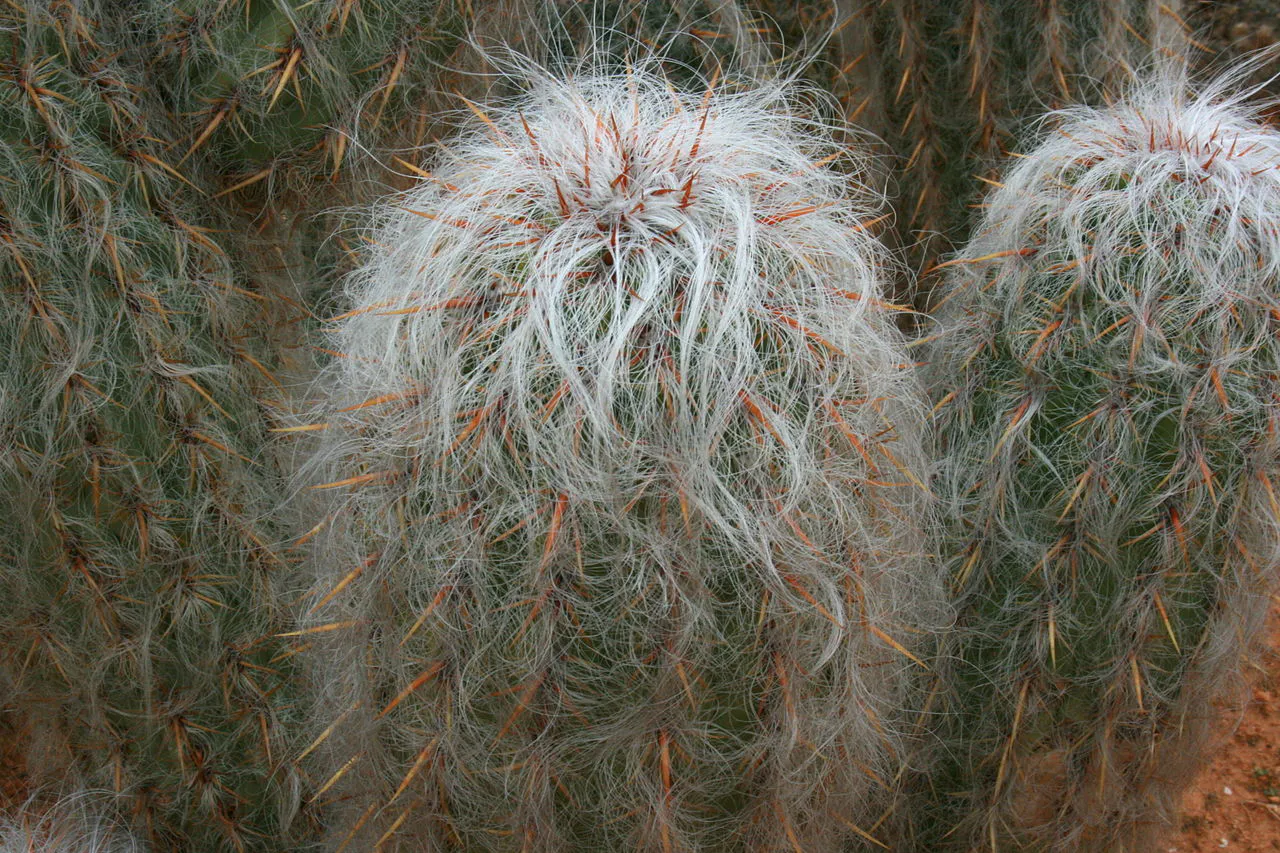
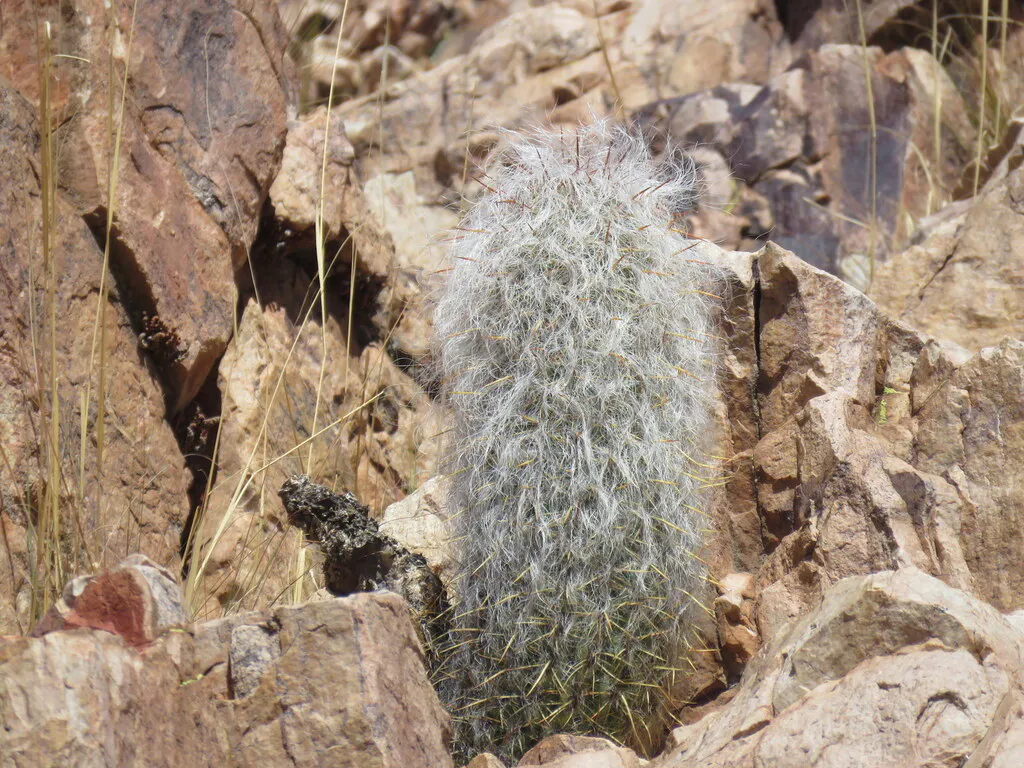
A short upright column wrapped in long white wool, with reddish-brown spines showing through the fibers and a greener crown visible where the newest coat is thinner.
One curious thing
 One curious thing
Did you know?
The wool is more than decoration: on an Andean cactus it helps buffer intense high-altitude sunlight and cold nights, while the harder spines underneath retain the plant's physical defense.
Explore This Plant
A closer look
How this plant works
 How this plant works
Long white hairs surround the ribbed green column and its stout colored spines.
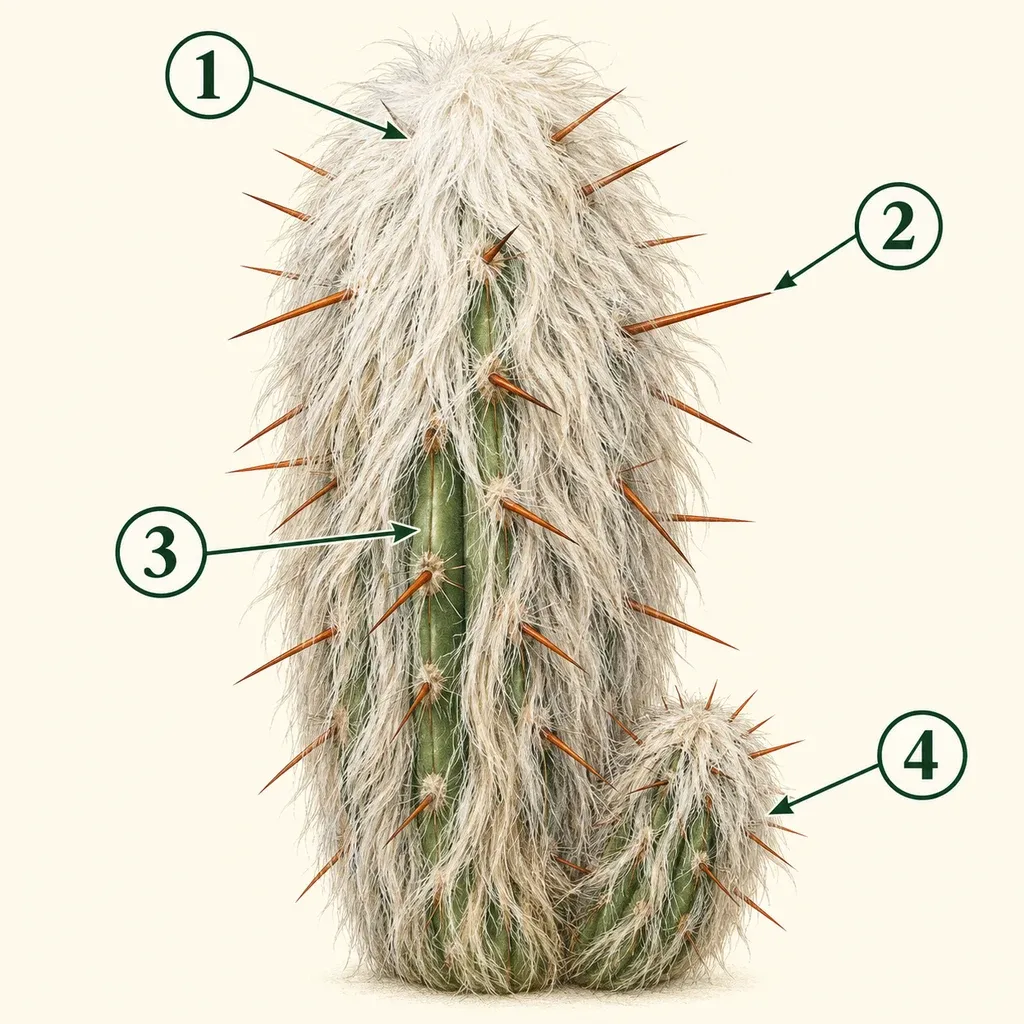
White hairs
Long pale hairs form the conspicuous covering over the column.
Stiff spine
Orange to reddish-brown spines project beyond the hair covering.
Green stem
The ribbed stem beneath the hairs is the photosynthetic body.
Basal side stem
A new shoot at the base contributes to the species’ clumping habit.
Habitat and origins
 Habitat and origins
Native to dry mountainous regions of Bolivia and northwestern Argentina, this cactus grows a dense white coat around its green stems. Stiff orange to reddish-brown spines project through the hair.
What growth can look like
 What growth can look like
- Stage 1
Small hairy stem
The young plant develops its white covering over a compact body.
- Stage 2
Short column
The stem lengthens while colored spines remain visible through the hairs.
- Stage 3
Clumping plant
Side stems expand the group; mature growth can eventually produce flowers.
New shoots arise from the base, gradually turning a single hairy column into a clump.
Growth sources: [2]
Flowers
Pink to red flowers around 4 cm long emerge near the upper part of mature stems, contrasting with the surrounding white hair.
As it matures
The species forms a clump of short columns. Specialist descriptions give stems about 6–10 cm thick, usually under 50 cm high but occasionally approaching 1 m.
Behind the name
The accepted Oreocereus combination dates to 1936. Kew also records the original Cereus trollii name from 1929, showing how this Andean cactus has moved among genera in different treatments.
Sources: [1]
Similar plants, useful clues
Feather cactus ↗
Mammillaria plumosa makes a low mound covered by interlacing feather-like radial spines. Oreocereus instead has longer hair-like strands and obvious projecting orange-brown spines on columnar stems.
This plant in the collection
Its story so far
Then and now
Explore the sources
 Explore the sources
Names and identity
| Kind | Name |
|---|---|
| Accepted botanical name | Oreocereus trollii (Kupper) Backeb. |
| Common names | Old Man of the Andes, Old Man of the Mountain |
| Original published name | Cereus trollii Kupper |
| Name meaning | Oreocereus means roughly “mountain cereus”; trollii honors German botanist Wilhelm Troll |
The white wool is a normal feature of this high-elevation cactus. Its hairs are modified spines surrounding a green column armed with much sharper reddish-brown central spines.
Origin, habitat, and history
The accepted wild range runs from Bolivia into northwestern Argentina, including Jujuy. It grows in dry, rocky Andean grassland and puna at roughly 3,000–4,000 m elevation. Strong ultraviolet light, cold nights, wind, and limited moisture are normal there. The hair layer shades the stem and traps a thin boundary of air, useful in a habitat that can be sunny and cold on the same day.
Walter Kupper published the plant as Cereus trollii in 1929. Curt Backeberg moved it to Oreocereus in 1936. Kew currently accepts that combination and assesses the species as Least Concern.
Mature plants form upright columns and may cluster from the base. Tubular reddish to pink flowers emerge around the upper stem rather than from a bare terminal crown. Small plants first build their columns and woolly covering before reaching flowering maturity.
Care in this collection

| Topic | Practical approach |
|---|---|
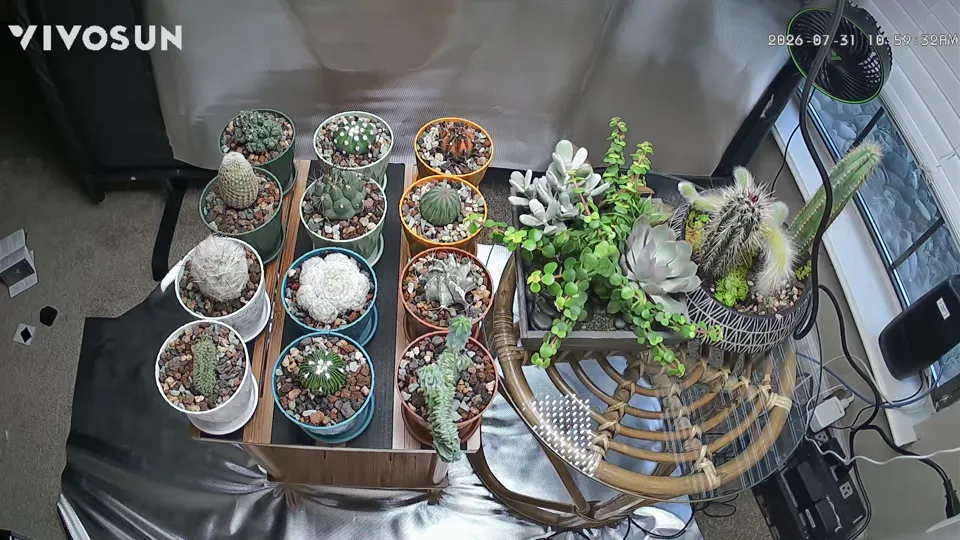
| Grow-light position | R2C2 · High. September 15, 2026 photo layout, facing the window (six columns, four rows). Interior-left position with clear exposure at its growing tip; do not compare only tabletop light. See the current placement guide. |
| Outdoor light | Bright light and increasing direct sun; acclimate because hairs do not prevent sunburn after a dim period. |
| Water | Soak the root ball, drain completely, then wait until it is dry and the pot is light. Water more readily during warm active growth and much less in a cool, slow winter period. |
| Mix and pot | The current drained 4-inch pot and gritty mix are reasonable. Do not bury the woolly base or let the tray hold water. |
| Temperature | It experiences cold in habitat, but a small watered pot is less forgiving. Keep it dry during cool spells and protect it from hard freezes. |
| Feeding | A dilute, low-nitrogen cactus fertilizer a few times during active growth is plenty; the included fertilizer in fresh mix reduces urgency. |


Compact new growth with strong spines is the goal. Fresh bleached or tan areas mean the increase was too fast; a narrowing tip with weak spines suggests too little light.
Propagation and watch points
- Seed is the normal way to produce new genetic individuals; established offsets can be separated after the cut calluses.
- Mealybugs can hide deep under the hair. Look for sticky residue, cottony patches that differ from the even natural wool, or a stalled growing point.
- Do not routinely mist or wash the wool indoors. Persistent damp around the crown and base removes much of the margin for error.
- The sharp central spines extend beyond the soft-looking hairs. Handle the pot, not the plant.
Sources

Through the seasons
Plant Photo History
Recent photographs of this plant. Open a photo or its collection for the complete history.
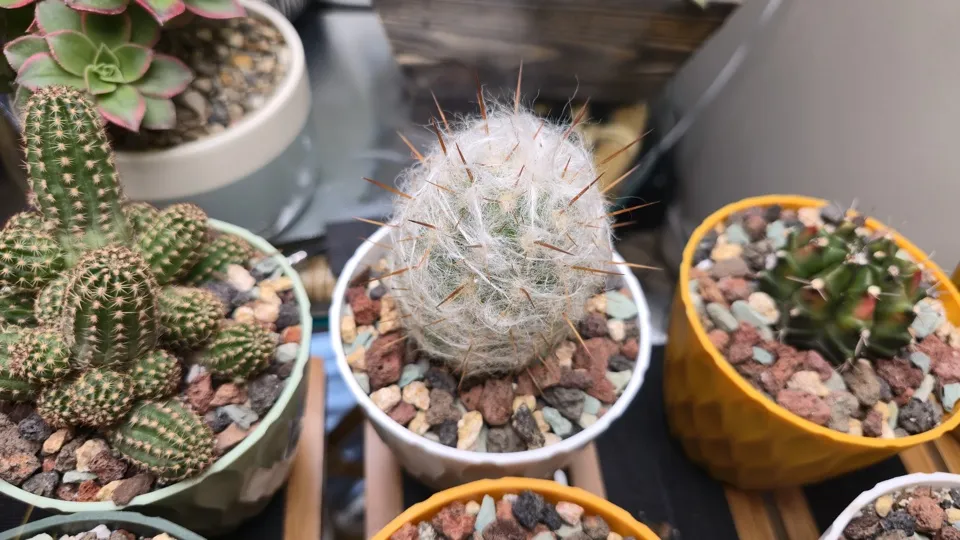
From the nursery
Nursery Labels
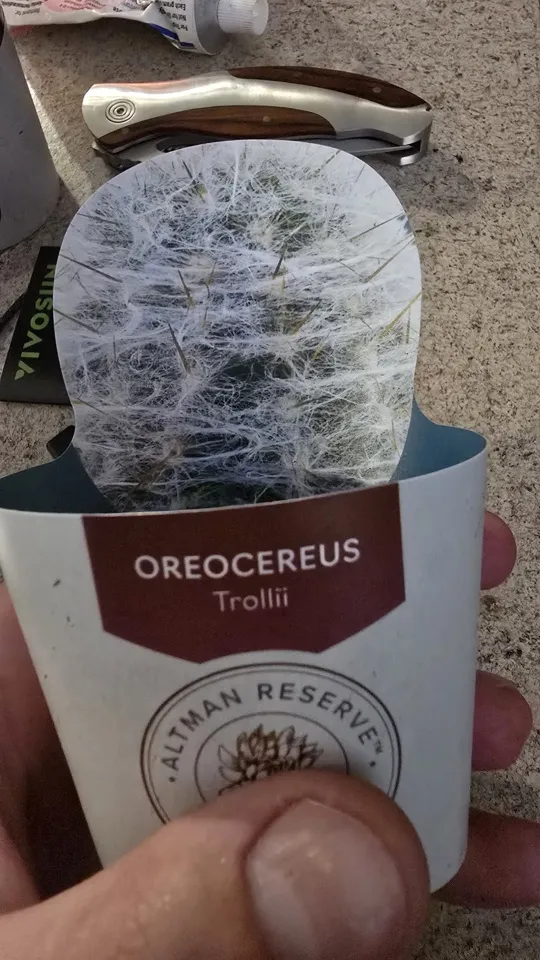
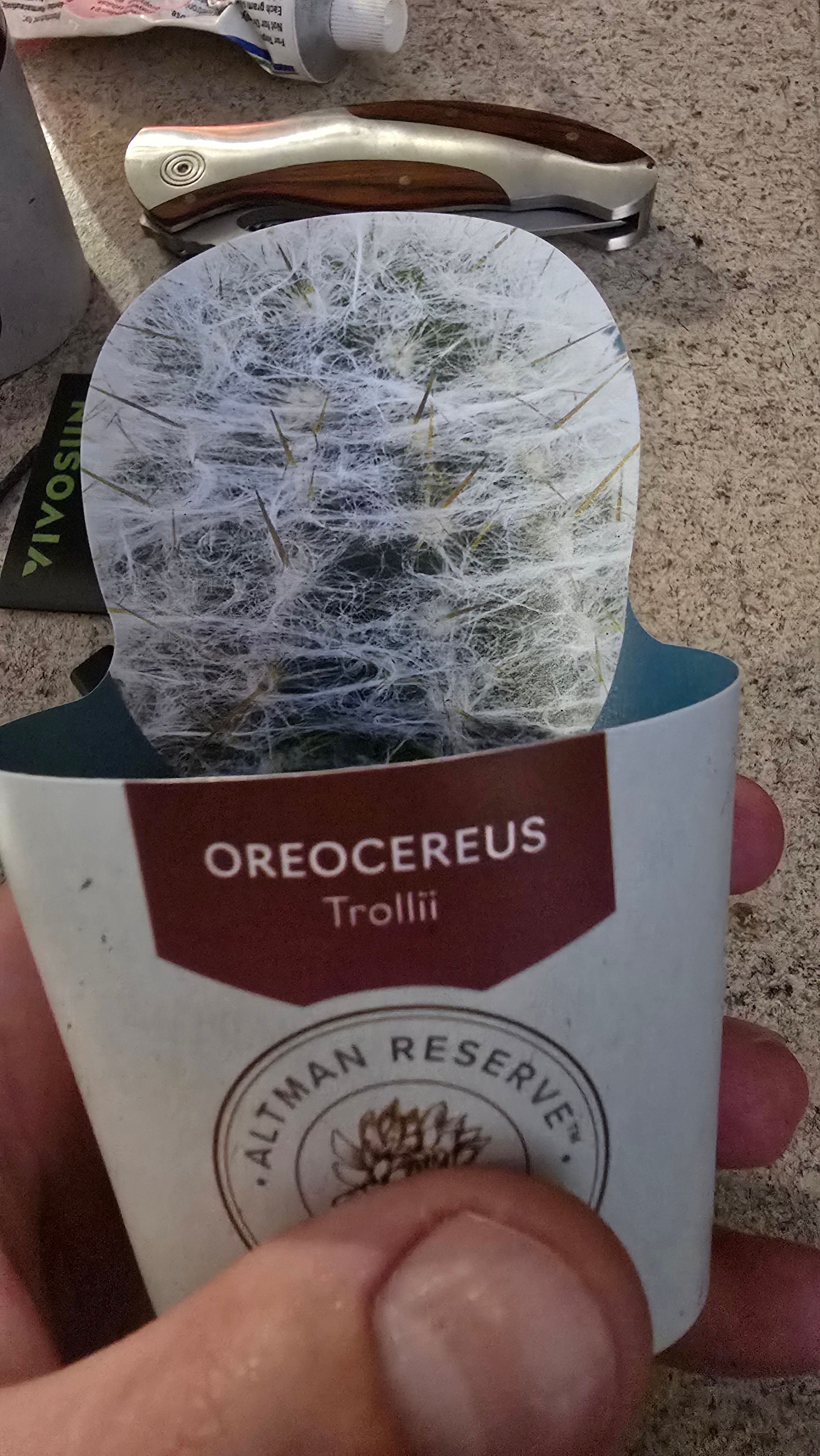
Original nursery labels and packaging.
Botanical reference photos
Reference Gallery
Form and growth


Look closer


In the landscape
Research Trail
- Collection Notes on GitHub
- Complete Photo Archive and Credits
- iNaturalist Observations — Species observations