Shared planter and individual succulents
Plant 32 / 45 Shared planter and individual succulents
 Plant 32 / 45
 Echeveria sp. — species and cultivar unresolved
Pale rosette echeveria


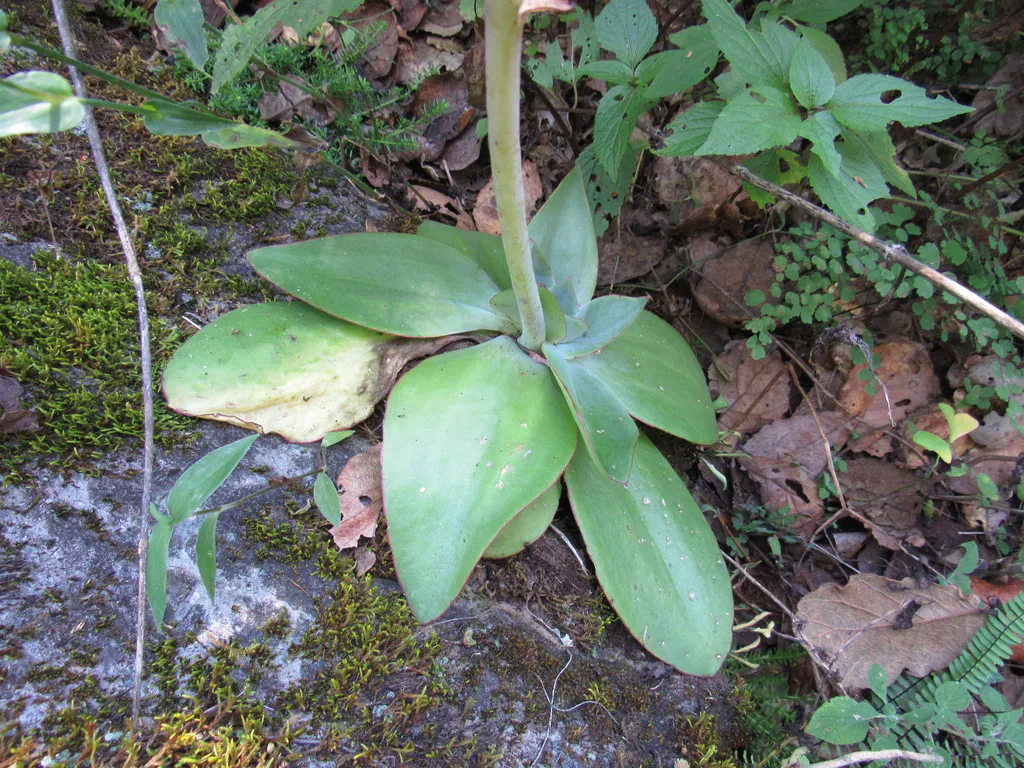
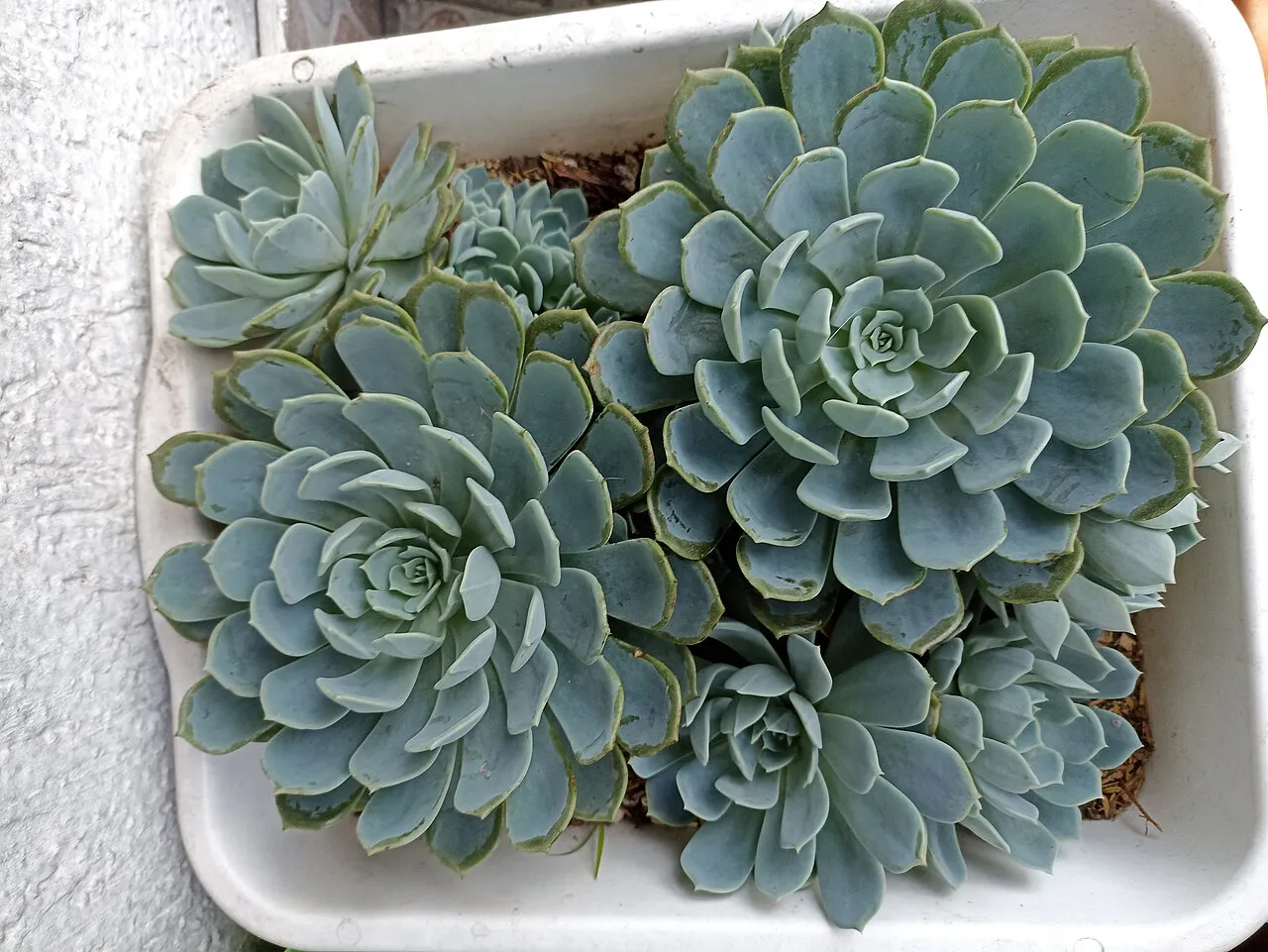
Species reference · ProfeAnita · CC BY-SA 4.0 · Photo Source ↗
Shared container · P30 · #6
Tiny mixed succulent planter · P30
3 botanical profiles · one container history
- Pale rosette echeveriaEcheveria sp. — species and cultivar unresolvedTentative GenusThis profile
 Coppertone-type sedumProbable Sedum adolphi / S. nussbaumerianum complexTentative Foliage Match
 Paddle kalanchoeKalanchoe luciae / K. thyrsiflora complex — species unresolvedTentative Foliage Match
Three visible botanical groups share this container. Judge the shared root volume by full dry-down and whole-pot weight; do not repeatedly wet the pot for one component while the others remain firm.
One care record: log watering, feeding, weighing, and repotting once for P30. Include a plant's name when an observation concerns just that member.
 Collection Record
- Succulent-10A
 Permanent Label
#6 Identification
 Status
 Acquired From
- Home Depot as part of the Smart Planet Home / Altman Plants mixed succulent garden
 Acquired On
- 2026-09-02
 Google Sheets ID
- P30 ↗
 Photo History
- 6 captures · newest ↓
Measurements and Care History
 Measurements and Care History
Weights, watering, events, and charts for P30.
Spot it
 Spot it
What it looks like
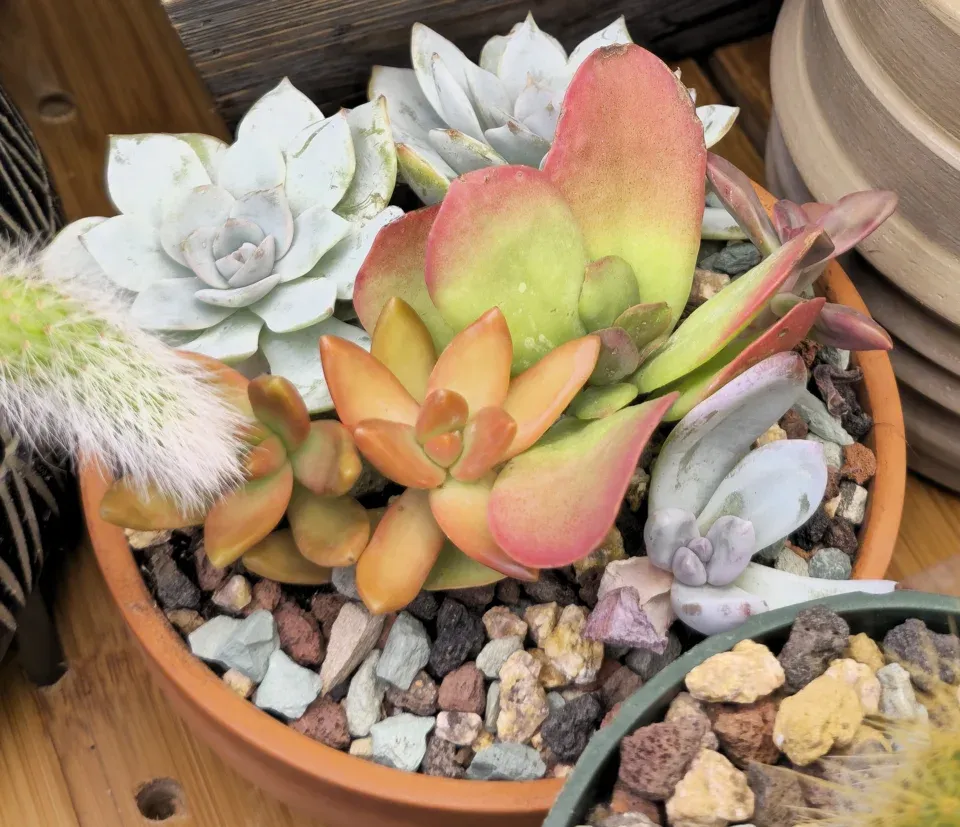
Pale blue-white powdery rosettes with overlapping, pointed fleshy leaves; several rosettes are visible within the same tiny planter.
One curious thing
 One curious thing
Did you know?
An Echeveria can make new rosettes beside its base; as older lower leaves fall, the short stem beneath the original rosette becomes easier to see.
Explore This Plant
A closer look
How this plant works
 How this plant works
Overlapping leaves build a compact rosette, while a short stem and side offsets support its expansion.
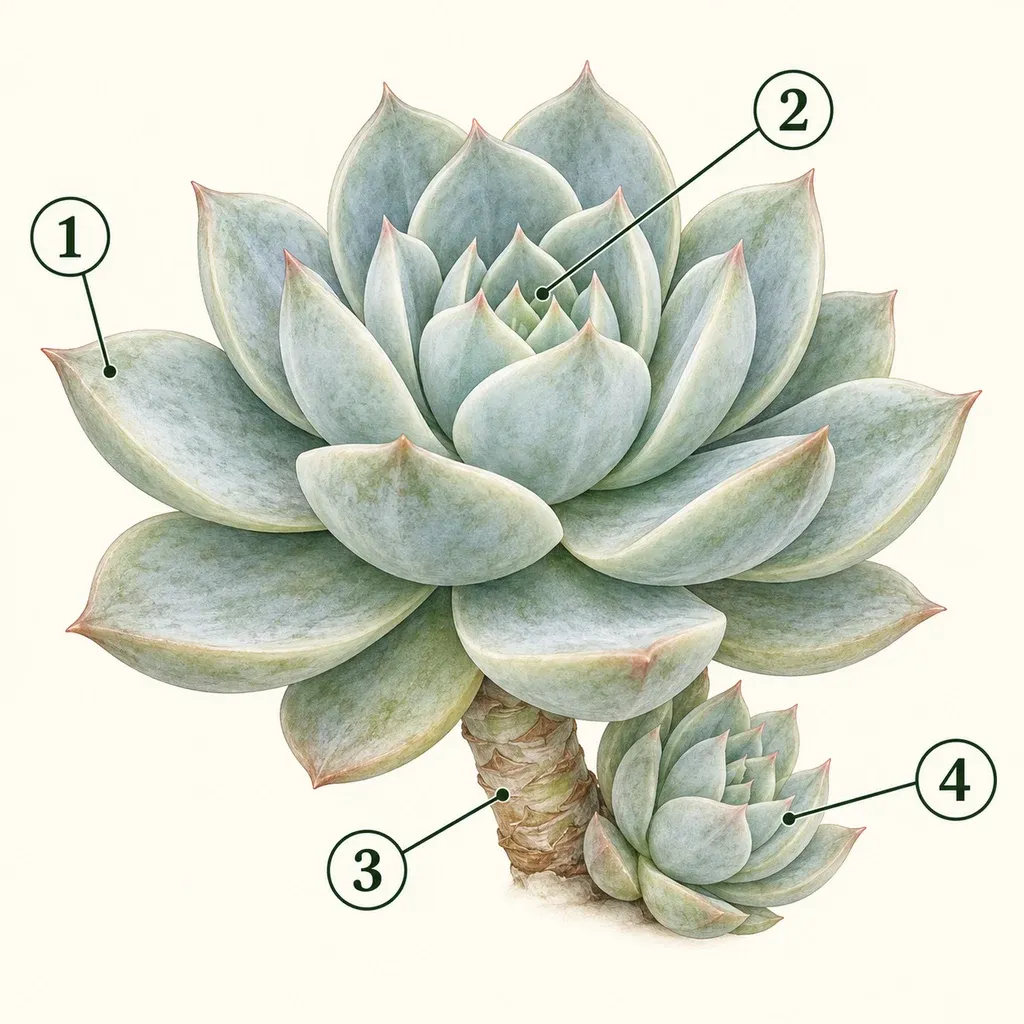
Fleshy leaf
A thick leaf stores water and presents a broad surface to light.
Rosette center
New leaves crowd around the growing center.
Short stem
The stem supports successive leaves and becomes exposed as lower leaves age.
Basal offset
A small side rosette can enlarge beside the parent.
Anatomy sources: [1]
Habitat and origins
 Habitat and origins
Echeveria is an American genus extending from southwestern Texas to northwestern Argentina. Its succulent leaves form rosettes in a wide range of shapes and colors, with many garden hybrids adding to that diversity. The pale group here has the compact, overlapping leaves typical of the genus.
Habitat sources: [1]
What growth can look like
 What growth can look like
- Stage 1
Compact rosette
New leaves fill the center while older leaves sit farther out.
- Stage 2
Stem and offsets
Lower-leaf loss can reveal a stem; side rosettes may expand.
- Stage 3
Flowering plant
A sufficiently mature rosette may send a flower stalk above its leaves.
Offsets enlarge beside the parent rosette, gradually filling more of the planter.
Growth sources: [1]
Flowers
Flower stalks lift pink, red or yellow-toned blooms above the rosettes. Outdoors, Echeveria flowers attract bumblebees and hummingbirds, giving these low-growing plants a role beyond their sculptural foliage.
Sources: [1]
As it matures
A rosette may develop a visible stem and basal offsets as it ages. NC State gives a broad genus range up to about 12 inches tall and wide; individual species and hybrids vary considerably.
Sources: [1]
Behind the name
The genus honors botanical illustrator Atanasio Echeverría y Godoy, a fitting namesake for these sculptural rosettes.
Sources: [1]
Similar plants, useful clues
Coppertone-type sedum ↗
The sedum has narrower leaves on extending stems, contrasting with these broad, powdery leaves in a compact rosette.
This plant in the collection
Its story so far
Joined the collection
Acquired in the Smart Planet Home mixed succulent garden from Home Depot.
Collection record ↗Repotted together
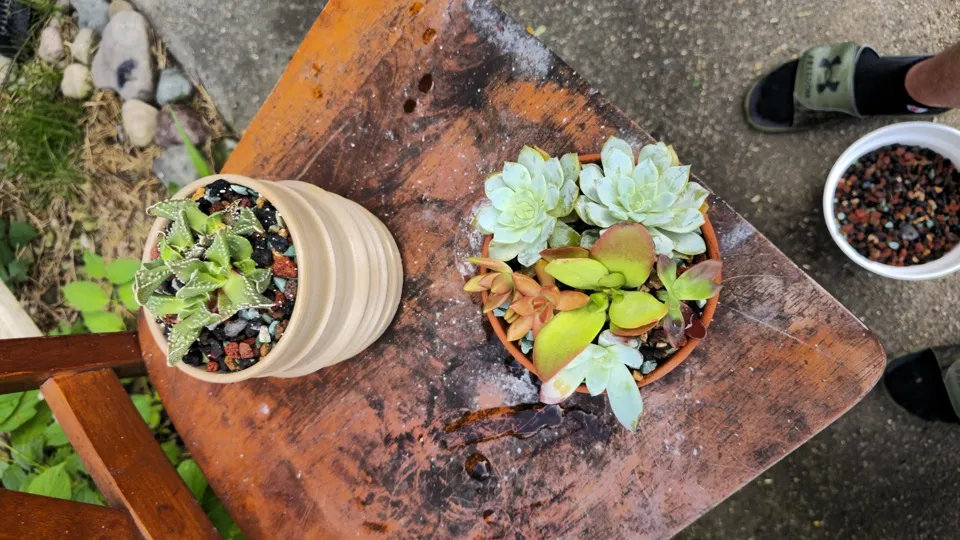
The rosettes, copper-toned shoots and broad paddles stayed together in the terra-cotta planter.
Collection record ↗Close view recorded
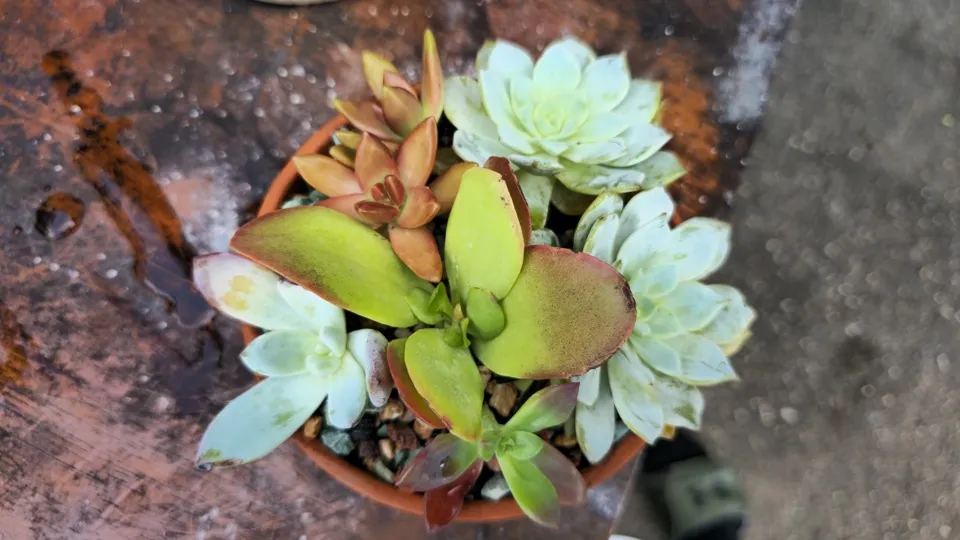
A close photograph recorded the powdery rosettes, patchy coating loss and older leaf damage.
Collection record ↗
Then and now
Explore the sources
 Explore the sources
Names and identification
| Kind | Record |
|---|---|
| Common reference name | Pale rosette echeveria |
| Scientific name | Echeveria sp. |
| Seller evidence | Mixed garden label only; no component-specific botanical name |
| Profile scope | One recognizable foliage group in the shared planter |
The September 2 top view and September 16 close view show several pale rosettes. The overlapping, pointed leaves and compact crowns are the features behind the Echeveria match.
Collection evidence and shared history
This component belongs to the tiny mixed succulent planter, acquired and repotted on September 2, 2026. The September 2 top view and September 16 close view show three recognizable foliage groups within the seller's five-plant garden.
The other component pages are coppertone-type sedum and paddle kalanchoe. All share #6 / P30, one root volume, and one watering and weight history.
Botanical context

NC State Extension describes Echeveria as a diverse American genus in Crassulaceae, with fleshy rosettes, many cultivated hybrids, and variable leaf shapes and colors. Its general growing guidance emphasizes bright light and well-drained soil. The rosette shape makes new central leaves and older outer leaves easy to compare.
Care in this collection

| Topic | Practical approach |
|---|---|
| Position | Remains inside P30, at the photo-matched front of the rear zone between #1 and #5. See the current placement guide. Exposure at individual leaf height remains unmeasured. |
| Light and neighbors | Keep the low rosettes clear of shade cast by the taller paddle leaves and nearby large pots. Compare the compactness of new growth at leaf height and acclimate gradually to any brighter position. |
| Water | Follow the shared-pot watering strategy: assess dryness throughout the pot, the weight trend, and all three foliage groups before watering and draining the container. |
| Weighing | Weigh the complete P30 planter using the adaptive weighing strategy. |
| Feeding | Use the shared planter's fertilizer schedule during a normal watering; the dose applies to the whole pot. |


Growth and watch points

The September 16 owner photo shows patchy loss of the pale surface coating and some older leaf damage. Avoid rubbing or wiping the powdery leaf surfaces; compare new growth with the older photographed leaves.
Follow new offsets as they fill the gaps between older rosettes. If crowding develops, compare individual crowns and their access to light before planning a division.
Sources

- NC State Extension Plant Toolbox: Echeveria — genus diversity, morphology, and general culture.
- Owner's September 2 top view and September 16 close view — original collection appearance; copyright Nick, all rights reserved.
- Shared-planter acquisition and nursery-label evidence — source of acquisition, seller, and repot context.
Through the seasons
Plant Photo History
Recent photographs of this plant. Open a photo or its collection for the complete history.
From the nursery
Nursery Labels
Original nursery labels and packaging.




Botanical reference photos
Reference Gallery
Echeveria genus comparisons
Form and growth


Flowers and buds


In the landscape