


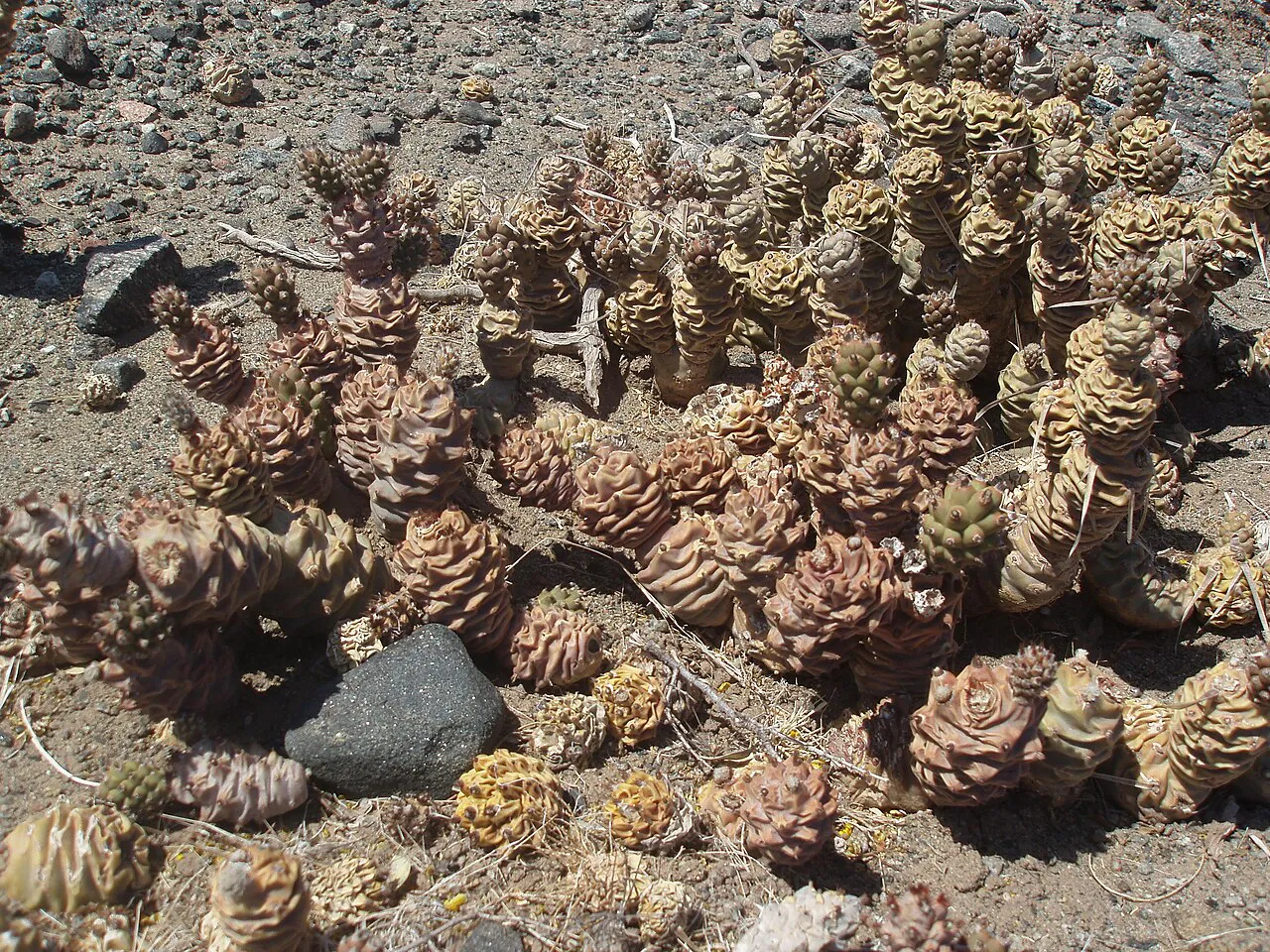
Cactus collection
Plant 19 / 45 Cactus collection
 Plant 19 / 45
 Tephrocactus articulatus var. papyracanthus
Paper spine cactus


Species reference · Man77 · CC BY-SA 3.0 · Photo Source ↗
 Collection Record
- Cactus-08
 Permanent Label
G2 Identification
 Status
 Acquired From
- Mountain Crest Gardens
 Acquired On
- 2026-08-28
 Google Sheets ID
- P23 ↗
 Photo History
- 9 captures · newest ↓
Measurements and Care History
 Measurements and Care History
Weights, watering, events, and charts for P23.
Spot it
 Spot it
What it looks like
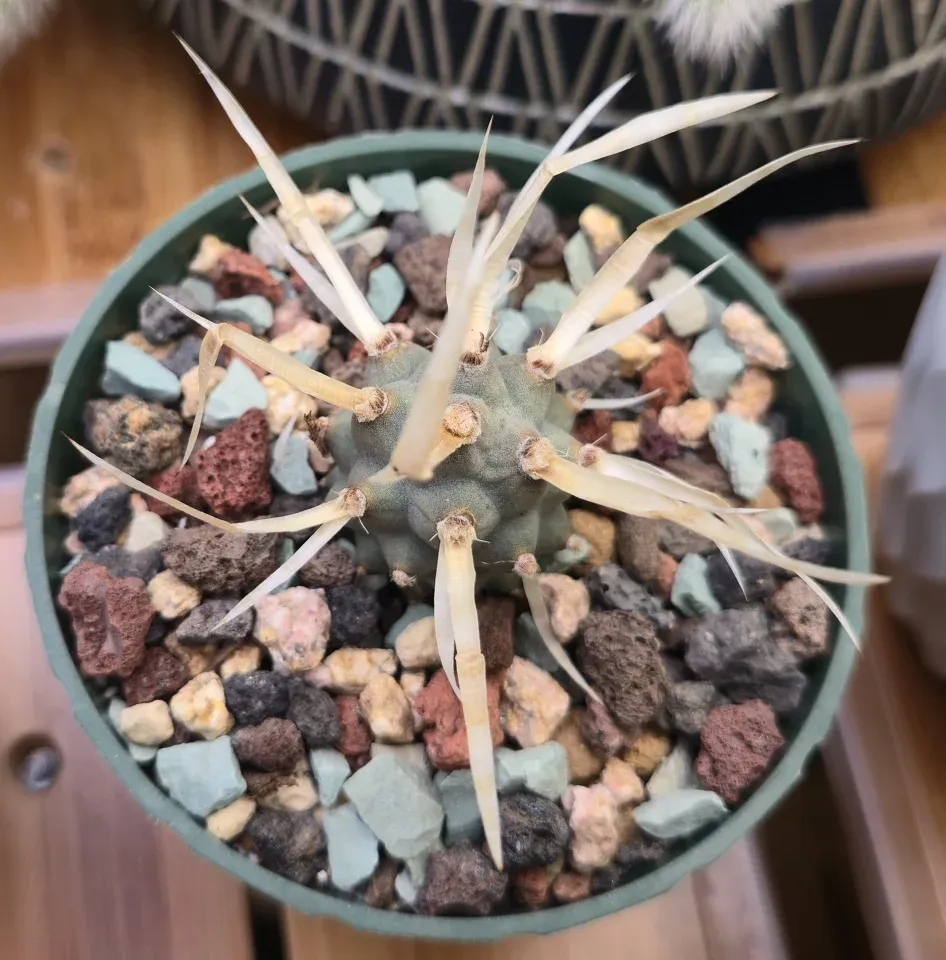
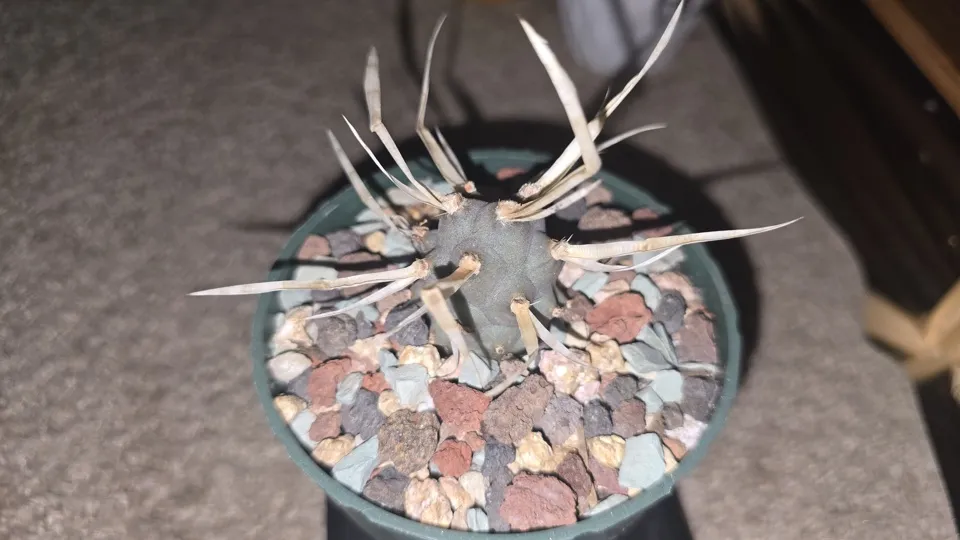
A loose stack of rounded gray-green segments decorated with broad, curling ivory spines that look more like strips of paper than cactus armor.
One curious thing
 One curious thing
Did you know?
Both oddities are functional: the “paper” structures are true spines, while the easily detached stem segments can root and start new plants.
Explore This Plant
A closer look
How this plant works
 How this plant works
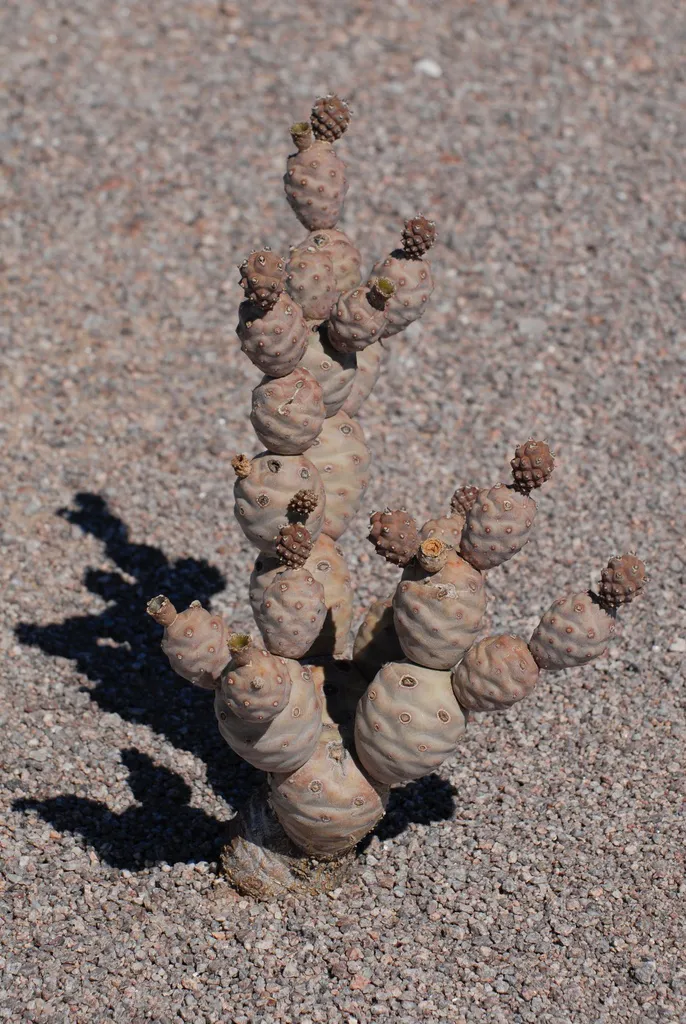
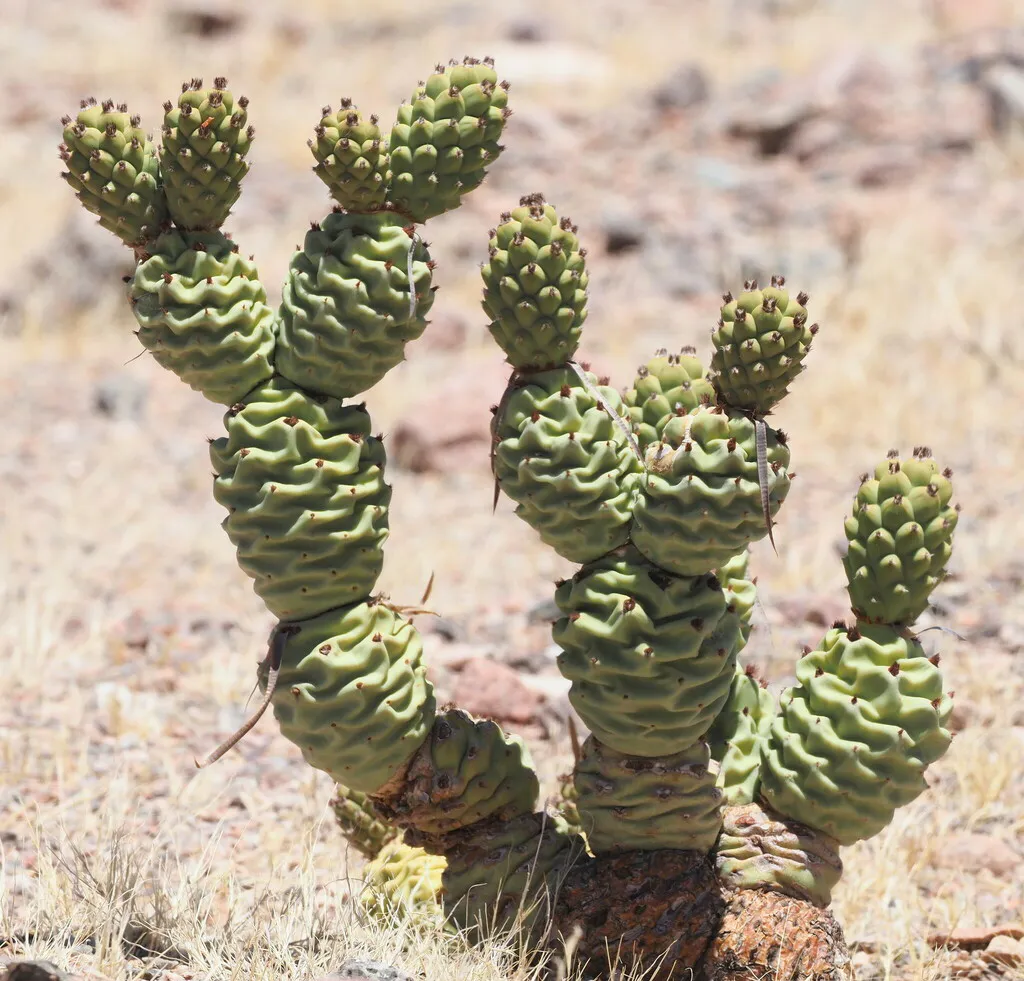
Rounded stem joints connect at narrow necks, with broad flattened spines emerging from the surface cushions.
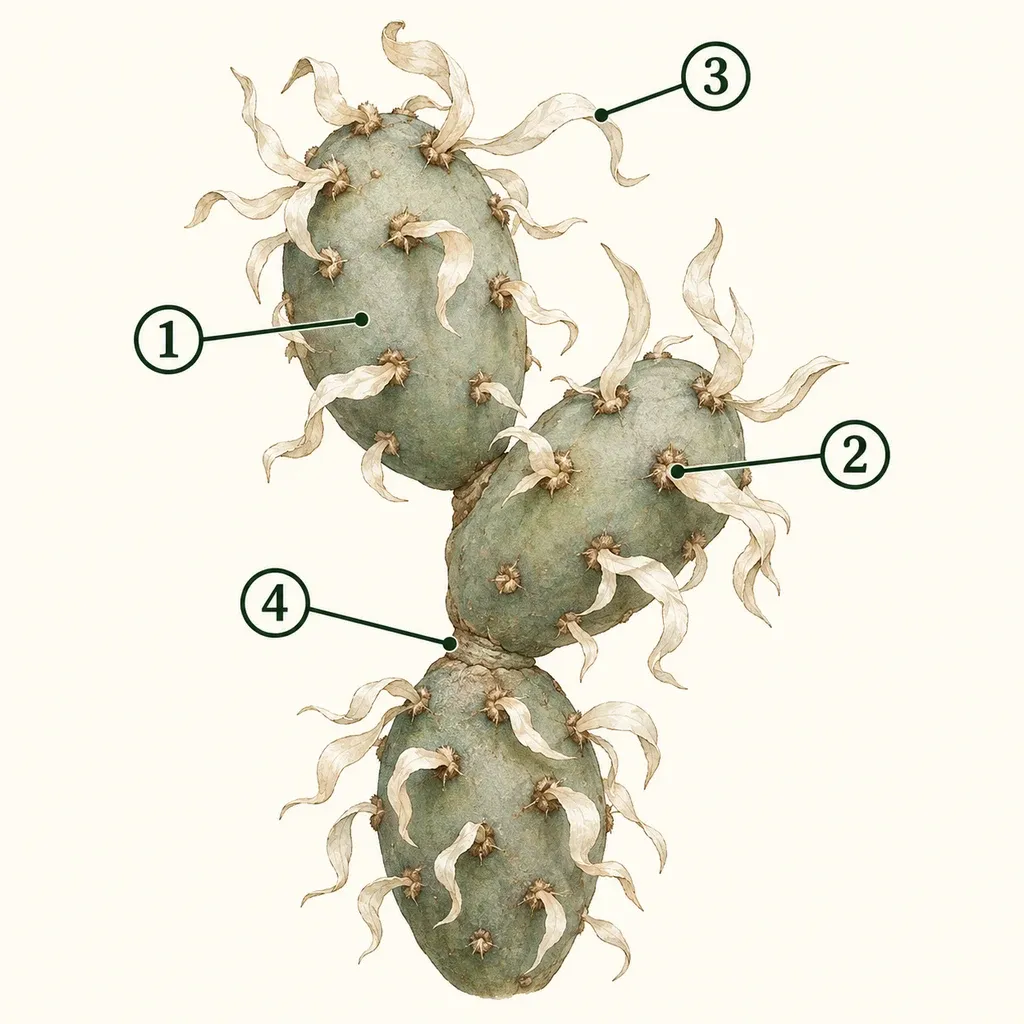
Stem segment
Each green joint stores water and contributes to photosynthesis.
Areole
The small cushion is the origin of the cactus's spines.
Papery spine
Broad, flattened spines give this form its distinctive ribbonlike surface.
Segment joint
The narrow connection can separate; a detached healthy segment can root.
Habitat and origins
 Habitat and origins
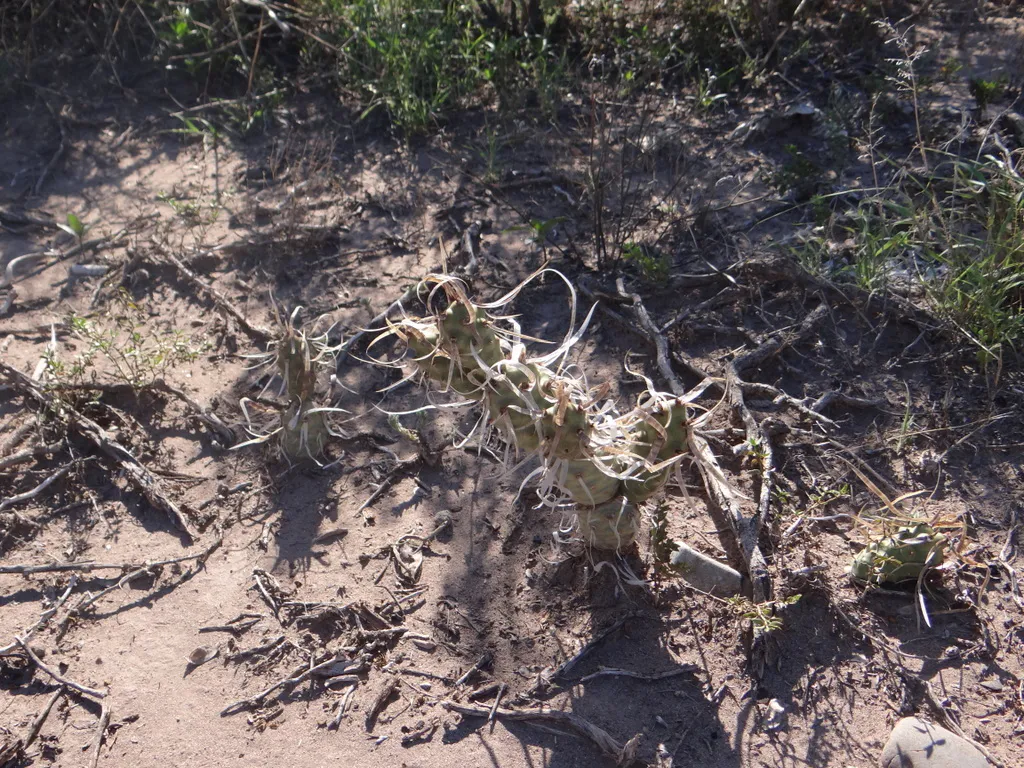
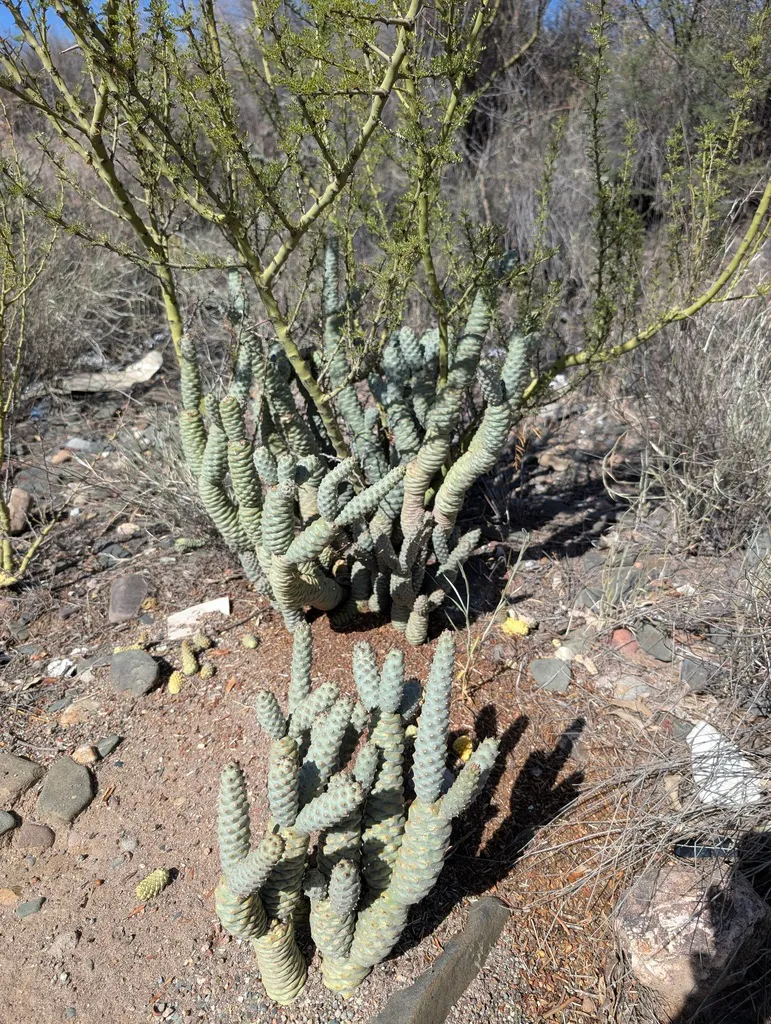
The underlying species, Tephrocactus articulatus, is native to northwestern and north-central Argentina in desert and dry shrubland. This collection plant carries the papery-spined horticultural name. Its compact stack of separate joints makes a small branching framework, rather than the continuous column seen in many other cacti.
What growth can look like
 What growth can look like
- Stage 1
Single joint
A young plant may begin as one rooted segment.
- Stage 2
Stacked growth
New joints form above or beside established segments.
- Stage 3
Branching clump
Successive segments build an irregular miniature shrub.
New segments extend the stack, while detached joints can root and establish another plant.
Growth sources: [2]
Flowers
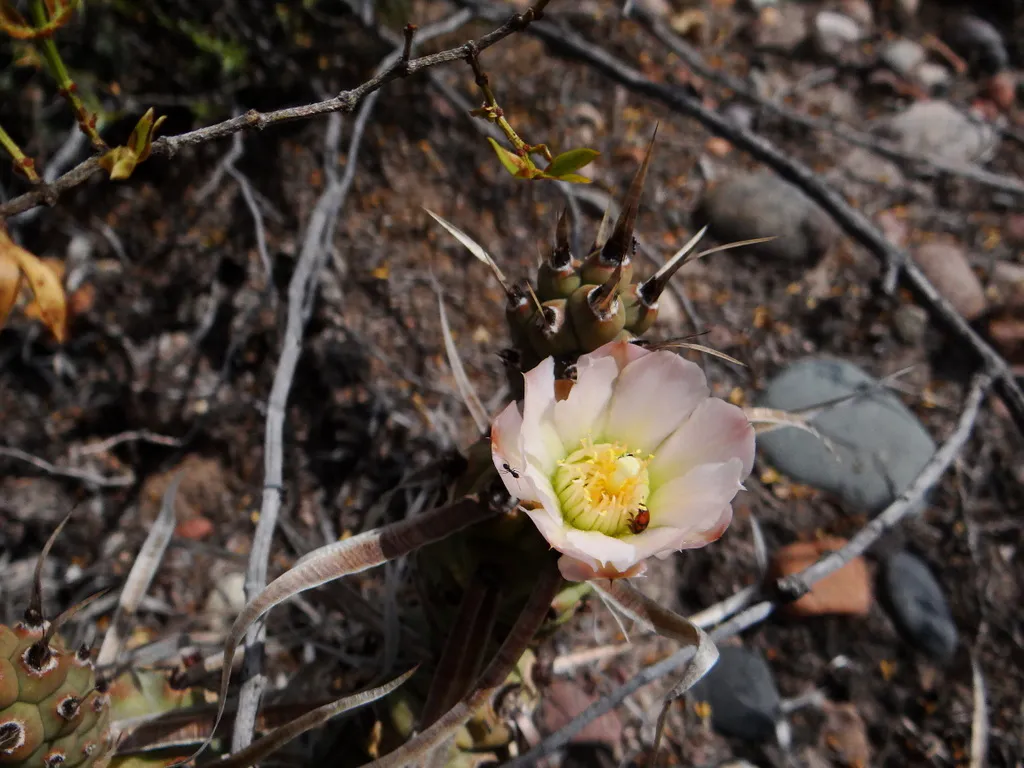
The papery-spined form is often reluctant to bloom. The underlying species produces bell-shaped flowers about 3–4 cm across.
As it matures
An older plant becomes an irregular branching stack. Segment loss and new rooting continually reshape the clump.
Sources: [2]
Behind the name
Kew treats the papyracanthus variety name within Tephrocactus articulatus; the species traces back to Cereus articulatus, published in 1837.
Sources: [1]
Similar plants, useful clues
Eve's needle ↗
Eve's needle has long pointed leaves and elongated cylindrical branches, rather than papery spines on short joints.
This plant in the collection
Its story so far
Arrived and repotted
Received from Mountain Crest Gardens and repotted after removal of most nursery soil.
Collection record ↗
Then and now
Explore the sources
 Explore the sources
Names and identity
| Kind | Name |
|---|---|
| Accepted species | Tephrocactus articulatus |
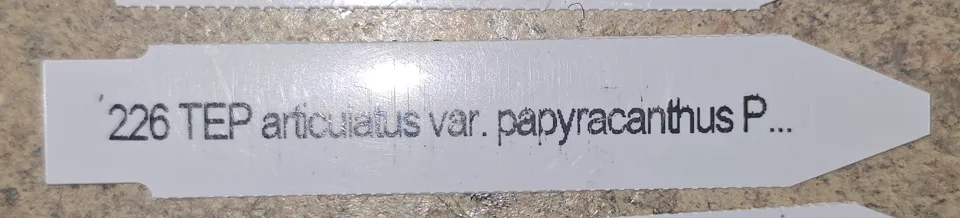
| Seller and variety name | T. articulatus var. papyracanthus |
| Common name | Paper spine cactus |
| Taxonomic treatment | The variety is often treated within the accepted species. |
The flattened, papery structures develop as unusually broad, thin spines. Their ribbonlike shape gives papyracanthus its distinctive appearance.
Collection history

Ordered from Mountain Crest Gardens on August 25, 2026, this plant arrived rooted on August 28 in a 2-inch nursery pot. It was inspected and repotted that day into a 4 × 4 × 3.7-inch round pot, with approximately 95% of the nursery soil removed according to the owner. The substrate was slightly moist at inspection.
The August 29 measurements were 375.5 g for the potted plant and 1.25 in high × 1.15 in wide for the plant itself, measured with a scale and ruler. Collection photographs include top and side views.
The mix is Molly's Succulent Mix with added perlite. On September 20, the owner estimated the blend as approximately 80% Molly's / 20% added perlite. See the current placement guide for the indoor arrangement. Individual lamp clearance has not been measured.
Nursery description
Mountain Crest Gardens' specifications, recorded August 26, 2026:
| Seller field | Listing value |
|---|---|
| SKU | C2KY3308 |
| Product size | 2.0-inch pot |
| Current / seasonal color | Blue or blue-green / silver |
| Bloom color | White |
| Hardiness | Zone 10; seller threshold 30 °F |
| Recommended light | Bright indoor light; full sun |
| Maximum-height category | Over 12 inches |
| Growth habit | Vertical grower / tall stem |
Mountain Crest describes raffia-like spines and knobby segments that branch, stack, and reroot readily after detaching. The papery-spined form is often reluctant to flower.
Origin, form, and taxonomy
Tephrocactus articulatus is an Argentine cactus with detachable, rounded to ovoid stem segments. Mountain Crest describes the papery-spined form as a stacking, branching plant whose segments detach and reroot easily.
GBIF accepts T. articulatus at species rank and treats var. papyracanthus as a synonym under that species. The variety name remains a useful horticultural name for the papery-spined form.
Care in this collection

| Topic | Practical starting approach |
|---|---|
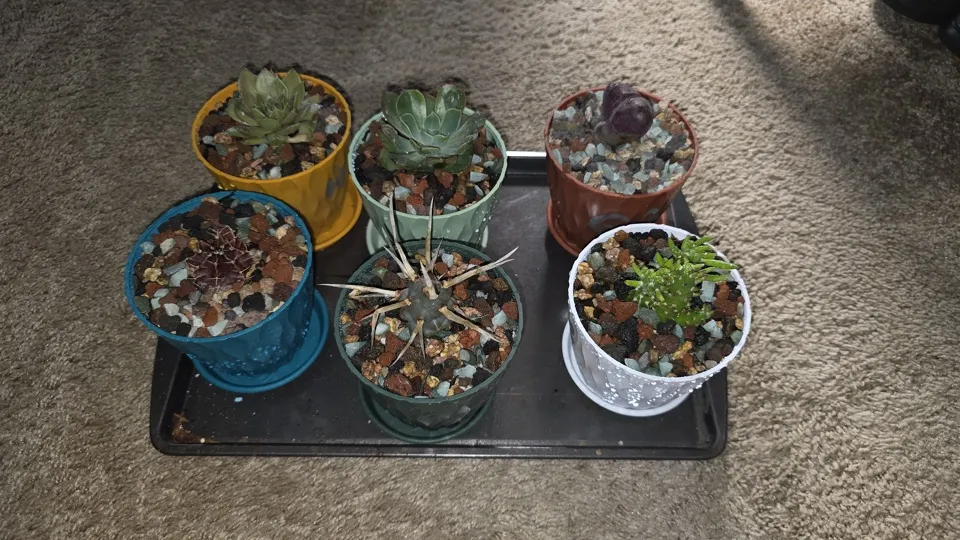
| Grow-light position | Photo-matched R4C3 · High. September 15, 2026 photo reference: six-column/four-row front grid, facing the window. Back row of small pots, close to the trailing shared cactus. Avoid shadow or contact from the monkey tail. See the current placement guide. |
| Water | Let the root zone dry before watering, using pot-weight trends and plant firmness together. The larger pot can remain damp below a dry surface. |
| Pot and mix | 4 × 4 × 3.7-inch round pot with Molly's Succulent Mix and approximately 20% added perlite (owner estimate). Keep drainage clear and avoid persistent moisture around the base. |
| Handling | Support the lowest segment instead of grabbing the paper spines or upper joints. |


Rotation, propagation, and watch points
- Support the pot during rotation and use the
G2label as an orientation reference; the loose segments should not take the strain. - A detached healthy segment can be allowed to callus and then rooted in an airy mix.
- Paper-like spines are still cactus spines, and small glochids or sharper structures may be less obvious than the broad ribbons.
- Do not bury lower stem segments deeply simply to compensate for an unstable pot; fix the container support instead.
Sources

-
Owner observations, August 28–29 and September 20, 2026: receipt, repotting, substrate condition, scale/ruler measurements, and estimated Molly's Succulent Mix/perlite blend.
-
LLIFLE cactus encyclopedia: Tephrocactus articulatus var. papyracanthus
-
Annals of Botany: cactus shoot structure and papery spine development
Through the seasons
Plant Photo History
Recent photographs of this plant. Open a photo or its collection for the complete history.
From the nursery
Nursery Labels
Original nursery labels and packaging.
Botanical reference photos
Reference Gallery
Tephrocactus articulatus forms
Form and growth

Look closer
.jpg)
.jpg)
Flowers and buds

.jpg)
In the landscape
Research Trail
- Collection Notes on GitHub
- Complete Photo Archive and Credits
- Mountain Crest Gardens: paper spine cactus seller listing
- iNaturalist Observations — Species observations; compare the paper-spined variety
 Mountain Crest Gardens: paper spine cactus seller listing