


Houseplant collection
Plant 44 / 45 Plant 44 / 45
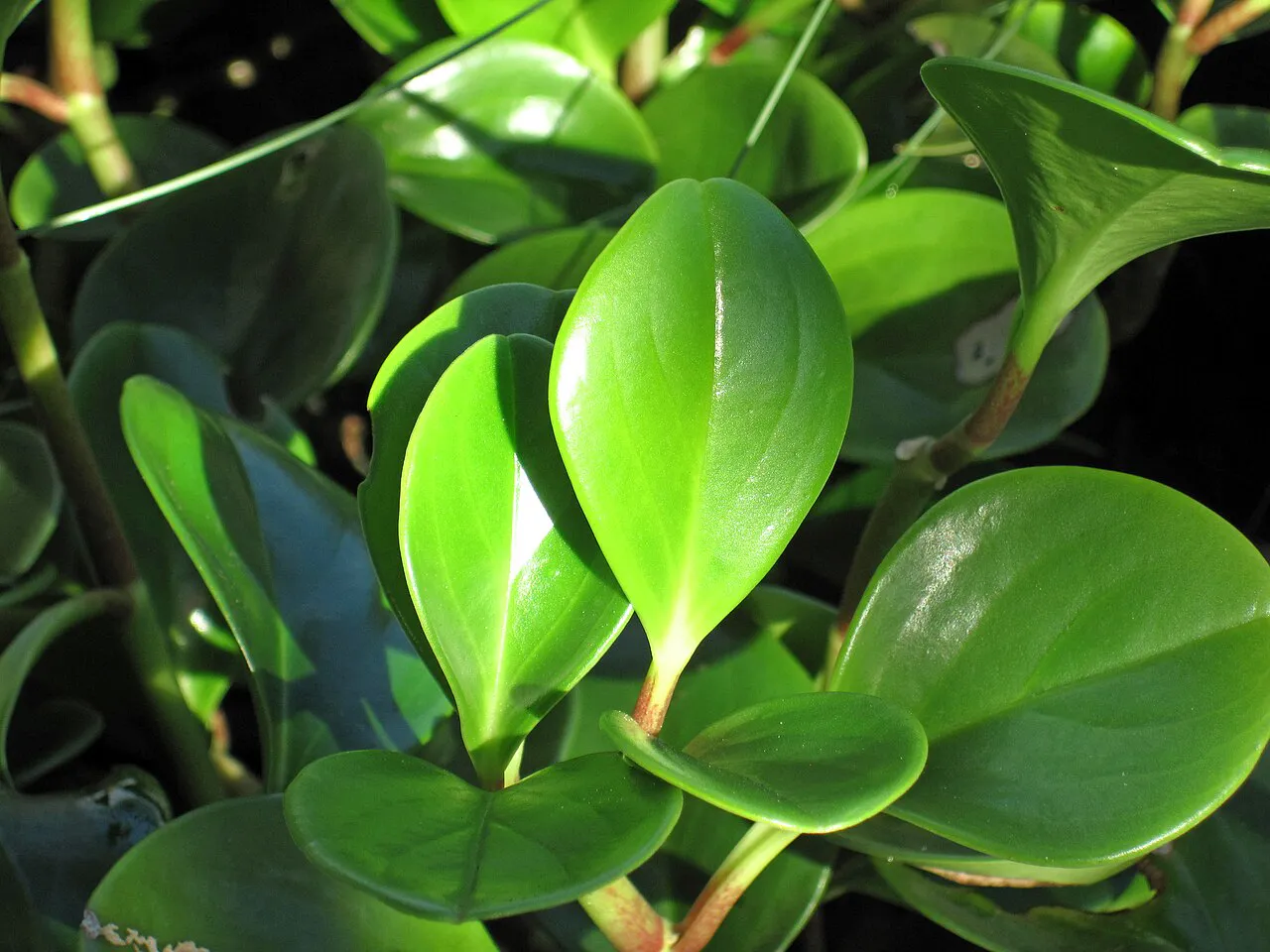
Peperomia obtusifolia 'Obtipan Bicolor'
Peperomia Bicolor


Species reference · James St. John · CC BY 2.0 · Photo Source ↗
 Collection Record
- Houseplant-03
 Permanent Label
#7 Identification
 Status
 Acquired From
- Carlson's Greenhouses
 Acquired On
- 2026-09-20
 Google Sheets ID
- P31 ↗
 Photo History
- Photos in collection notes ↓
Measurements and Care History
 Measurements and Care History
Weights, watering, events, and charts for P31.
Spot it
 Spot it
What it looks like
A compact, branching houseplant with thick, rounded green leaves and broad cream-colored variegation; the photographed purchase is in a hanging nursery basket.
One curious thing
 One curious thing
Did you know?
A slender cream-colored spike is an entire crowded cluster of minute, petal-less flowers. Each tiny flower has just two stamens, so the plant's flowering display looks more like a thin tail than a bouquet.
Explore This Plant
A closer look
How this plant works
 How this plant works
Glossy cupped leaves, short stalks, fleshy branches, and slender flower spikes make up this compact plant.
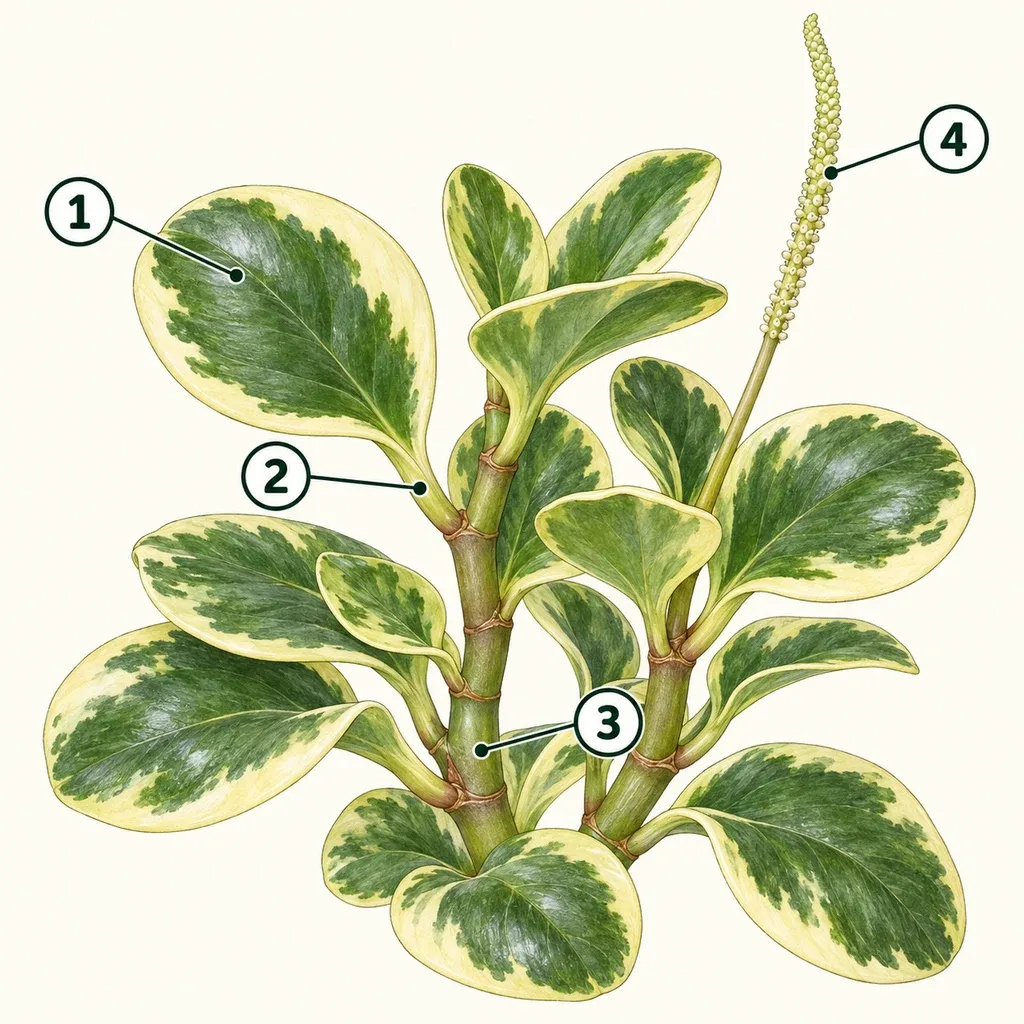
Thick leaf
The fleshy blade stores moisture and has a recessed midrib running toward its rounded tip.
Petiole
A short stalk attaches the leaf blade to the stem.
Branching stem
Fleshy stems carry successive leaves and give the plant its bushy form.
Flower spike
Many tiny petal-less flowers crowd onto a slender upright axis.
Habitat and origins
 Habitat and origins
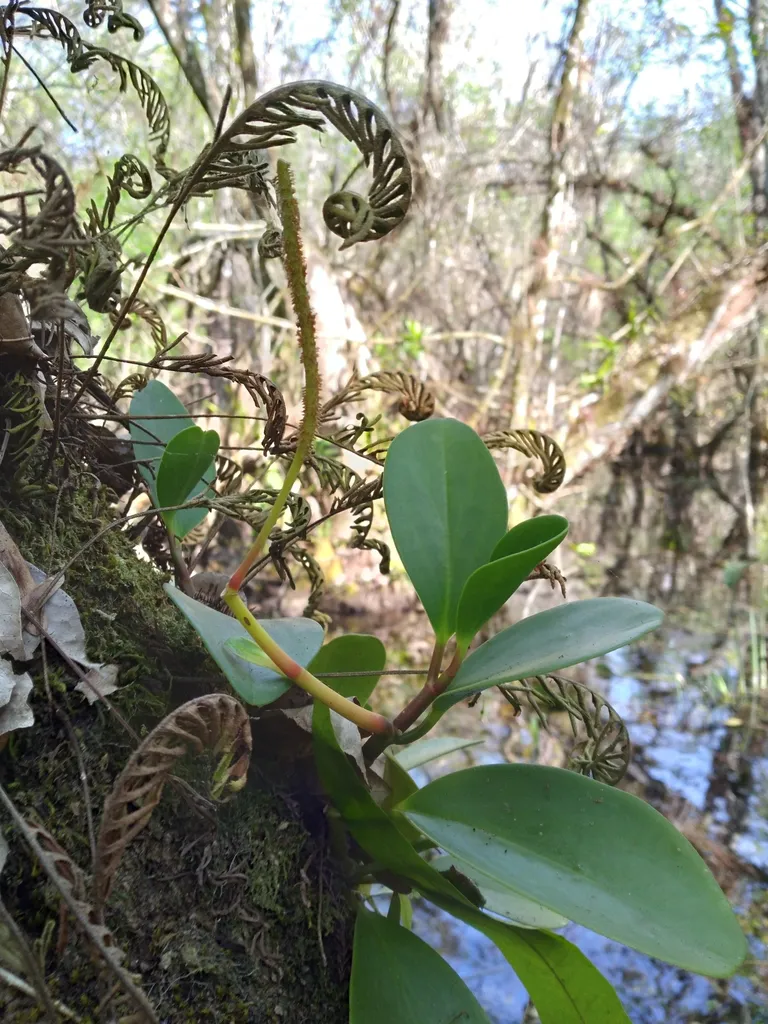
The species belongs to tropical America; the named Bicolor cultivar has a horticultural origin. A Veracruz field study records Peperomia obtusifolia growing on trees, on the ground, and on rock across several forest types, including humid and seasonally drier forests. Thick leaves therefore do not make this plant a desert specialist.
What growth can look like
 What growth can look like
- Stage 1
New leafy shoots
Small leaves expand along growing shoots, gradually revealing their cupped shape and cream-green pattern.
- Stage 2
Branching clump
Side branches fill out the canopy; compare new stem spacing with older growth when reviewing light.
- Stage 3
Flower spikes
Slender spikes can develop without the showy petals of many other houseplants.
Softwood stem cuttings can root in free-draining medium or water before potting. NC State also lists leaf cuttings for the species; allow this recently purchased plant to establish first.
Flowers
A cream-white spike about 3.5–5 inches long holds many minute flowers. Each flower has two stamens and no petals, creating a narrow, grainy-looking surface instead of a showy bloom.
Sources: [1]
As it matures
The species forms a rounded, branching herbaceous plant about 6 inches to 2 feet in height and spread. Fleshy stems and broad leaves create fullness without the woody trunk of a true rubber tree.
Sources: [1]
Behind the name
The Obtipan breeder record describes a cross between two unnamed Peperomia obtusifolia cultivars. RHS lists Obtipan Bicolor separately. The species belongs to the pepper family, while its baby rubber plant nickname describes the thick leaves.
Similar plants, useful clues
Rubber plant, Ficus elastica
Both have glossy thick leaves, but Ficus forms a woody tree with much larger leathery blades. Peperomia's compact fleshy stems and slender flower spikes distinguish the baby rubber plant; the common name does not indicate close relationship.
This plant in the collection
Its story so far
Purchased and labeled
Purchased at Carlson's Greenhouses in a reported six-inch nursery basket; the tag supplies the Bicolor name.
Collection record ↗Living-room layout planned
The owner assigned the smallest Bamworld stool beside P32 at the sliding glass door; the move and repot remain unconfirmed.
Collection record ↗
See the acquisition and repot photographs in the collection notes.
Explore the sources
 Explore the sources
Names and identity
| Kind | Name |
|---|---|
| Working cultivar | Peperomia obtusifolia 'Obtipan Bicolor' |
| Collection common name | Peperomia Bicolor |
| Exact nursery wording | “Peperomia obtipan Bicolor basket” |
| Species common names | Baby rubber plant; blunt-leaved peperomia |
The species is Peperomia obtusifolia; “Obtipan” is part of the cultivar name on the tag. RHS lists the full name 'Obtipan Bicolor'.
The USPP29598P3 breeder record describes green-leaved 'Obtipan' as a cross between two unnamed P. obtusifolia cultivars. The separate history of the Bicolor selection is unrecorded.
Purchase and label evidence
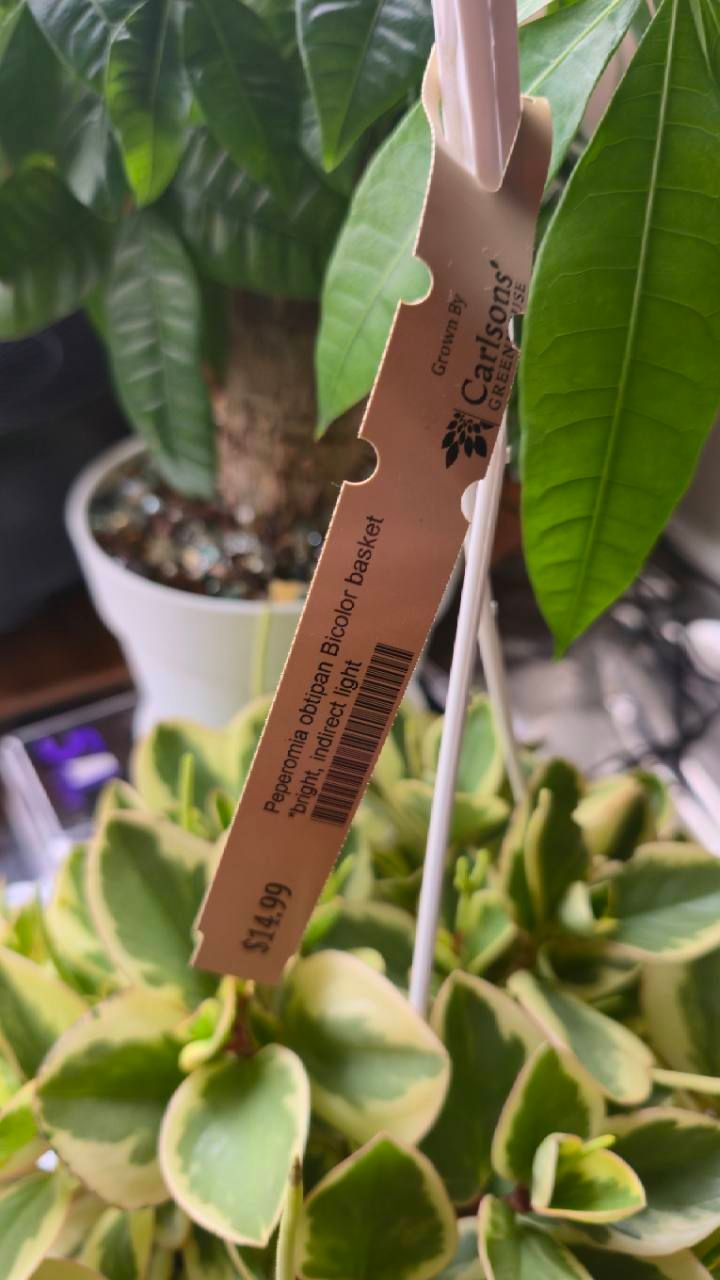
Purchased at Carlson's Greenhouses on September 20, 2026, in a nursery basket reported as six inches wide. The tag names Carlson's as grower and reads “Peperomia obtipan Bicolor basket”, “bright, indirect light”, and $14.99.
This plant is P31 / #7 / Houseplant-03.
Last confirmed floor placement and planned pots

The last recorded location for P31 and P32 is the room-side floor near the money tree, on September 20, 2026. Both nursery pots are reported as six inches wide and full of growth. Two Amazon Basics eight-inch pots with drainage holes are available for repotting; compare the root balls with the new pots before increasing pot size. One pot is decorated, with its plant assignment unrecorded.
The proposed medium is airy, perlite-containing greenhouse potting mix blended with Molly's Succulent Mix; the ratio is undecided. Nursery-pot depth, drainage, existing medium, and root condition still need inspection. The planned repots and living-room move have no completion record.
The equipment inventory lists the Bamworld Nature stools. Their delivery and assembly are unconfirmed.
September 21 living-room plan
The September 22 plan places P31 / #7 Peperomia Bicolor and P32 / #8 Tricolor oyster plant side by side at the north-facing double glass sliding door: P32 closest to the glass, P31 raised on the smallest Bamworld stool, and the FECiDA 54 W six-tube light clipped to a shelf. The smallest stool is seller-listed at 7.8 inches; actual leaf heights and lamp clearances are unmeasured. This is a separate location from the money tree's cactus-room windowsill.
For this layout, try the FECiDA alone for 12 daytime hours first. Two Juhefa three-head fixtures, each seller-rated about 10 W total, are available to fill dim areas if repositioning the six FECiDA heads leaves gaps. A separate Diivoo is optional; its input power is unverified. Installation, settings, and canopy coverage remain unrecorded. See the equipment inventory for exact models and the living-room measurement trial for checking coverage.
Bright indirect light remains the goal. NC State's low-light tolerance note applies especially to non-variegated cultivars. For Bicolor, measure light at the actual leaves and watch the spacing and shape of subsequent growth when adjusting the setup.
Origin and form
Peperomia obtusifolia is a tropical American perennial in the pepper family. Its glossy leaves broaden toward their rounded tips, cup slightly, and attach by short stalks to fleshy branching stems. The recessed midrib is a useful detail to look for on a leaf. Despite the thick foliage, the roots tolerate neither persistently wet nor very dry soil.
Care in this collection

Reported room conditions on September 20, 2026 were approximately 45–50% relative humidity and temperatures in the 70s °F. These are approximate observations, not a daily minimum/maximum record. On September 27, the owner confirmed this plant had just been watered at the September 20 pickup. The exact watering time and any nutrients in that water are unknown; that completed nursery watering does not establish present root-ball moisture.
| Topic | Practical approach |
|---|---|
| Light | Bright indirect light, consistent with the nursery label and extension guidance. Keep the cream-variegated leaves out of an abrupt move into the strongest cactus exposure. |
| Proposed starting exposure | About 4–6 mol·m⁻²·day⁻¹ initially, with 6–10 a possible settled comparison range if new growth remains compact and undamaged. These are conservative collection-specific trial ranges inferred from bright-indirect guidance, not measured cultivar thresholds or an established optimum. |
| Grow-light position | Last confirmed September 20 on the room-side floor near the money tree. Planned September 22: on the smallest Bamworld stool beside P32, which is closest to the glass, at the living-room north-facing sliding glass door. FECiDA clips to a shelf; try it alone first, with Juhefa fill only if needed. The move and installation are unconfirmed; actual leaf-height exposure and clearances are unmeasured. |
| Water | RHS recommends allowing the mix to partially dry between waterings. Check the upper mix and accessible root zone while avoiding prolonged whole-pot drought. A wet root zone, even under a dry surface, is a reason to wait. Check current nursery-pot drainage, water through when needed, and empty retained runoff. |
| Tracker | Treat this as a manual moisture-check houseplant. A pot weight can document a trend, but a cactus plateau or prior dry reference alone cannot decide watering. Use the current pot setup and recent observations when comparing weight trends. |
| Pot and medium | A separate Amazon Basics eight-inch pot with drainage holes is planned; the repot is unconfirmed. Current nursery-pot diameter is owner-reported as six inches; depth, drainage, medium, and root condition remain unrecorded. The proposed greenhouse-mix/Molly's blend has no chosen ratio; keep destination drainage holes clear and inspect the root ball before implementing the plan. |
| Temperature and airflow | Keep in a warm indoor position away from cold glass or drafts, with gentle moving air rather than a continuous direct fan blast. |
| Feeding | Next ready watering: plain RO. Once settled and growing, use Foliage-Pro 9-3-6, 1/4 tsp/US gal, at most every second ready watering. See the feeding plan for nursery-charge checks, plain-RO fallback and small batches. No extra weighing. |


For the proposed living-room trial, 4–6 DLI over a constant 12-hour light period is approximately 93–139 µmol·m⁻²·s⁻¹. A 12-hour daytime trial matches the listed timers on the FECiDA, Juhefas, and optional Diivoo. Align whichever lights are used to the same window; the applied setting is unrecorded. The DLI comparison includes lamps plus daylight, so these PPFD equivalents are not an extra LED quota on top of window light. For the recommended first trial, measure the FECiDA alone after dark at this plant's actual leaf height, then remeasure all selected fixtures together if adding fill. Compare across the foliage, and assess variable daylight separately; a single noon reading multiplied by the timer is not a measured daily integral. Acclimate gradually and judge new growth; neither the starting nor the optional settled range establishes a minimum, optimum, or burn threshold. Measure the living-room conditions separately from the cactus display.
Watch points and propagation
- Check the undersides, leaf axils, stems, and basket before placing the new plant among the established collection.
- Persistently wet mix, soft stems, or declining roots need inspection. A soft leaf alone does not distinguish thirst from root damage.
- Pale or scorched patches after a move warrant reassessing exposure; elongated, weak new growth can warrant a gradual increase after root and moisture checks.
- Establish the purchased plant before taking cuttings. RHS recommends softwood stem cuttings rooted in free-draining medium or in water before potting; NC State also lists leaf cuttings for this species. Check the new plant's leaf pattern as it develops.
Sources

-
Owner clarification, September 27, 2026: watered at the September 20 pickup, with nursery fertilizer use unreported. The requested Foliage-Pro starting plan distinguishes the historical manufacturer dilution from the collection's gentler frequency; no feed is recorded as completed.
-
Iowa State Extension: supplemental-light considerations and University of Minnesota Extension: indoor lighting: generic foliage DLI categories, PPFD conversion, and suggested light duration. The collection's Bicolor ranges remain an inference, not published cultivar thresholds.
-
Collection observations and plans, September 21–22, 2026: north-facing living-room layout, P31 stool/P32 glass-side positions, and FECiDA purchase. The equipment record includes the FECiDA, two Juhefas, and optional Diivoo; light ratings are seller specifications, and installation is unconfirmed.
-
Collection observations, September 20, 2026: six-inch nursery pots on the room-side floor; two eight-inch Amazon Basics destination pots, one decorated; airy greenhouse mix containing perlite; approximately 45–50% RH and temperatures in the 70s °F. Root condition and nursery feeding history are unrecorded.
-
Owner's September 20, 2026 acquisition photograph with Carlson's Greenhouses grower tag and purchase confirmation: purchase date, exact nursery wording, bright-indirect instruction, displayed $14.99 price, and purchase basket.
-
RHS: Peperomia obtusifolia 'Obtipan Bicolor': recognized horticultural name and cultivar record.
-
USPP29598P3: Peperomia plant named 'Obtipan': breeder account, same-species parents, and distinction from an unsupported interspecific-hybrid claim.
-
NC State Extension: Peperomia obtusifolia: tropical origin, form, bright indirect light, sensitivity to wet and very dry soil, and propagation.
-
RHS: How to grow peperomia: partial drying between waterings and condition-led watering.
Through the seasons
Plant Photo History
Botanical reference photos
Reference Gallery
Peperomia obtusifolia: green and variegated selections
Form and growth
.jpg)
.jpg)
Look closer
_3.jpg)
_2.jpg)
_1.jpg)
.jpg)

Flowers and buds

In the landscape
_(41338533825).jpg)