


Cactus collection
Plant 11 / 45 Cactus collection
 Plant 11 / 45


Species reference · C T Johansson · CC BY 3.0 · Photo Source ↗
 Collection Record
- Starter-06
 Permanent Label
D2 Identification
 Status
 Acquired From
- Costa Farms
 Acquired On
- 2026-07-23
 Google Sheets ID
- P11 ↗
 Photo History
- 4 captures · newest ↓
Measurements and Care History
 Measurements and Care History
Weights, watering, events, and charts for P11.
Spot it
 Spot it
What it looks like
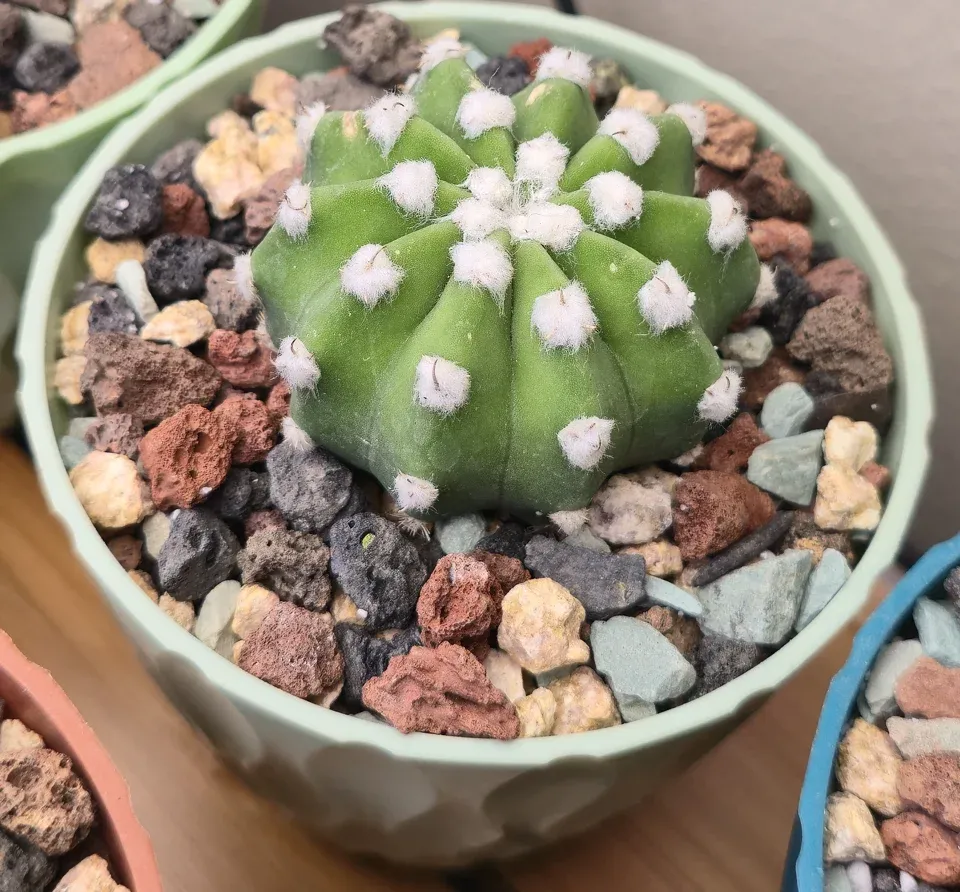
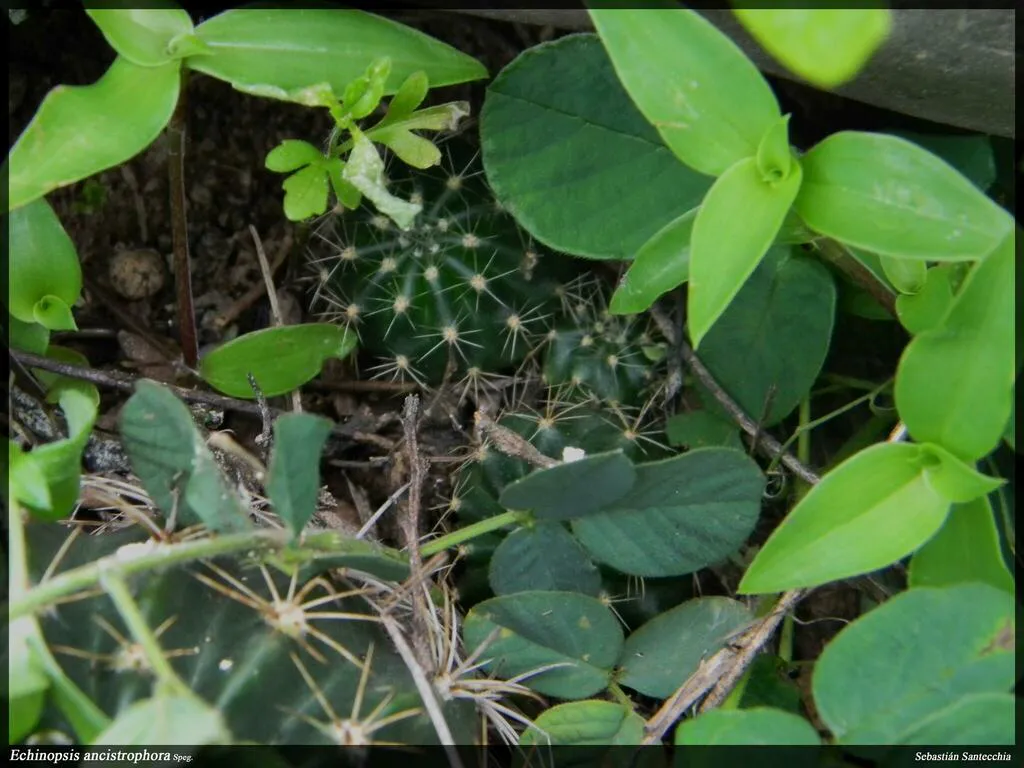
A smooth green globe divided into broad rounded ribs, with bright white felted areoles and only tiny, nearly invisible spines creating the familiar domino-dot pattern.
One curious thing
 One curious thing
Did you know?
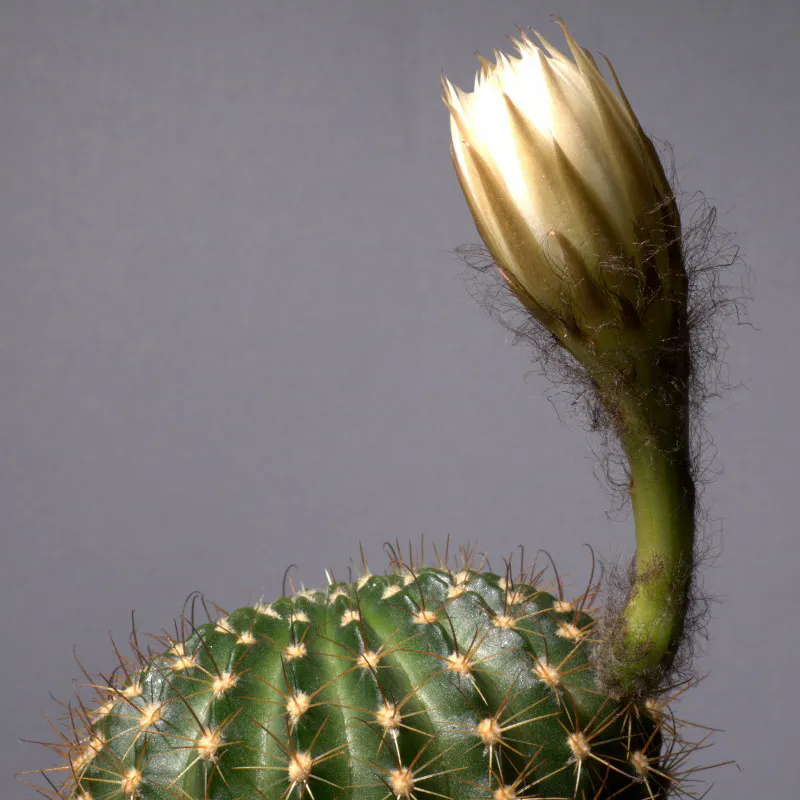
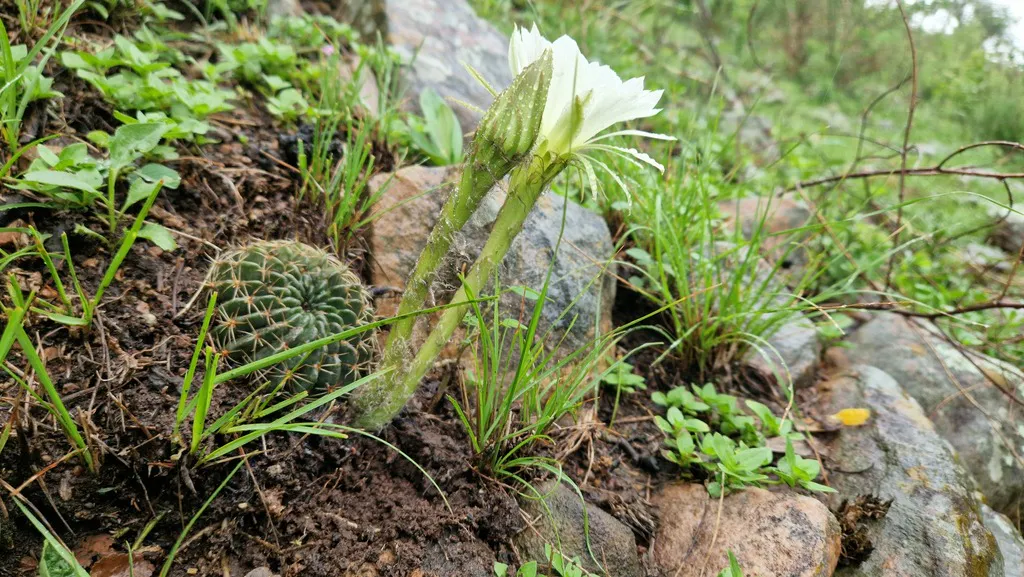
The compact body can produce a fragrant, night-opening white flower on a long tube—a bloom that can look enormous beside the nearly spineless cactus that made it.
Explore This Plant
A closer look
How this plant works
 How this plant works
White woolly areoles form the domino pattern across the rounded green ribs.
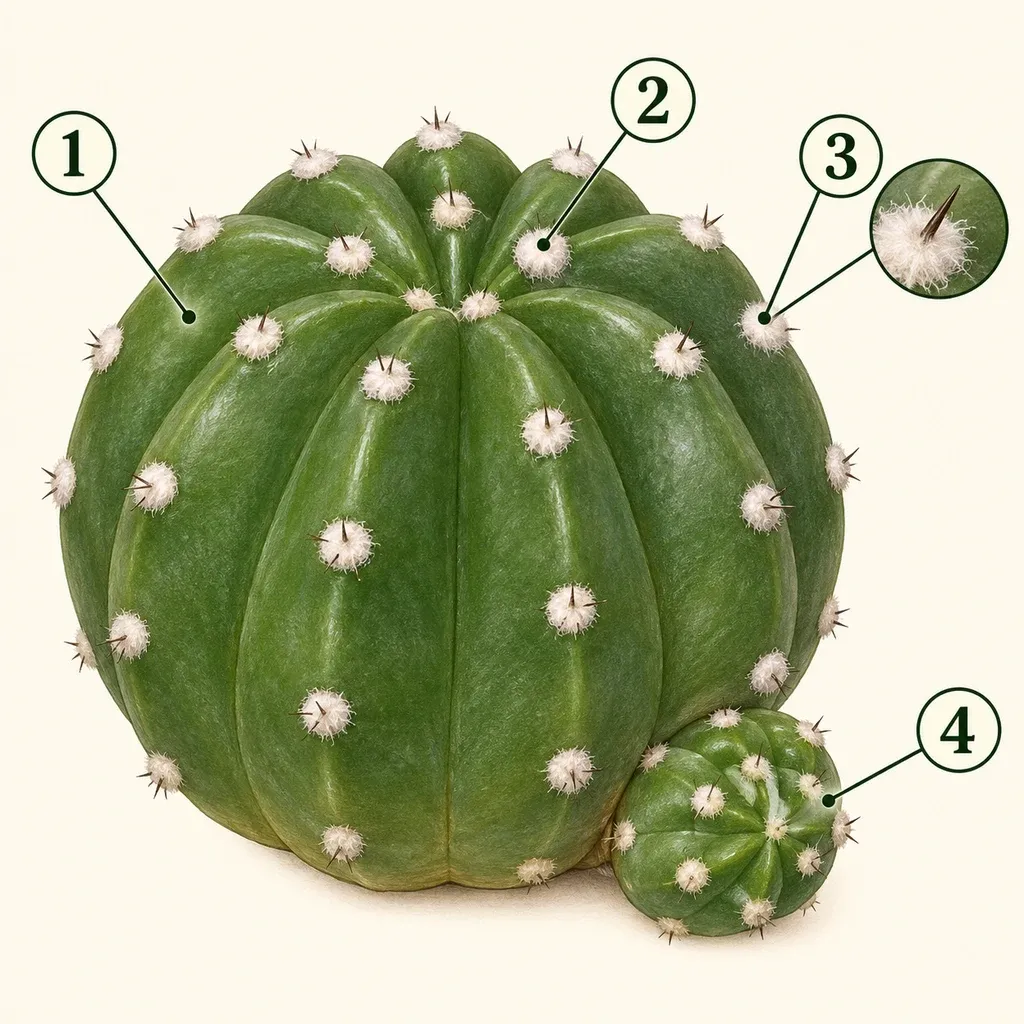
Rounded rib
The broad green ridge forms part of the photosynthetic stem.
White areole
The conspicuous woolly cushion carries the tiny spines.
Tiny spine
Short dark-tipped spines can be easy to overlook among the white wool.
Basal offset
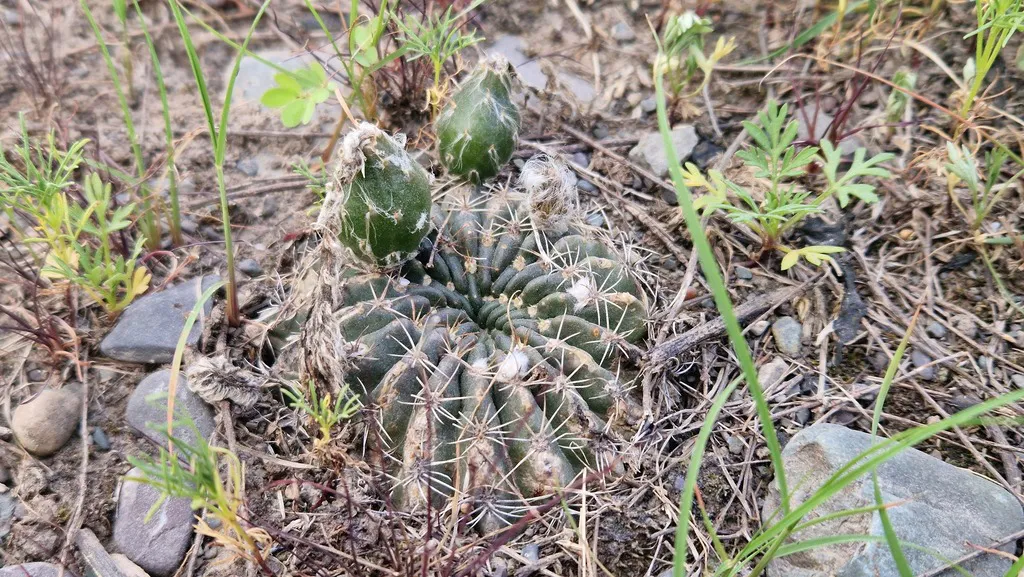
A small side shoot repeats the parent’s ribbed body as the plant forms a clump.
Habitat and origins
 Habitat and origins
NParks describes the horticultural Echinopsis subdenudata from Bolivia and Paraguay. Kew places it within Echinopsis ancistrophora, whose accepted range is northwestern Argentina. The familiar nursery name and the broader taxonomic treatment remain in use side by side.
What growth can look like
 What growth can look like
- Stage 1
Single globe
The compact plant shows rounded ribs and scattered white areoles.
- Stage 2
Widening group
Basal shoots may gradually build a cluster around the original body.
- Stage 3
Flowering plant
Long flower tubes can rise well beyond the small green body.
Basal offsets repeat the parent’s rounded ribs and white areoles, gradually turning a single globe into a cluster.
Growth sources: [4]
Flowers
Fragrant white funnels rise on tubes around 15–22 cm long. Each flower is short-lived, with its main display lasting about a day; the bloom can dwarf the compact body beneath it.
As it matures
Individual bodies are around 7–12 cm across in the specialist description. Basal offsets increase the width of the clump while preserving its low, rounded outline.
Behind the name
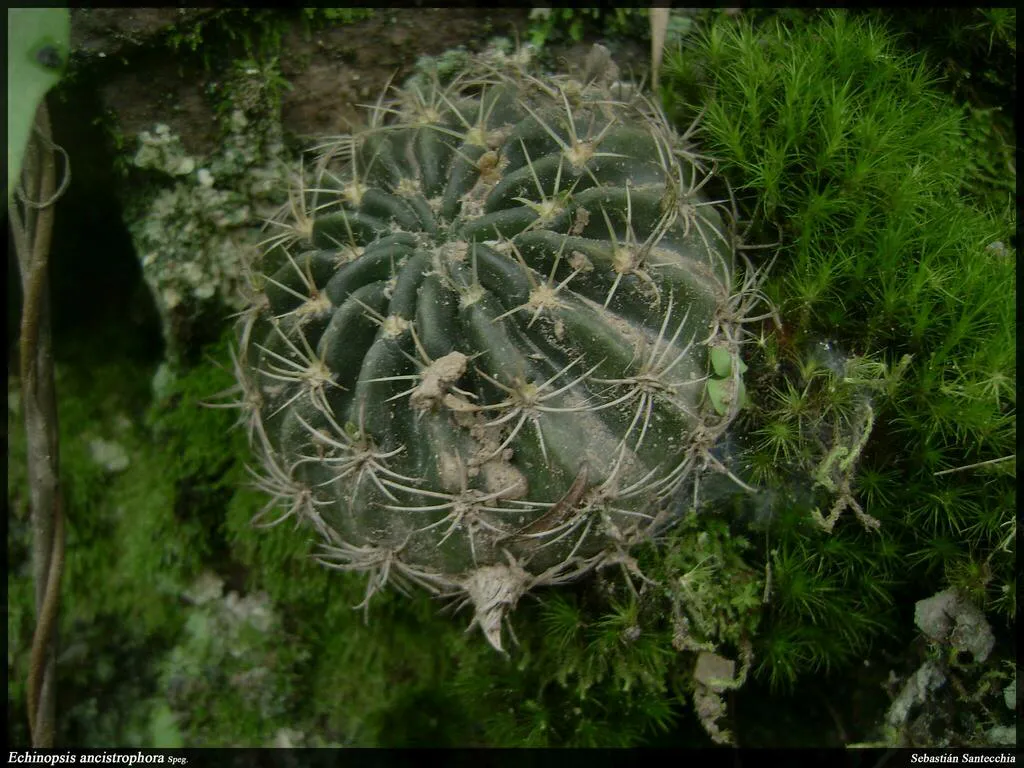
Martín Cárdenas published Echinopsis subdenudata in 1956. The name persists in horticulture, while Kew includes it as a synonym of Echinopsis ancistrophora.
Sources: [1]
Similar plants, useful clues
Astrophytum asterias
Both can look like nearly spineless dotted globes. NParks distinguishes the domino cactus’s more sharply separated ribs from the broad, flatter ribs of A. asterias.
Comparison sources: [2]
This plant in the collection
Its story so far
Then and now
Explore the sources
 Explore the sources
Names and identity
| Kind | Name |
|---|---|
| Familiar horticultural name | Echinopsis subdenudata Cárdenas |
| Current Kew treatment | Synonym of Echinopsis ancistrophora Speg. |
| Common names | Domino cactus, Easter lily cactus, night-blooming hedgehog |
| Name clue | subdenudata means almost naked, referring to the nearly spineless body |
The round green body, broad ribs, and evenly spaced white woolly areoles give it the look of a domino. Some specimens have minute dark spines buried in those areoles, so “spineless” should not be taken literally.
Origin, taxonomy, and flowers
Plants circulated as E. subdenudata come from the E. ancistrophora complex. Horticultural references often associate the form with Bolivia and Paraguay; Kew gives the accepted E. ancistrophora a native range in northwestern Argentina. Martín Cárdenas described E. subdenudata in 1956, but Kew now treats it as a synonym rather than a separate accepted species.
The body stays globular to short-columnar and often makes basal pups with age. Its main performance is the flower: a long woolly tube rises dramatically above the body and opens into a very large, white, fragrant trumpet. NParks records an individual flower lifespan of about one day. A healthy plant can make several buds in a growing season, extending the display across successive flowers.
Care in this collection

| Topic | Practical approach |
|---|---|
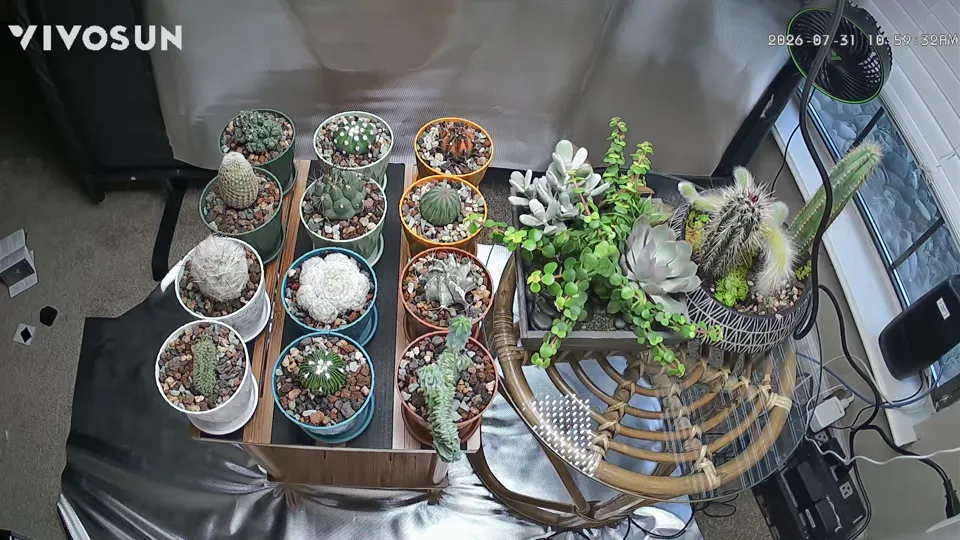
| Grow-light position | R2C6 · Bright. September 15, 2026 photo layout, facing the window (six columns, four rows). Keep a clear light path to the growing tip. See the current placement guide. |
| Water | Deep soak and full drainage after the pot dries. A plant in active growth or carrying buds may use water sooner than a dormant one. |
| Winter | Cooler, bright, and dry conditions encourage a clean rest; do not force growth with warmth, water, and weak light. |
| Pot and mix | The current drained pot works. Repot when pups crowd the rim or roots have replaced much of the mix. |
| Feeding | Modest dilute fertilizer during warm growth can support flowering; avoid high-nitrogen feeding. |


Propagation and watch points
- Basal pups are the easiest clone propagation. Let any cut surface callus before placing it into dry, airy mix.
- Seed produces variation within a taxonomically variable complex.
- The relatively exposed green skin can sunburn faster than a densely spined cactus; acclimation matters even though it is a high-light plant.
- Root mealybugs and basal rot can remain invisible until the body softens. Pot weight and drainage are better controls than repeated preventive watering.
- A spent flower and dry tube can be removed once they release easily; do not pull a firmly attached bud.
Sources

Through the seasons
Plant Photo History
Recent photographs of this plant. Open a photo or its collection for the complete history.
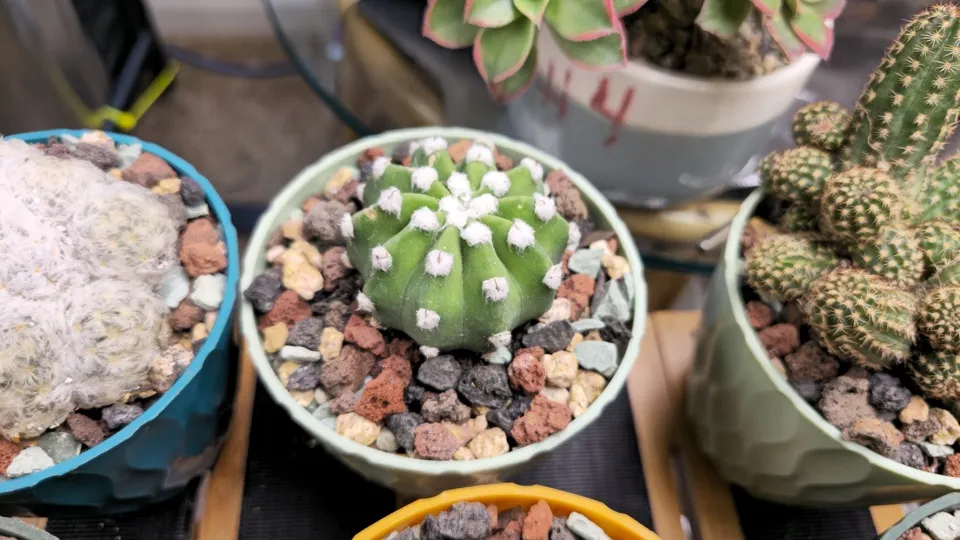
From the nursery
Nursery Labels
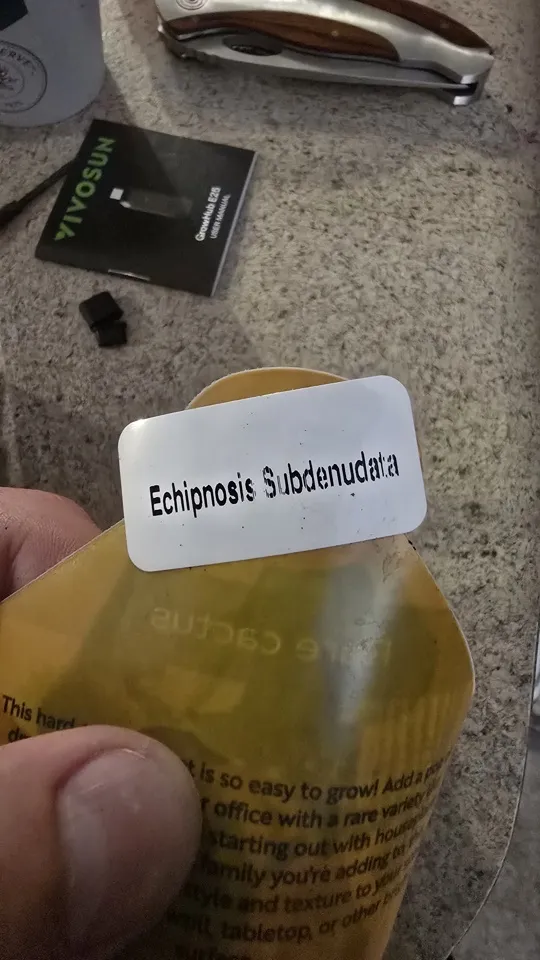
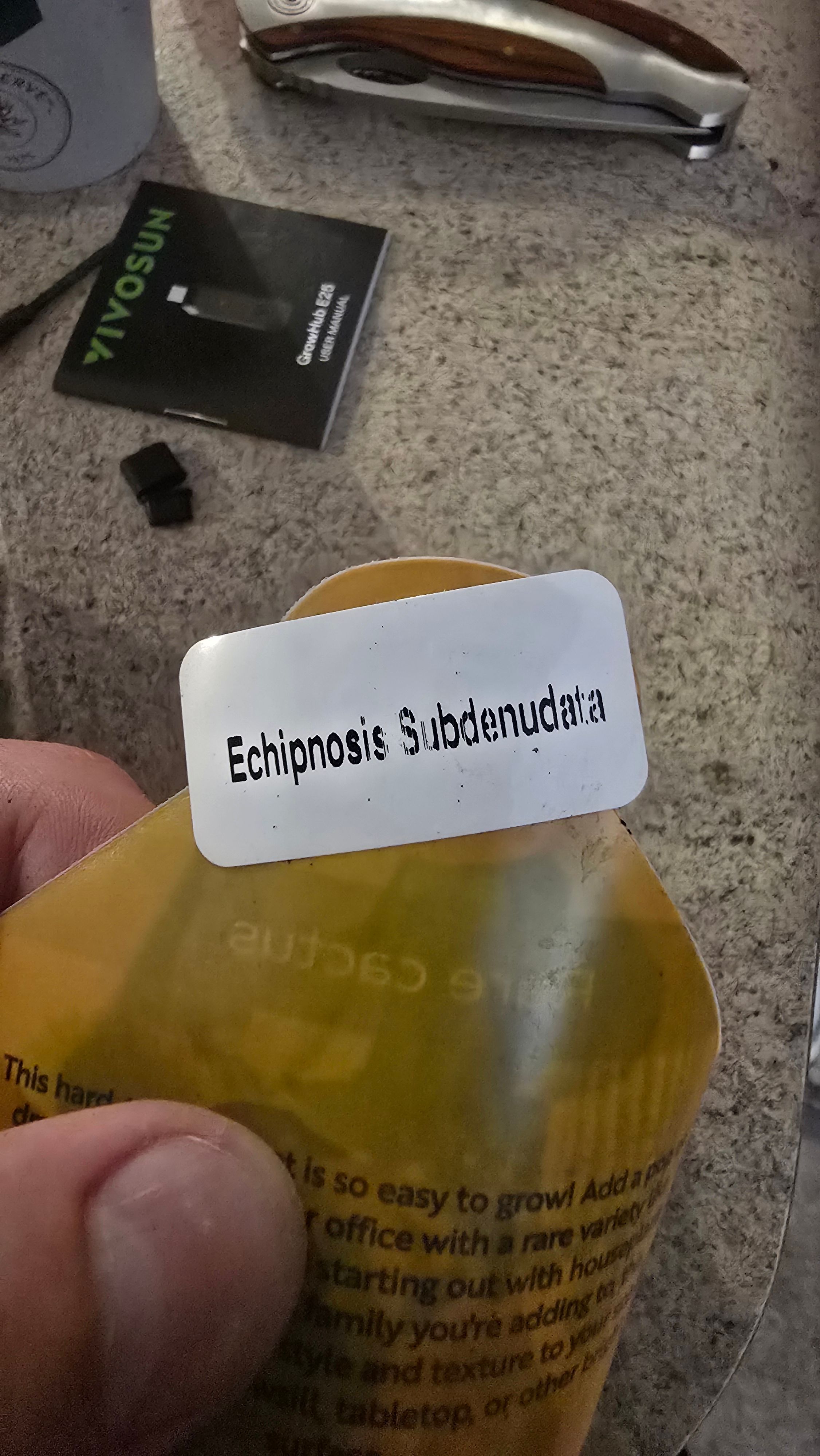
Original nursery labels and packaging.
Botanical reference photos
Reference Gallery
Look closer
Flowers and buds



In the landscape
Research Trail
- Collection Notes on GitHub
- Complete Photo Archive and Credits
- iNaturalist Observations — Accepted species concept that includes subdenudata