


Cactus collection
Plant 18 / 45 Cactus collection
 Plant 18 / 45


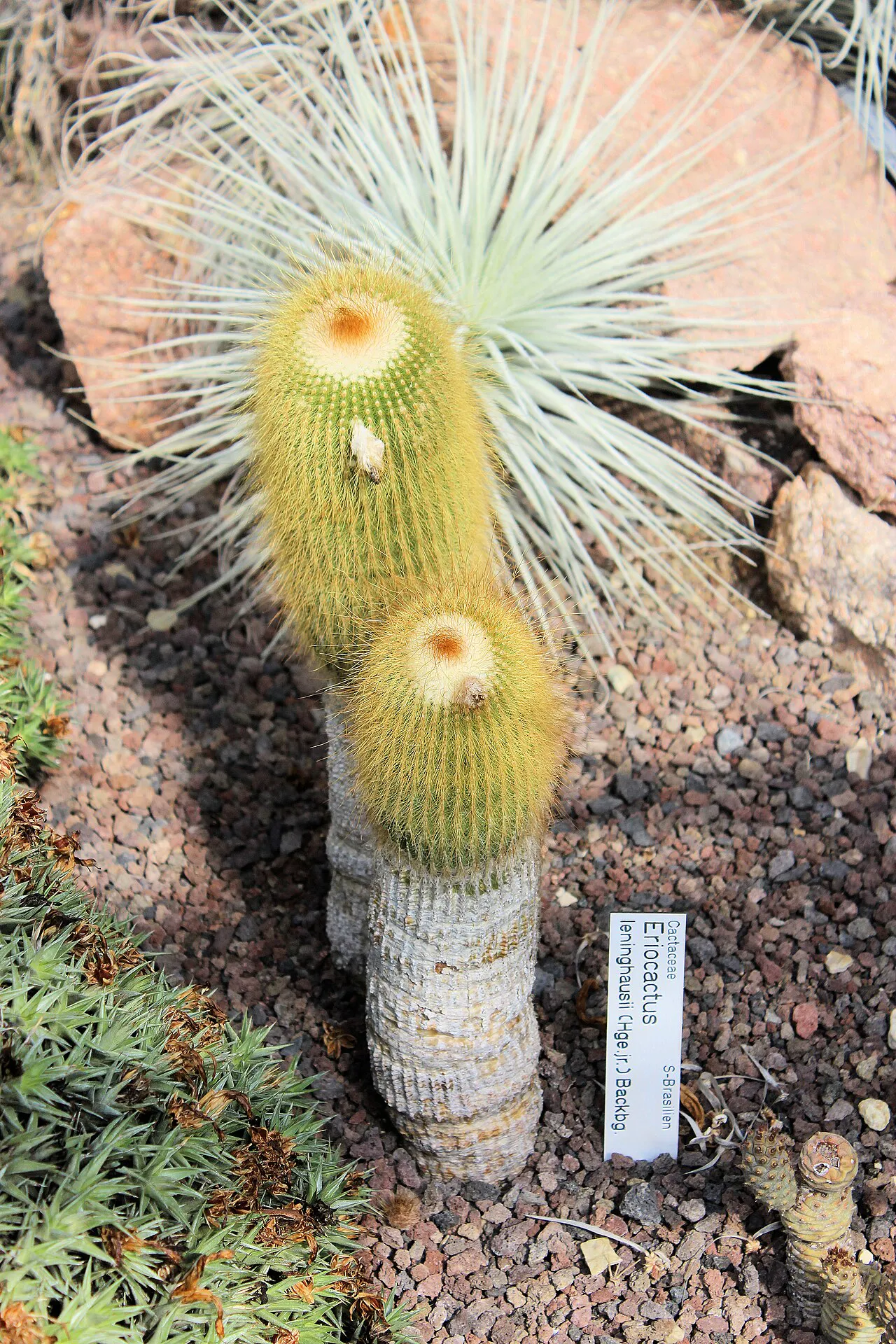
Species reference · Dguendel · CC BY 3.0 · Photo Source ↗
 Collection Record
- Cactus-04
 Permanent Label
F3 Identification
 Status
 Acquired From
- Carlsons' Greenhouse, Torrey Road, Fenton, Michigan
 Acquired On
- 2026-08-10
 Google Sheets ID
- P18 ↗
 Photo History
- 4 captures · newest ↓
Measurements and Care History
 Measurements and Care History
Weights, watering, events, and charts for P18.
Spot it
 Spot it
What it looks like
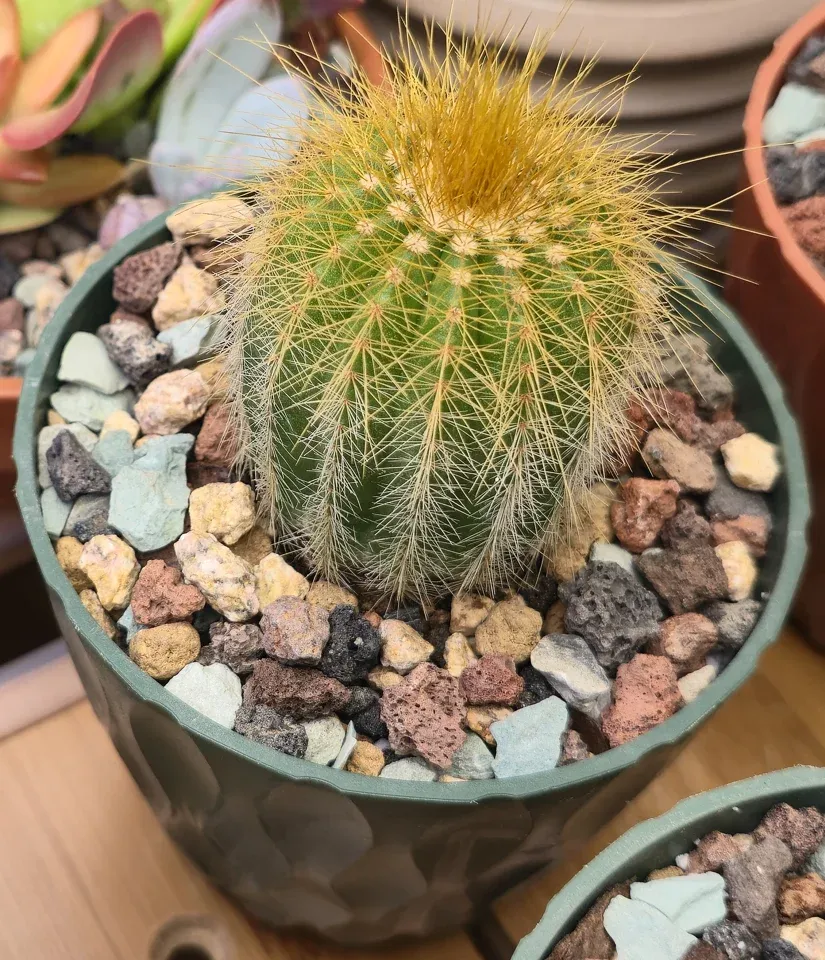
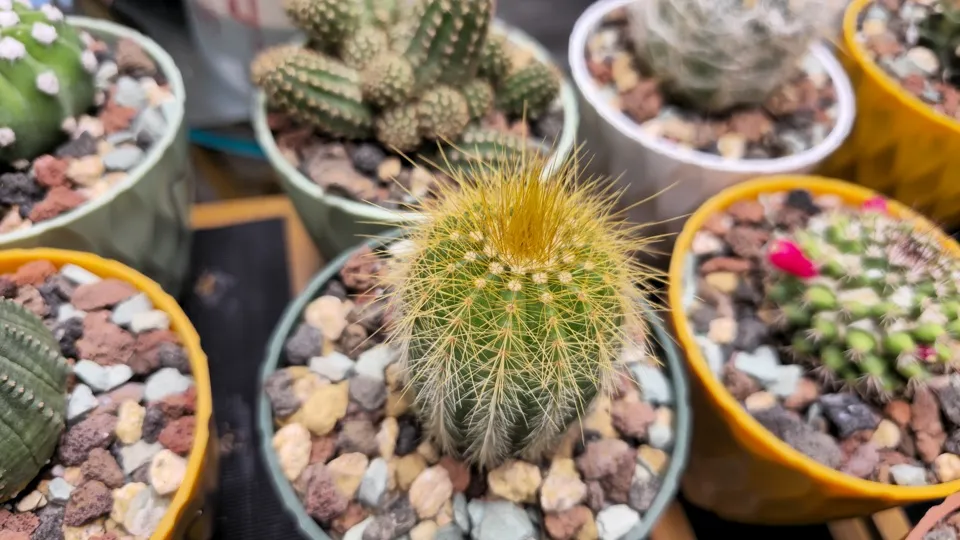
A densely ribbed green body wrapped in fine golden spines, rounded while young but gradually stretching into an upright column as it matures.
One curious thing
 One curious thing
Did you know?
An older plant can crown that golden column with repeated flushes of pale-yellow flowers, concentrating the blooms around the growing tip rather than down the sides.
Explore This Plant
A closer look
How this plant works
 How this plant works
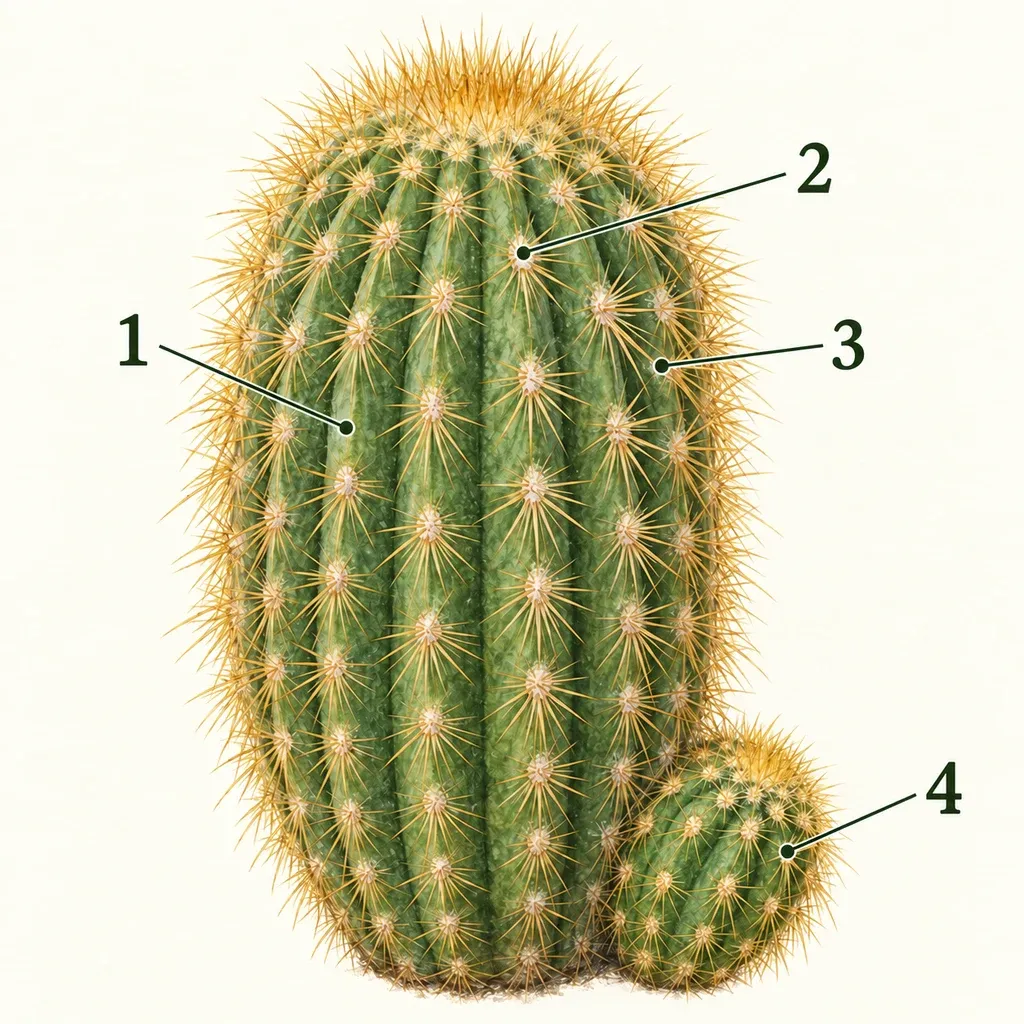
Many narrow ribs carry repeating spine cushions, creating the golden coat over a green water-storing stem.
Habitat and origins
 Habitat and origins
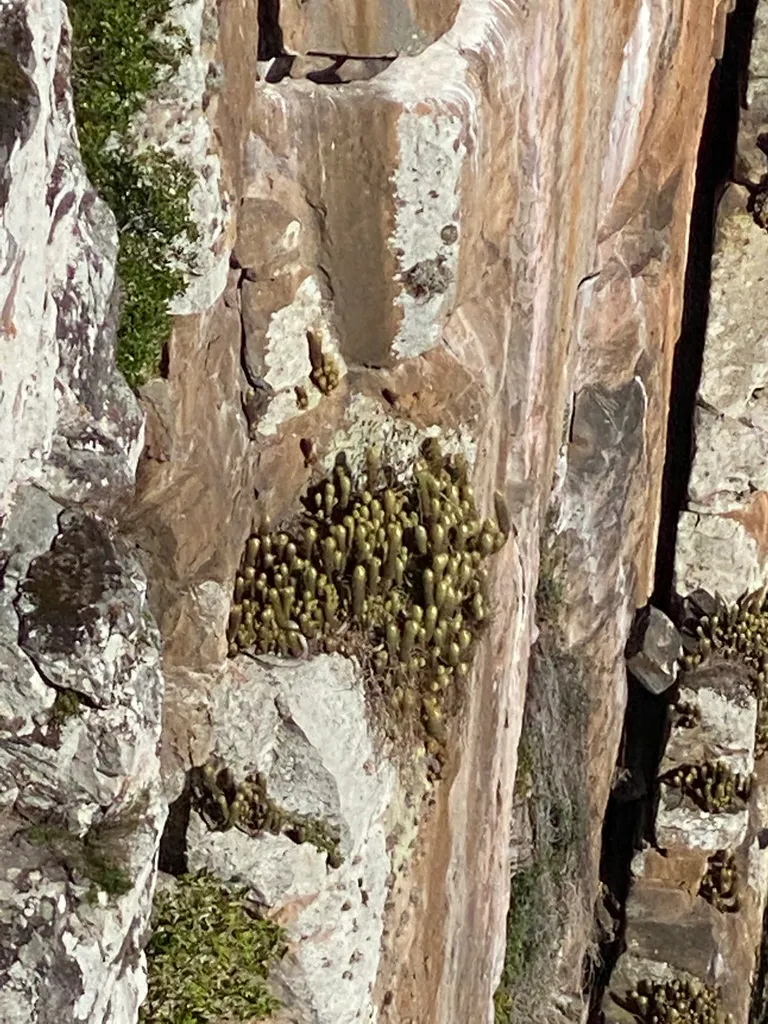
This species is native to Rio Grande do Sul in southern Brazil. Kew places it in seasonally dry tropical vegetation. The golden covering is a dense layer of slender spines over a green stem: a globe when young, becoming a column with age, sometimes accompanied by offsets.
Habitat sources: [1]
What growth can look like
 What growth can look like
- Stage 1
Golden globe
A young stem starts with a rounded outline.
- Stage 2
Lengthening column
The body extends upward while retaining its many narrow ribs.
- Stage 3
Older clump
Offsets can gather around the base of a flowering-sized column.
The ribbed body can expand as water is stored and contract as it is used; vertical growth gradually changes a globe into a column.
Flowers
Lemon-yellow, bowl-shaped flowers about 4–5 cm across rise above the golden spine coat on established plants.
Sources: [2]
As it matures
Columns can reach about 60 cm, growing alone or with smaller offsets clustered around the base.
Sources: [2]
Behind the name
Kew currently records the name as Parodia lenninghausii, published in 2010, and traces its basionym Pilocereus lenninghausii to 1896.
Sources: [1]
Similar plants, useful clues
Woolly Espostoa ↗
Espostoa's white wool conceals sharper projecting spines; this Parodia has a visibly golden bristly coat.
This plant in the collection
Its story so far
Joined the collection
Purchased at Carlsons' Greenhouse in a 4-inch individual pot.
Collection record ↗
Then and now
Explore the sources
 Explore the sources
Names and identity
| Kind | Name |
|---|---|
| Profile name | Parodia leninghausii |
| Common names | Yellow tower cactus, golden ball cactus |
| Current Kew spelling | Parodia lenninghausii |
The golden-spined young globe becomes a tall column with age. Mature plants can produce repeated bursts of pale-yellow flowers around the crown.
Observations from August 11, 2026 recorded numerous narrow ribs, fine golden radial spines, longer flexible golden central spines, and denser golden growth at the crown. The close photographs used for that assessment are no longer available.
Origin, form, and publication
The species is native to Rio Grande do Sul in southern Brazil. Kew records the basionym Pilocereus lenninghausii from 1896 and the accepted Parodia lenninghausii combination from 2010. The collection profile retains the familiar horticultural spelling leninghausii.
Care in this collection

| Topic | Practical approach |
|---|---|
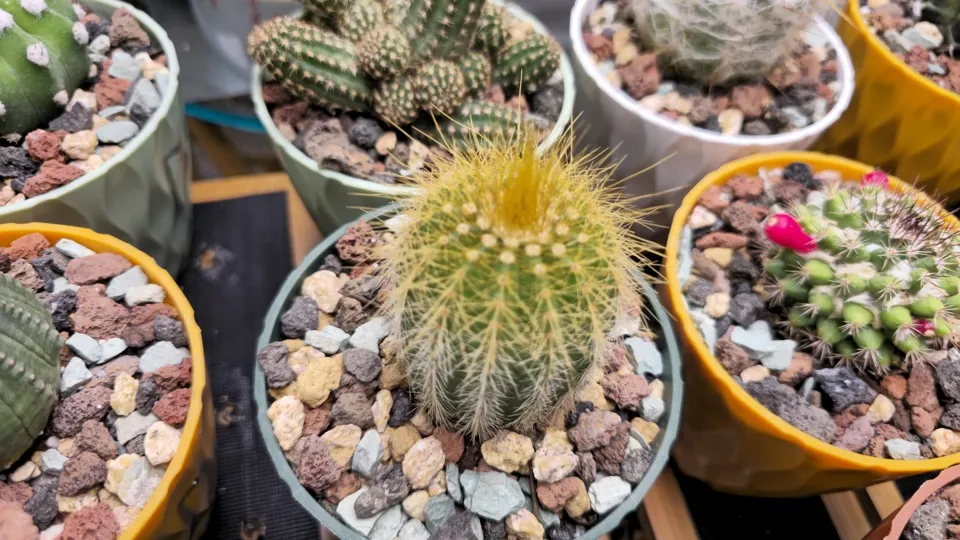
| Grow-light position | Photo-matched R4C5 · Bright. September 15, 2026 photo reference: six-column/four-row front grid, facing the window. Back-right taller cactus; compare its tip separately from the short F1 beside it. See the current placement guide. |
| Water | Soak and drain, then let the 4-inch pot dry. Reduce watering when cool or growth slows. |
| Pot and mix | A stable, mineral-heavy pot becomes important as the body changes from globe to column. |
| Flowers | Mature columns carry bowl-shaped lemon-yellow flowers above the golden spine coat. |


Rotation, propagation, and watch points
- Rotate 90° clockwise on Sundays so the column does not lean toward one edge.
- Propagation is normally by seed; handle the golden spines as sharp even when they look soft in backlight.
- Recheck stability before using a riser as the plant becomes taller.
Sources

Through the seasons
Plant Photo History
Recent photographs of this plant. Open a photo or its collection for the complete history.
Botanical reference photos
Reference Gallery
Form and growth
,_botanischer_Garten,_Parodia_leninghausii.jpg)


Look closer


Flowers and buds

In the landscape
Research Trail
- Collection Notes on GitHub
- Complete Photo Archive and Credits
- iNaturalist Observations — Species observations