


Cactus collection
Plant 08 / 45 Cactus collection
 Plant 08 / 45
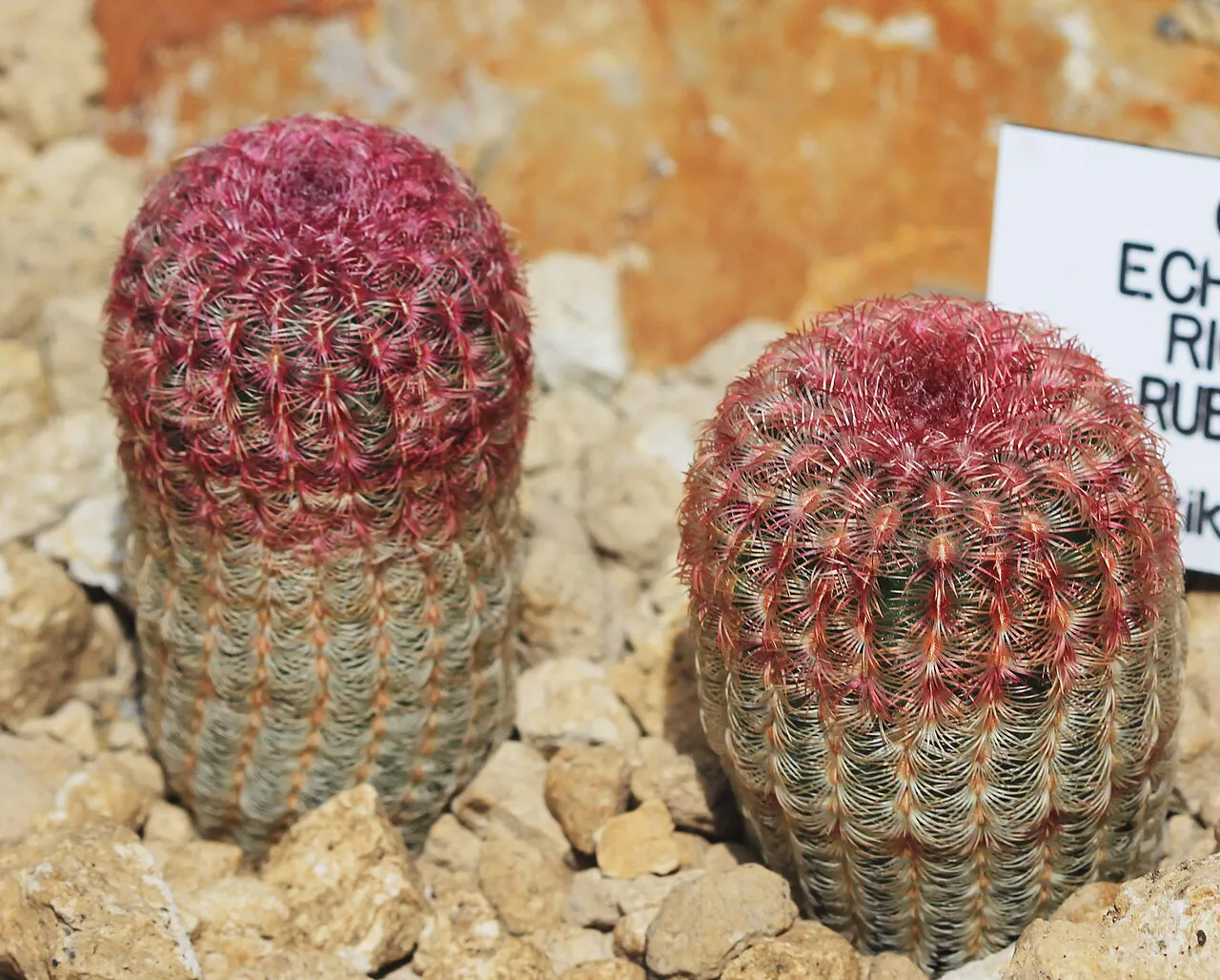
 Echinocereus rigidissimus subsp. rubispinus
Rainbow hedgehog cactus


Species reference · Karelj · CC BY-SA 3.0 · Photo Source ↗
 Collection Record
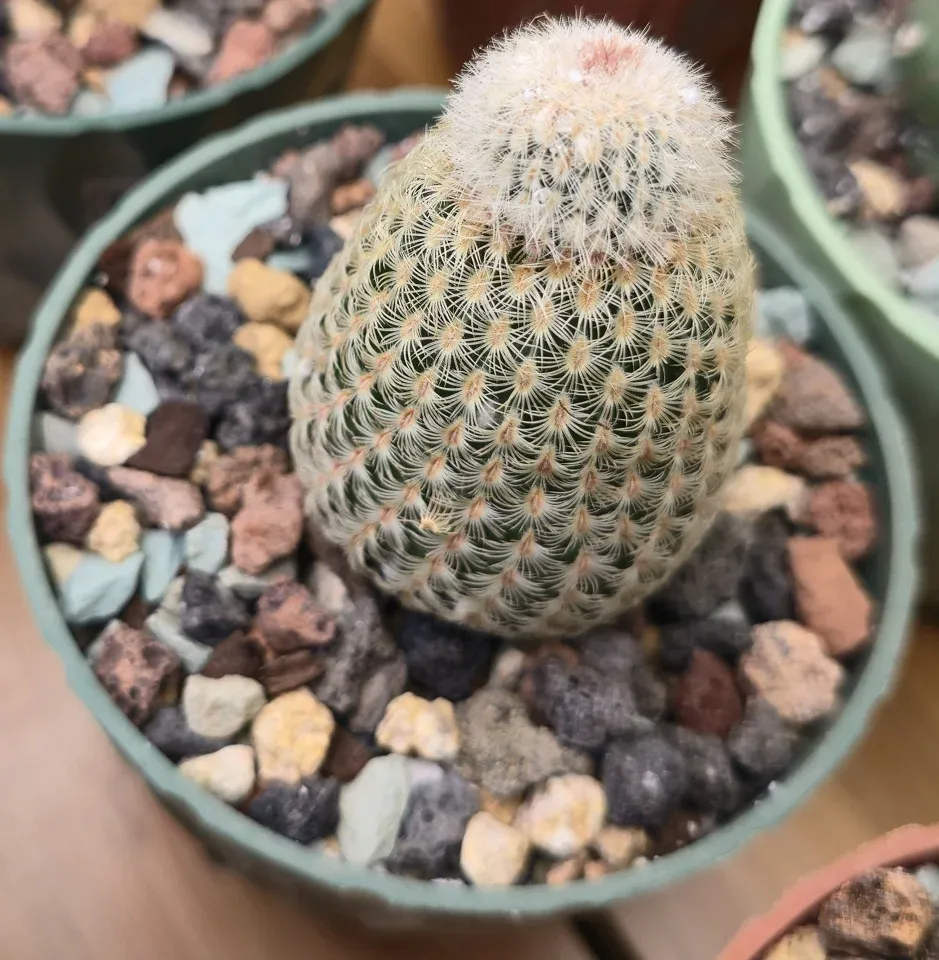
- Starter-03
 Permanent Label
C2 Identification
 Status
 Acquired From
- Costa Farms
 Acquired On
- 2026-07-23
 Google Sheets ID
- P08 ↗
 Photo History
- 4 captures · newest ↓
Measurements and Care History
 Measurements and Care History
Weights, watering, events, and charts for P08.
Spot it
 Spot it
What it looks like
A compact cylinder hidden beneath tight combs of pink, ruby-red, and white spines, arranged in horizontal color bands so regular that the green stem barely shows.
One curious thing
 One curious thing
Did you know?
Most of the visible color belongs to the spines rather than the cactus body; a mature plant can make the contrast even louder with a large magenta flower near the crown.
Explore This Plant
A closer look
How this plant works
 How this plant works
Most of the rainbow effect sits outside the green stem, in its closely arranged spines.
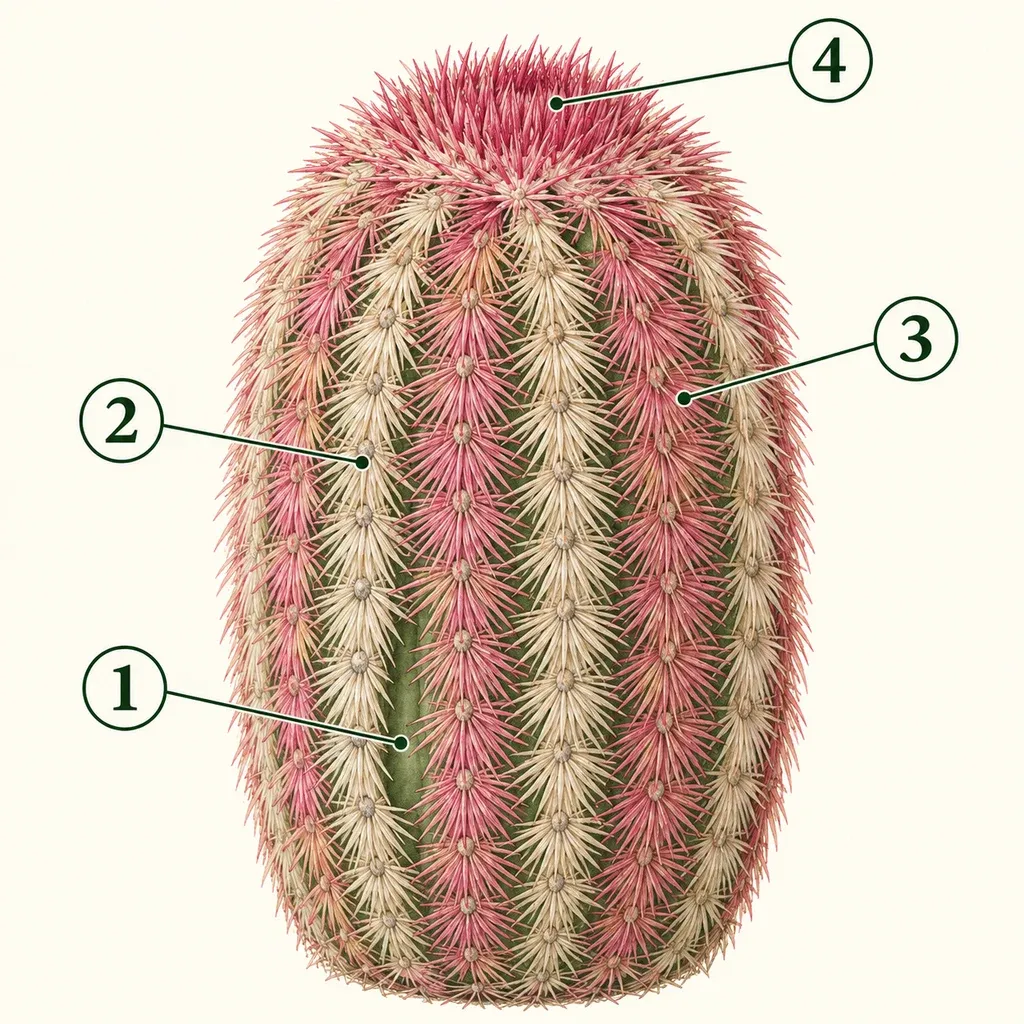
Ribbed stem
Green stem tissue remains beneath the covering of spines.
Areole
Each small growing cushion anchors a group of radial spines.
Radial spine comb
The closely arranged spines curve toward the stem instead of forming long outward spikes.
Crown
Newer spine growth near the top can be more strongly pink than older growth below.
Habitat and origins
 Habitat and origins
This subspecies comes from the Sierra Oscura of western Chihuahua, Mexico, within desert and dry shrubland. Its recorded range is much narrower than that of rainbow cacti as a whole.
Habitat sources: [1]
What growth can look like
 What growth can look like
- Stage 1
Compact youngster
A small body is already covered with tightly arranged radial spines.
- Stage 2
Longer column
The solitary stem extends upward while older spines become paler.
- Stage 3
Flowering crown
A mature plant can carry a conspicuous pink flower near its upper areoles.
New spines are reddish pink; as they mature, they fade toward yellow or pale pink, creating bands of changing color down the stem.
Growth sources: [2]
Flowers
Bright pink flowers with a white throat grow from younger areoles near the top of the plant, standing above the closely packed spines.
Sources: [2]
As it matures
The plant develops a solitary upright body rather than a broad mound. RHS lists a cultivated height and spread of 10–50 cm for the species.
Sources: [2]
Behind the name
The subspecies combination dates to 1997. Kew also records older names placing it under Echinocereus pectinatus or treating rubispinus as a variety, explaining the different labels found in older references.
Sources: [1]
Similar plants, useful clues
Echinocereus rigidissimus without a subspecies label
The broader species also has closely pressed colored spines. The nursery’s subspecies label distinguishes this plant from rainbow cacti sold without that detail.
This plant in the collection
Its story so far
Then and now
Explore the sources
 Explore the sources
Names and identity
| Kind | Name |
|---|---|
| Accepted botanical name | Echinocereus rigidissimus subsp. rubispinus (G.Frank & A.B.Lau) N.P.Taylor |
| Common and trade names | Rainbow hedgehog cactus, ruby rainbow cactus |
| Earlier rank seen in collections | Echinocereus rigidissimus var. rubispinus |
| Name clue | rubispinus means ruby- or red-spined |

New radial spines emerge ruby, pink, or magenta and fade as they age, producing horizontal color bands as the stem grows. There are normally no large projecting central spines; the dense comb of radials hugs the body.
Origin and life cycle
The subspecies is native to northwestern Mexico, especially Chihuahua, where it occupies sunny, rocky slopes in dry upland habitat. It is usually a solitary column rather than a freely branching clump. Dense spines shade the epidermis but still allow photosynthesis through the gaps.
Large bright magenta-pink flowers with a conspicuously pale or white throat appear around the upper portion of a sufficiently mature stem, commonly in spring. Each flower can rival the stem diameter. The striking spine color made the subspecies a collector favorite, but cultivated color varies with genetics, age, season, and light; a greenish lower band is not automatically a problem.
The form was originally described at varietal rank by Gerhard Frank and Alfred Lau. Nigel Taylor published the subspecies combination accepted by Kew in 1997.
Care in this collection

| Topic | Practical approach |
|---|---|
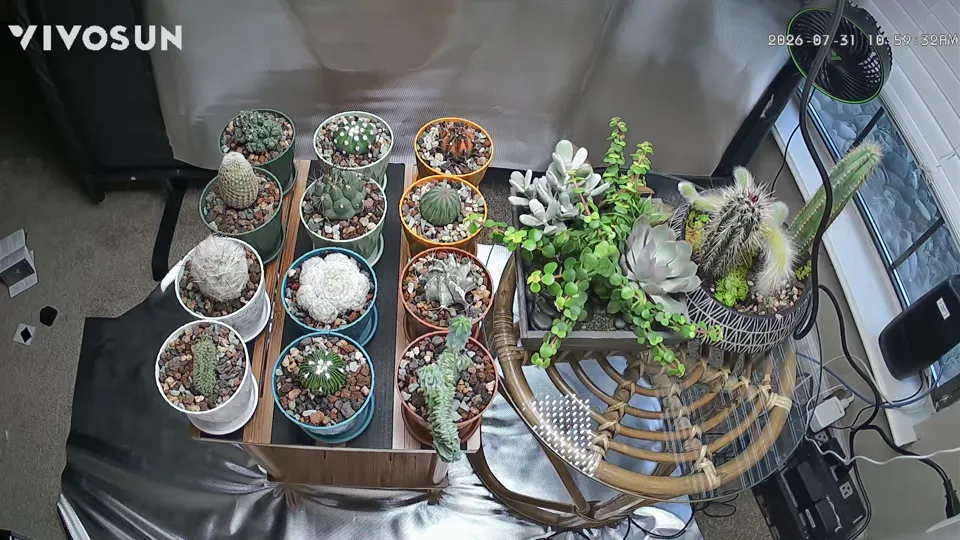
| Grow-light position | R3C5 · High. September 15, 2026 photo layout, facing the window (six columns, four rows). Interior-right stronger-light priority. Keep a clear overhead path to the crown. See the current placement guide. |
| Outdoor light | Increasing direct sun is useful, but a greenhouse-grown stem can burn before its spine cover and epidermis adapt. |
| Water | Thorough watering followed by a complete dry-down in warm growth. Keep dry or nearly dry during cool winter rest. |
| Mix | Favor a very open mineral fraction around the roots. Never let the tray act as a reservoir. |
| Flowering support | Strong seasonal light and a cool, dry winter rest are more useful than heavy fertilizer. |


Judge light by dense, even, colorful new spination on a stem that keeps its diameter. Pale corky patches on the lamp-facing side are a reason to back off.
Propagation and watch points
- Seed is the usual propagation method; solitary plants offer few offsets.
- This species is notably unforgiving of a cold, wet root ball. Cold tolerance reported for dry established plants should not be copied to a recently watered 4-inch pot.
- Scale insects can be hard to see through dense spines. Inspect the crown with a bright light rather than pushing fingers into it.
- The root system does not need a huge pot. Repot when roots occupy the current container or the mix no longer drains freely.
Sources

Through the seasons
Plant Photo History
Recent photographs of this plant. Open a photo or its collection for the complete history.
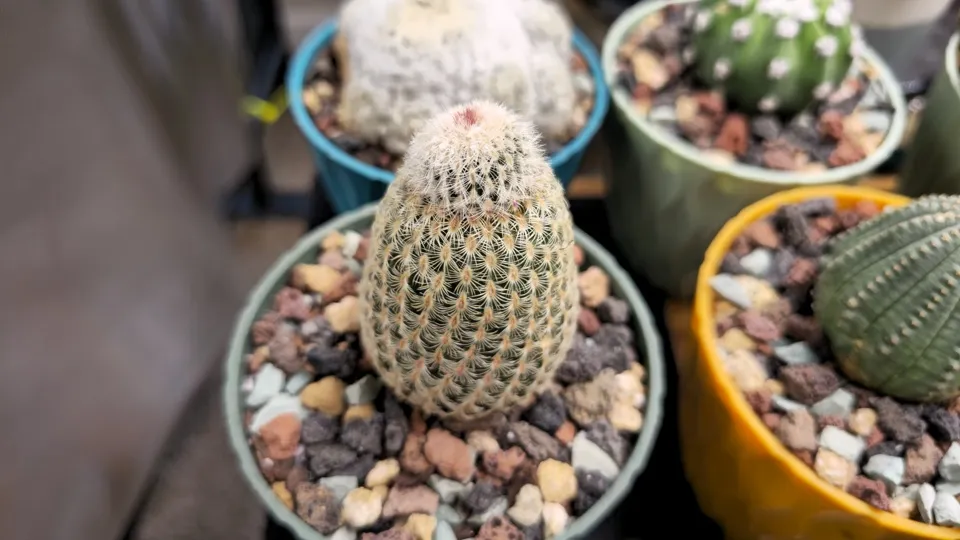
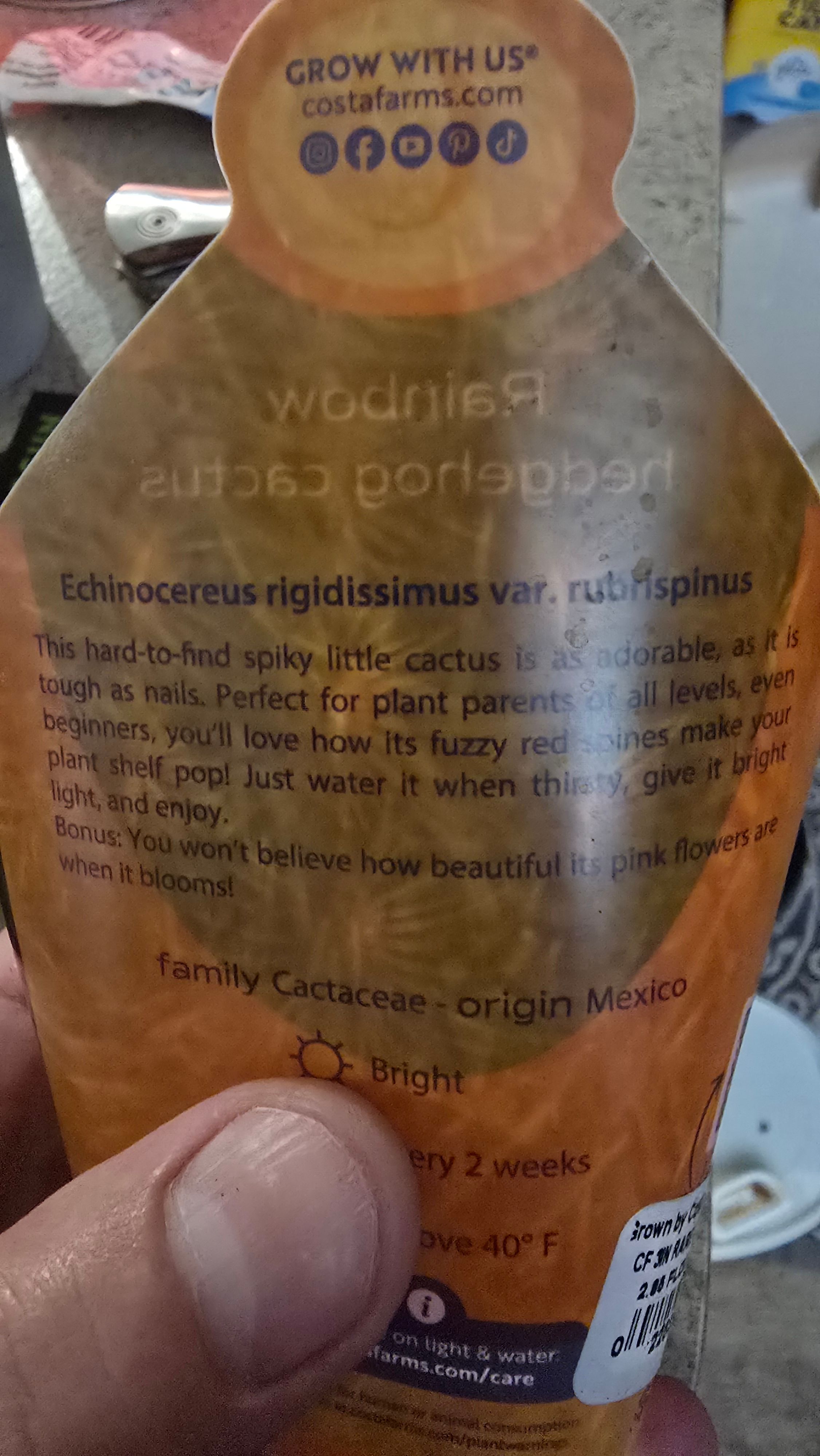
From the nursery
Nursery Labels
Original nursery labels and packaging.
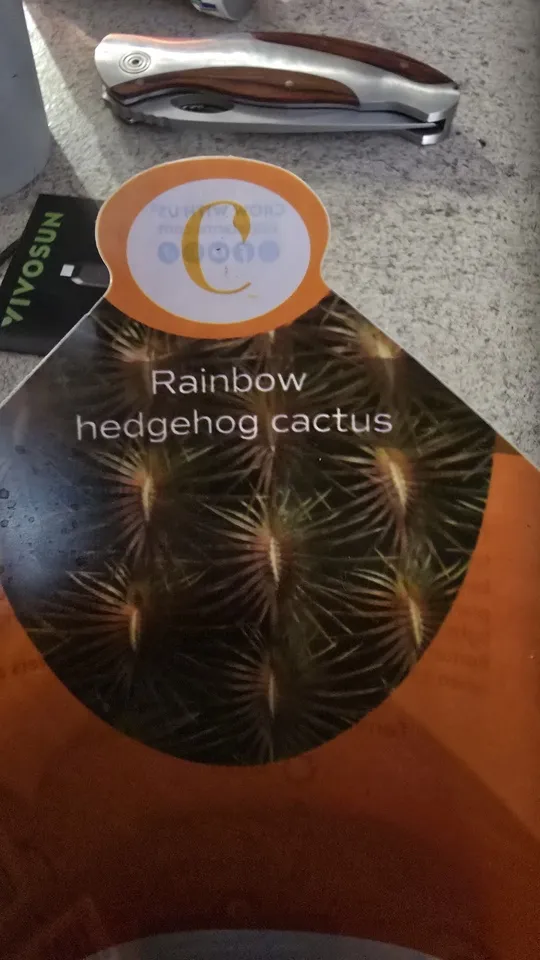
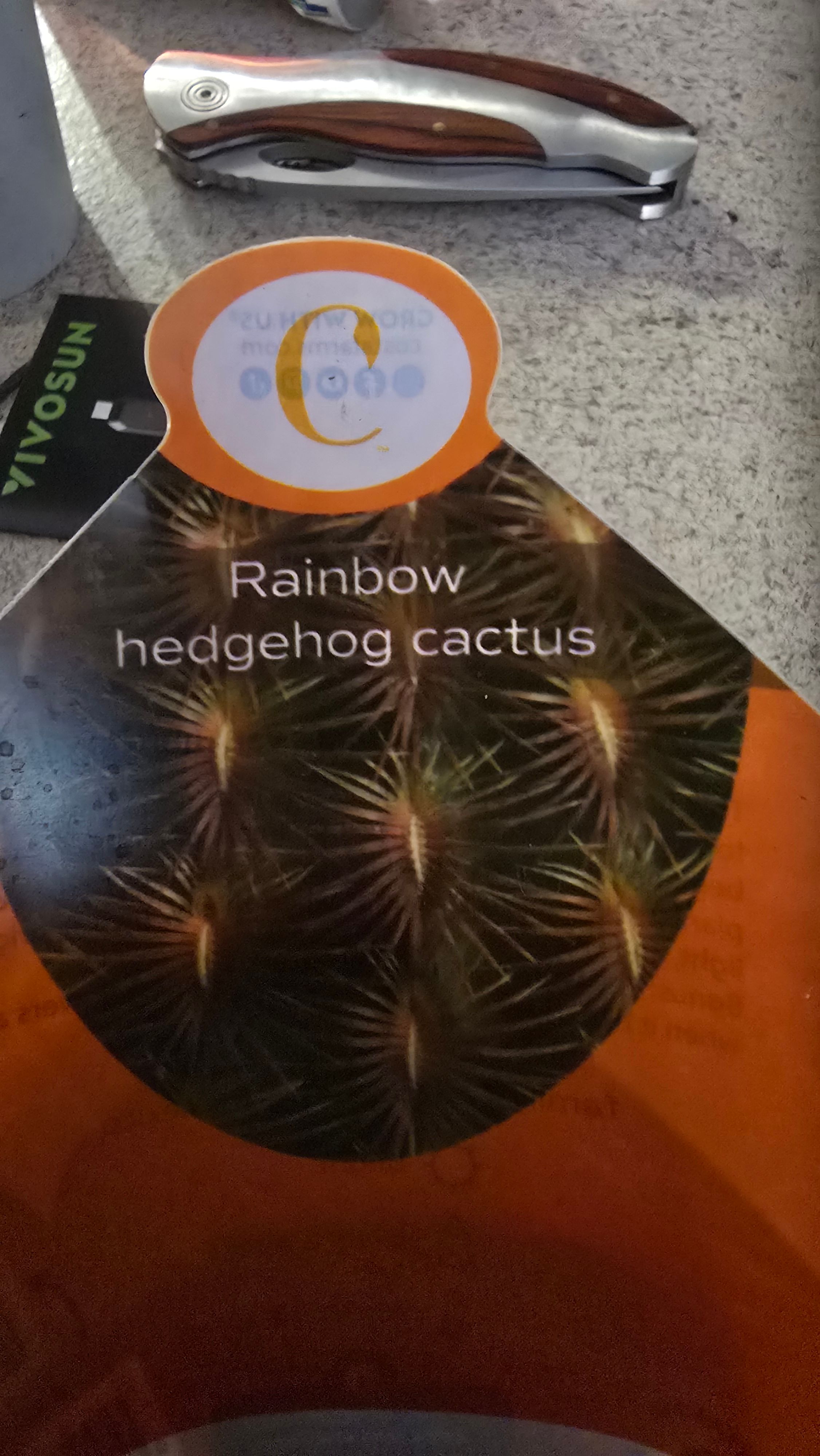
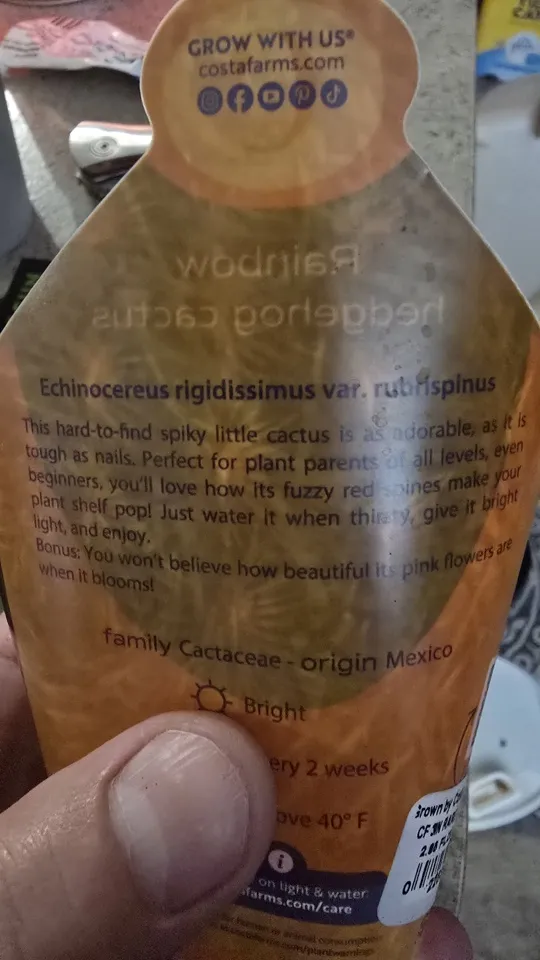
Botanical reference photos
Reference Gallery
Form and growth

Look closer


Flowers and buds

_(9223697561).jpg)


Research Trail
- Collection Notes on GitHub
- Complete Photo Archive and Credits
- iNaturalist Observations — Species observations; compare the red-spined subspecies