


Older planter and archive
Plant 39 / 45 Older planter and archive
 Plant 39 / 45
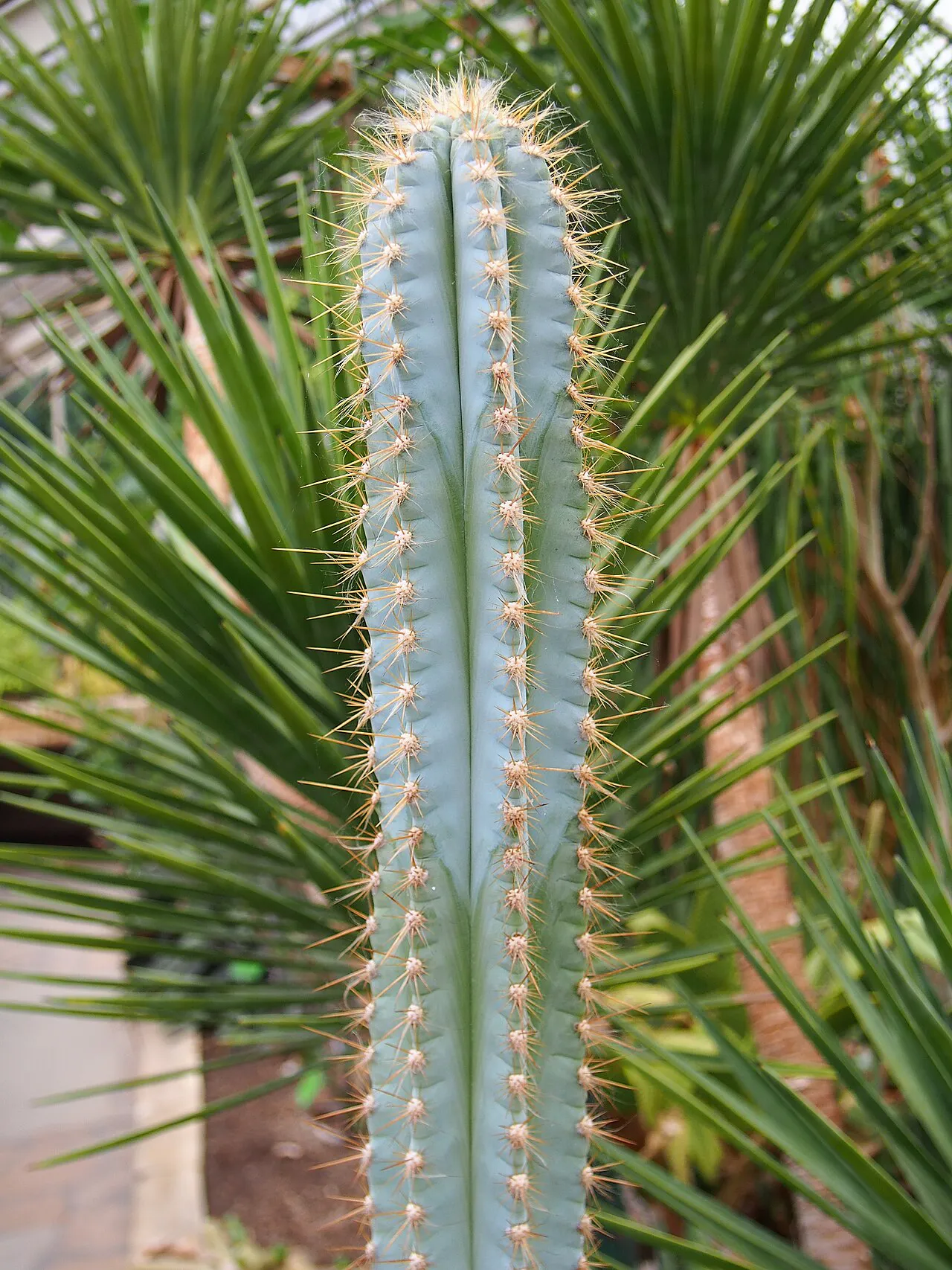
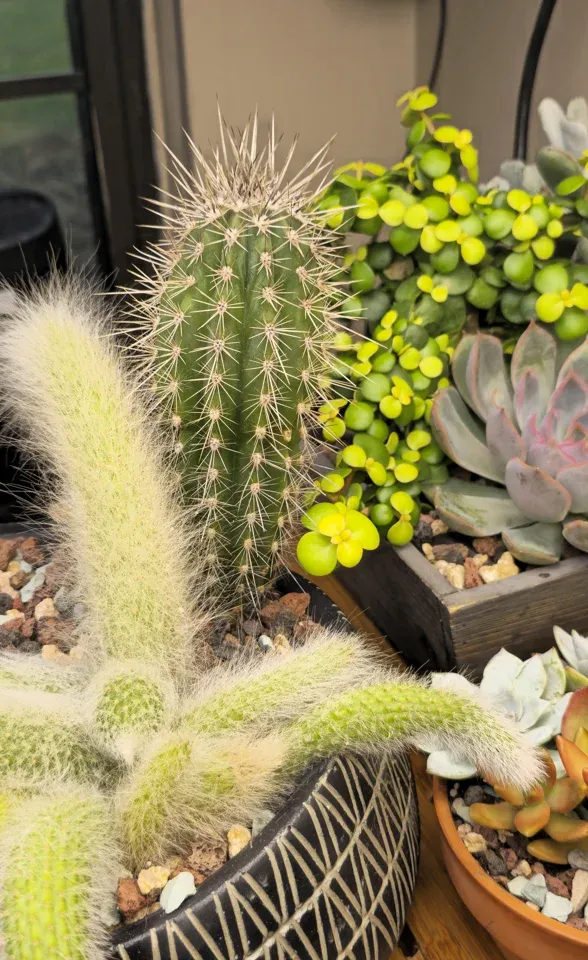
 probable variegated Pilosocereus pachycladus
Variegated blue torch cactus


Species reference · Agnieszka Kwiecień, Nova · CC BY-SA 4.0 · Photo Source ↗
Shared container · P19 · #1
Shared rehab cactus planter · P19
 Shared rehab cactus planter · P19
3 botanical profiles · one container history
- Variegated blue torch cactusprobable variegated Pilosocereus pachycladusLikely MatchThis profile
 Monkey tail cactusCleistocactus colademononisStrong Match
 Golden torch cactusprobable Echinopsis spachianaLikely Match
Three cactus profiles share one root volume and one watering and weight history. Inspect each cactus, then judge the whole container before watering; a concern with one member is not a separate watering instruction.
One care record: log watering, feeding, weighing, and repotting once for P19. Include a plant's name when an observation concerns just that member.
 Collection Record
- Rehab-01
 Permanent Label
#1 Identification
 Status
 Acquired From
- Gerych's Design, Fenton, Michigan, as part of the shared cactus planter
 Acquired On
- 2023-06-21
 Google Sheets ID
- P19 ↗
 Photo History
- 5 captures · newest ↓
Measurements and Care History
 Measurements and Care History
Weights, watering, events, and charts for P19.
Spot it
 Spot it
What it looks like
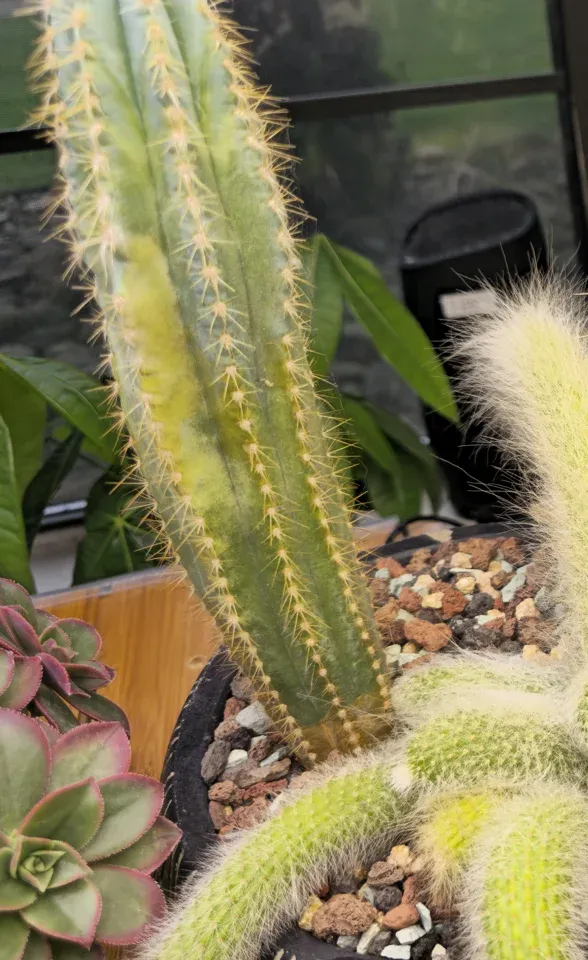
A tall ribbed column with a powdery blue-green surface, vertical cream streaks, and regular golden areoles; the pale variegation runs with the ribs rather than forming isolated spots.
One curious thing
 One curious thing
Did you know?
Two different surface effects create the color: a waxy bloom produces the blue cast, while the cream sectors contain less chlorophyll and can scorch before the greener tissue does.
Explore This Plant
A closer look
How this plant works
 How this plant works
Blue-green stem tissue and cream sectors run along the ribs, punctuated by hairy spine cushions.
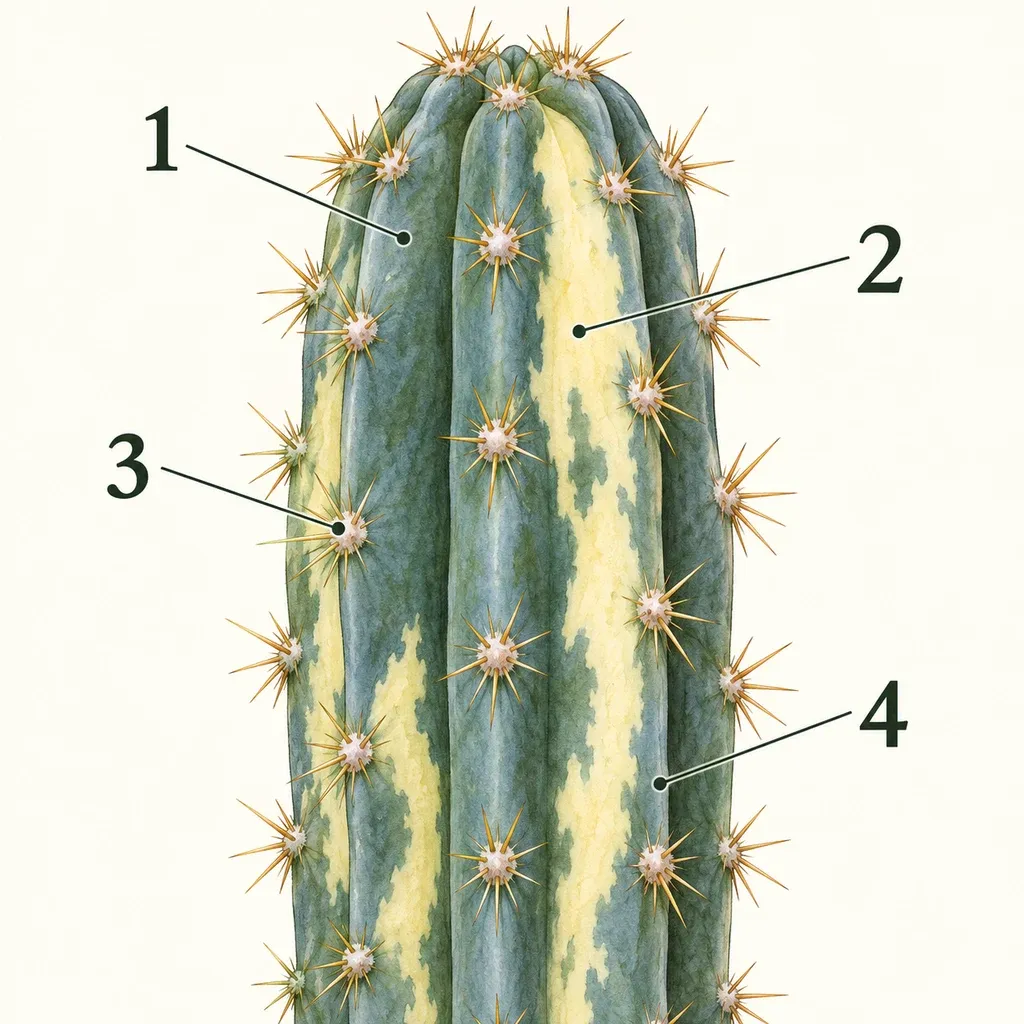
Blue-green stem
Green living tissue beneath the glaucous surface contributes to photosynthesis.
Cream sector
Paler variegated tissue contains less chlorophyll than neighboring green tissue.
Areole
The small cushion bears spines and fine hairs along the column.
Rib
A raised fold lets the succulent stem accommodate changes in stored water.
Habitat and origins
 Habitat and origins
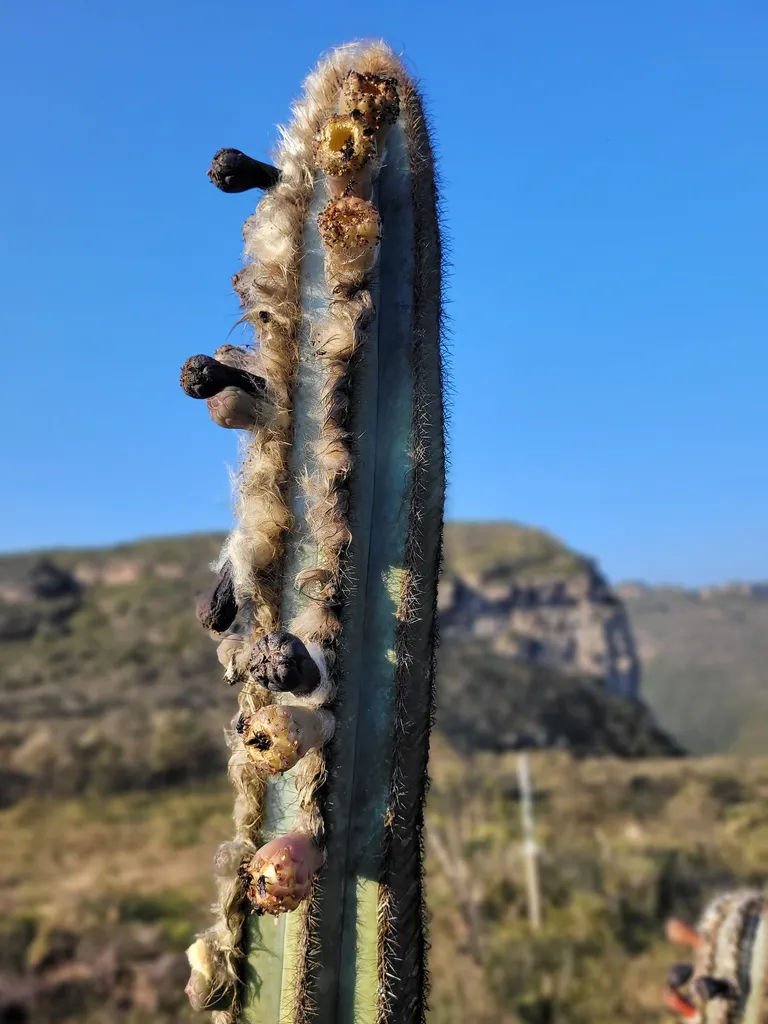
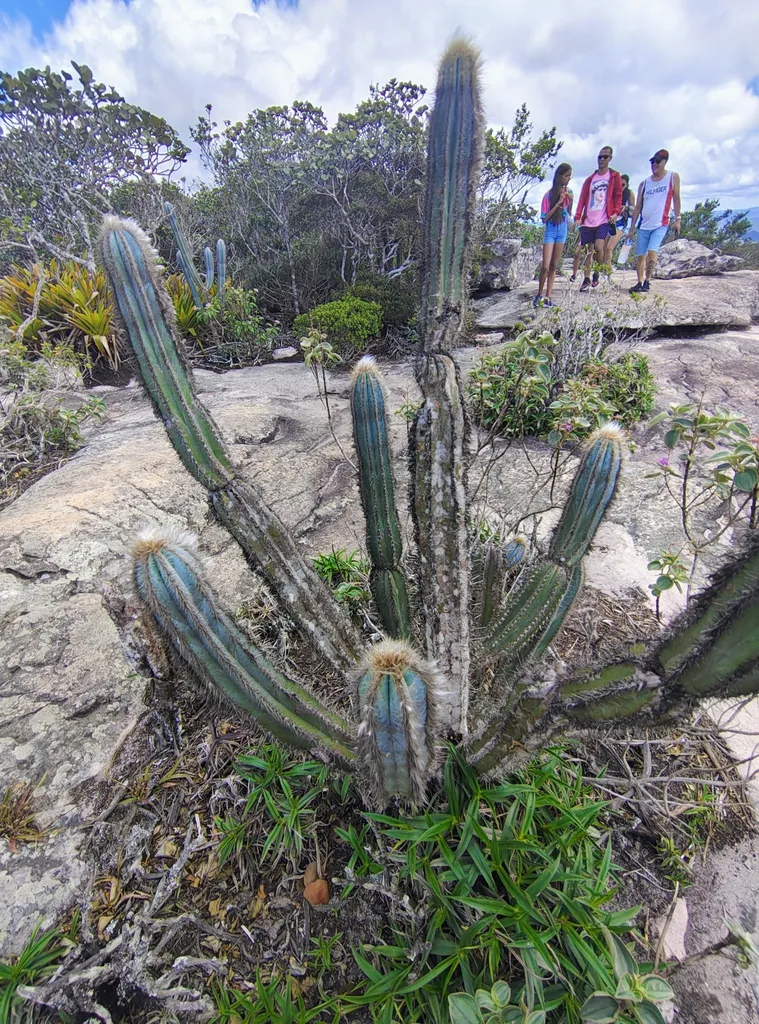
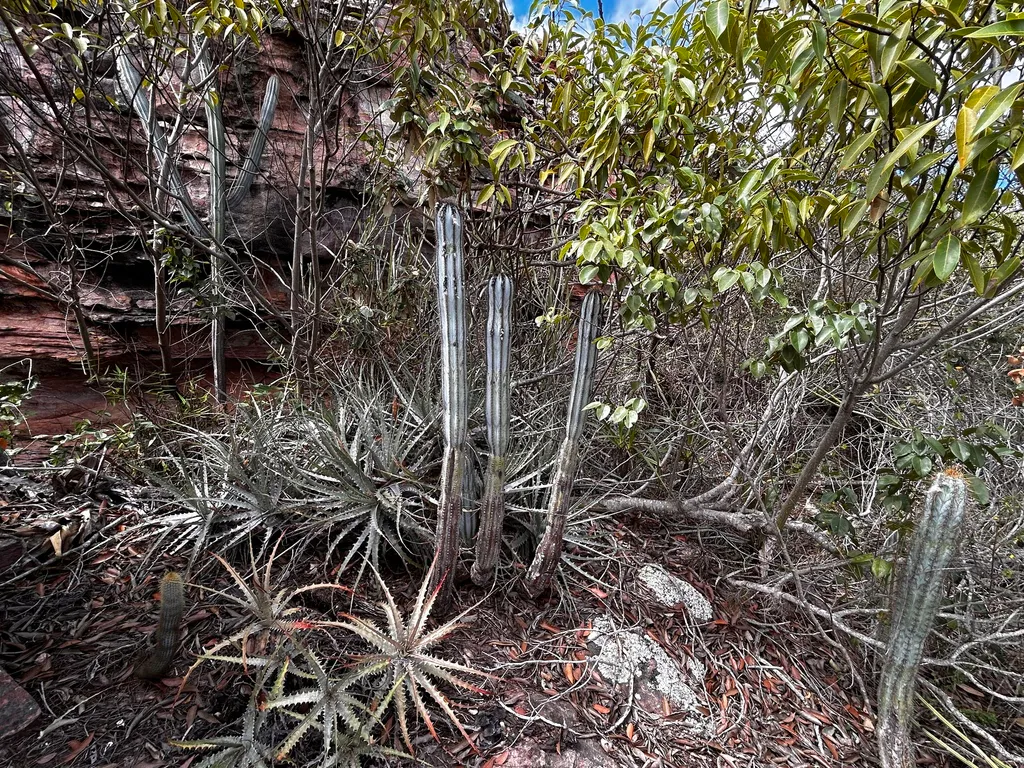
Pilosocereus pachycladus is native to eastern Brazil, from the northeast into northern Minas Gerais, in seasonally dry tropical vegetation including the Caatinga. The wild species has blue-green branching columns; the collection's cream sectors are a cultivated variegated feature.
Habitat sources: [1]
What growth can look like
 What growth can look like
- Stage 1
Young column
A small plant establishes a ribbed blue-green stem.
- Stage 2
Extending tip
Fresh growth lengthens the column and carries its own color pattern.
- Stage 3
Branched framework
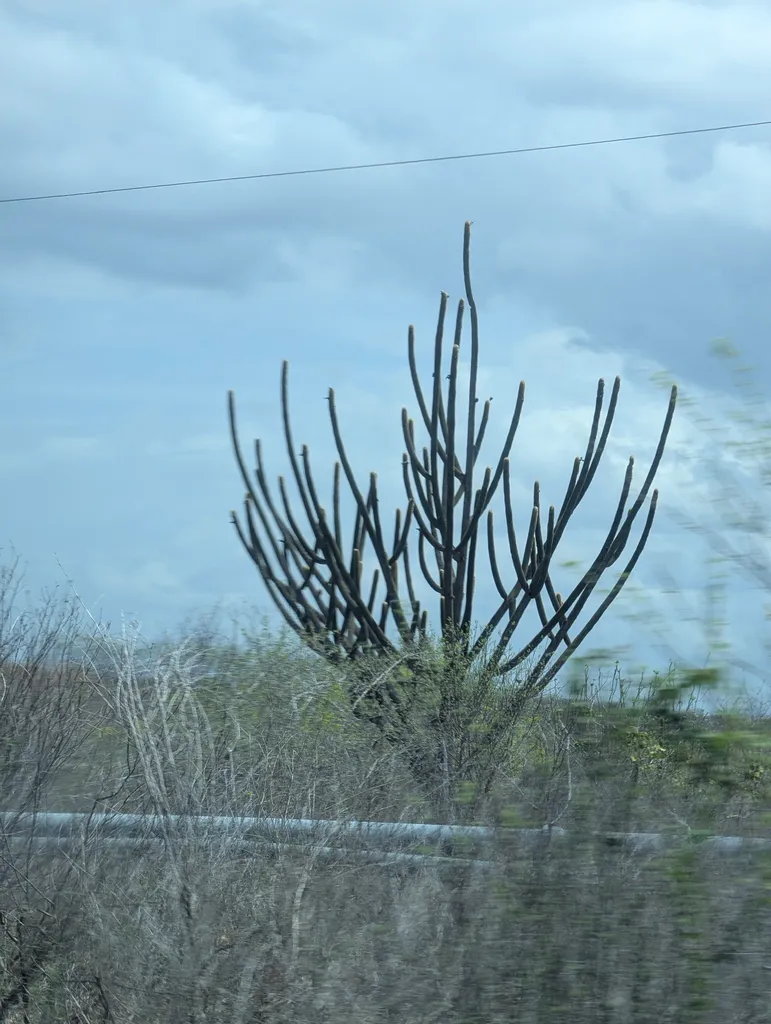
The normal species can become a large branching cactus tree.
Fresh growth extends the column and its color pattern; older plants develop a branching framework.
Growth sources: [2]
Flowers
White funnel-shaped flowers open at night, sometimes flushed red at the tips, and can be followed by fig-shaped fruits. Studies of Pilosocereus, including P. pachycladus, examine visits by bats, hawkmoths, and bees.
As it matures
Wild plants can reach as much as 10 m and become branching cactus trees. Cultivated plants remain much smaller.
Sources: [2]
Behind the name
Ritter published Pilosocereus pachycladus in 1979. Kew places the familiar trade name Pilosocereus azureus within its subspecies pachycladus.
Similar plants, useful clues
Golden torch ↗
Golden torch is greener with a more uniformly golden spine covering; cream stripes are a feature of this variegated individual.
This plant in the collection
Its story so far
Arrived in the shared planter
Acquired from Gerych's Design in the shared cactus planter now tracked as P19.
Collection record ↗
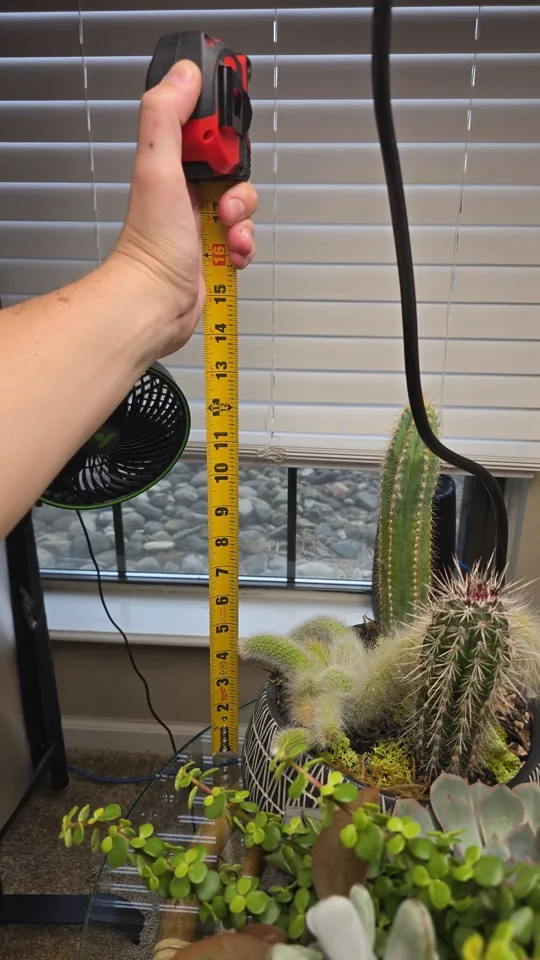
Then and now
Explore the sources
 Explore the sources
- Kew Plants of the World Online: Pilosocereus pachycladus ↗
- RHS: Pilosocereus pachycladus ↗
- Kew Plants of the World Online: Pilosocereus pachycladus subsp. pachycladus ↗
- Rocha and colleagues: reproductive biology of Pilosocereus ↗
- RHS: Echinopsis spachiana ↗
- RHS: reversion and chlorophyll in variegated plants ↗
- National Park Service: cactus adaptations ↗
Names and identification
| Kind | Name |
|---|---|
| Best working ID | Variegated Pilosocereus pachycladus F.Ritter |
| Common and trade names | Blue torch cactus, blue columnar cactus |
| Older trade name | Pilosocereus azureus |
| Collection feature | Broad cream-yellow vertical sectors consistent with variegation |
The smooth-edged pale stripes follow the growth axis and repeat over a long section, which is more consistent with stable variegation than a random burn or rot lesion. The blue skin, golden-brown areole wool, rib number, and columnar habit support the blue-torch appearance.
Normal species: origin and life cycle
The accepted species is native to eastern Brazil, from the northeast into northern Minas Gerais, in the seasonally dry Caatinga and related rocky vegetation. Kew assesses it as Least Concern. Friedrich Ritter published the name in 1979. Kew now treats the familiar Pilosocereus azureus as a synonym within P. pachycladus subsp. pachycladus.
Wild plants are branching blue columns that can become cactus trees. Flowering sections produce more hair around the areoles. Pale nocturnal flowers and fleshy fruits fit a broader Pilosocereus pattern strongly associated with bat pollination in the Caatinga. Research on the species indicates it is mainly outcrossing, so successful seed production benefits from pollen from another genetically distinct plant.
The collection plant's cream stripes contrast with the normal species' blue-green color.
Rehabilitation and grow-light care

| Topic | Practical approach |
|---|---|
| Grow-light position | Photo-matched rear center · Mixed. September 15, 2026 photo reference: rear wooden tables, facing the window. Compare both tall columns and trailing monkey tail; pale tissue and short neighbors need separate attention. See the current placement guide; exact exposure remains unmeasured. |
| Current status | Living green tip and ribs are visible. Old scars, lean, and color boundaries will not disappear; judge the next band of growth. |
| Water | During warm active growth, soak and drain after the mixed planter dries. Keep much drier in cool slow conditions. |
| Temperature | A warm-growing Brazilian cactus; protect from frost and cold wet roots. |
| Space | A healthy column eventually needs its own stable, deeper pot rather than permanent competition in a shallow mixed bowl. |


Variegated tissue has less chlorophyll. The green sectors must carry more of the photosynthetic load, while the pale sectors can burn sooner. A bright setting can still work, but the ramp should be based on the most sensitive side.
Propagation and watch points
- A cutting must contain enough green tissue to support itself. Let a cut callus fully before rooting.
- A fully green branch would be a reversion and may outgrow the variegated portion.
- Inspect the base after decorative moss is removed. A firm dry scar can remain; softness or spreading translucent brown tissue needs action.
- Mealybugs favor woolly areoles. Scale is easy to mistake for a small scar on blue waxy skin.
- Do not rub the blue bloom or pale sectors while inspecting; fingerprints remove wax and complicate photo comparisons.
Sources

Through the seasons
Plant Photo History
Recent photographs of this plant. Open a photo or its collection for the complete history.
Botanical reference photos
Reference Gallery
Pilosocereus pachycladus species forms
Form and growth

Look closer


_(4802630487).jpg)
In the landscape
Research Trail
- Collection Notes on GitHub
- Complete Photo Archive and Credits
- iNaturalist Observations — Pilosocereus species forms