


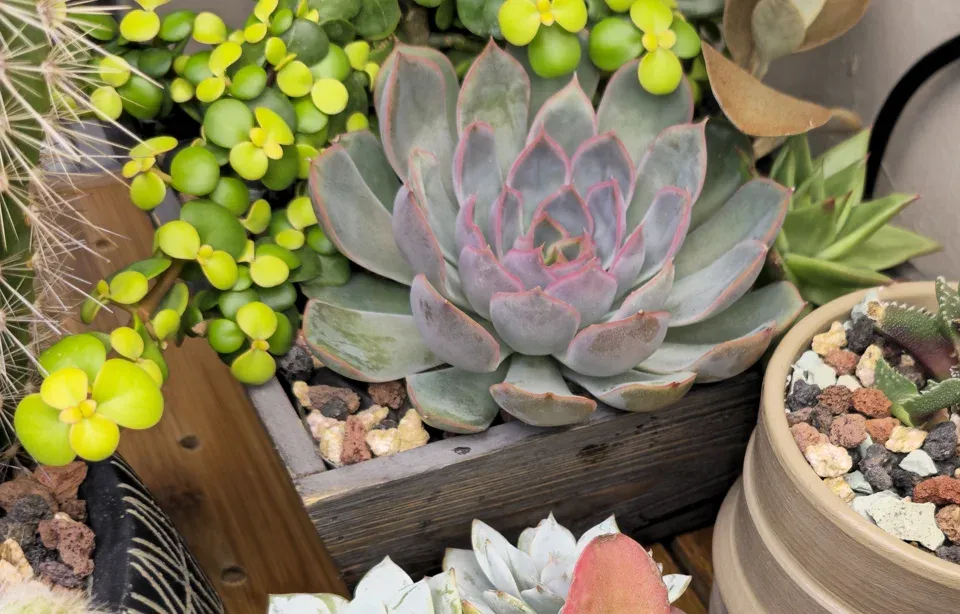
Shared planter and individual succulents
Plant 25 / 45 Shared planter and individual succulents
 Plant 25 / 45

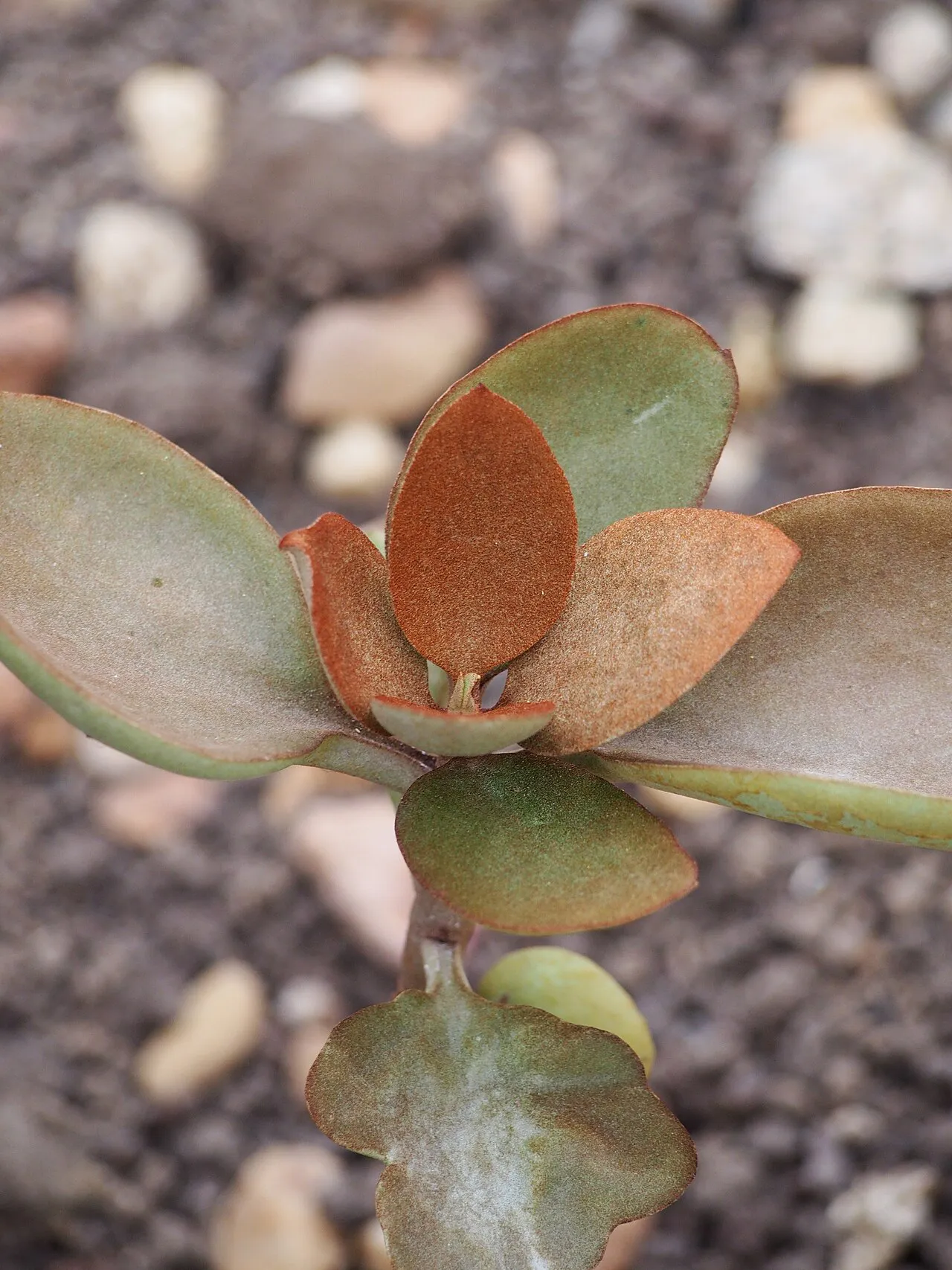
Species reference · Agnieszka Kwiecień, Nova · CC BY-SA 4.0 · Photo Source ↗
Shared container · P20 · #2
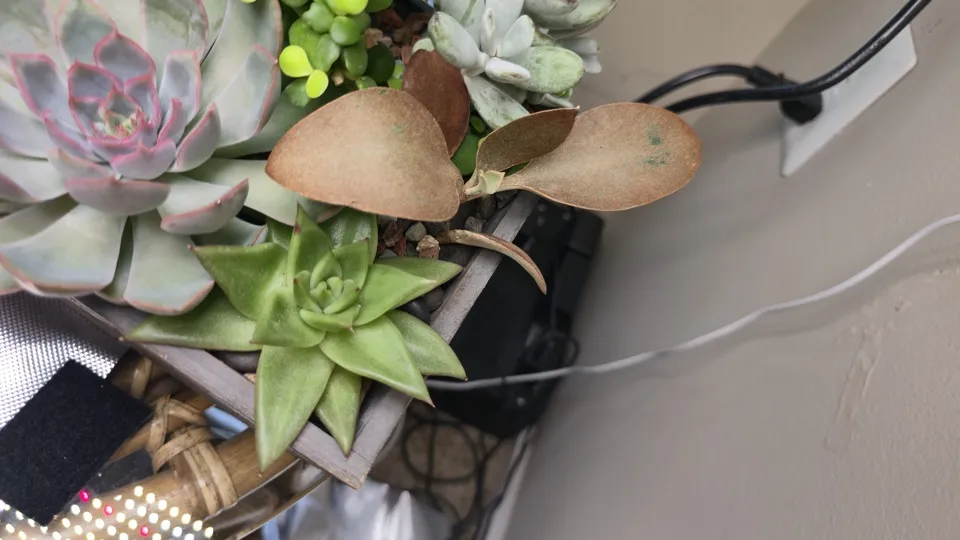
Shared succulent planter · P20
4 botanical profiles · one container history
 Pulido's echeveriaprobable Echeveria pulidonis or close hybridLikely Match
 Silver teaspoonsprobable Kalanchoe bracteataLikely Match
 Copper spoonsKalanchoe orgyalisStrong MatchThis profile
 Elephant bushPortulacaria afraStrong Match
The echeveria, two kalanchoes, and elephant bush have separate identity and care profiles but receive water through one shared root volume. Compare all four members and the whole-pot dry-down before watering.
One care record: log watering, feeding, weighing, and repotting once for P20. Include a plant's name when an observation concerns just that member.
 Collection Record
- Succulent-04
 Permanent Label
#2 Identification
 Status
 Acquired From
- Gerych's Greenhouse, as part of the mixed succulent planter
 Acquired On
- 2026-07-27
 Google Sheets ID
- P20 ↗
 Photo History
- 5 captures · newest ↓
Measurements and Care History
 Measurements and Care History
Weights, watering, events, and charts for P20.
Spot it
 Spot it
What it looks like
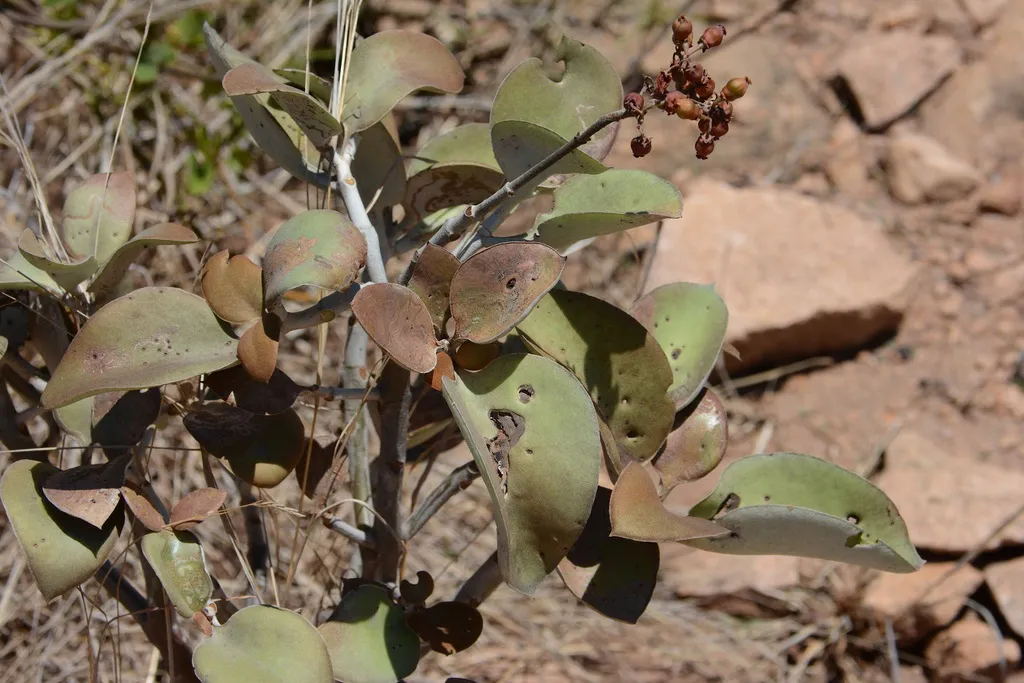
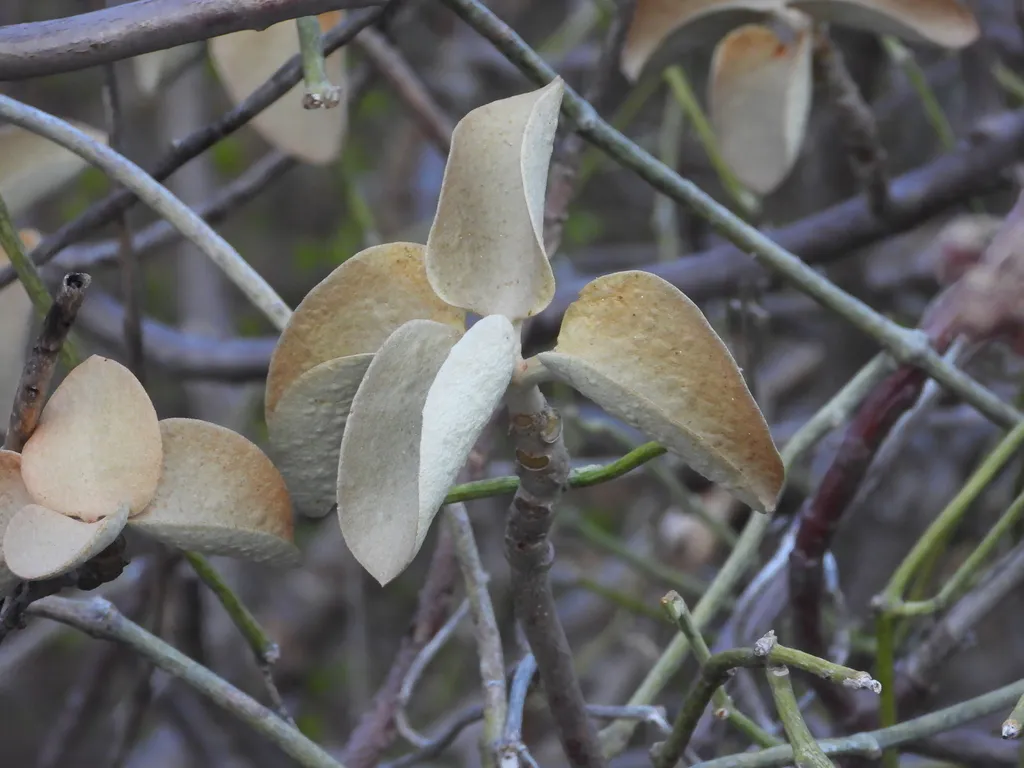
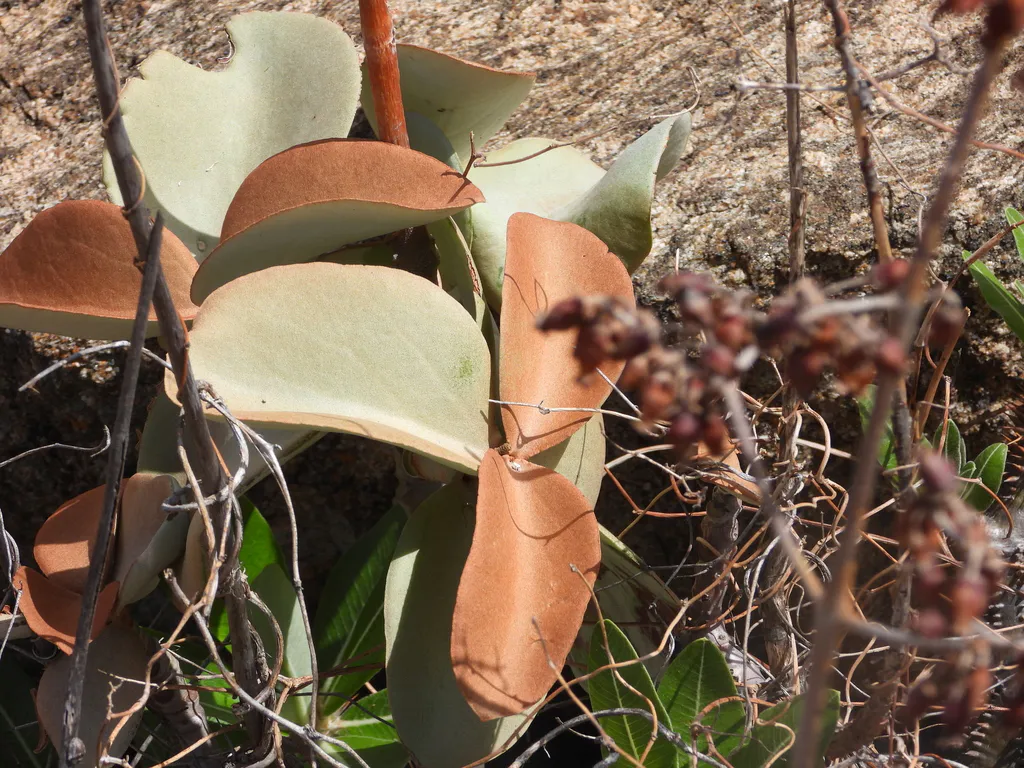
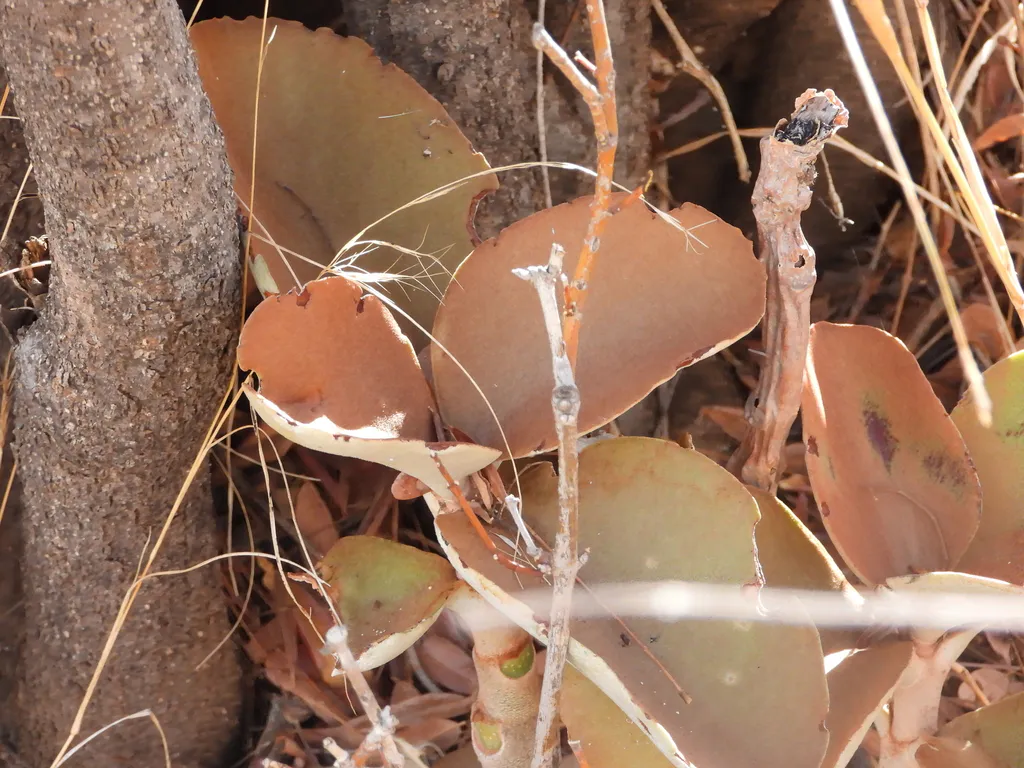
An upright fuzzy succulent with broad spoon-shaped leaves, cinnamon-colored felt on the upper surfaces and contrasting grey-bronze undersides.
One curious thing
 One curious thing
Did you know?
Each spoon-shaped leaf has contrasting surfaces: cinnamon-colored felt above and a greyer bronze underside, making a turned leaf a useful identification view.
Explore This Plant
A closer look
How this plant works
 How this plant works
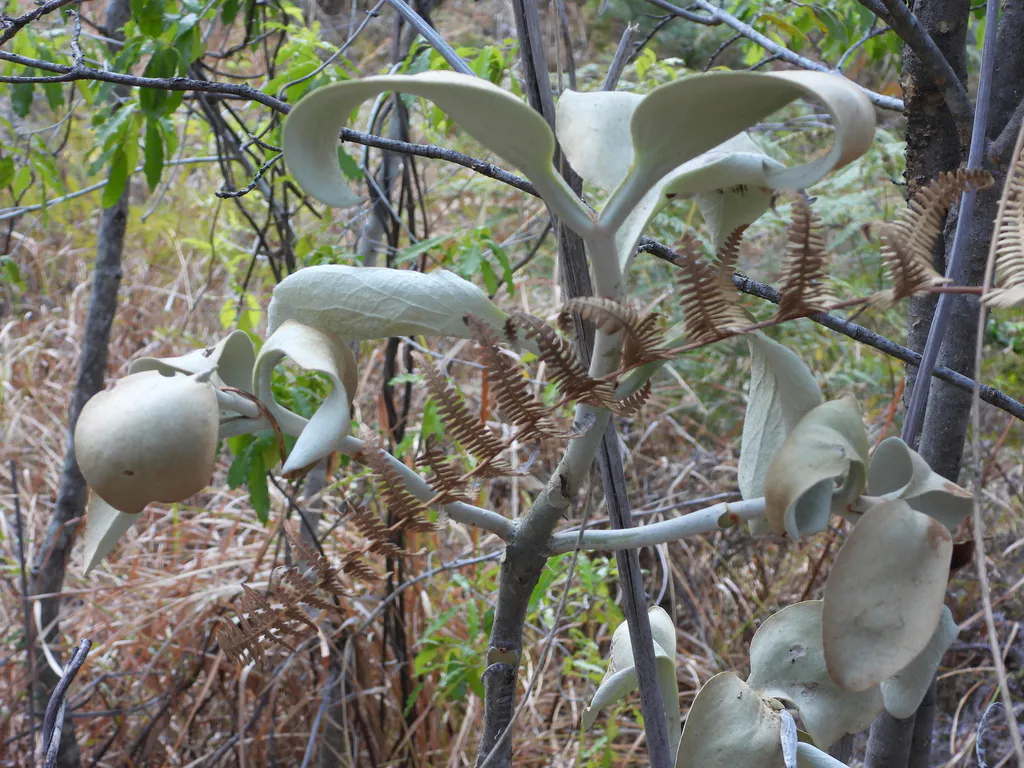
The contrasting surfaces and folded shape distinguish copper spoons at a glance.
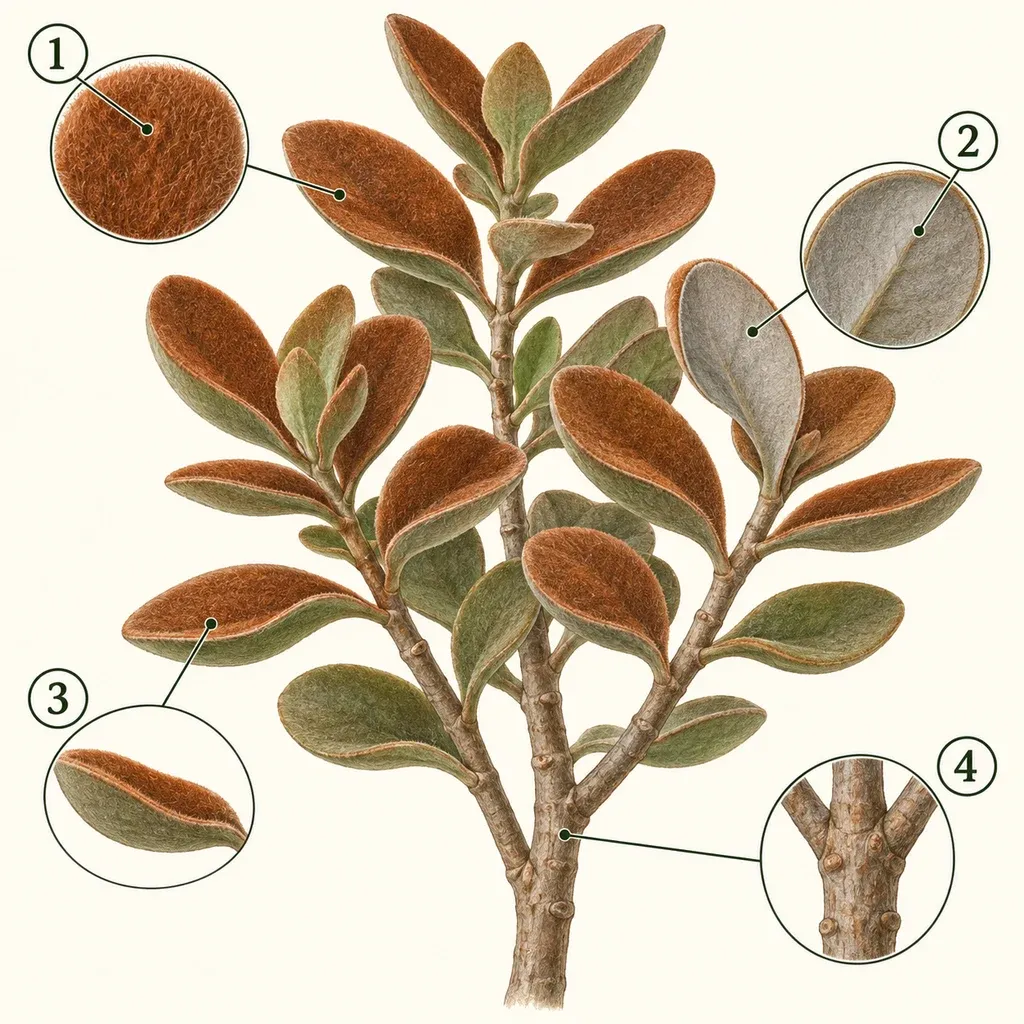
Copper upper felt
Fine cinnamon-colored hairs cover the upper leaf surface.
Grey-bronze underside
The underside contrasts with the copper top of the same leaf.
Folded leaf blade
The fleshy spoon-shaped blade bends upward along its middle.
Upright stem
Branching stems lift the leaves into a shrub-like crown.
Anatomy sources: [1]
Habitat and origins
 Habitat and origins
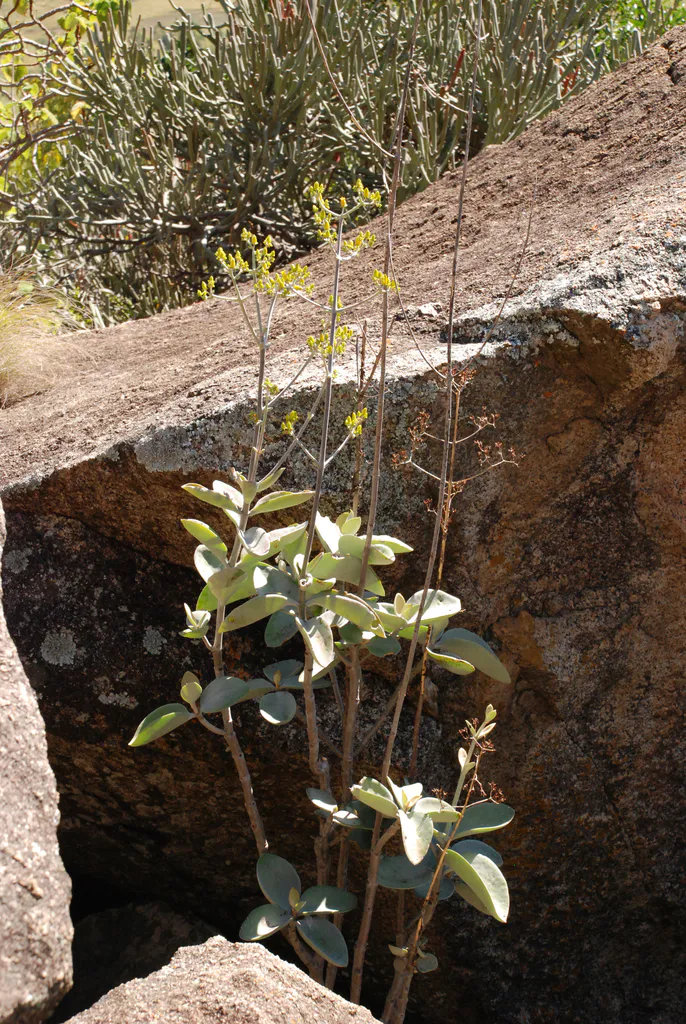
Copper spoons comes from Madagascar and is associated with rocky, dry ground. Its upright, branching form gives it a different role from the low echeveria beside it in this collection. The felted leaves are its most striking feature, but the plant eventually develops a shrub's framework rather than staying a small cluster of spoons.
What growth can look like
 What growth can look like
- Stage 1
Extend a shoot
Leaf pairs develop along an upright stem.
- Stage 2
Build a crown
Additional branches spread the foliage above the soil.
- Stage 3
Flower at the tips
Established branch tips may carry terminal flower clusters.
Growth can be slow in a young plant, then become faster as it matures and builds its branching framework.
Growth sources: [1]
Flowers
Flower clusters form at the branch tips. Port St. Lucie Botanical Gardens describes bright yellow or pink blooms above the copper foliage.
Sources: [1]
As it matures
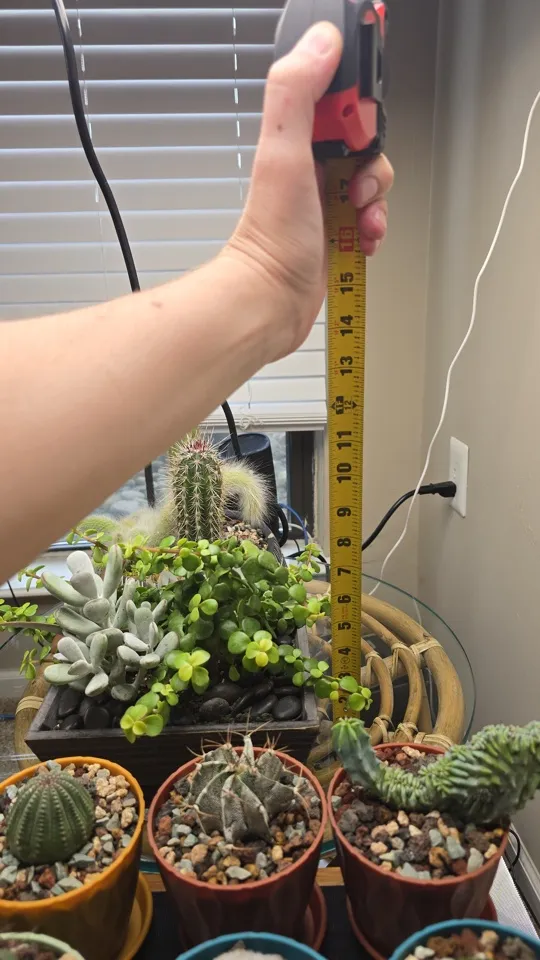
The botanical garden lists roughly 3–6 ft or more for mature plants. A pot-grown specimen may remain much smaller. Its potential height helps explain why this member of the shared box can overtop its low-growing neighbors.
Sources: [1]
Behind the name
Copper spoons and cinnamon bear both describe the warm-colored felt on the upper leaf surface. Turn a leaf slightly to see the contrasting grey-bronze underside.
Sources: [1]
Similar plants, useful clues
Silver spoons (Kalanchoe bracteata) ↗
Silver spoons has predominantly silvery leaves, whereas copper spoons combines cinnamon upper felt with a greyer underside and an upward-folded blade.
This plant in the collection
Its story so far
Joined the collection
Acquired at Gerych's Greenhouse with the other plants sharing P20 / #2.
Collection record ↗
Then and now
Explore the sources
 Explore the sources
Names and identity
| Kind | Name |
|---|---|
| Accepted botanical name | Kalanchoe orgyalis Baker |
| Common and trade names | Copper spoons, cinnamon bear, leather plant, shoe-leather kalanchoe |
| Collection nickname | “Brown spoons” |
| Synonym seen in references | Kalanchoe antanosiana |
The leaves fold upward along their middle, creating the spoon shape. Cinnamon-colored hairs cover the upper surface, while the underside is greyer and bronze-toned.
Origin, history, and mature form
This is another Malagasy dry-country shrub. Kew accepts the species as native to Madagascar and records K. antanosiana as a synonym. John Gilbert Baker published K. orgyalis in 1882.
In time it can reach roughly 3–6 ft, with woody branching stems and thick spoon-shaped leaves. Flower clusters appear at mature branch tips. Port St. Lucie Botanical Gardens describes yellow or pink blooms and notes that growth can speed up as a young plant matures.
The copper felt softens the leaf outline. Handle the plant by its pot and inspect leaf axils gently to avoid rubbing the hairy surfaces.
Care in the shared planter

The square wooden planter has a plastic liner and an approximately one-inch drainage hole through both the bottom and liner, documented September 20, 2026. Keep the opening clear and let the shared root zone dry before watering.
| Topic | Practical approach |
|---|---|
| Grow-light position | Rear right, toward window · Mixed. September 15 rear wooden tables, facing the window. Keep the low Echeveria exposed beneath the taller Portulacaria and Kalanchoe foliage. See the current placement guide. |
| Outdoor light | Full sun to partial shade is possible after acclimation; very hot abrupt sun can still burn felted leaves. |
| Water | Soak the dry shared planter and drain. Reduce water when growth slows, especially in cool conditions. |
| Pruning | Head back tall stems above a node to create branches and keep the mixed planting balanced. |
| Feeding | Dilute balanced fertilizer in active growth; avoid forcing weak winter stems. |


More light often deepens copper color and keeps internodes short. Color alone is not a meter, however: genetics, leaf age, temperature, and water status all contribute. Use stem spacing and the health of the newest leaves too.
Propagation, pests, and toxicity

- Stem cuttings root easily after the wound dries. Individual leaves can propagate, but a stem gives a faster usable plant.
- Scale and mealybugs hide at the felted leaf axils; inspect without scrubbing.
- Sudden leaf drop can follow waterlogged roots, cold, or a major move. A few old lower leaves drying is ordinary turnover.
- As a Kalanchoe, it should be treated as toxic to pets and people if eaten. Keep trimmings out of reach and out of animal-accessible compost.
- It will eventually compete with both the echeveria and silver teaspoons for headroom; periodic pruning is part of the shared-planter design.
Sources

-
Owner observations, September 20, 2026: P20 / #2 wooden planter with a plastic liner and an approximately one-inch drainage hole through both layers.
Through the seasons
Plant Photo History
Recent photographs of this plant. Open a photo or its collection for the complete history.
Botanical reference photos
Reference Gallery
Look closer



Flowers and buds

Research Trail
- Collection Notes on GitHub
- Complete Photo Archive and Credits
- iNaturalist Observations — Species observations