


Shared planter and individual succulents
Plant 24 / 45 Shared planter and individual succulents
 Plant 24 / 45

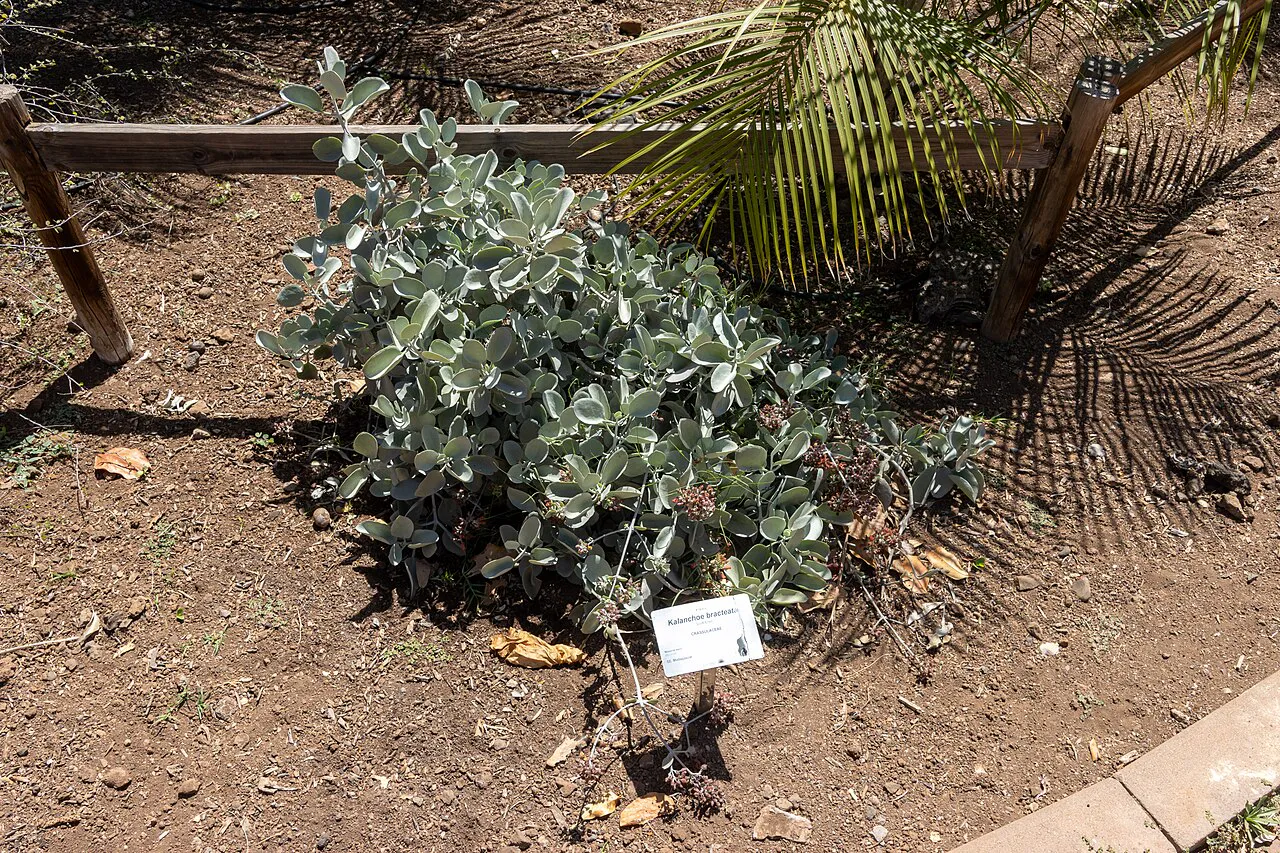
Species reference · Photograph by Mike Peel ( www.mikepeel.net ). · CC BY-SA 4.0 · Photo Source ↗
Shared container · P20 · #2
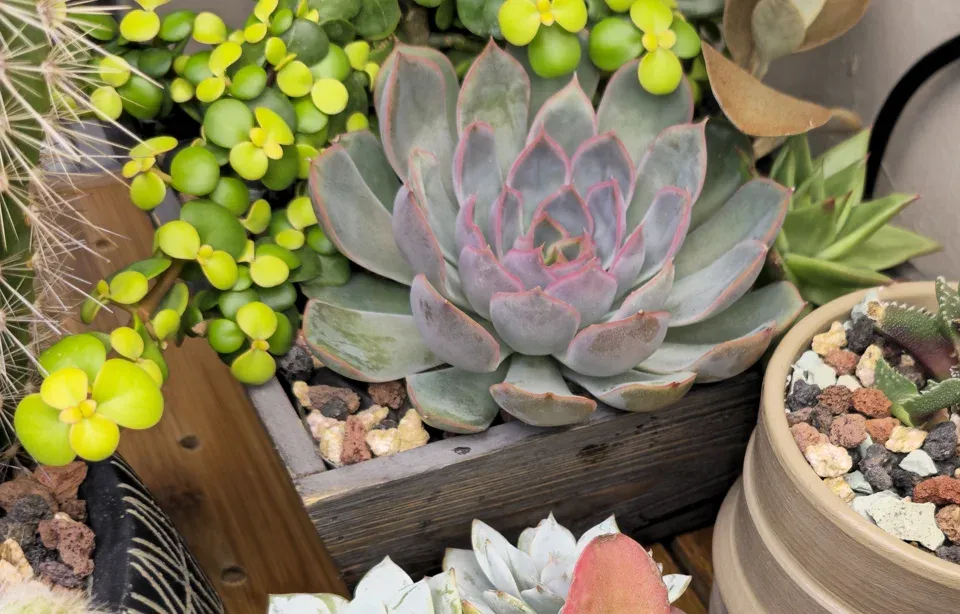
Shared succulent planter · P20
4 botanical profiles · one container history
 Pulido's echeveriaprobable Echeveria pulidonis or close hybridLikely Match
 Silver teaspoonsprobable Kalanchoe bracteataLikely MatchThis profile
 Copper spoonsKalanchoe orgyalisStrong Match
 Elephant bushPortulacaria afraStrong Match
The echeveria, two kalanchoes, and elephant bush have separate identity and care profiles but receive water through one shared root volume. Compare all four members and the whole-pot dry-down before watering.
One care record: log watering, feeding, weighing, and repotting once for P20. Include a plant's name when an observation concerns just that member.
 Collection Record
- Succulent-03
 Permanent Label
#2 Identification
 Status
 Acquired From
- Gerych's Greenhouse, as part of the mixed succulent planter
 Acquired On
- 2026-07-27
 Google Sheets ID
- P20 ↗
 Photo History
- 5 captures · newest ↓
Measurements and Care History
 Measurements and Care History
Weights, watering, events, and charts for P20.
Spot it
 Spot it
What it looks like
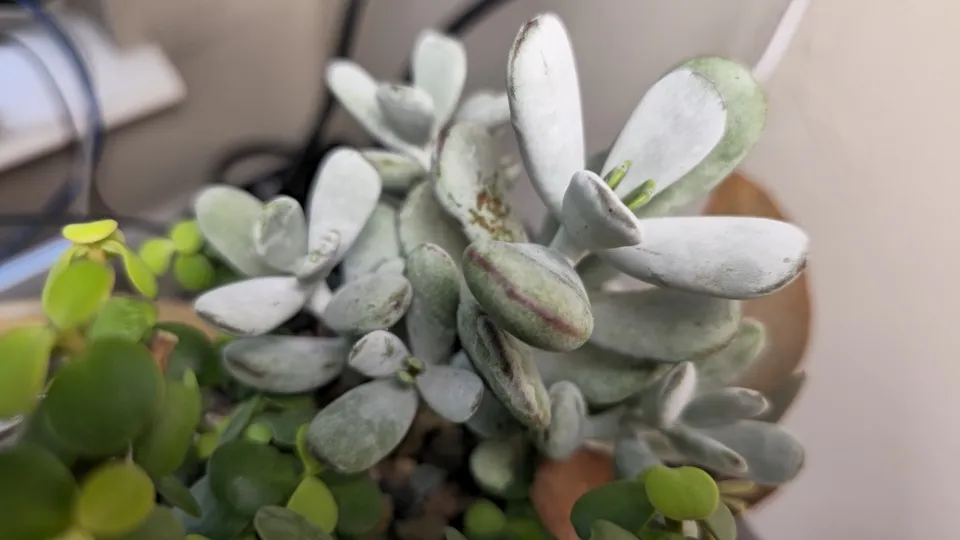
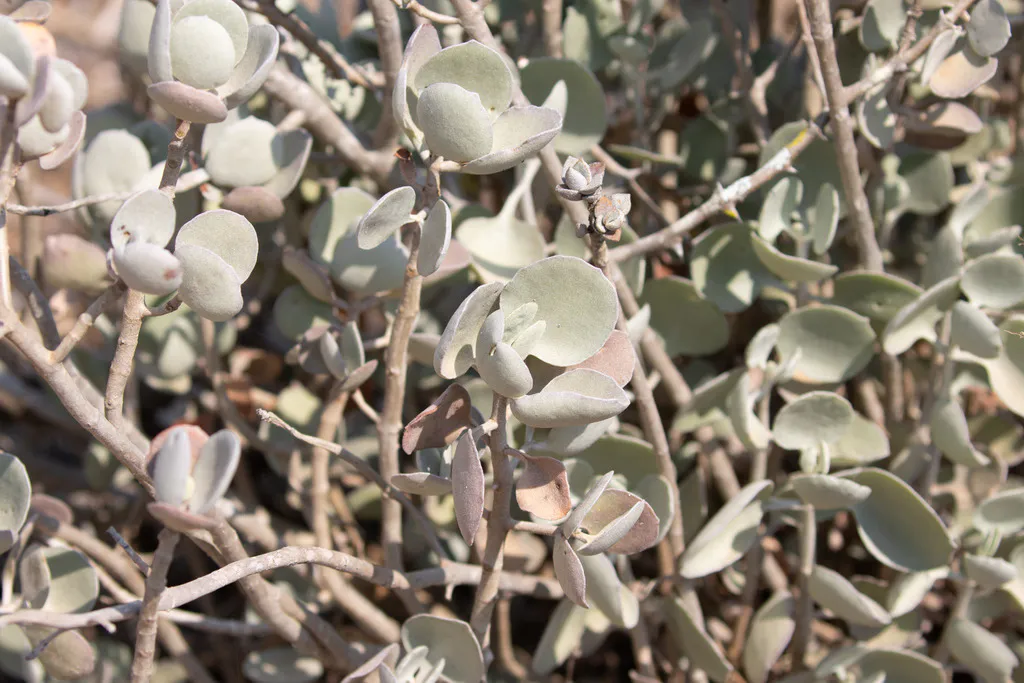
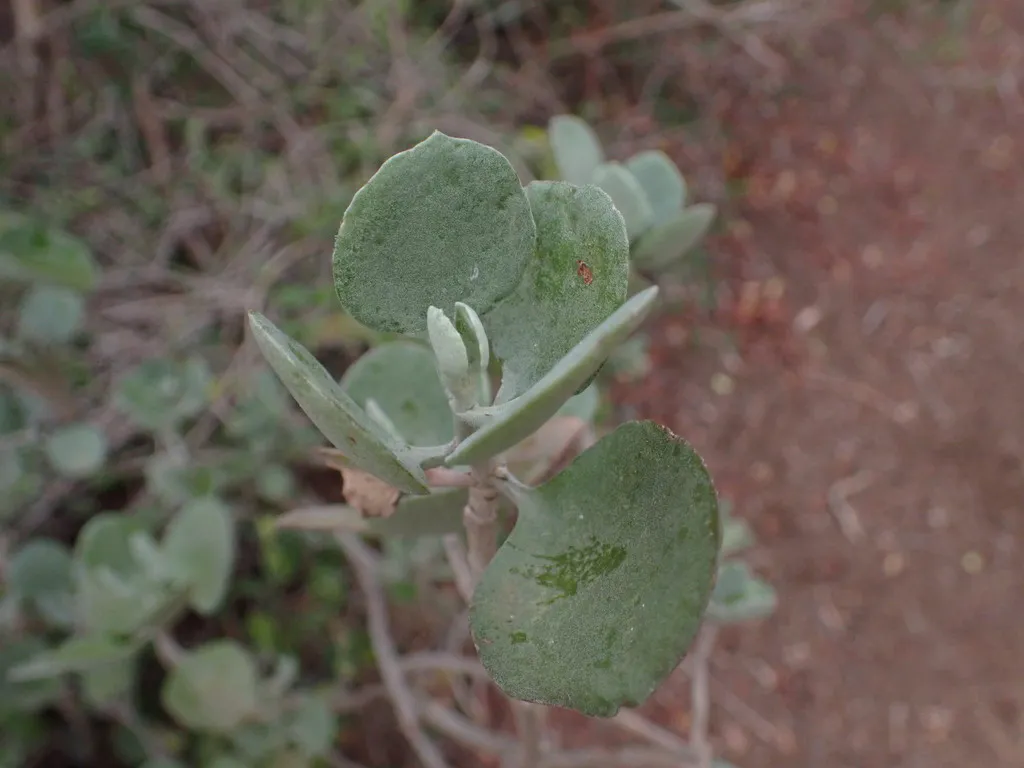
A branching succulent with thick spoon-shaped leaves muted by a dense silver felt, making the foliage look almost white beside the greener plants in the shared planter.
One curious thing
 One curious thing
Did you know?
Fine hairs and a waxy coating create the silver leaf surface; beneath the foliage, pale four-angled stems gradually become woody.
Explore This Plant
A closer look
How this plant works
 How this plant works
Silver spoons combines finely hairy leaves with short leaf stalks and branching stems.
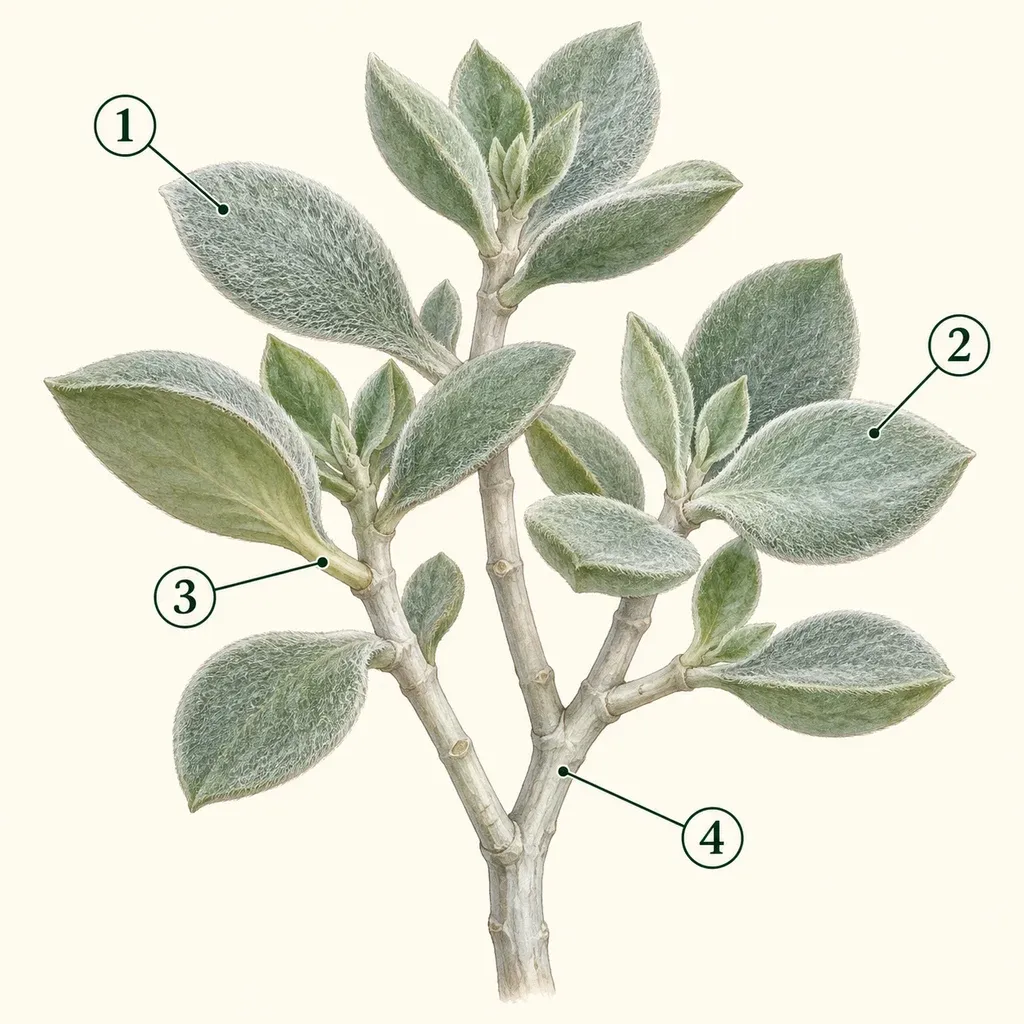
Silver surface
Dense hairs and a waxy coating give the leaf its pale appearance.
Spoon-shaped blade
The thick leaf supplies both photosynthetic area and water storage.
Short petiole
A short stalk attaches the blade to the stem.
Branching stem
Somewhat woody stems support the spreading crown of opposite leaves.
Anatomy sources: [1]
Habitat and origins
 Habitat and origins
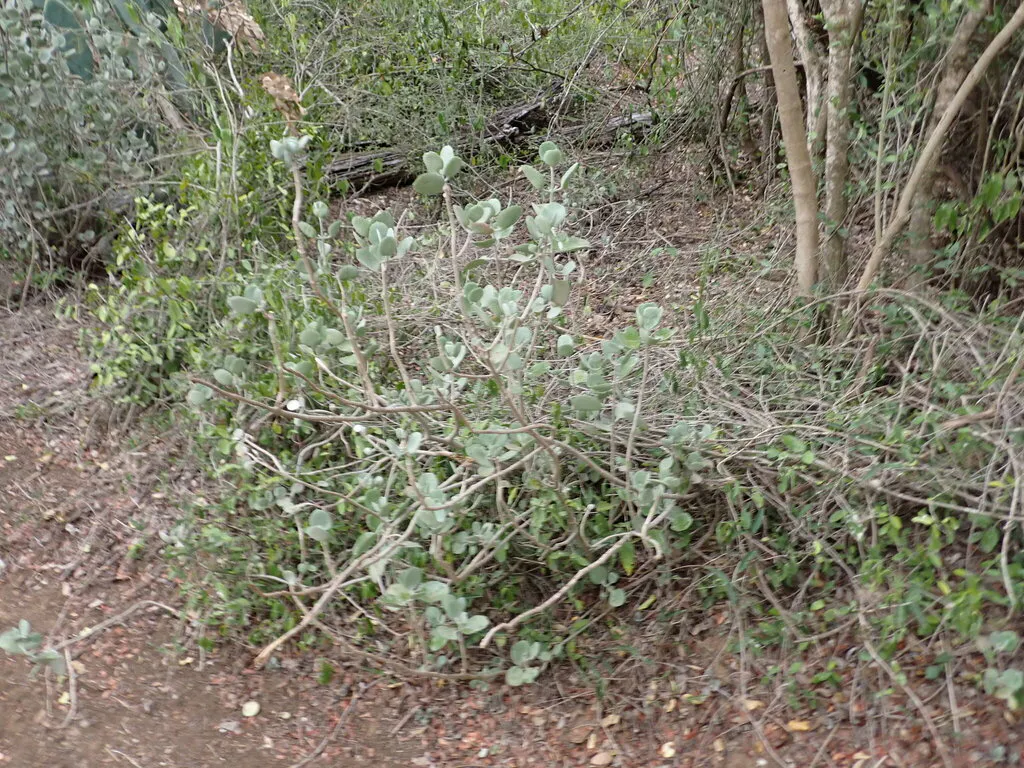
Kalanchoe bracteata is native to Madagascar’s seasonally dry tropical regions. It develops a branching shrub with pale leaves held above somewhat woody stems. The silvery surface combines dense hairs with a waxy coating, giving the foliage a soft appearance beside smooth green succulents.
What growth can look like
 What growth can look like
- Stage 1
Open leaf pairs
Young shoots add paired leaves at their tips.
- Stage 2
Branch outward
An erect shoot develops a broader, mounding outline.
- Stage 3
Form flower clusters
Mature shoot tips may develop a branched inflorescence.
The pale stems are four-angled and become somewhat woody as the shrub develops.
Growth sources: [1]
Flowers
Red tubular flowers grow in branched clusters at the shoot tips. They add a strong color contrast to the grey-silver foliage.
Sources: [1]
As it matures
Plants can reach about 2–4 ft tall and similarly wide. Prune taller shoots to keep this shrub in scale with the shared box and leave the lower echeveria exposed to light.
Sources: [1]
Behind the name
Bracteata refers to floral bracts. The familiar 'silver spoons' name instead describes the silvery, spoon-shaped leaves visitors can recognize before it flowers.
Sources: [1]
Similar plants, useful clues
Copper spoons (Kalanchoe orgyalis) ↗
Copper spoons has cinnamon-colored upper felt and greyer undersides; silver spoons has predominantly silver to olive foliage.
This plant in the collection
Its story so far
Joined the collection
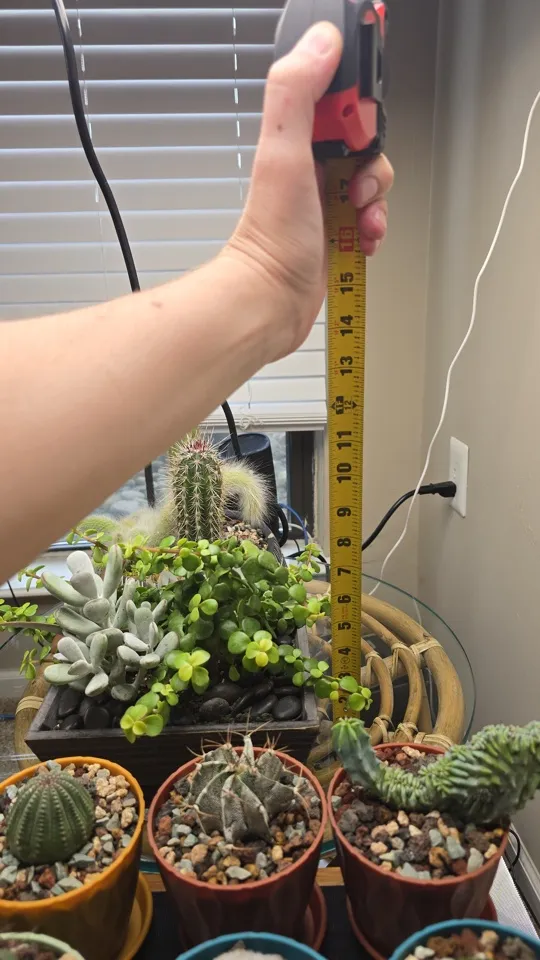
Acquired at Gerych's Greenhouse in the shared P20 / #2 succulent planter.
Collection record ↗
Then and now
Explore the sources
 Explore the sources
Names and identification
| Kind | Name |
|---|---|
| Best working ID | Kalanchoe bracteata Scott Elliot |
| Common and trade names | Silver teaspoons, silver spoons, teaspoons |
| Close alternative | Kalanchoe hildebrandtii |
| Name clue | bracteata refers to conspicuous bracts associated with the flowers |

The dense silver coating and rounded spoon-shaped leaves support K. bracteata. Flower color is useful when comparing the similar silver-leaved shrubs: K. bracteata has red tubular flowers.
Origin, form, and flowers
Kew accepts K. bracteata as a species native to Madagascar's seasonally dry tropical regions. George Francis Scott Elliot published it in 1891. Kew treats the later name Kalanchoe nadyae as a synonym.
It is a branching succulent shrub rather than a permanently compact rosette. NC State describes plants reaching roughly 2–4 ft under favorable conditions. Leaves have short silvery hairs and a waxy coating, while the pale stems have a distinctive four-angled shape. Clusters of red, four-parted flowers may appear on mature stems.
Prune its taller shoots to keep the shrub in scale with the shared planter and leave the low echeveria exposed to light.
Care in the shared planter

The square wooden planter has a plastic liner and an approximately one-inch drainage hole through both the bottom and liner, documented September 20, 2026. Keep the opening clear and let the shared root zone dry before watering.
| Topic | Practical approach |
|---|---|
| Grow-light position | Rear right, toward window · Mixed. September 15 rear wooden tables, facing the window. Keep the low Echeveria exposed beneath the taller Portulacaria and Kalanchoe foliage. See the current placement guide. |
| Water | Let the shared planter dry, then soak and drain. Hairy leaves do not benefit from frequent misting. |
| Light response | Healthy light produces sturdy stems and well-spaced, densely silver leaves. Abrupt hot sun can scorch despite the hairs. |
| Pruning | Cut above a leaf node to branch the plant and keep it from shading the echeveria. |
| Feeding | Light fertilizer during warm active growth only. |


A controlled study of six other Kalanchoe species found better dry mass and flowering at 8.6–17.2 mol/m²/day than at 4.3. It supports a bright starting range, but it is not a direct experiment on K. bracteata and should not be treated as an exact requirement.
Propagation, pests, and toxicity

- Stem cuttings are the easiest propagation; leaf cuttings can also form new plants. Let wounds dry before placing them in lightly moist, airy medium.
- Mealybugs, scale, aphids, and spider mites are the likely indoor pests.
- Brown rubbed patches in the silver hair may be mechanical. A soft stem or translucent leaf base points instead to excess moisture.
- Like other Kalanchoe, it contains bufadienolide cardiac glycosides. Keep leaves and flowers away from pets and children; do not treat it as edible.
Sources

-
Owner observations, September 20, 2026: P20 / #2 wooden planter with a plastic liner and an approximately one-inch drainage hole through both layers.
-
University of Minnesota research summary: DLI in six Kalanchoe species
Through the seasons
Plant Photo History
Recent photographs of this plant. Open a photo or its collection for the complete history.
Botanical reference photos
Reference Gallery
Form and growth

Look closer

Flowers and buds


In the landscape



Research Trail
- Collection Notes on GitHub
- Complete Photo Archive and Credits
- iNaturalist Observations — Species comparisons