


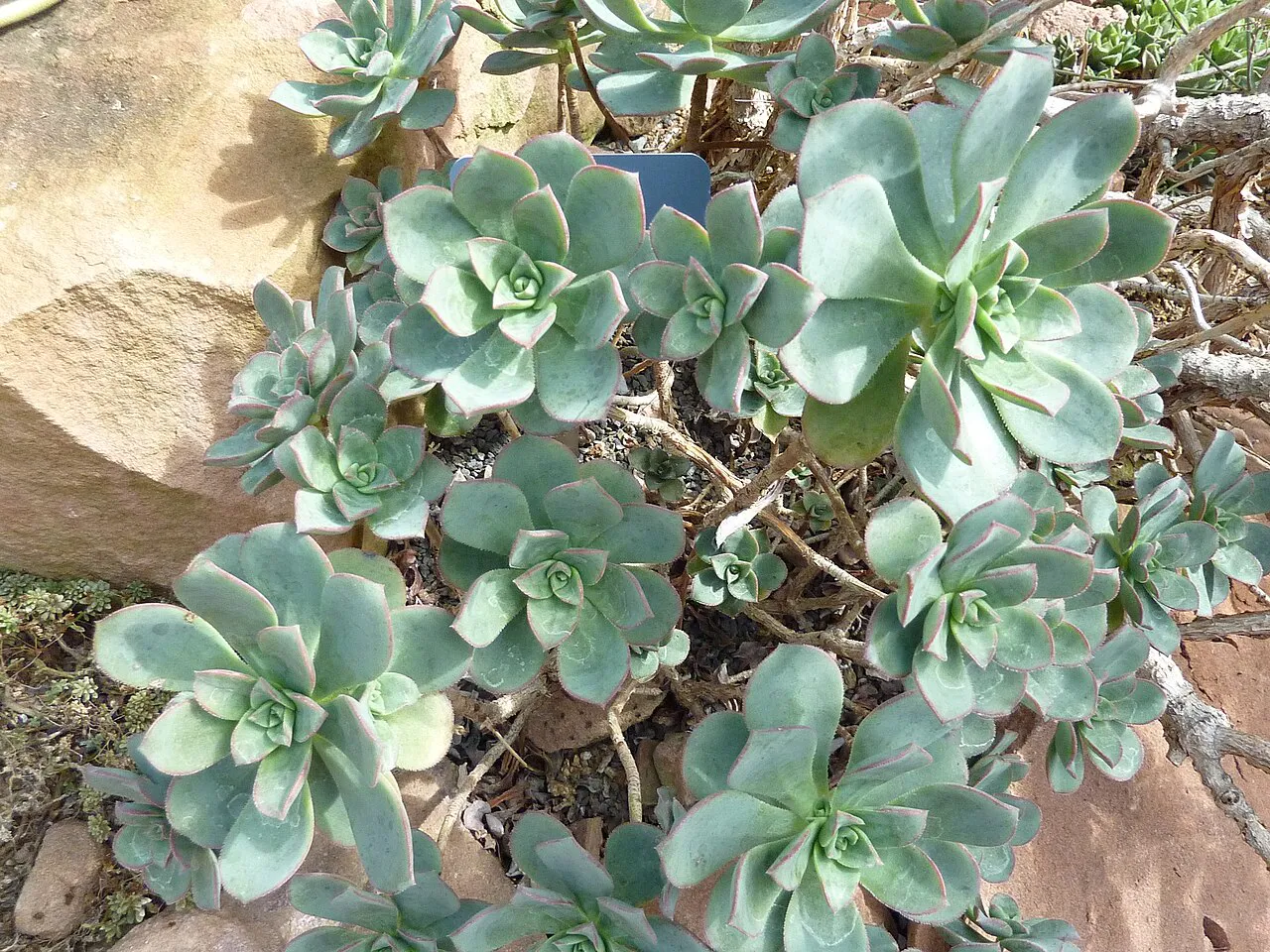
Shared planter and individual succulents
Plant 26 / 45 Shared planter and individual succulents
 Plant 26 / 45


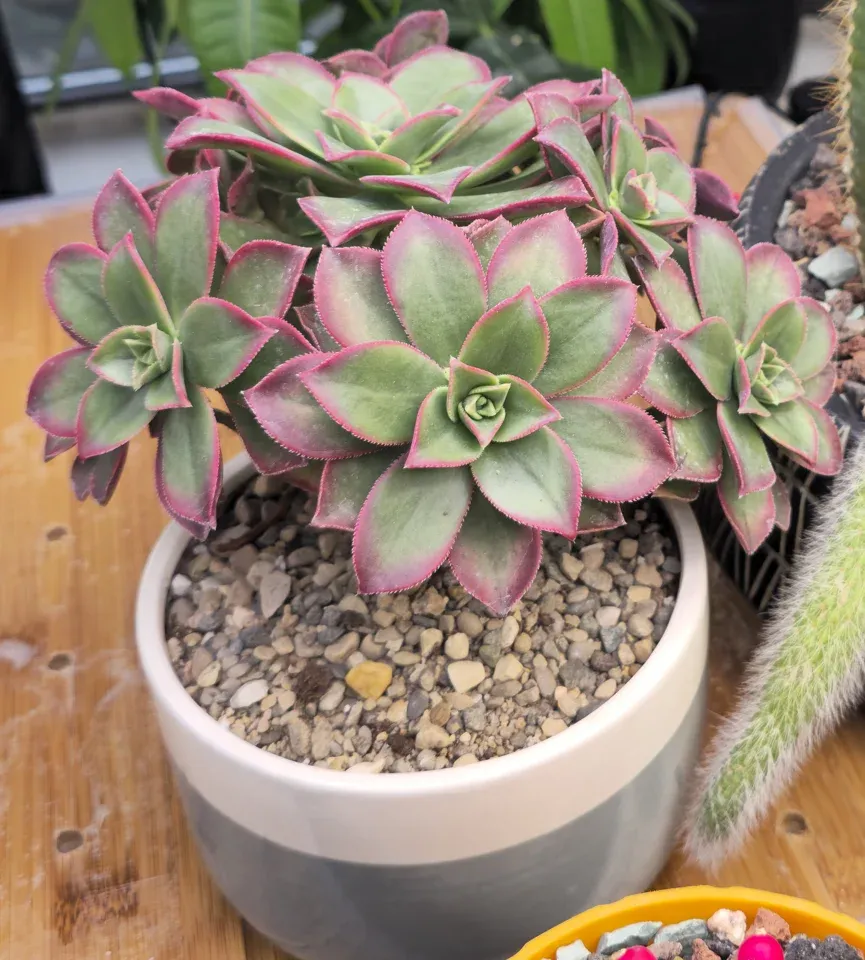
Species reference · James Steakley · CC BY-SA 3.0 · Photo Source ↗
 Collection Record
- Succulent-05
 Permanent Label
#4 Identification
 Status
 Acquired From
- Carlsons' Greenhouse, Torrey Road, Fenton, Michigan
 Acquired On
- 2026-08-10
 Google Sheets ID
- P22 ↗
 Photo History
- 5 captures · newest ↓
Measurements and Care History
 Measurements and Care History
Weights, watering, events, and charts for P22.
Spot it
 Spot it
What it looks like
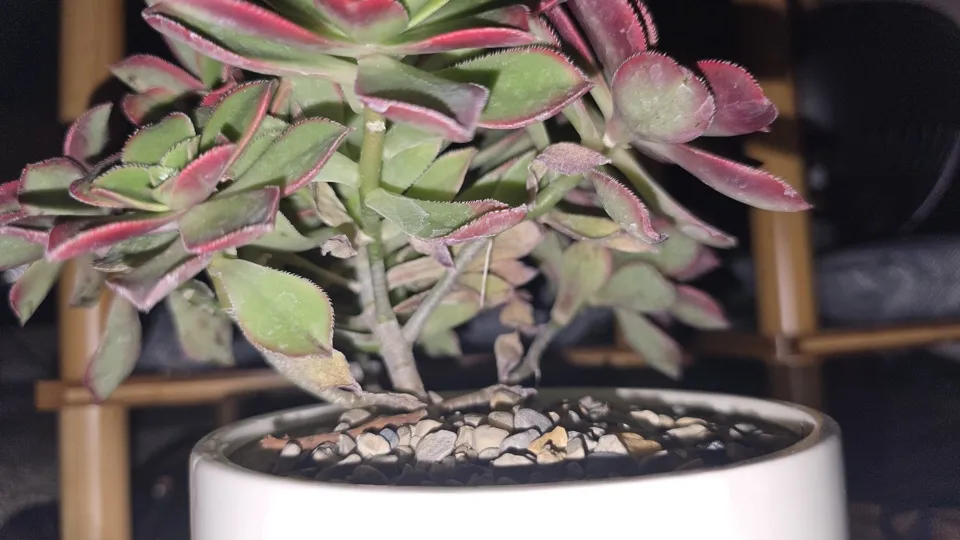
Branching rosettes of spoon-shaped leaves blend green and creamy yellow through the center, then sharpen into vivid pink-red margins; older bare stems hold the colorful crowns above the pot.
One curious thing
 One curious thing
Did you know?
A flowering aeonium rosette dies after its bloom, but a branched plant can continue through its other rosettes; one finished crown need not mean the whole plant is lost.
Explore This Plant
A closer look
How this plant works
 How this plant works
Terminal rosettes make leafy crowns at the ends of a branching framework.
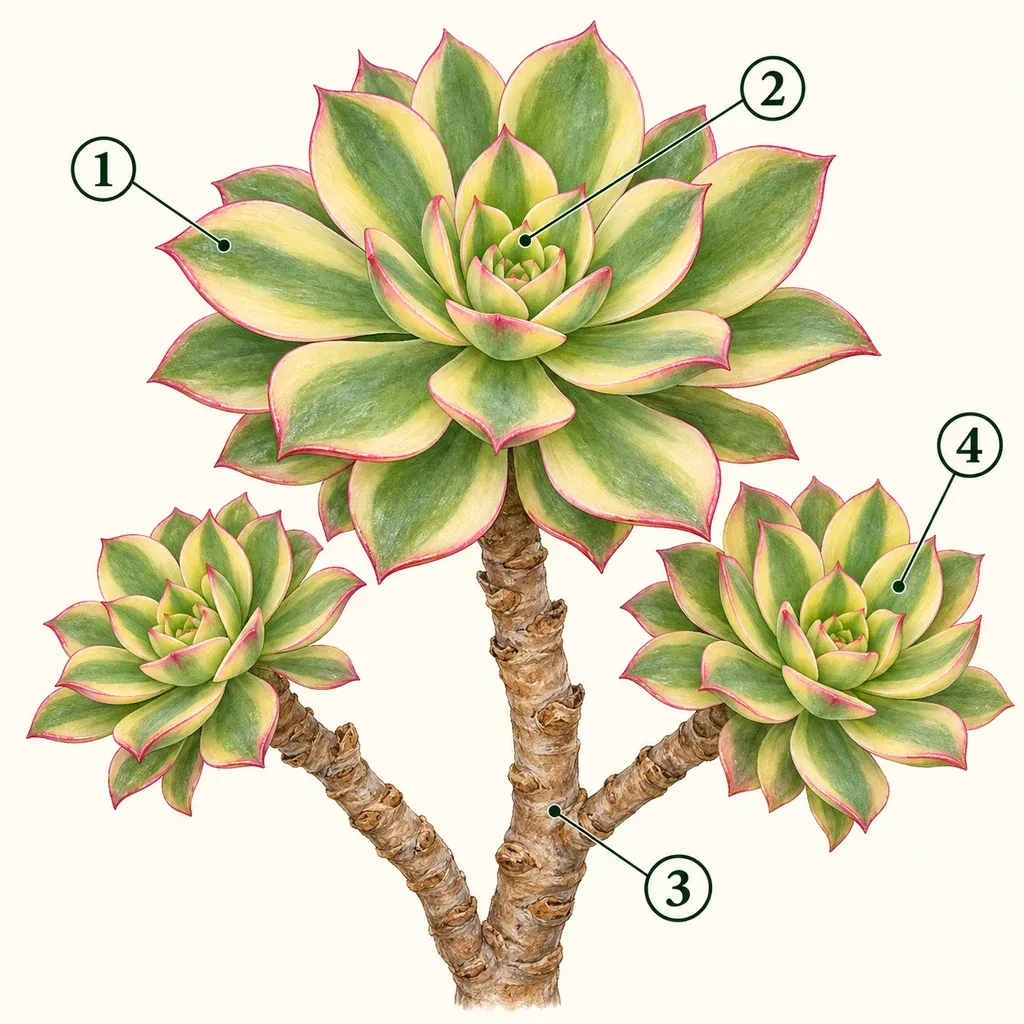
Variegated leaf
Fleshy blades combine green and yellow areas with colored margins.
Rosette center
The youngest leaves cluster at the growing tip.
Woody branch
Older stem sections hold each rosette above the ground.
Side rosette
Another growing tip adds a new leafy crown to the shrub.
Habitat and origins
 Habitat and origins
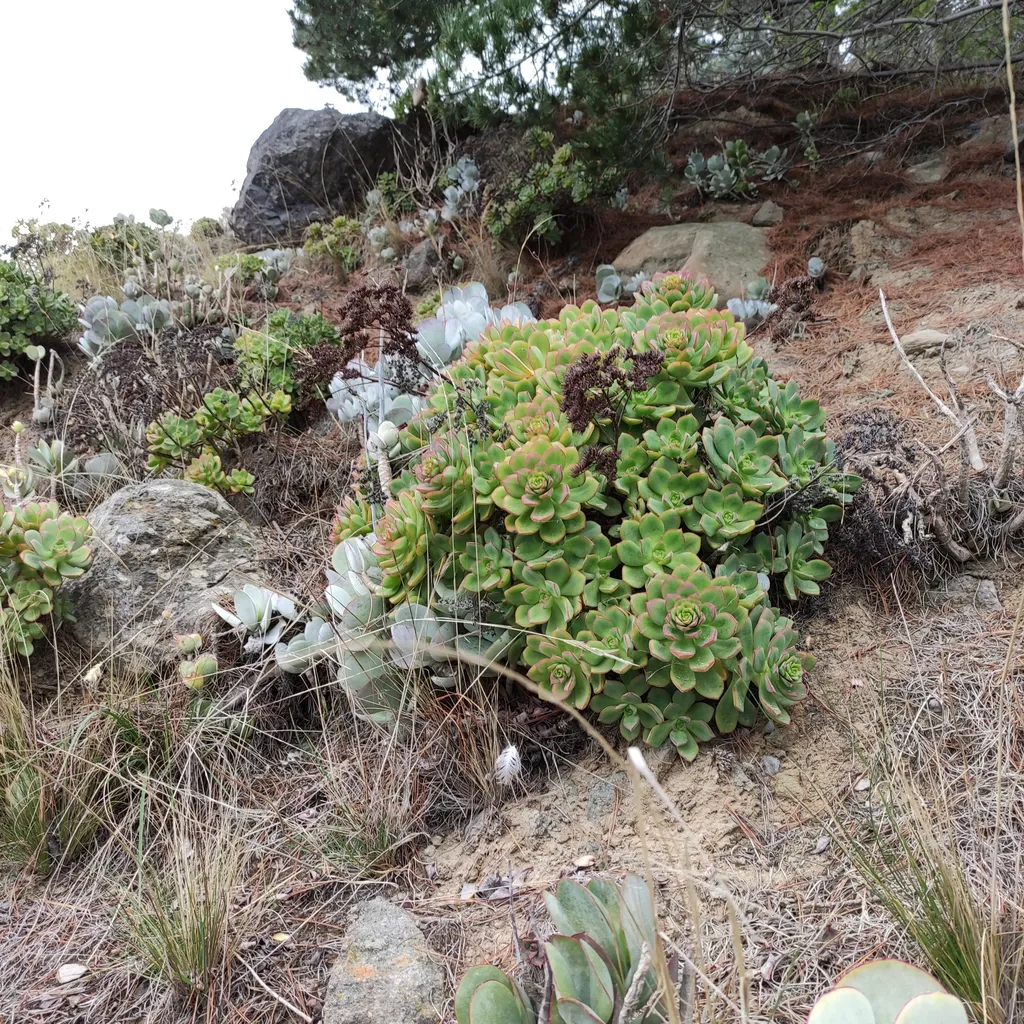
Aeonium haworthii is native to Tenerife in the Canary Islands, where it grows as a subtropical succulent subshrub. The cultivated Dream Color form brings yellow, green and pink-red tones to that branching shape. Older leaves gradually fall away, leaving visible stems topped by living rosettes.
What growth can look like
 What growth can look like
- Stage 1
Expand a rosette
Young central leaves spread into successive rings.
- Stage 2
Branch and lift
Stems lengthen and carry additional rosettes.
- Stage 3
Flower one crown
A flowering rosette finishes its life while other branches can persist.
Older leaves fall as new ones develop, naturally exposing the stems below the rosettes; sudden collapse or widespread soft leaves deserve a closer inspection.
Growth sources: [3]
Flowers
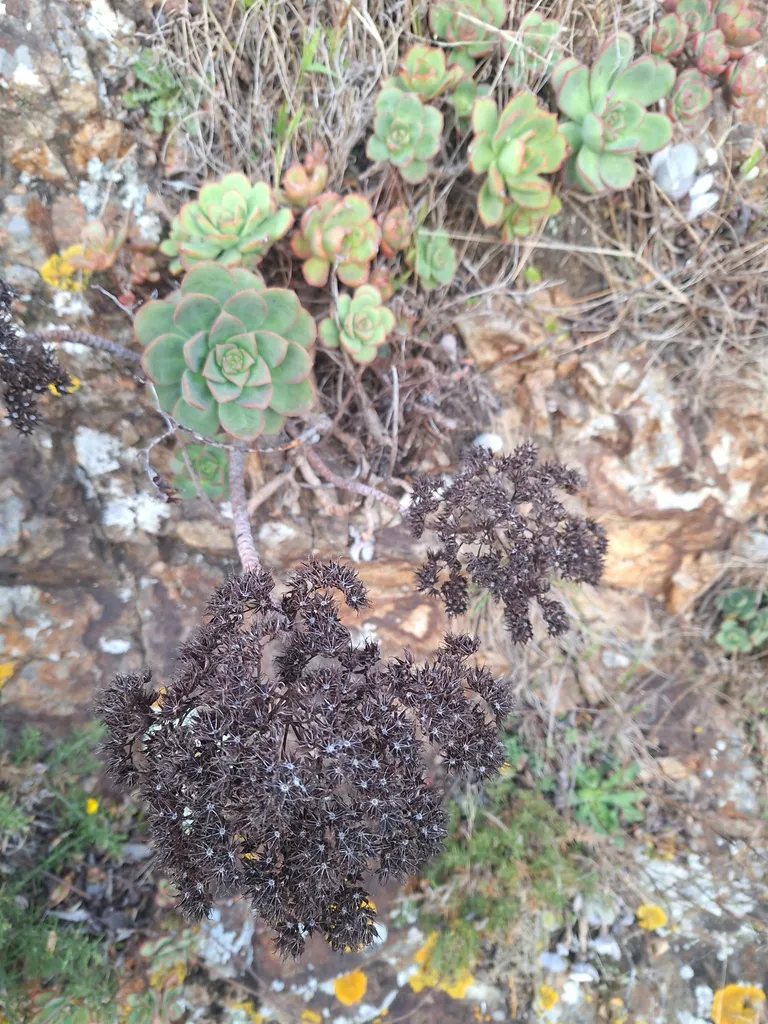
Aeoniums produce clusters of small star-shaped flowers above a mature rosette. That crown dies after flowering, while the other crowns of a branching plant can continue growing.
As it matures
RHS lists about 0.1–0.5 m in height and spread for the variegated pinwheel. Expect a branched cluster of crowns rather than one permanently flat rosette; pot conditions affect the eventual scale.
Sources: [2]
Behind the name
RHS links 'Kiwi' with variegated pinwheel 'Dream Color' and lists several trade synonyms, including 'Tricolor' and 'Keweonium'.
Sources: [2]
Similar plants, useful clues
Echeveria pulidonis ↗
Both have colored rosettes, but this aeonium develops conspicuous woody branches with crowns at their tips; pulidonis stays lower and has thicker blue-grey leaves.
This plant in the collection
Its story so far
Joined the collection
Acquired from Carlsons' Greenhouse in its approximately 5-inch pot; now P22 / #4.
Collection record ↗
Then and now
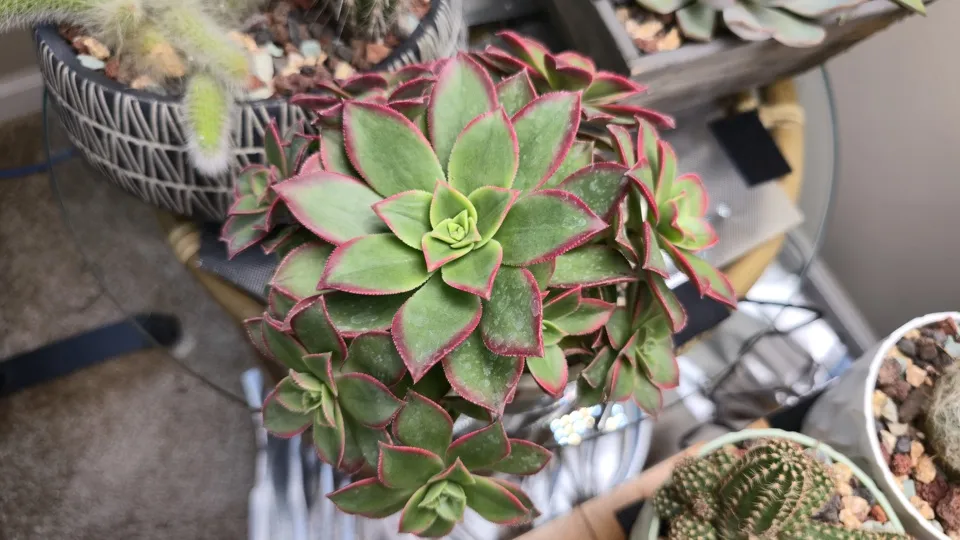
Explore the sources
 Explore the sources
Names and identity
| Kind | Name |
|---|---|
| Cultivar | Aeonium haworthii 'Dream Color' |
| Common names | Kiwi aeonium, variegated pinwheel |
| Trade names | 'Kiwi', 'Tricolor', 'Variegatum', 'Keweonium', 'Kiwionium' |
| Cultivar origin | Unknown |
The green-and-yellow rosettes with pink edges give this aeonium its pinwheel appearance. Older leaves gradually fall away as new ones develop, exposing the branching stems beneath the leafy crowns.
Origin, form, and publication
The cultivated form belongs to Aeonium haworthii, a subtropical succulent shrub native to Tenerife in the Canary Islands. Kew records the species name as first published in 1841.
Care in this collection

| Topic | Practical approach |
|---|---|
| Grow-light position | Rear left · Bright. September 15 rear wooden tables, facing the window. Keep substantial lamp contribution without allowing its canopy to shade the small pots. See the current placement guide. |
| Water | Let much of the pot dry, then water and drain. Do not force it through cactus-level drought during active growth. |
| Pot and mix | Keep the current 5-inch pot while drainage and drying are satisfactory. |
| Seasonal behavior | Aeoniums often slow in summer heat and grow more actively in cooler bright conditions. |


Recorded pot changes

Bone-dry top dressing was added on September 16, 2026, increasing the pot weight from 841.5 g to 992 g, a 150.5 g addition. The pot remains setup 1; that added mass matters when comparing readings across this date.
Rotation, propagation, and watch points
- Rotate when growth begins leaning toward one side of the fixture.
- Stem rosettes root readily after the cut end has dried.
- Crisp tan patches or bleached yellow centers after a move indicate too much light too quickly; stretched open rosettes indicate too little.
- Handle by the pot to protect the leaves and avoid breaking the branching crowns.
Sources

Through the seasons
Plant Photo History
Recent photographs of this plant. Open a photo or its collection for the complete history.
Botanical reference photos
Reference Gallery
Aeonium haworthii species and cultivated forms
Form and growth


Flowers and buds


In the landscape
Research Trail
- Collection Notes on GitHub
- Complete Photo Archive and Credits
- iNaturalist Observations — Species forms behind Dream Color