Cactus collection
Plant 06 / 45 Cactus collection
 Plant 06 / 45
 Myrtillocactus geometrizans 'Indigo Wave'
Indigo Wave


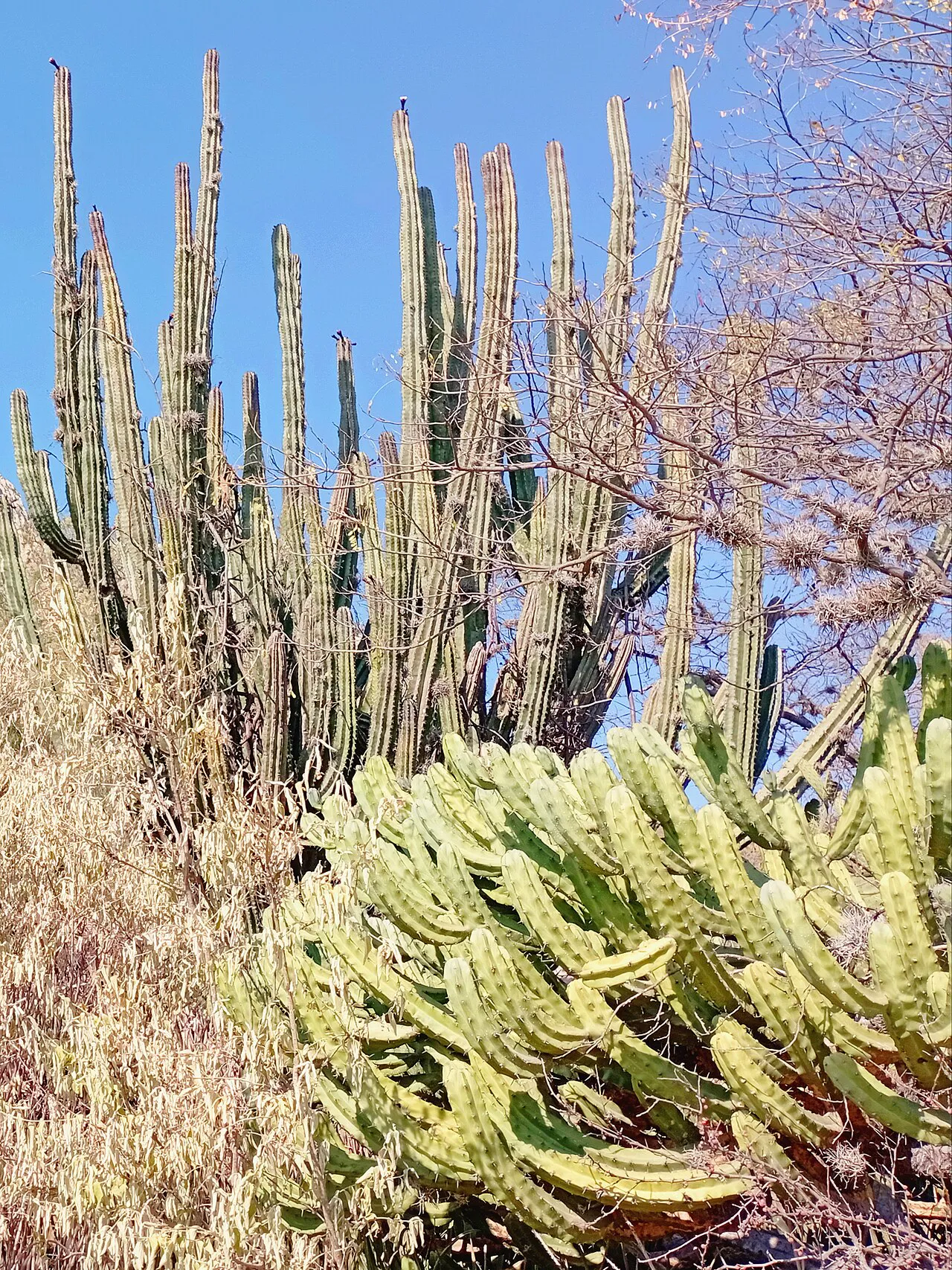
Species reference · Juan Carlos Fonseca Mata · CC BY-SA 4.0 · Photo Source ↗
 Collection Record
- Starter-09
 Permanent Label
B3 Identification
 Status
 Acquired From
- Altman Reserve
 Acquired On
- 2026-07-15
 Google Sheets ID
- P06 ↗
 Photo History
- 5 captures · newest ↓
Measurements and Care History
 Measurements and Care History
Weights, watering, events, and charts for P06.
Spot it
 Spot it
What it looks like
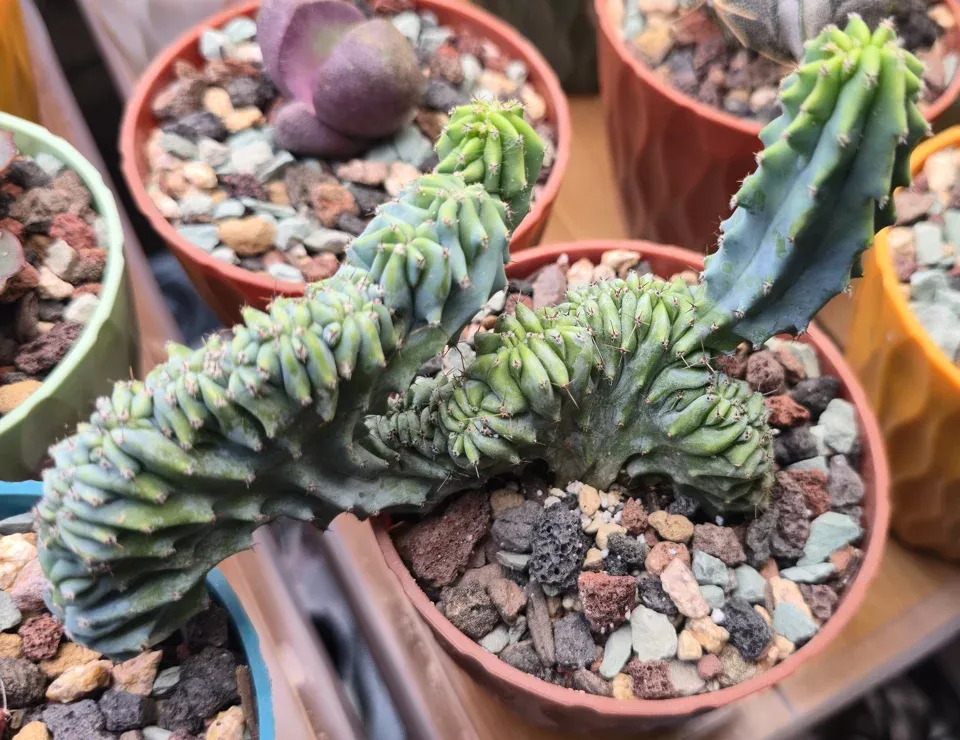
A blue-green monstrose mass of rippled ridges, folded fans, and irregular knobby growth, with no clean central column.
One curious thing
 One curious thing
Did you know?
The sculptural growth is a cultivated mutation of a useful species: normal Myrtillocactus geometrizans bears sweet edible berries called garambullos in Mexico.
Explore This Plant
A closer look
How this plant works
 How this plant works
Irregular folds and ridges reshape the blue-green stem into a sculptural mass.
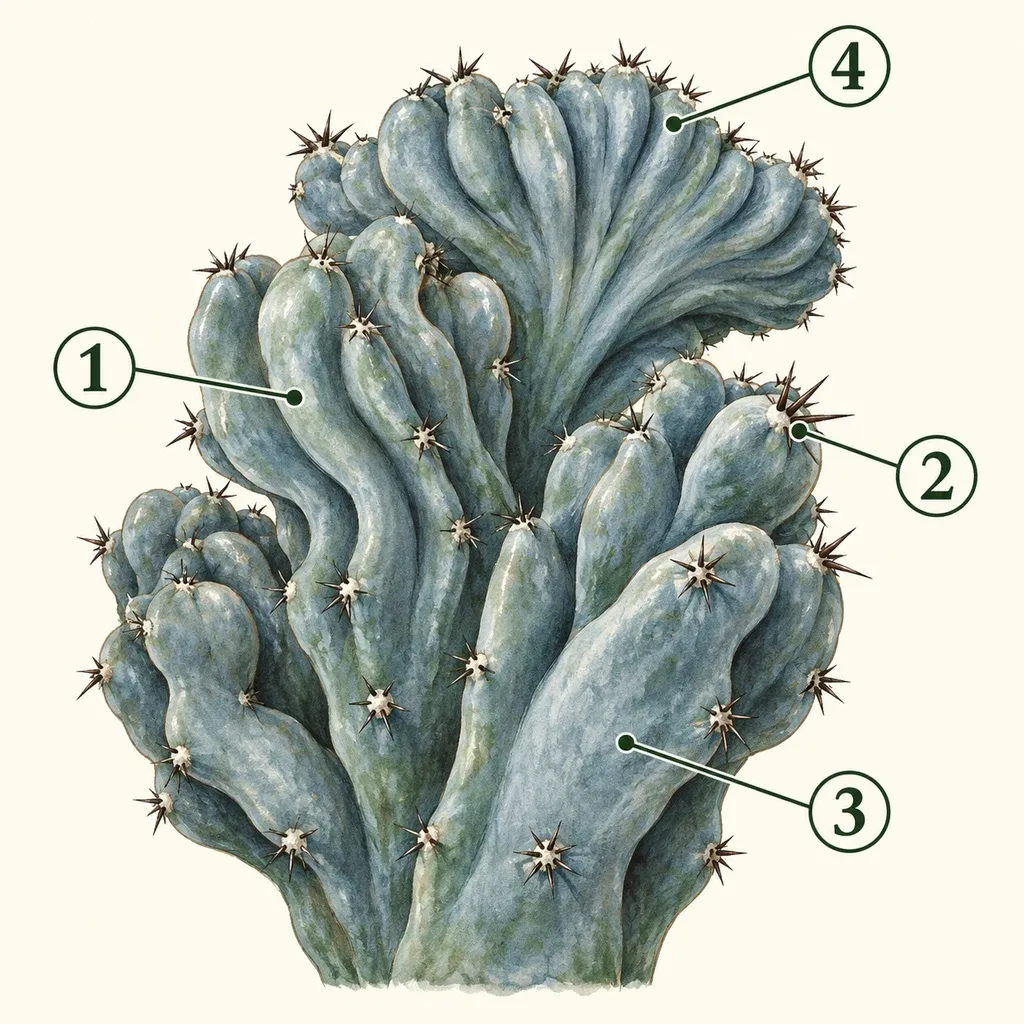
Wavy stem fold
The folded surface is part of the succulent cactus stem.
Areole
A small cushion produces the short dark spines.
Blue-grey surface
The glaucous exterior gives the underlying green stem its blue cast.
Growth crest
Where growth broadens into a line, it can form a fan instead of a single rounded tip.
Habitat and origins
 Habitat and origins
The wild species grows on stony and sandy soils in Mexico’s seasonally dry tropical woodland. Indigo Wave is a cultivated selection with irregular, folded growth.
What growth can look like
 What growth can look like
- Stage 1
Small folded plant
The cultivated body begins with irregular lobes and ridges.
- Stage 2
Changing outline
Different growing regions add uneven new folds or fan-shaped tissue.
- Stage 3
Older sculpture
Continued growth builds an individual outline rather than a predictable straight column.
Monstrose growth makes irregular knobs and branching points; crested growth spreads a growing tip into a line, producing broad fans.
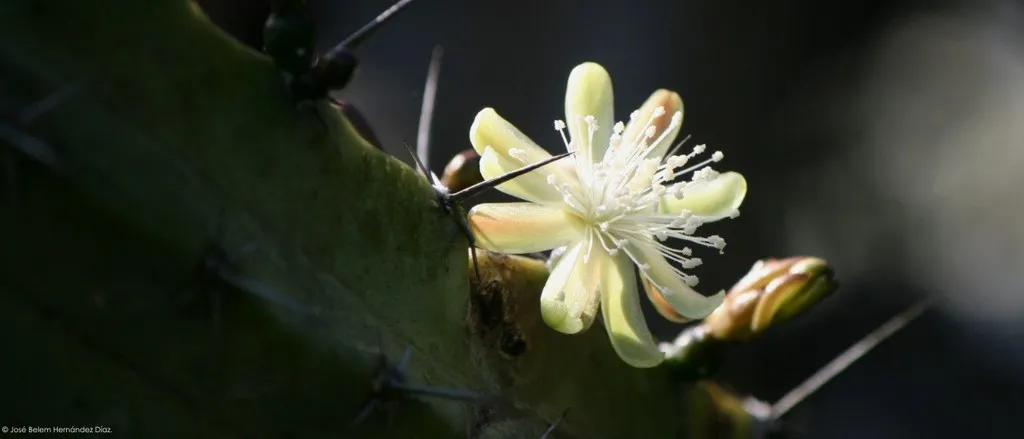
Flowers
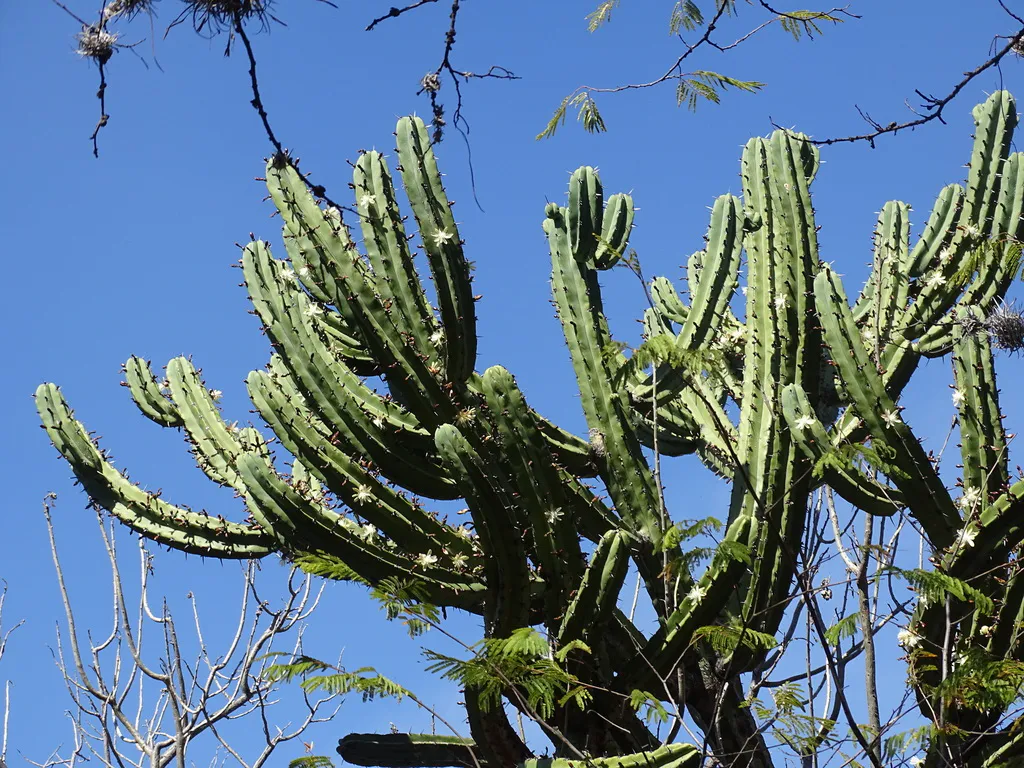
The normal species bears small greenish-white flowers followed by sweet blue-purple garambullo fruits. Royal Botanic Garden Edinburgh describes the berries as 8–20 mm across, about blueberry size, and records their sale in Mexican markets.
As it matures
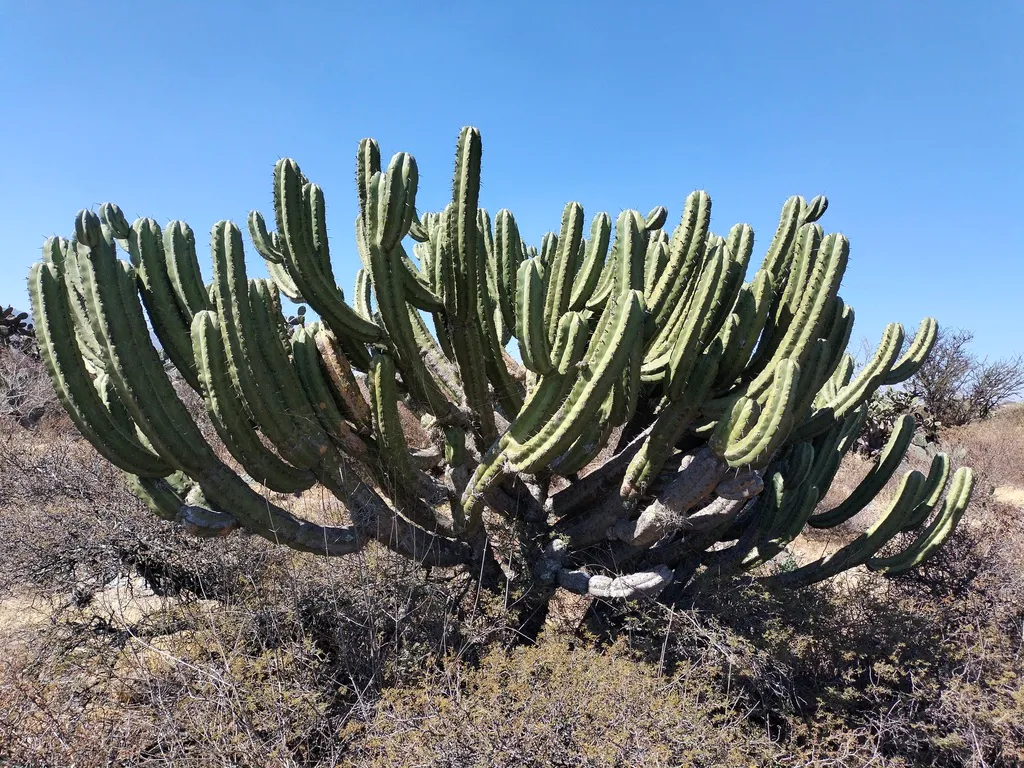
Ordinary Myrtillocactus geometrizans forms a candelabra-like tree around 3.4–4.6 m tall. Indigo Wave retains a folded, irregular outline as its stems expand.
Sources: [2]
Behind the name
The species appeared as Cereus geometrizans in 1837 and moved to Myrtillocactus in 1897. The nursery selection is sold as Indigo Wave.
Sources: [1]
Similar plants, useful clues
Ming Thing ↗
Ming Thing makes thick rounded clubs, while Indigo Wave has blue-green folded ridges and broader fan-like areas.
This plant in the collection
Its story so far
Then and now
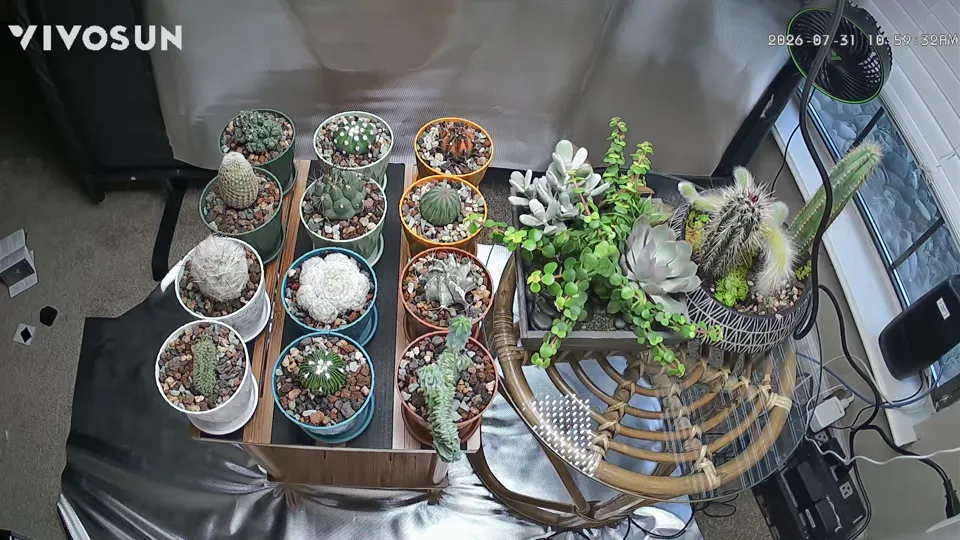
Explore the sources
 Explore the sources
Names and identity
| Kind | Name |
|---|---|
| Underlying accepted species | Myrtillocactus geometrizans (Mart. ex Pfeiff.) Console |
| Collection trade name | Indigo Wave |
| Species common names | Garambullo, bilberry cactus, whortleberry cactus, blue myrtle cactus, blue candle |
| Growth form | Monstrose: the growing points make irregular waves and knobs instead of a normal column |

'Indigo Wave' is a horticultural selection with altered growth points. Its ridges, folds, and asymmetric bumps form the plant's characteristic shape.
The normal species behind the cultivar

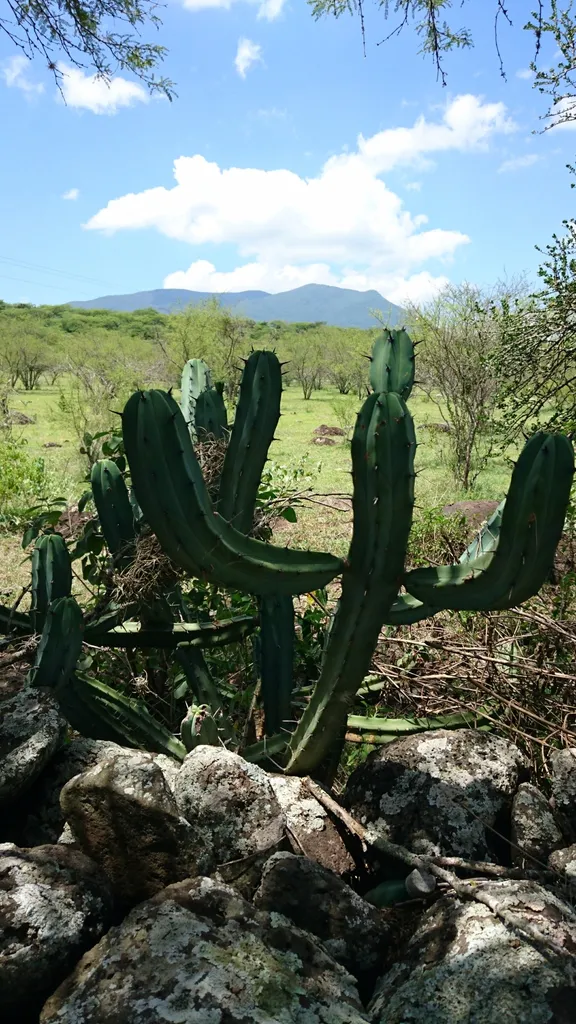
Wild M. geometrizans is a blue-green, candelabra-shaped cactus tree native to Mexico. It occurs in seasonally dry habitats from north-central into southern parts of the country and can grow several metres tall. The waxy bloom responsible for its blue cast also helps reduce water loss and excessive light at the stem surface.
Small greenish-white flowers are followed by dark purple edible berries called garambullos, about 8–20 mm across. They have a long history as a seasonal food in Mexico and explain the genus name: Myrtillocactus compares the fruits with bilberries or small myrtle berries. geometrizans alludes to the geometric regularity of the normal ribs—the opposite of this cultivar's chaotic-looking folds.
The species was published as Cereus geometrizans in 1837. Michelangelo Console made the accepted Myrtillocactus combination in 1897. 'Indigo Wave' is the Altman Reserve trade selection in this collection.
Care in this collection

| Topic | Practical approach |
|---|---|
| Grow-light position | R1C5 · High. September 15, 2026 photo layout, facing the window (six columns, four rows). Front row near the right. Keep the folded growing tips exposed without crowding neighboring plants. See the current placement guide. |
| Outdoor light | Acclimate toward substantial sun. Preserve the natural blue wax by handling the body as little as possible. |
| Water | Deep soak followed by a full dry-down. It may use water a little faster than the tiny globular species while actively growing. |
| Temperature | Favor warmth; protect from frost and especially from cold wet soil. |
| Pot and mix | Free drainage and a stable pot. Increase pot size gradually as the branched top gains leverage. |
| Feeding | Light feeding in the warm growing season; excessive nitrogen encourages vulnerable soft growth. |


Uneven surfaces receive uneven light. Watch the highest pale ridges for the first hint of bleaching, and check deep shaded folds for pests or retained moisture. Healthy new monstrose tissue can still be compact, firm, and strongly colored even though it is not symmetrical.
Propagation and watch points
- Stem pieces can be rooted after a clean cut has fully callused. Cuttings are the practical way to preserve this exact monstrose form.
- A normal-looking column may be a reversion. It can be left for contrast or removed if preserving the compact form is the priority.
- Scale and mealybugs hide in folds. Use a light and magnifier instead of repeatedly poking between growing points.
- The glaucous wax rubs off and does not quickly return on old tissue; finger marks are cosmetic but permanent-looking.
Sources

Through the seasons
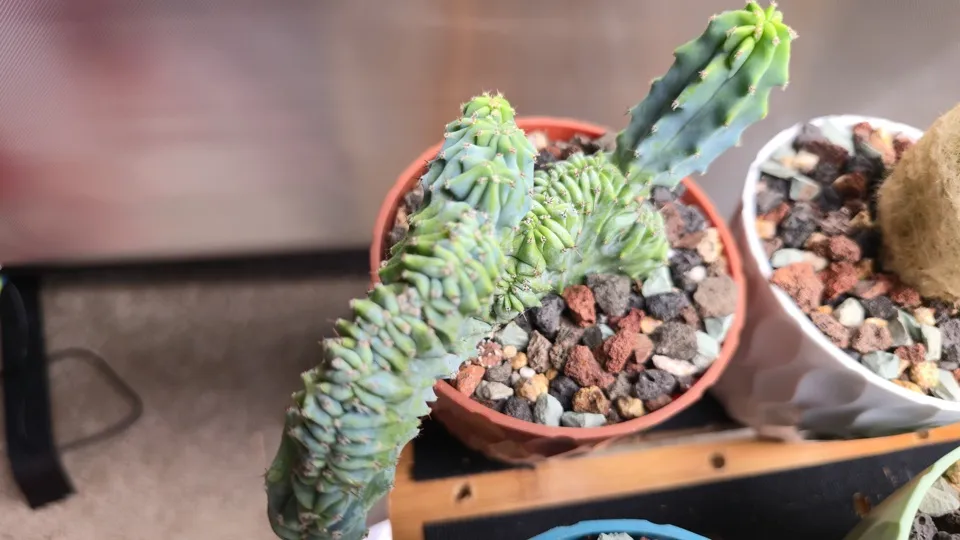
Plant Photo History
Recent photographs of this plant. Open a photo or its collection for the complete history.
From the nursery
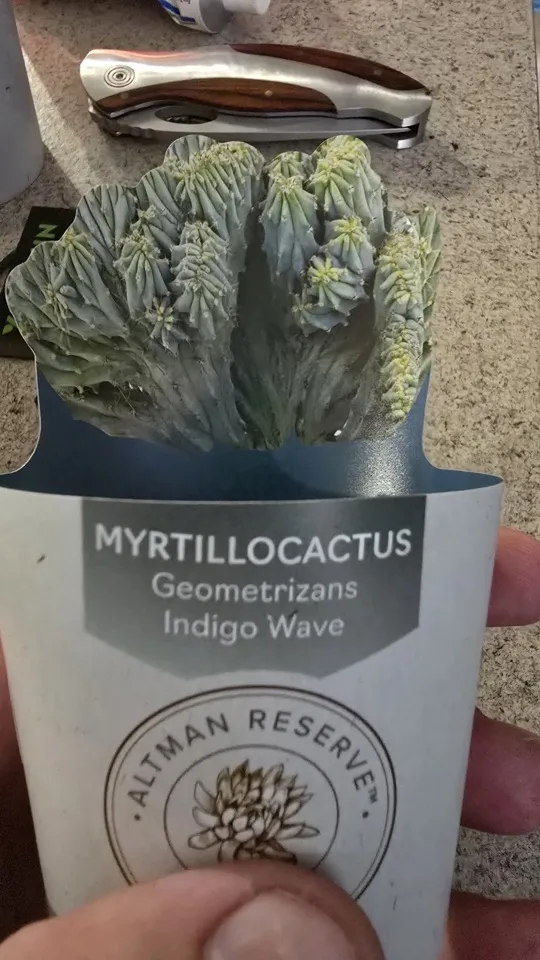
Nursery Labels
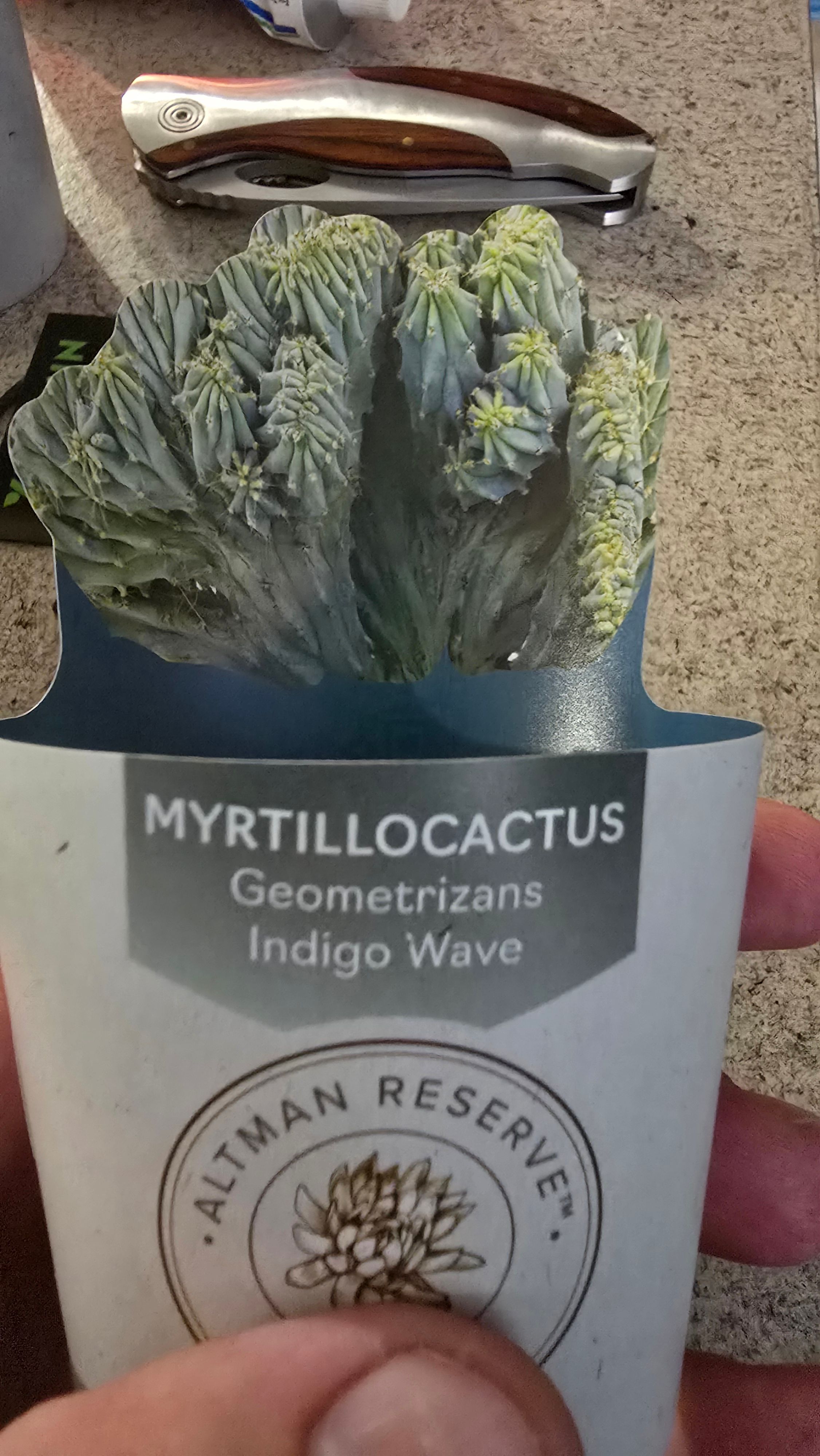
Original nursery labels and packaging.
Botanical reference photos
Reference Gallery
Myrtillocactus geometrizans species forms
Look closer

Flowers and buds

.jpg)
_-_Flor.jpg)
In the landscape
_y_Myrtillocactus_geometrizans_(garambullo).jpg)
,_november.jpg)
 Lowe's: Altman Reserve Myrtillocactus Indigo Wave