


Cactus collection
Plant 09 / 45 Cactus collection
 Plant 09 / 45


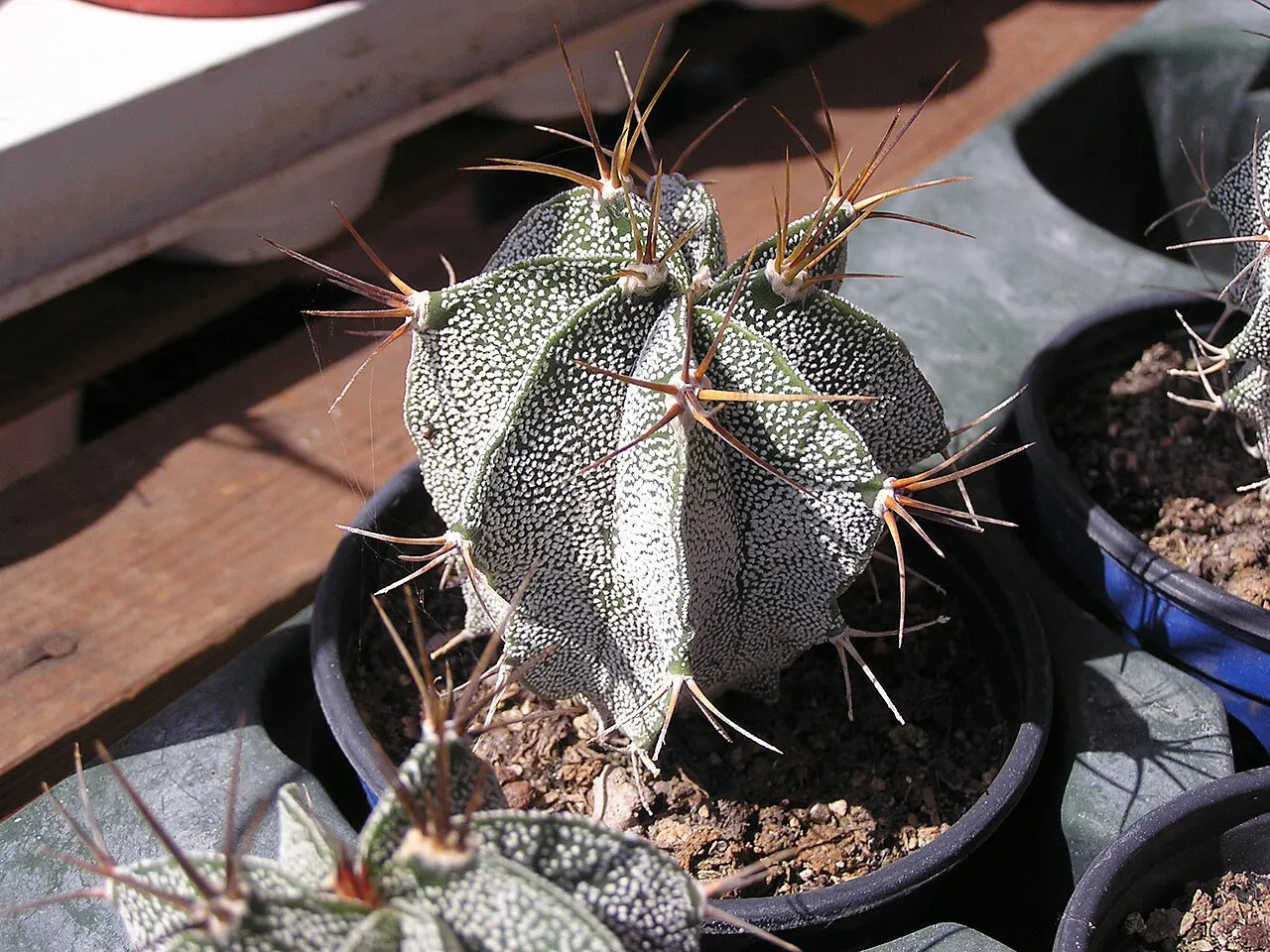
Species reference · Andrey Butko · CC BY-SA 3.0 · Photo Source ↗
 Collection Record
- Starter-12
 Permanent Label
C3 Identification
 Status
 Acquired From
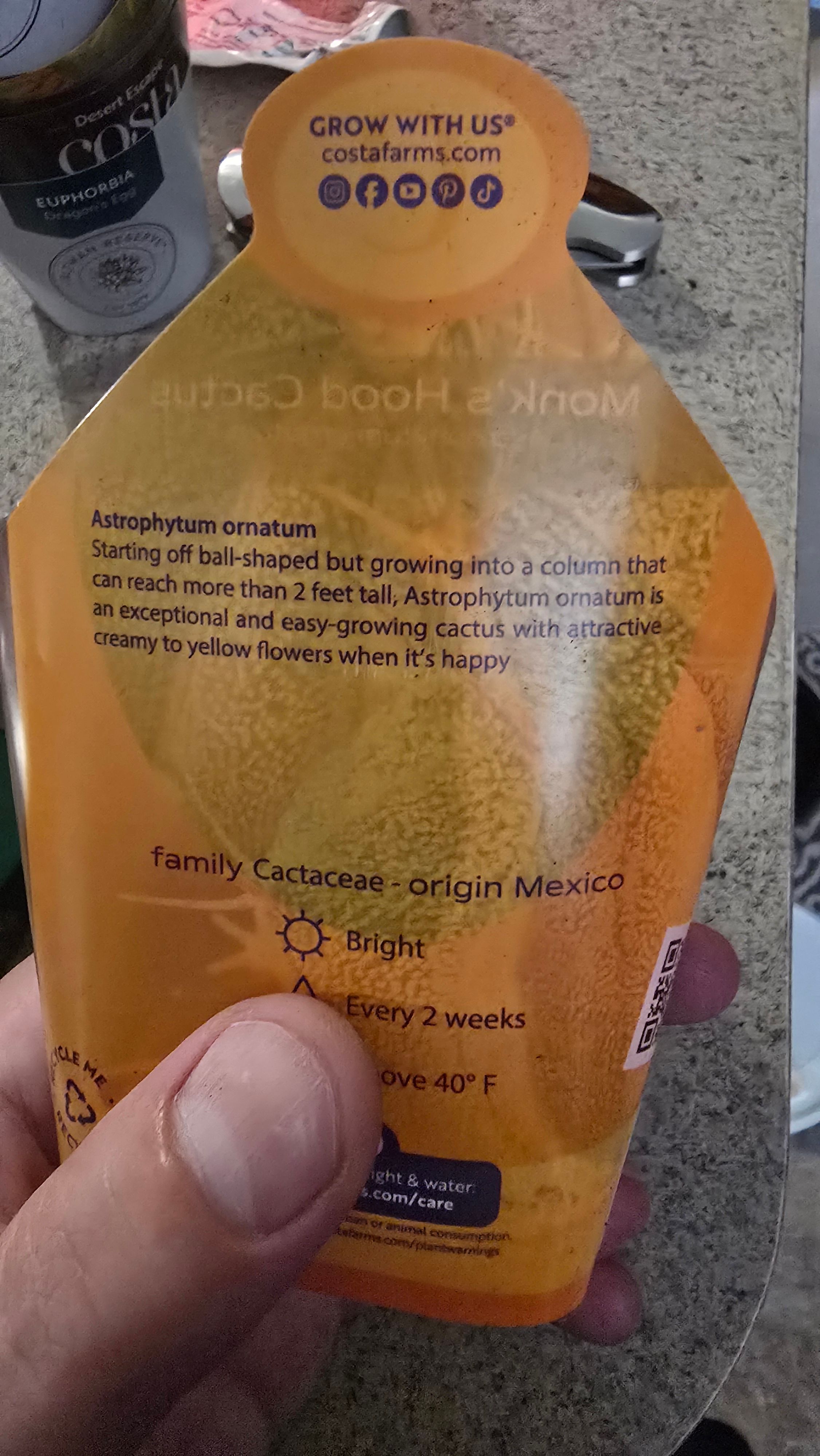
- Costa Farms
 Acquired On
- 2026-07-23
 Google Sheets ID
- P09 ↗
 Photo History
- 4 captures · newest ↓
Measurements and Care History
 Measurements and Care History
Weights, watering, events, and charts for P09.
Spot it
 Spot it
What it looks like
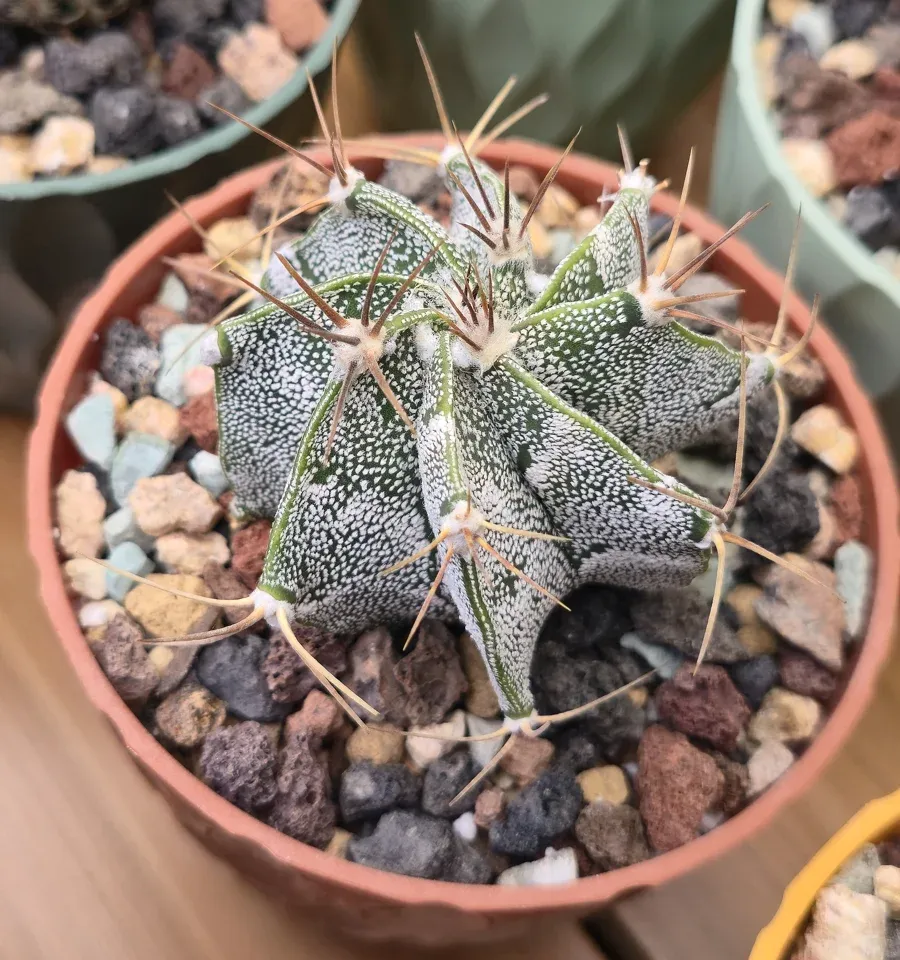
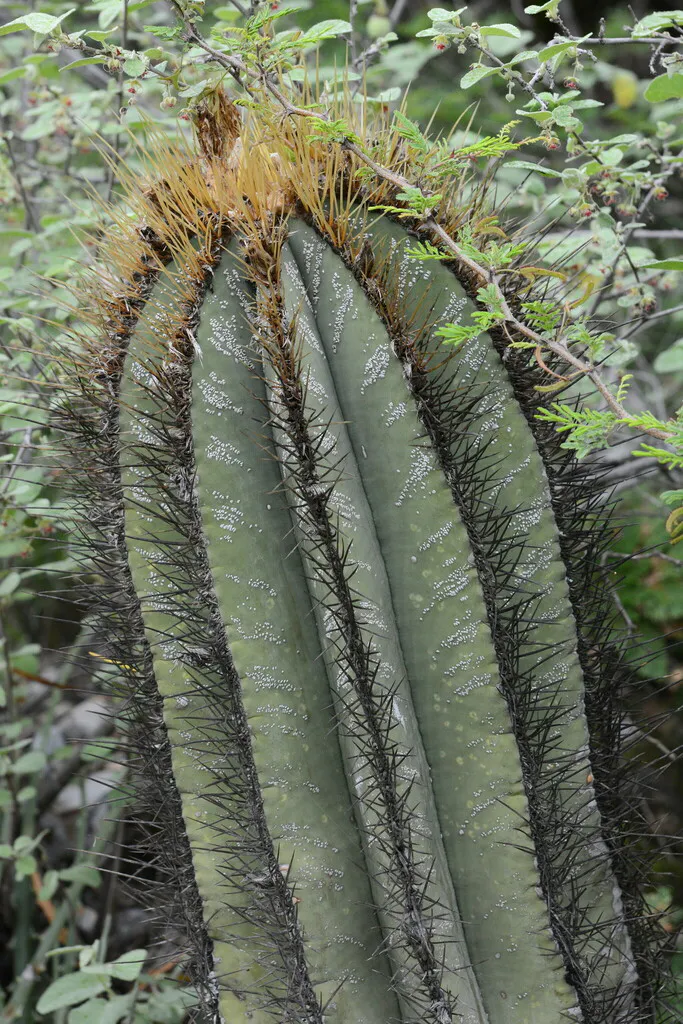
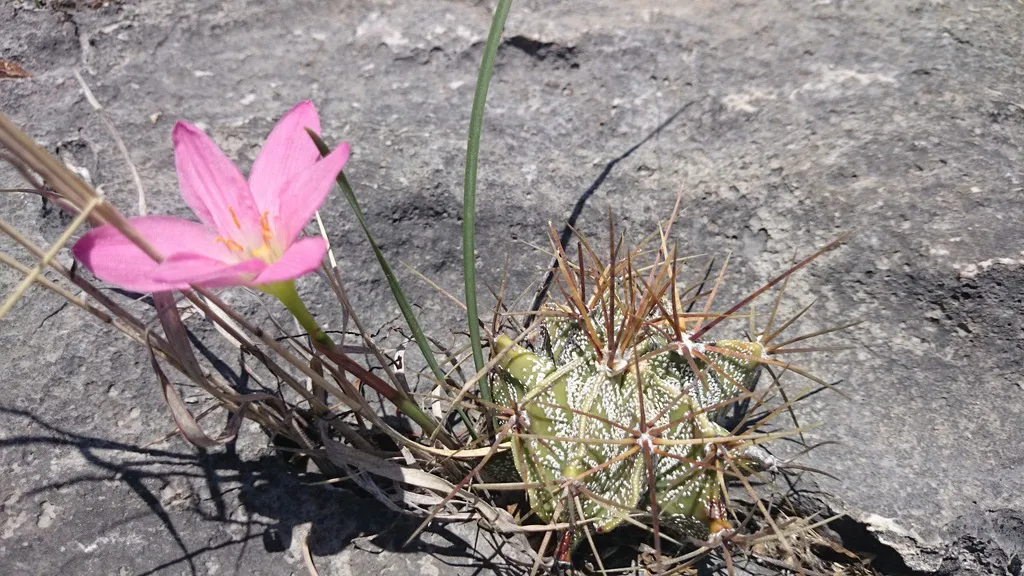
A sharply star-ribbed green body patterned with bands of white flecks, with long yellow-brown spines projecting from the rib crests; the geometric markings remain visible between the spines.
One curious thing
 One curious thing
Did you know?
Its white surface flecks are separate from the woolly areoles that carry the spines; a young star-shaped globe gradually becomes a column.
Explore This Plant
A closer look
How this plant works
 How this plant works
The star shape, white flecks and spines are three different features of the same stem.
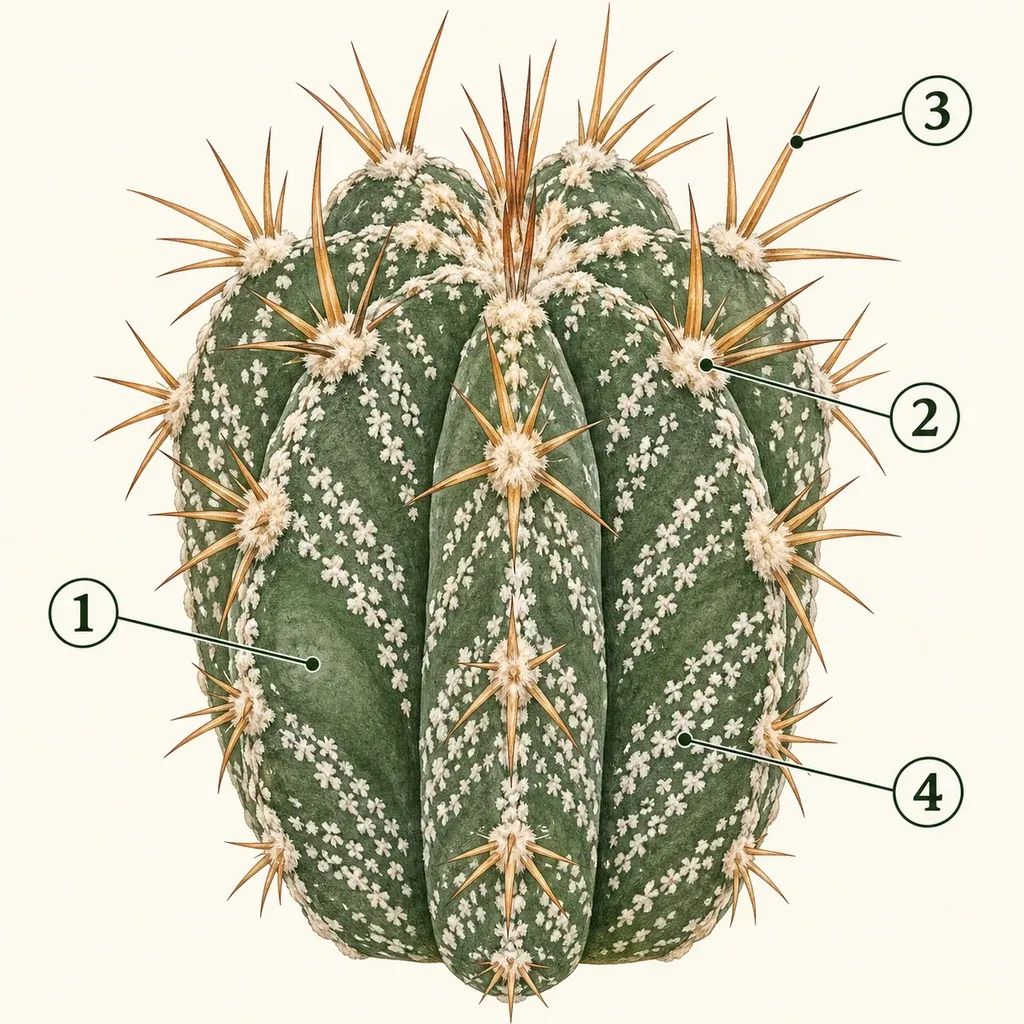
Broad rib
Each raised rib is part of the green photosynthetic stem.
Areole
This small woolly growing structure produces the cluster of spines.
Spine
The stiff yellow-brown structures are modified leaves, not branches.
Woolly flecks
Small patches of white wool mark the stem surface separately from the spine-bearing areoles.
Habitat and origins
 Habitat and origins
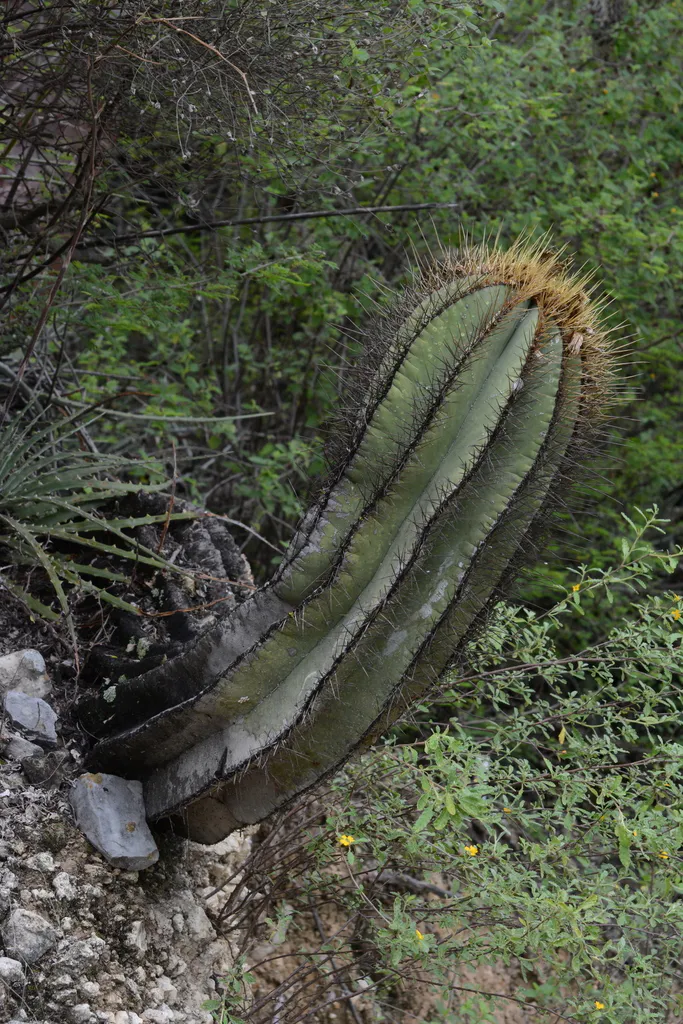
Native to northeastern Mexico south toward Veracruz, monk’s hood cactus grows in desert and dry shrubland. Its ribbed, water-storing stem carries out photosynthesis beneath the white woolly flecks.
What growth can look like
 What growth can look like
- Stage 1
Young globe
A small rounded plant already shows the conspicuous ribs and white markings.
- Stage 2
Lengthening stem
New growth gradually changes the outline from a globe into a short column.
- Stage 3
Mature crown
An established plant can produce yellow flowers from the upper stem.
The six to eight ribs may run straight up the stem or twist into a gentle spiral as it grows. RHS gives 10–20 years to maturity.
Growth sources: [2]
Flowers
Pale yellow, funnel-shaped flowers appear near the crown of mature plants in summer.
Sources: [2]
As it matures
The young globe gradually becomes a column with six to eight prominent ribs. RHS lists a cultivated height and spread of 10–50 cm.
Sources: [2]
Behind the name
The species was first named Echinocactus ornatus in 1828. The familiar Astrophytum combination dates to 1922: an old name history behind a very modern-looking plant.
Sources: [1]
Similar plants, useful clues
Dragon’s Egg Euphorbia ↗
Both can look like ribbed balls, but the Euphorbia lacks the cactus’s woolly, spine-bearing areoles. Its striped stem belongs to a different plant family.
This plant in the collection
Its story so far
Acquired
Joined the collection from Costa Farms; recorded as Starter-12, label C3.
Collection record ↗
Then and now
Explore the sources
 Explore the sources
Names and identity
| Kind | Name |
|---|---|
| Accepted botanical name | Astrophytum ornatum (DC.) Britton & Rose |
| Common names | Monk's hood cactus, star cactus, bishop's cap cactus |
| Original name | Echinocactus ornatus DC. |
| Name clue | Astrophytum means star plant; ornatum means decorated or ornate |
Viewed from above, the strong ribs produce a star. White woolly flecks decorate the green epidermis, while long yellow-brown spines distinguish it from the usually spineless A. myriostigma that also gets called bishop's cap.
Origin, history, and mature form
The species is endemic to Mexico, occurring from the northeast toward Veracruz in dry valleys, canyon walls, and rocky limestone country. It is the largest and eventually tallest Astrophytum: a young globe slowly develops into a substantial column with usually six to eight ribs. These may run straight or spiral gently around the stem.
Bright yellow flowers emerge from the woolly crown on mature plants. The RHS gives 10–20 years to maturity; flowering begins as the plant develops.
Augustin de Candolle described it as Echinocactus ornatus in 1828. Britton and Rose published the accepted Astrophytum combination in 1922. Kew reports the wild species as Vulnerable, reinforcing the value of seed-grown, nursery-documented plants.
Care in this collection

| Topic | Practical approach |
|---|---|
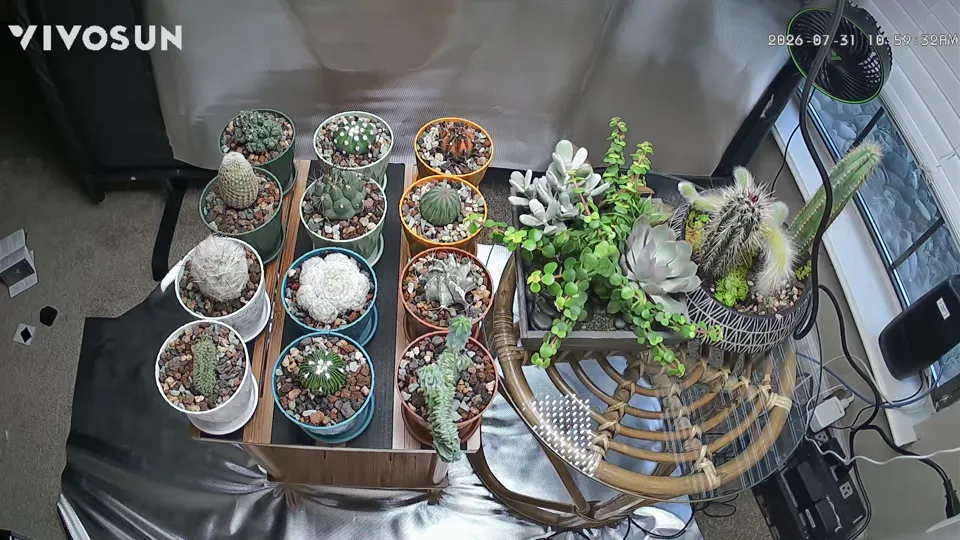
| Grow-light position | R2C5 · Bright. September 15, 2026 photo layout, facing the window (six columns, four rows). Keep a clear light path to the growing tip. See the current placement guide. |
| Outdoor light | Gradually increase direct sun, watching exposed green skin for bleaching. |
| Water | Thorough soak followed by a complete dry-down during warm growth; keep cool winter roots nearly dry. |
| Mix | Very free-draining and mineral. A slightly alkaline component is compatible with its limestone habitat, but drainage matters more than chasing an exact pH. |
| Pot | It develops a substantial root system; use enough depth without surrounding a small root ball with a huge wet volume. |
| Feeding | Low-strength cactus fertilizer during active growth only. |


Compact growth keeps the gaps between areoles short and the crown well armed. Elongation cannot be reversed, so tune the lamp based on the next band of growth, not old proportions.
Propagation and watch points
- Seed is the usual method. The species does not normally offer plentiful offsets.
- Water and debris can lodge in the woolly crown; keep it open and ventilated.
- Spider mites scar exposed green skin, while root mealybugs can cause an unexplained loss of vigor.
- White flecks are natural trichomes. Do not scrub them off as scale, and avoid frequent handling.
- Mature spines are stiff and long. Move the pot with folded paper, tongs protected by padding, or gloves that cannot snag.
Sources

Through the seasons
Plant Photo History
Recent photographs of this plant. Open a photo or its collection for the complete history.
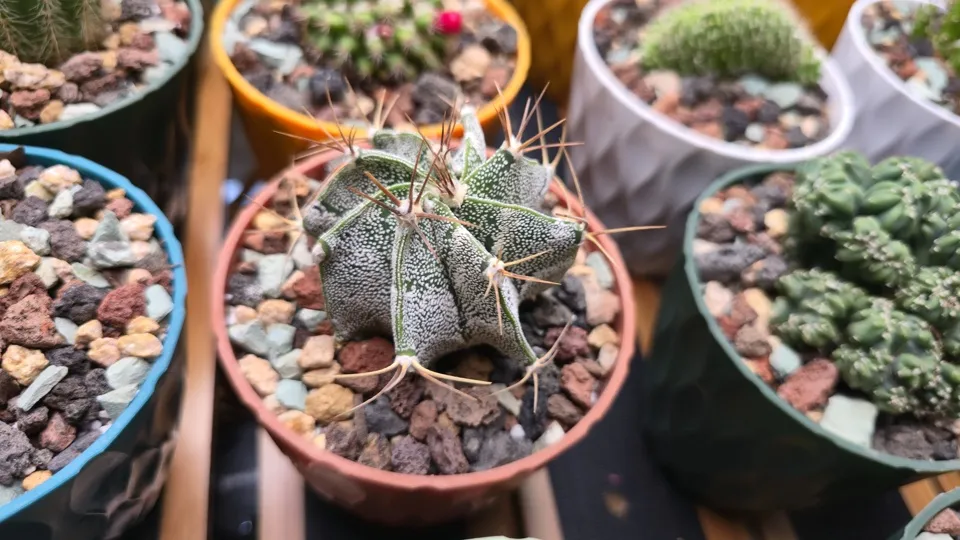
From the nursery
Nursery Labels
Original nursery labels and packaging.
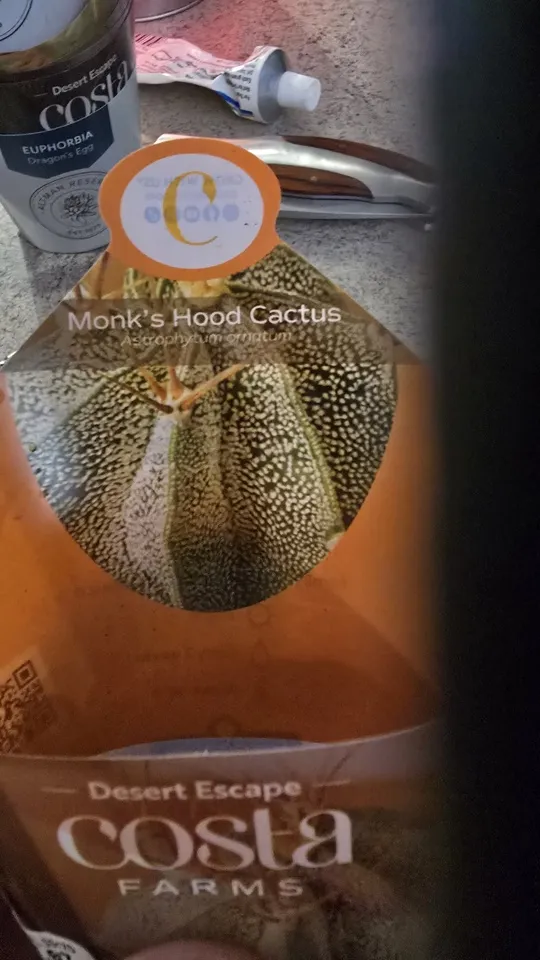
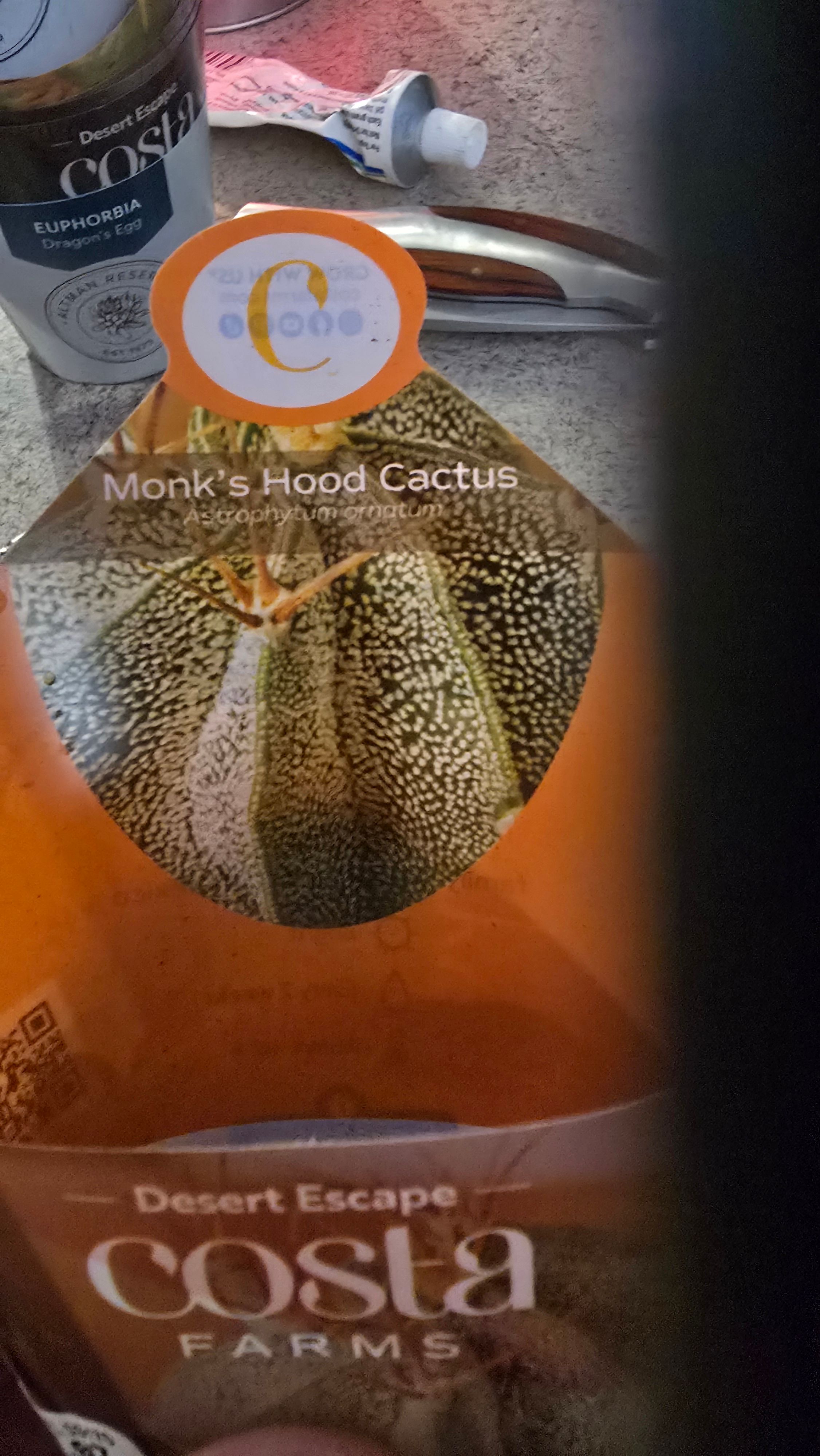
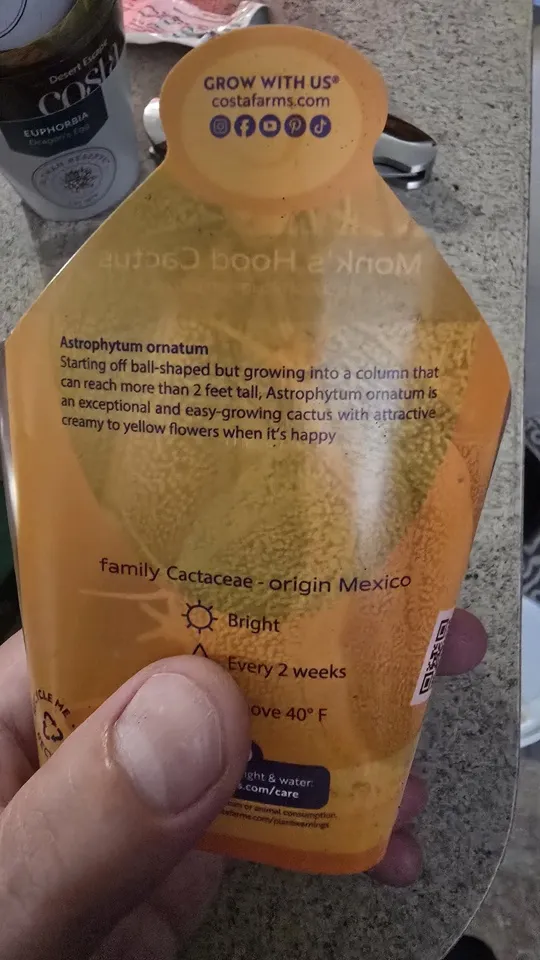
Botanical reference photos
Reference Gallery
Form and growth


Look closer

Flowers and buds


In the landscape
Research Trail
- Collection Notes on GitHub
- Complete Photo Archive and Credits
- iNaturalist Observations — Species observations