Cactus collection
Plant 02 / 45 Cactus collection
 Plant 02 / 45


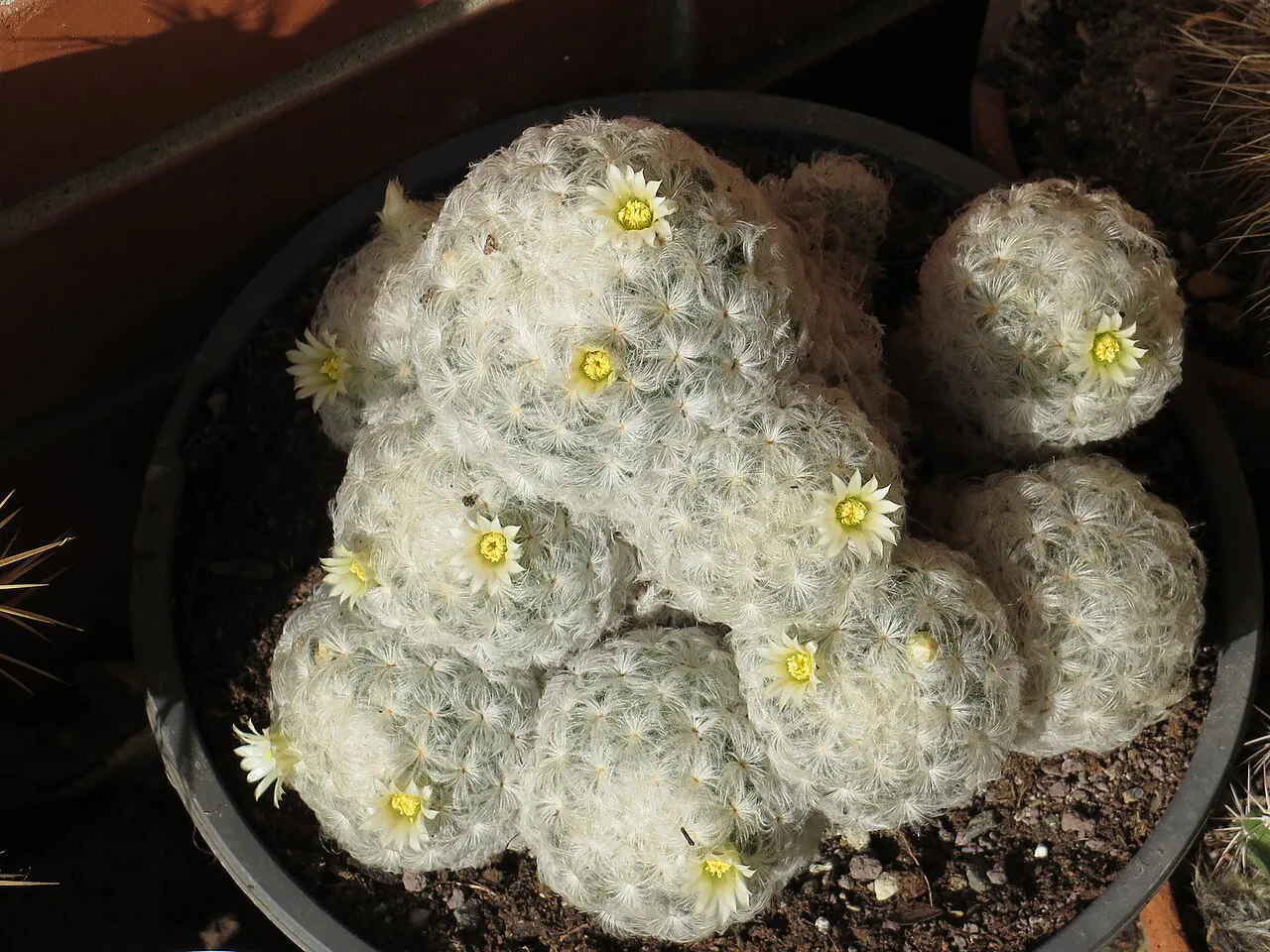
Species reference · Petar43 · CC BY-SA 4.0 · Photo Source ↗
 Collection Record
- Starter-05
 Permanent Label
A2 Identification
 Status
 Acquired From
- Altman Reserve
 Acquired On
- 2026-07-15
 Google Sheets ID
- P02 ↗
 Photo History
- 4 captures · newest ↓
Measurements and Care History
 Measurements and Care History
Weights, watering, events, and charts for P02.
Spot it
 Spot it
What it looks like
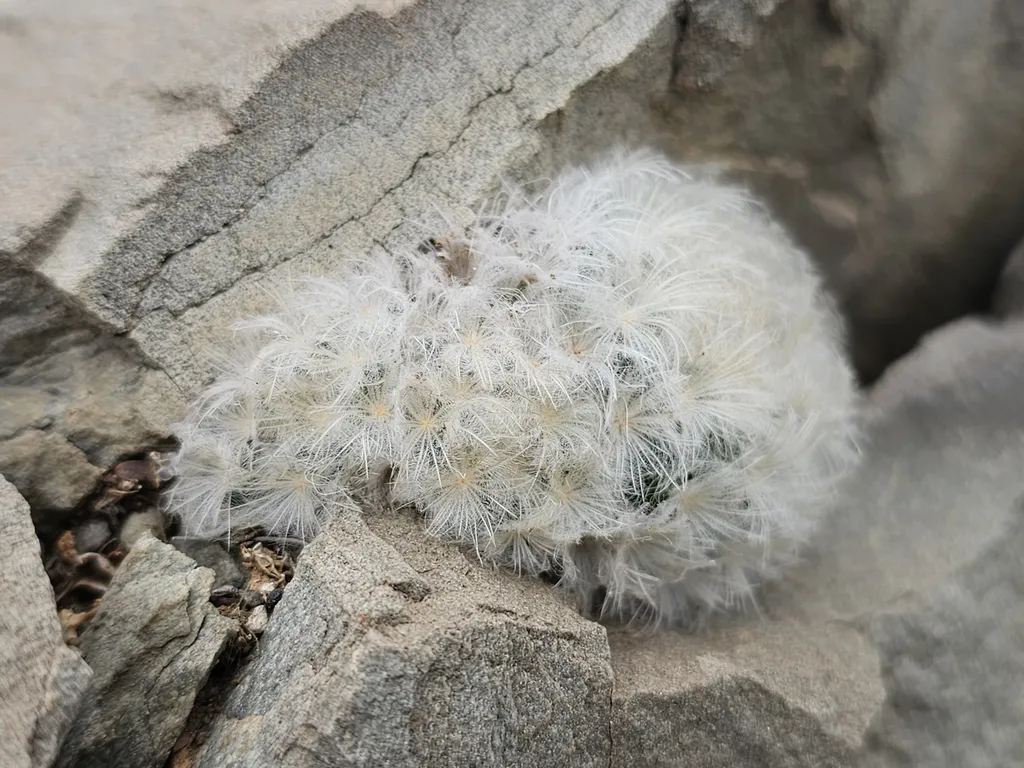
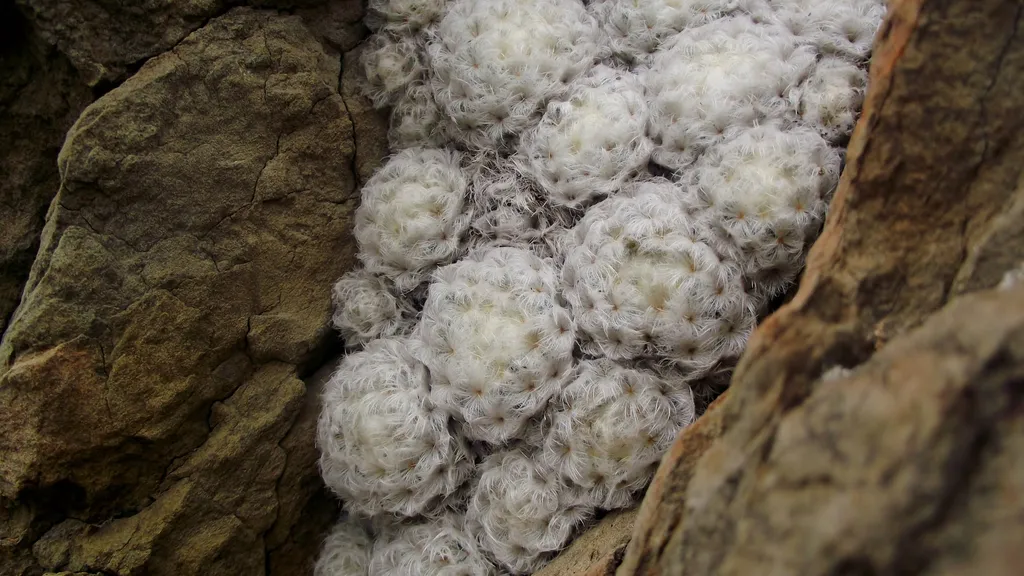
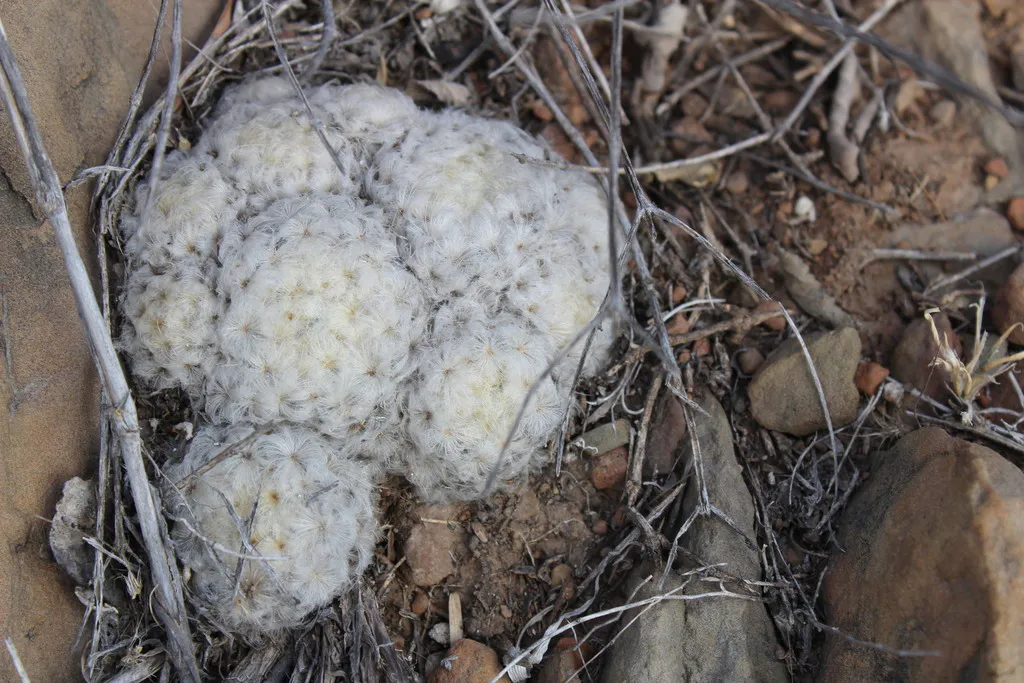
A low clustering mound almost completely hidden beneath overlapping white featherlike spines, with rounded heads merging into a soft, cloudlike surface.
One curious thing
 One curious thing
Did you know?
Its interlacing white spines shade the green body underneath; the fluffy-looking covering is a living cactus feature rather than fur.
Explore This Plant
A closer look
How this plant works
 How this plant works
A close view separates the green tubercles from the feather-like spine covering.
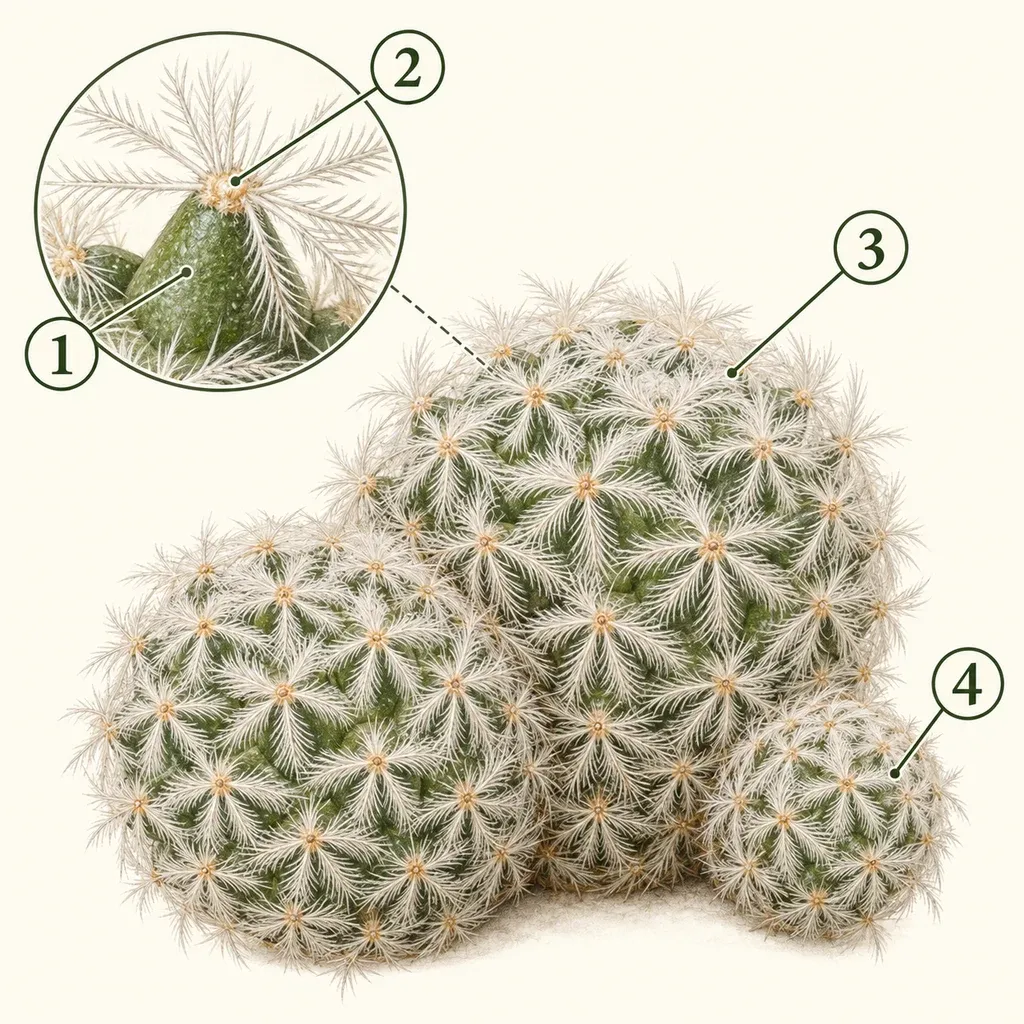
Tubercle
This small green projection is a unit of the stem’s bumpy surface.
Areole
The growing cushion at the tubercle’s tip produces the spine cluster.
Feathery spines
Interlacing white spines form a shade-providing cover over the green body.
Offset
A new side head repeats the same structure as the mound expands.
Habitat and origins
 Habitat and origins
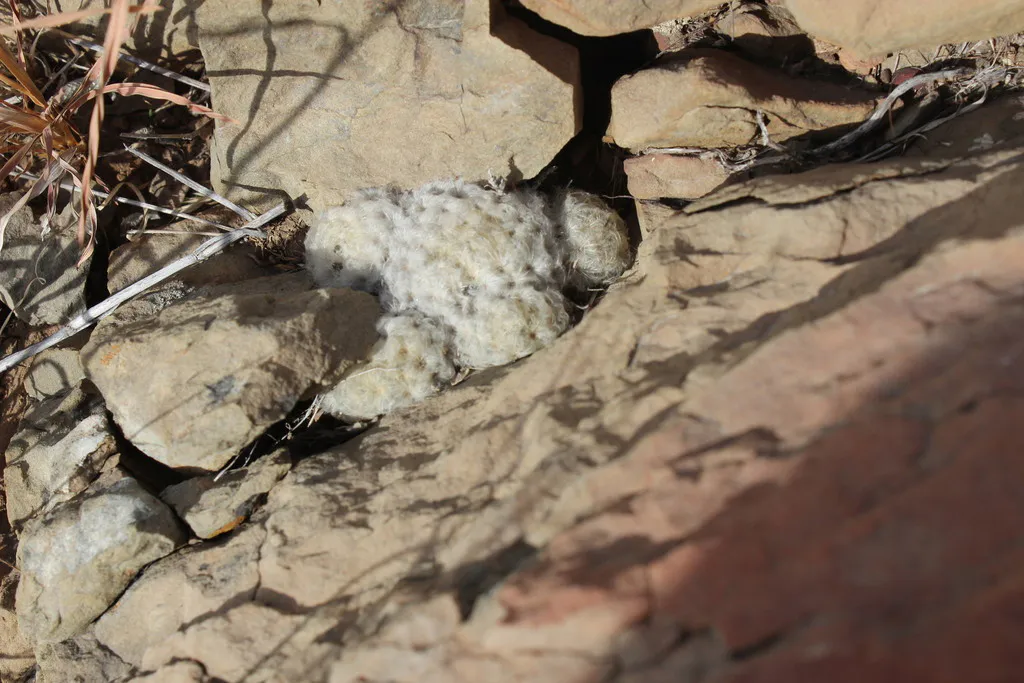
Feather cactus grows in northeastern Mexico, including Coahuila, Nuevo León and Tamaulipas, in desert and dry shrubland. Its interlacing white spines shade the green body beneath.
What growth can look like
 What growth can look like
- Stage 1
Single head
A young rounded stem is covered with a fine white spine mesh.
- Stage 2
Growing cluster
Offsets add new heads around the original plant.
- Stage 3
Mature mound
Many small globes become a low cushion that may produce tiny flowers.
The Desert Museum reports that deeply shaded new growth can develop a thinner, less white spine cover. The density of the fresh feathering is a useful feature to watch as the clump grows.
Flowers
Small cream, white or pink flowers emerge through the white spine mesh. RHS gives their length at around 1.5 cm.
As it matures
Individual heads reach roughly 6 cm across. New heads gradually build a low cushion; the Desert Museum describes mounds to about 40 cm wide.
Behind the name
Kew records the name Mammillaria plumosa from 1898. Later authors tried several other genera, but the familiar Mammillaria name is currently accepted.
Sources: [1]
Similar plants, useful clues
Old Man of the Andes ↗
Oreocereus has long white hairs on columnar stems with conspicuous stiff orange-brown spines. Feather cactus stays low and shows a fine, interlacing radial-spine pattern when examined closely.
This plant in the collection
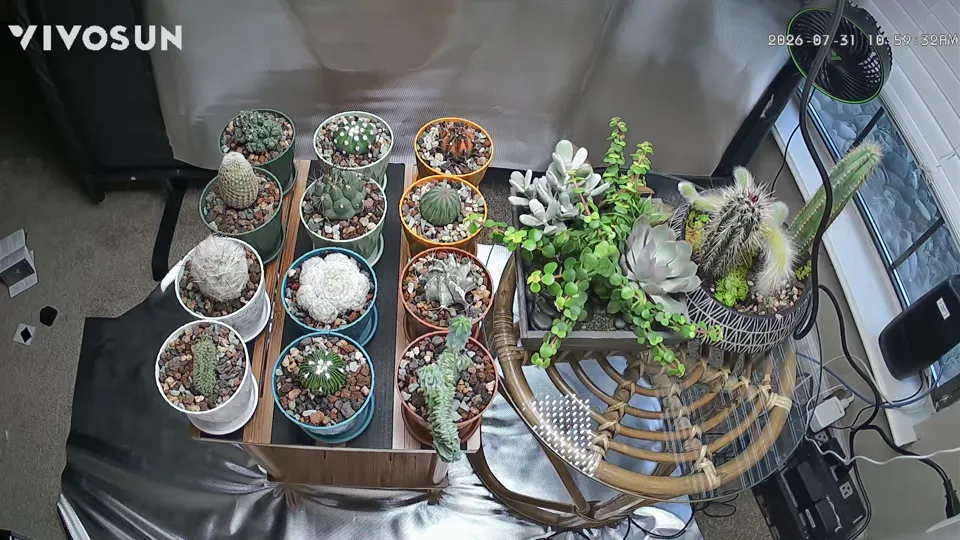
Its story so far
Then and now
Explore the sources
 Explore the sources
Names and identity
| Kind | Name |
|---|---|
| Accepted botanical name | Mammillaria plumosa F.A.C.Weber |
| Common names | Feather cactus, feather ball |
| Name clue | plumosa means feathered |
What looks like cotton is the cactus's normal armament. Each areole produces a ring of finely divided white radial spines that resemble tiny feathers and largely hide the green body. Unlike loose cottony mealybug wax, the natural feathers repeat in an orderly pattern from every tubercle.
Origin, form, and flowers
The species is native to northeastern Mexico, principally Coahuila and Nuevo León, where it grows on limestone-rich slopes and cliffs in dry shrubland. Individual heads are small and rounded, but they offset freely until an old plant can form a broad white cushion.
Creamy-white to pale yellow or dull pink flowers appear in a ring near the top of the heads, often from late summer into the cooler season in cultivation. They can be partly concealed by the spines. The fruit develops within the wool and is much less conspicuous than the bright berries of many other Mammillaria species.
Frédéric Albert Constantin Weber published the species in 1898. Kew accepts the name and reports an IUCN status of Near Threatened. Its specialized limestone habitat and popularity with collectors make documented nursery propagation preferable to plants without provenance.
Care in this collection

| Topic | Practical approach |
|---|---|
| Grow-light position | R2C1 · Bright. September 15, 2026 photo layout, facing the window (six columns, four rows). Left shoulder, with bright exposure across the clump. See the current placement guide. |
| Water | Wet the mix thoroughly and let it drain; then wait for a full dry-down. Keep water out of a cool crown and reduce strongly in winter. |
| Pot and mix | A wide, shallow pot can suit an expanding clump. The current individual pot is fine until heads reach its rim. Favor excellent mineral drainage. |
| Temperature | A dry plant handles cool nights better than a damp one. Protect from hard frost and cold rain. |
| Feeding | Dilute cactus feed during active growth only; soft fast growth is not an improvement. |


Water the soil, not the wool. If the feathers get wet, airflow and warmth should let them dry quickly. Persistent mineral spotting is cosmetic; persistent damp at the hidden body can become structural.
Propagation and watch points
- Offsets can be separated once they have enough size to root; seed is also straightforward with warmth and controlled moisture.
- Inspect with a bright light and a wooden skewer rather than parting the wool repeatedly. Mechanical handling can mat or break the feathered spines.
- Mealybugs are the main camouflage problem. New irregular cotton, sticky residue, or insects around the roots deserve attention.
- The green body can be hard to see, so use firmness and the appearance of the growing center. A beige outer patch may be stained wool; a soft dark body beneath it is different.
Sources

Through the seasons
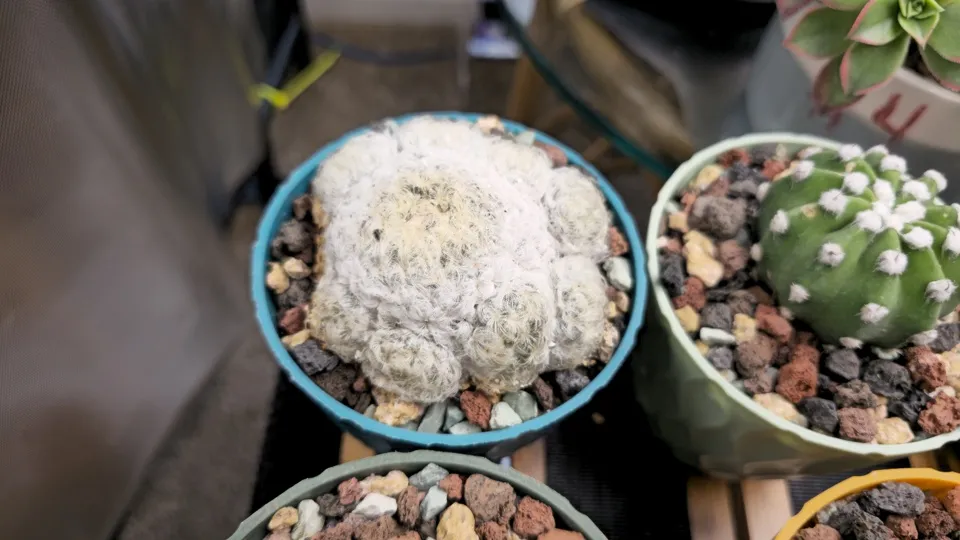
Plant Photo History
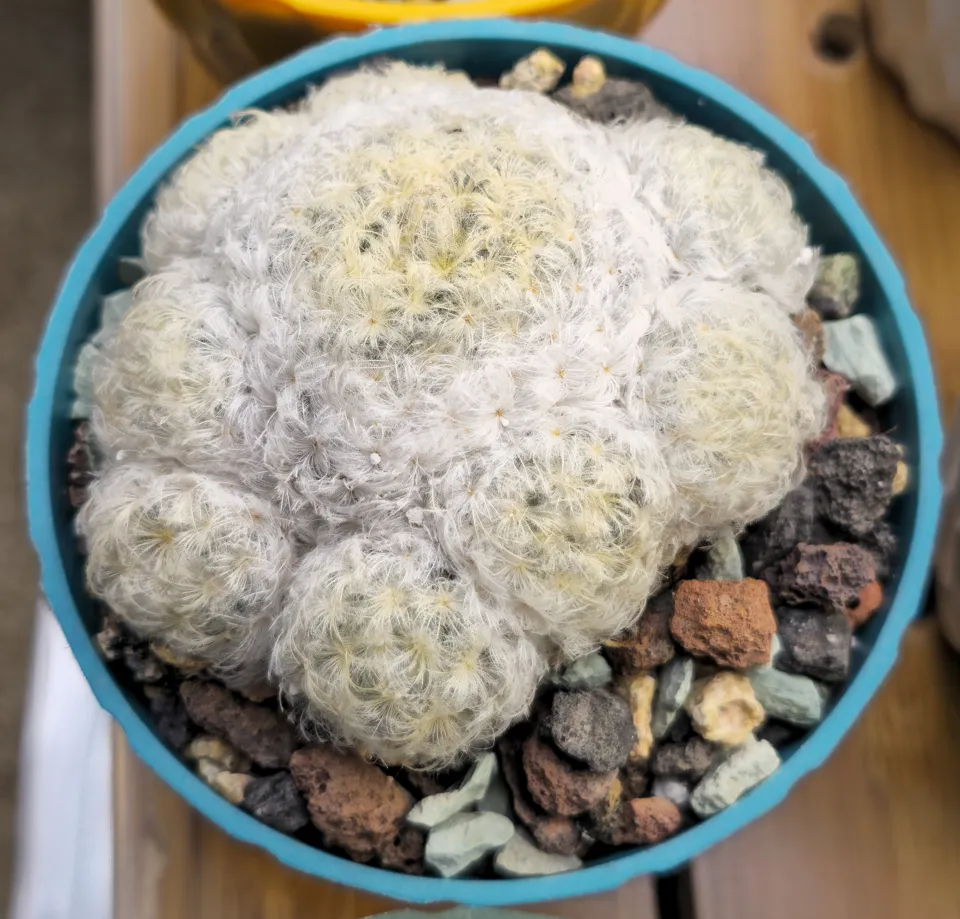
Recent photographs of this plant. Open a photo or its collection for the complete history.
From the nursery
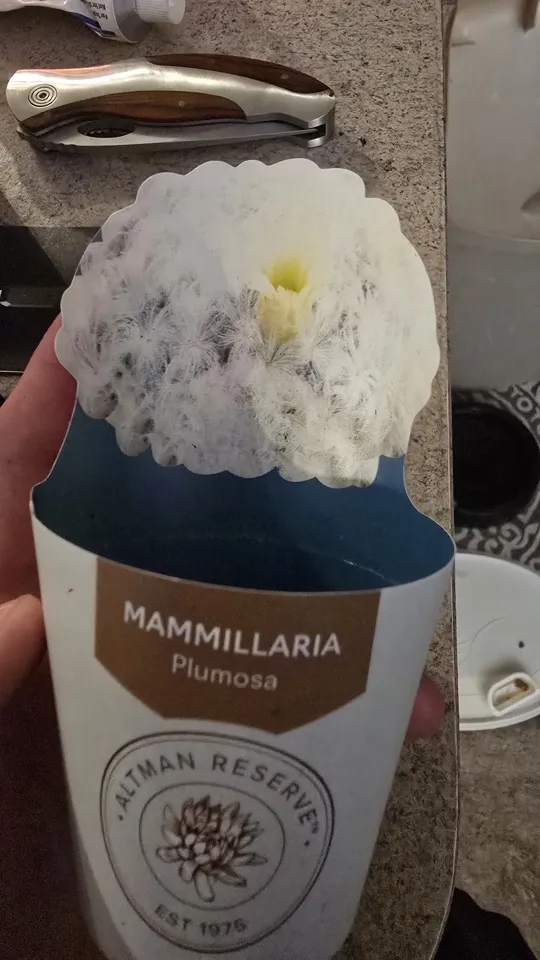
Nursery Labels
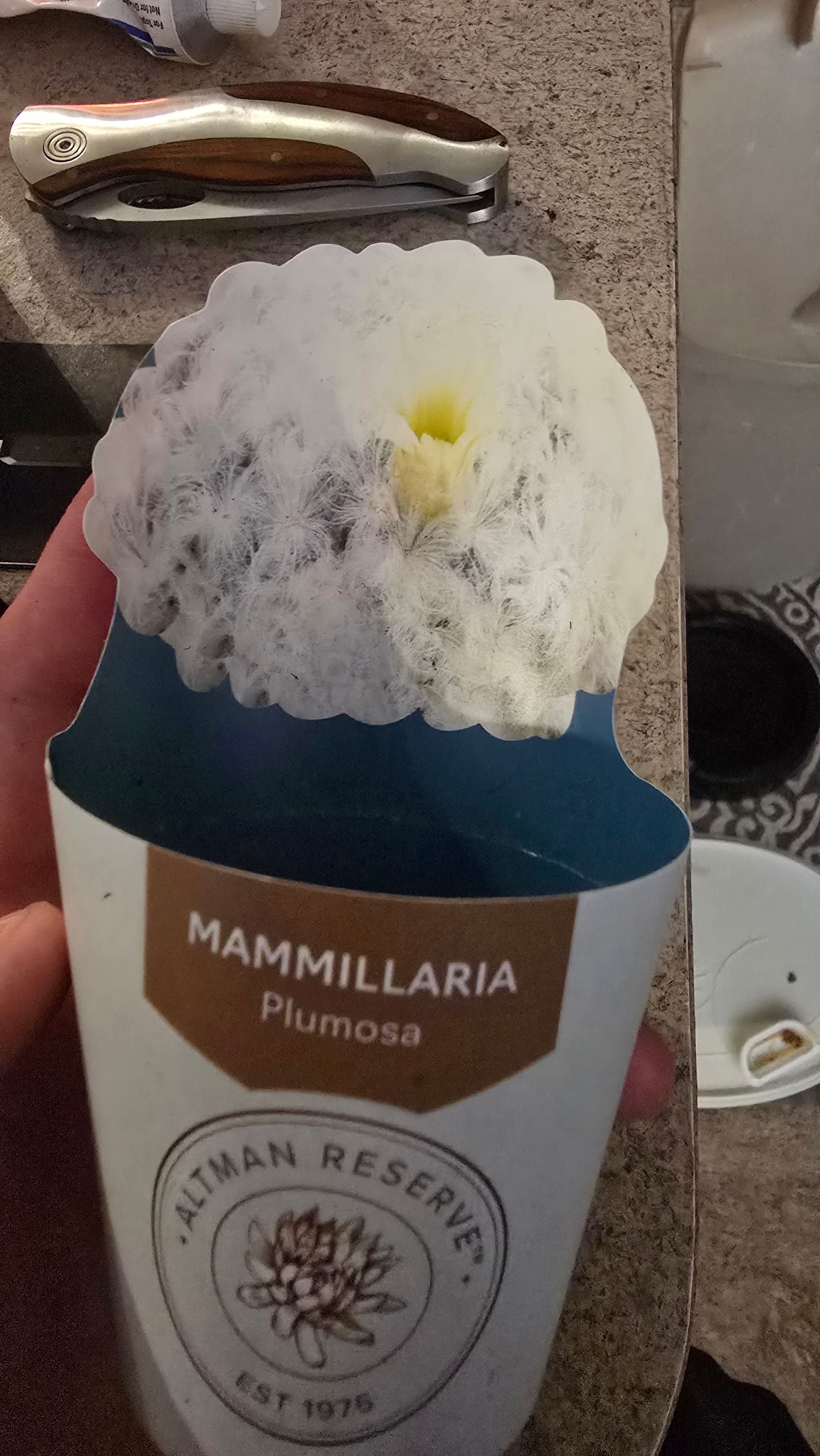
Original nursery labels and packaging.
Botanical reference photos
Reference Gallery
Form and growth

.JPG)
Look closer

Flowers and buds


In the landscape
 Altman Plants: feather cactus seller listing