


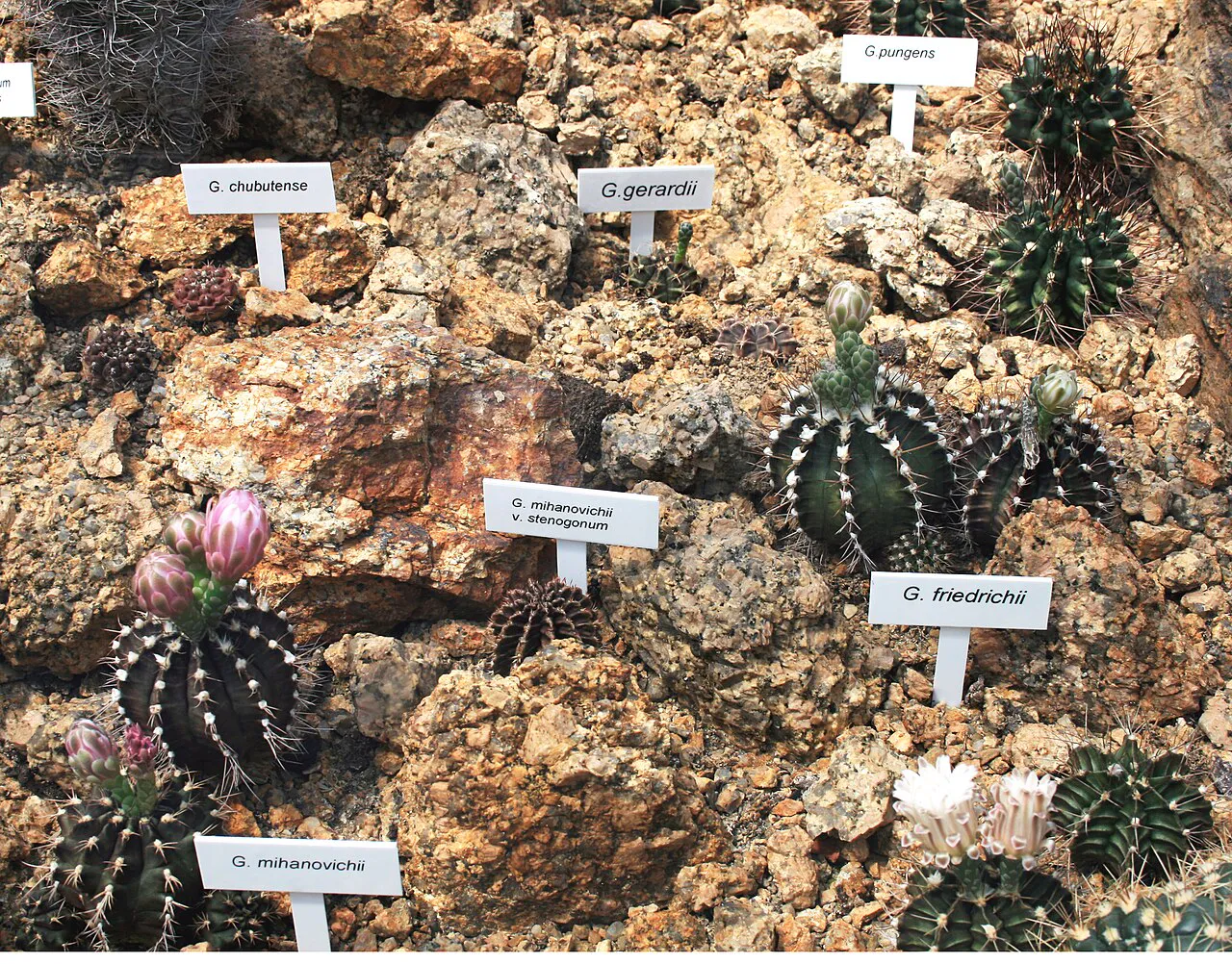
Cactus collection
Plant 21 / 45 Cactus collection
 Plant 21 / 45
 Gymnocalycium mihanovichii f. variegata 'Black Widow'
Black Widow chin cactus


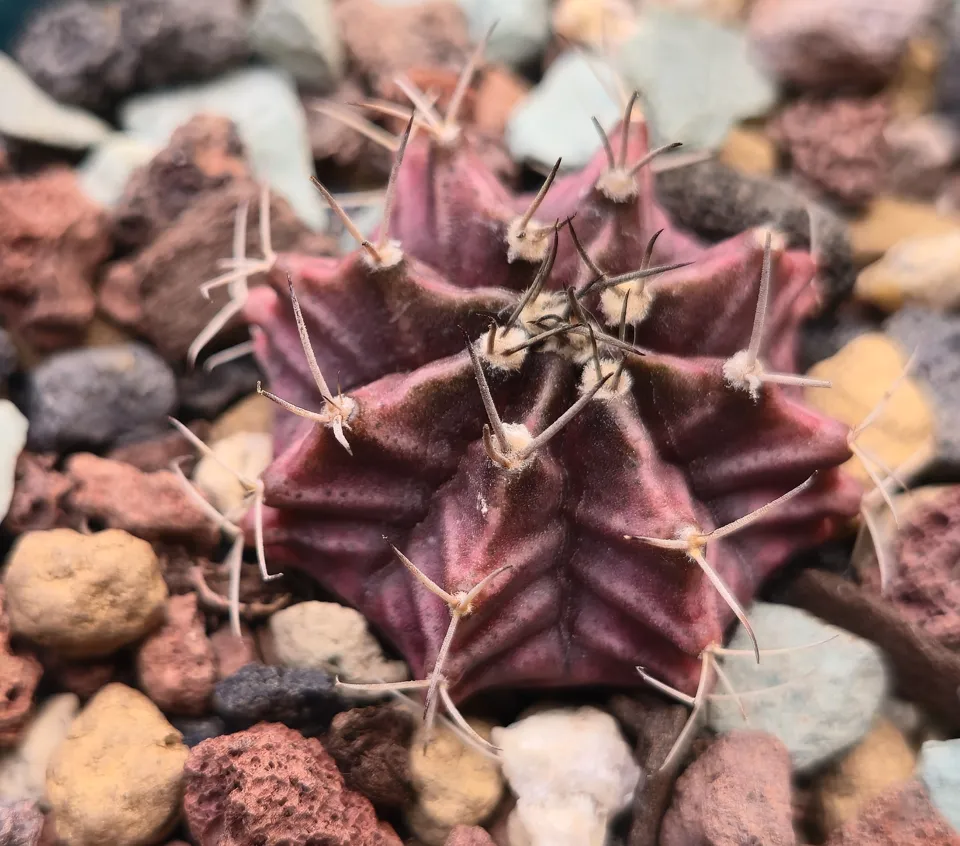
Species reference · Karelj · Public domain · Photo Source ↗
 Collection Record
- Cactus-09
 Permanent Label
G1 Identification
 Status
 Acquired From
- Mountain Crest Gardens
 Acquired On
- 2026-08-28
 Google Sheets ID
- P27 ↗
 Photo History
- 9 captures · newest ↓
Measurements and Care History
 Measurements and Care History
Weights, watering, events, and charts for P27.
Spot it
 Spot it
What it looks like
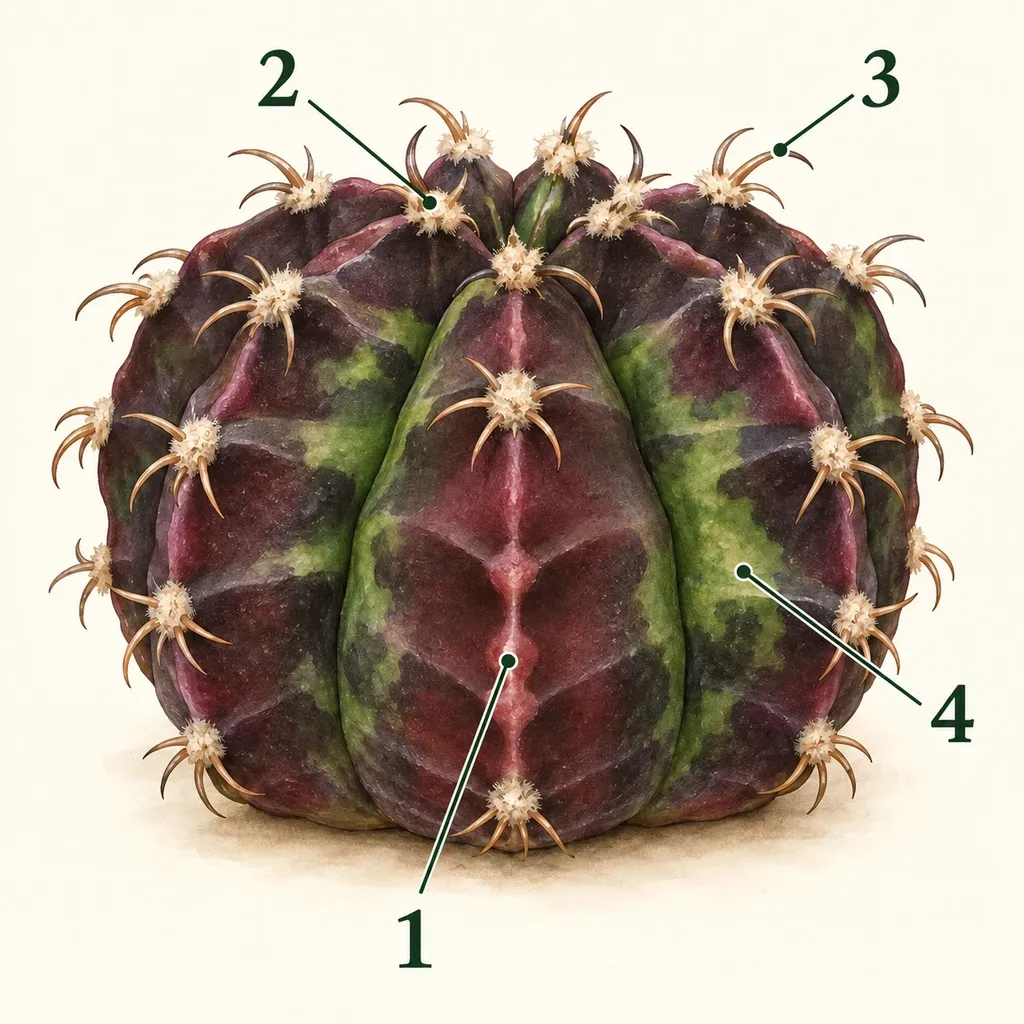
A low, dark ribbed globe mottled in near-black purple, wine red, and patches of green, with pale areoles punctuating the sharp color changes.
One curious thing
 One curious thing
Did you know?
This dramatic dark plant belongs to the same species as the neon grafted “moon cacti” sold in stores; the difference is a horticultural color form, not a different cactus species.
Explore This Plant
A closer look
How this plant works
 How this plant works
Chinlike rib notches and pale spine cushions stand out against the dark and green sectors of 'Black Widow'.
Habitat and origins
 Habitat and origins
The wild species comes from Paraguay and northeastern Argentina, including Chaco and Formosa. 'Black Widow' is a cultivated color form, so it has no separate wild habitat. Its smoky purple to nearly black body retains green tissue; the collection plant grows on its own roots rather than a graft.
What growth can look like
 What growth can look like
- Stage 1
Small globe
The young plant develops a compact ribbed body.
- Stage 2
Widening crown
New growth adds to the notched ribs at the top.
- Stage 3
Offsetting cluster
Mountain Crest reports regular offsets that can form a cluster.
New growth broadens the crown; offsets gradually turn the original globe into a cluster.
Flowers
The species bears pale green to brownish-yellow funnel-shaped flowers near the crown. Smooth buds lack the hairs and spines found on many other cactus flower buds.
Sources: [2]
As it matures
A compact ribbed globe can broaden into an offsetting cluster, with smaller heads gathered around the original stem.
Sources: [3]
Behind the name
The species was first published as Echinocactus mihanovichii in 1905, then placed in Gymnocalycium in 1922.
Sources: [1]
Similar plants, useful clues
Grafted moon cactus
Many vividly colored moon cacti lack enough chlorophyll and use a separate green rootstock. This own-root plant has a continuous base and green sectors.
Comparison sources: [2]
This plant in the collection
Its story so far
Arrived and repotted
Received from Mountain Crest Gardens and moved from its 2-inch nursery pot into the collection pot.
Collection record ↗
Then and now
Explore the sources
 Explore the sources
Names and identity
| Kind | Name |
|---|---|
| Underlying species | Gymnocalycium mihanovichii |
| Seller designation | G. mihanovichii f. variegata 'Black Widow' |
| Working common name | Black Widow chin cactus |
| Cultivar range | Horticultural selection |
The dark purple-to-nearly-black color and irregular green sectors are the cultivar's defining visual traits. Stable color patches remain firm; new bleaching, soft areas, or hard tan scars deserve closer inspection.
Collection history

Ordered from Mountain Crest Gardens on August 25, 2026, this plant arrived rooted on August 28 in a 2-inch nursery pot. It was inspected and repotted that day into a 4 × 4 × 3.7-inch round pot, with approximately 95% of the nursery soil removed according to the owner. The substrate was slightly moist at inspection.
The August 29 measurements were 388 g for the potted plant and 0.5 in high × 1.2 in wide for the plant itself, measured with a scale and ruler. Collection photographs include top and side views.
The mix is Molly's Succulent Mix with added perlite. On September 20, the owner estimated the blend as approximately 80% Molly's / 20% added perlite. See the current placement guide for the indoor arrangement. Individual lamp clearance has not been measured.
Nursery description
Mountain Crest Gardens' specifications, recorded August 26, 2026:
| Seller field | Listing value |
|---|---|
| SKU | C2ZY7804 |
| Product size | 2.0-inch pot |
| Current / seasonal color | Purple or black / green |
| Hardiness | Zone 10; seller threshold 30 °F |
| Recommended light | Bright indoor light; full sun |
| Growth habit | Vertical grower / tall stem — seller category |
| Special characteristics | Slow grower; variegated |
Mountain Crest describes a smoky purple-to-black cactus that offsets regularly, gradually building a cluster around the original globe.
Origin, form, and publication
The underlying species is native to Paraguay and northeastern Argentina. Gymnocalycium mihanovichii was first published under Echinocactus in 1905 and transferred to Gymnocalycium in 1922.
The genus name means “naked calyx,” referring to smooth flower buds without hairs or spines. Look for those buds emerging near the crown.
Care in this collection

| Topic | Practical starting approach |
|---|---|
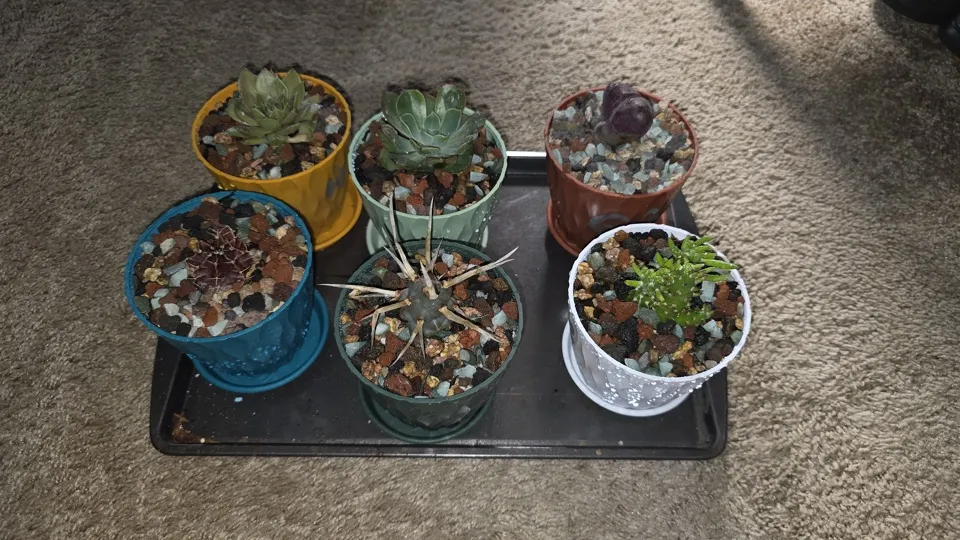
| Grow-light position | Photo-matched R1C3 · Bright. September 15, 2026 photo reference: six-column/four-row front grid, facing the window. Front-center bright position; dark color and variegation do not establish a shade requirement. See the current placement guide. |
| Water | Let the root zone dry before watering, using pot-weight trends and plant firmness together. The larger pot can remain damp below a dry surface. |
| Pot and mix | 4 × 4 × 3.7-inch round pot with Molly's Succulent Mix and approximately 20% added perlite (owner estimate). Keep drainage clear and avoid persistent moisture around the base. |
| Color | Judge new scars, bleaching, or translucence separately from stable dark purple and green variegation. |


Rotation, propagation, and watch points
- Acclimate the most variegated face gradually when changing the pot's orientation; pale sectors can be more sensitive than green tissue.
- More green tissue generally provides more photosynthetic capacity; do not remove green offsets merely to make the plant look darker.
- A sudden pale, translucent, or hard tan patch after a light change is not a desirable extension of the cultivar color.
- Keep the plant above freezing and away from standing water.
Sources

-
Owner observations, August 28–29 and September 20, 2026: receipt, repotting, substrate condition, scale/ruler measurements, and estimated Molly's Succulent Mix/perlite blend.
-
LLIFLE cactus encyclopedia: Gymnocalycium mihanovichii species reference
Through the seasons
Plant Photo History
Recent photographs of this plant. Open a photo or its collection for the complete history.
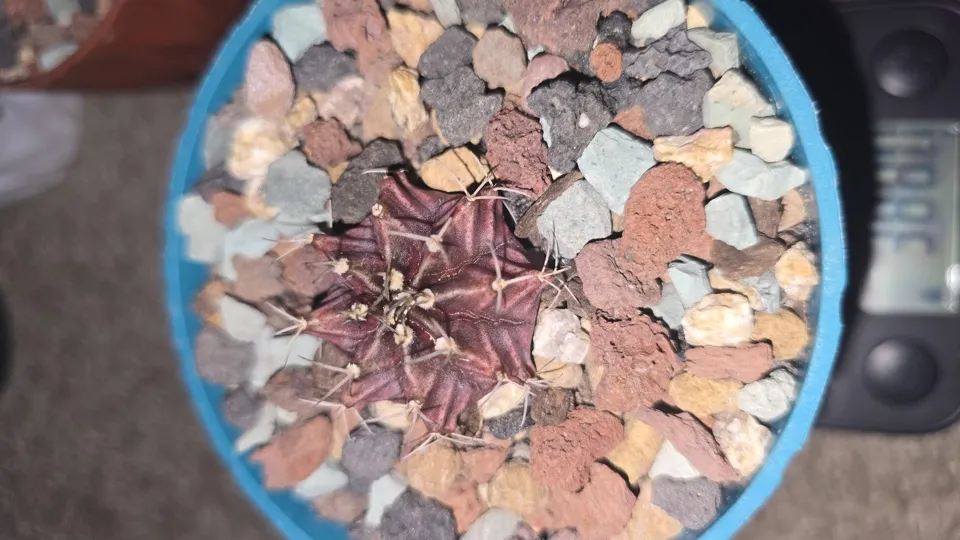
From the nursery
Nursery Labels
Original nursery labels and packaging.

Botanical reference photos
Reference Gallery
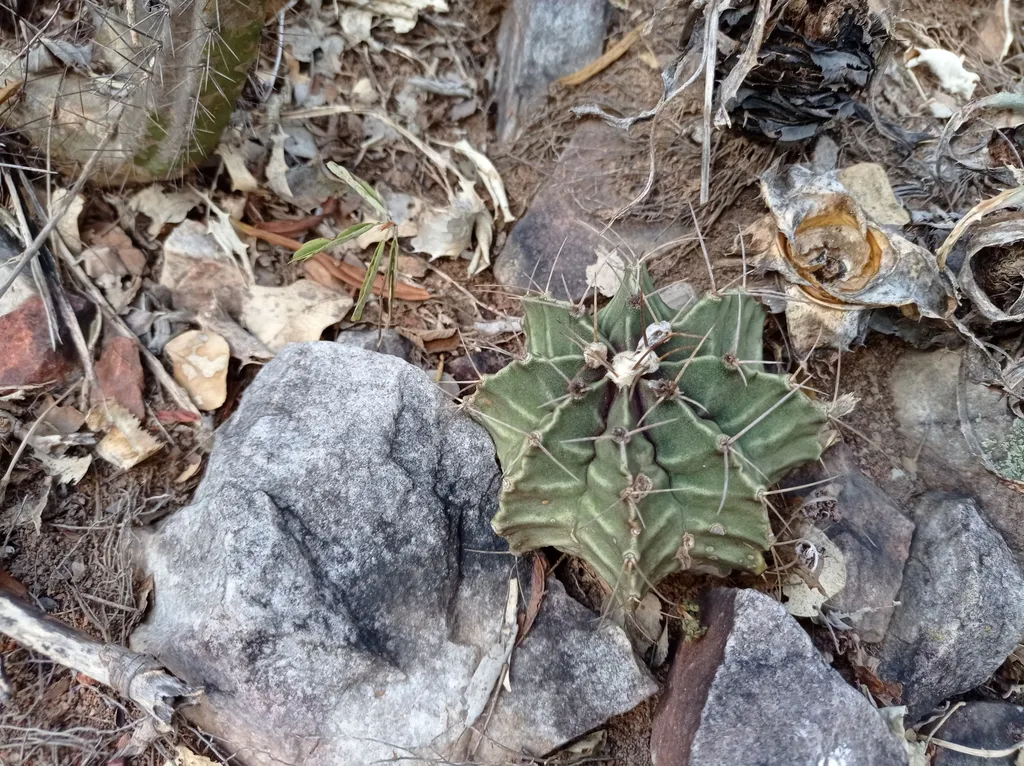
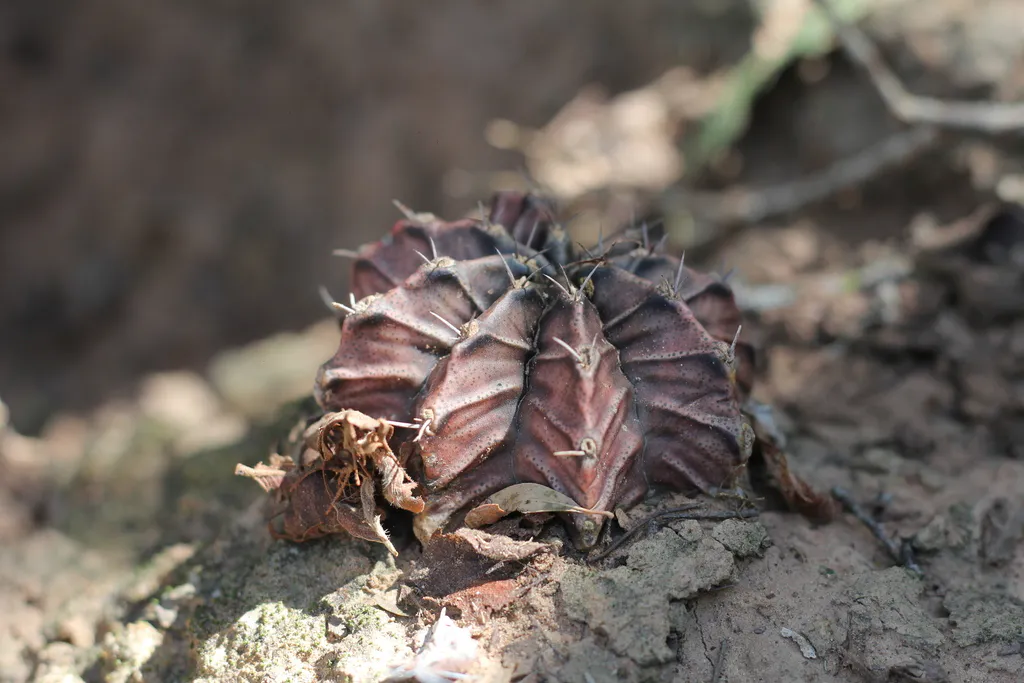
Gymnocalycium mihanovichii: green and variegated forms
Form and growth

.jpg)
Look closer


Flowers and buds

In the landscape

Research Trail
- Collection Notes on GitHub
- Complete Photo Archive and Credits
- Mountain Crest Gardens: 'Black Widow' seller listing
- iNaturalist Observations — Species and cultivated color forms
 Mountain Crest Gardens: 'Black Widow' seller listing