


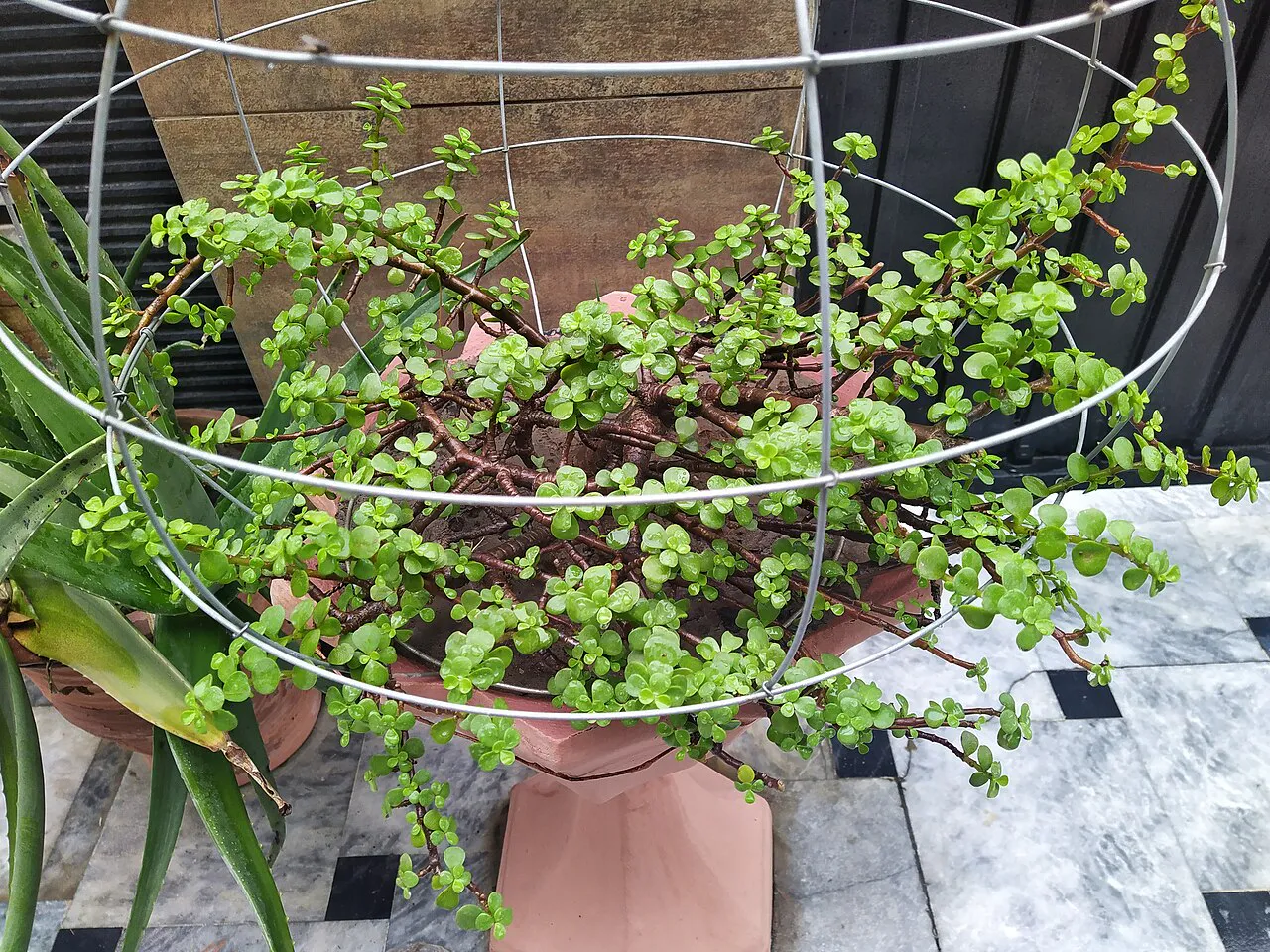
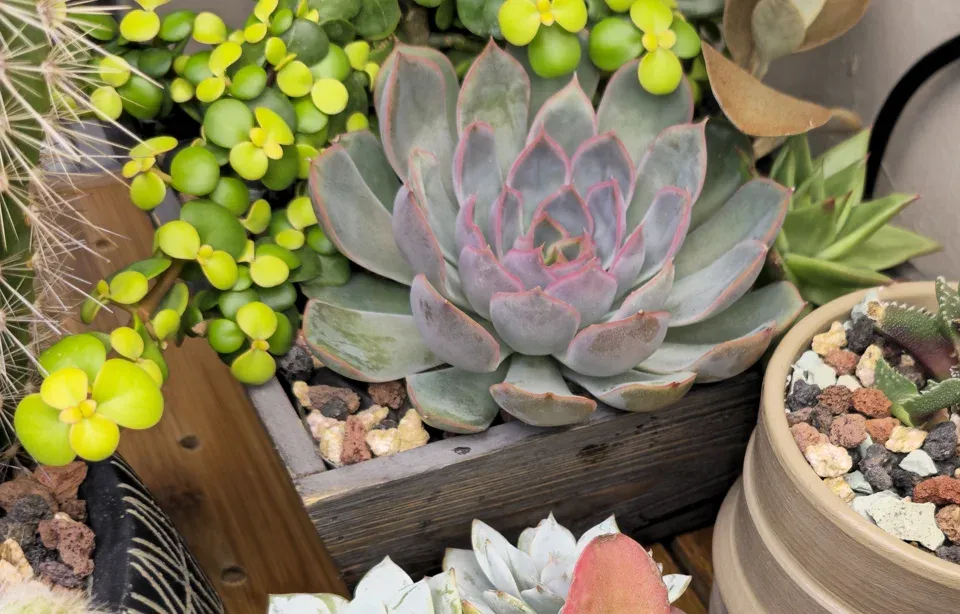
Shared planter and individual succulents
Plant 23 / 45 Shared planter and individual succulents
 Plant 23 / 45

Species reference · Tahir mq · CC BY-SA 4.0 · Photo Source ↗
Shared container · P20 · #2
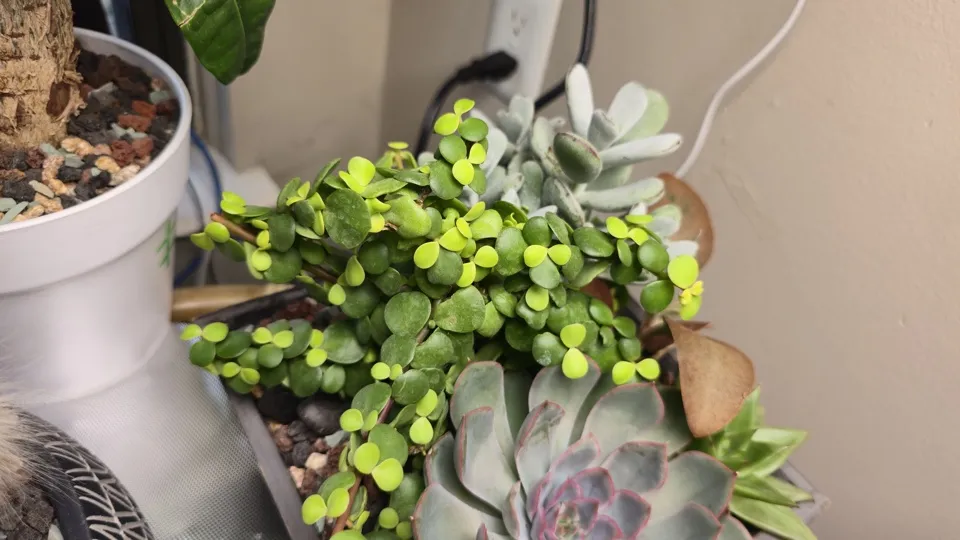
Shared succulent planter · P20
4 botanical profiles · one container history
 Pulido's echeveriaprobable Echeveria pulidonis or close hybridLikely Match
 Silver teaspoonsprobable Kalanchoe bracteataLikely Match
 Copper spoonsKalanchoe orgyalisStrong Match
 Elephant bushPortulacaria afraStrong MatchThis profile
The echeveria, two kalanchoes, and elephant bush have separate identity and care profiles but receive water through one shared root volume. Compare all four members and the whole-pot dry-down before watering.
One care record: log watering, feeding, weighing, and repotting once for P20. Include a plant's name when an observation concerns just that member.
 Collection Record
- Succulent-02
 Permanent Label
#2 Identification
 Status
 Acquired From
- Gerych's Greenhouse, as part of the mixed succulent planter
 Acquired On
- 2026-07-27
 Google Sheets ID
- P20 ↗
 Photo History
- 5 captures · newest ↓
Measurements and Care History
 Measurements and Care History
Weights, watering, events, and charts for P20.
Spot it
 Spot it
What it looks like
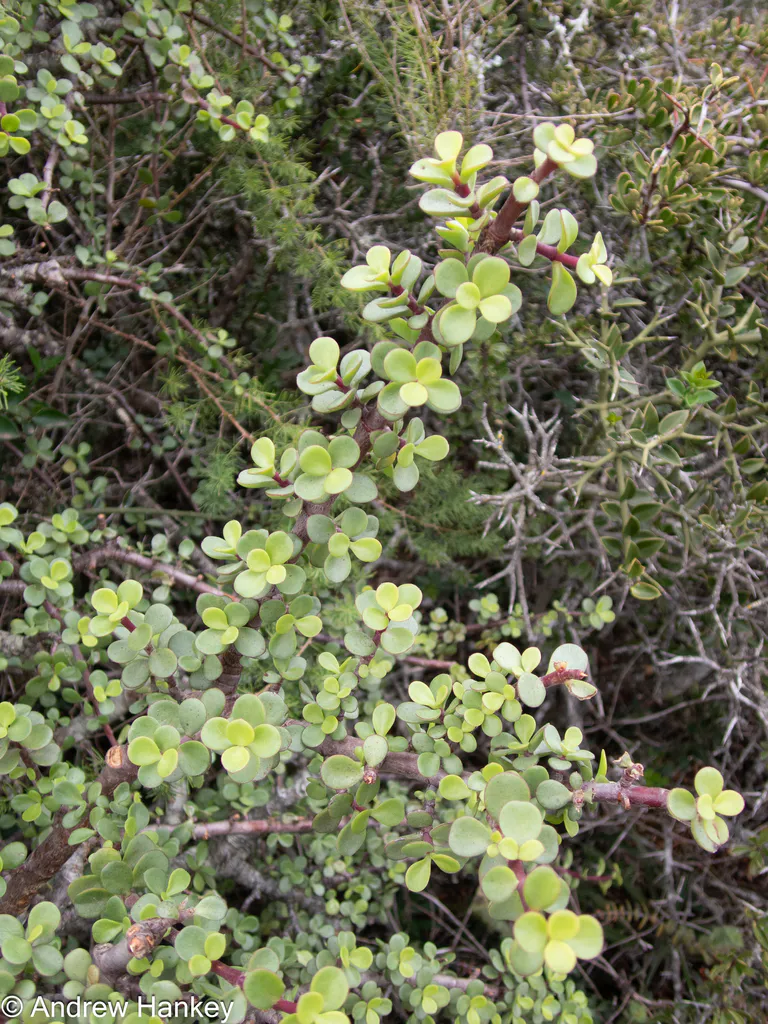
Fine branching reddish stems carry many small, round, glossy green leaves in opposite pairs, creating a miniature-tree texture within the shared planter.
One curious thing
 One curious thing
Did you know?
Elephant bush is physiologically flexible: it can use ordinary C3 photosynthesis when conditions allow and shift toward water-saving CAM behavior when conserving moisture matters more.
Explore This Plant
A closer look
How this plant works
 How this plant works
Small opposite leaves sit on red young shoots above an older woody framework.
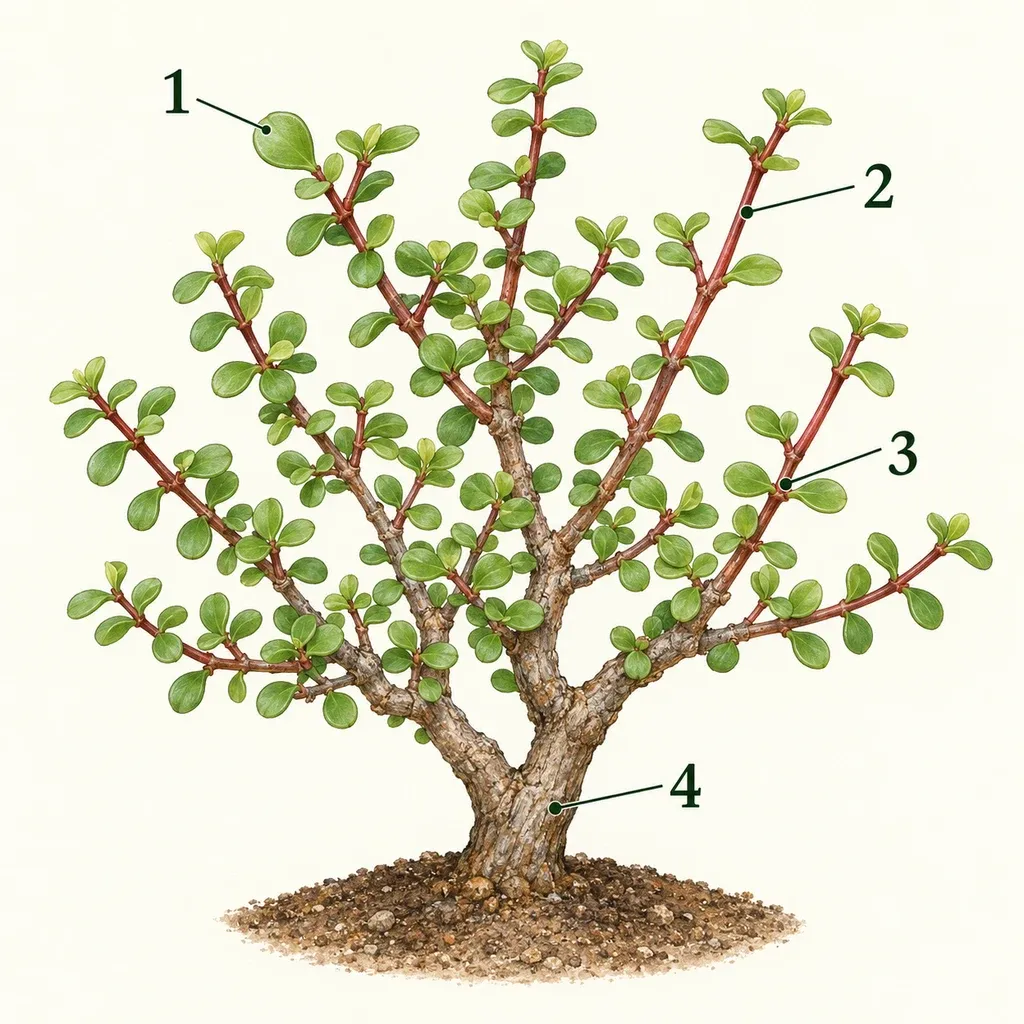
Fleshy leaf
The small rounded blade stores water while producing sugars.
Young stem
Reddish young shoots carry new foliage and gradually develop woody tissue.
Branching node
Opposite leaves and new shoots arise at these junctions.
Woody trunk
Older supporting tissue holds the expanding network of branches.
Anatomy sources: [2]
Habitat and origins
 Habitat and origins
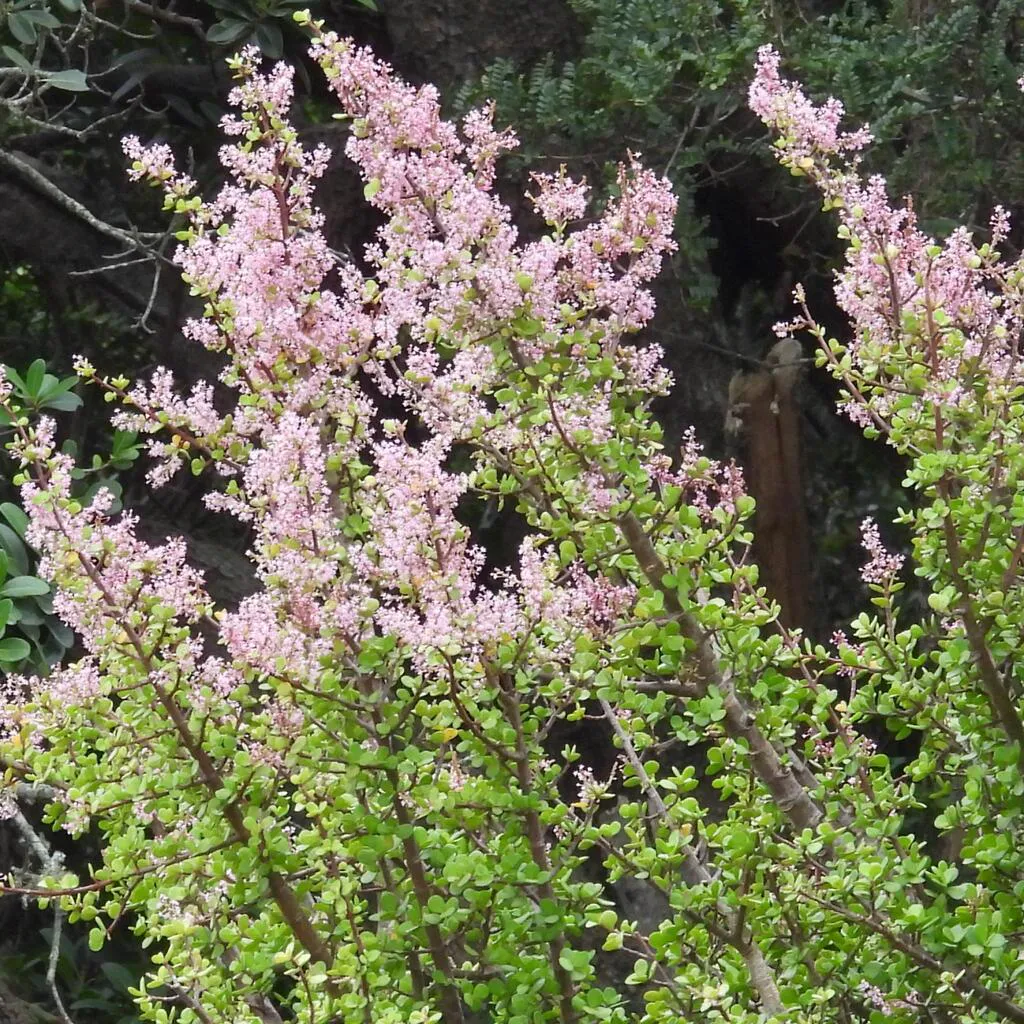
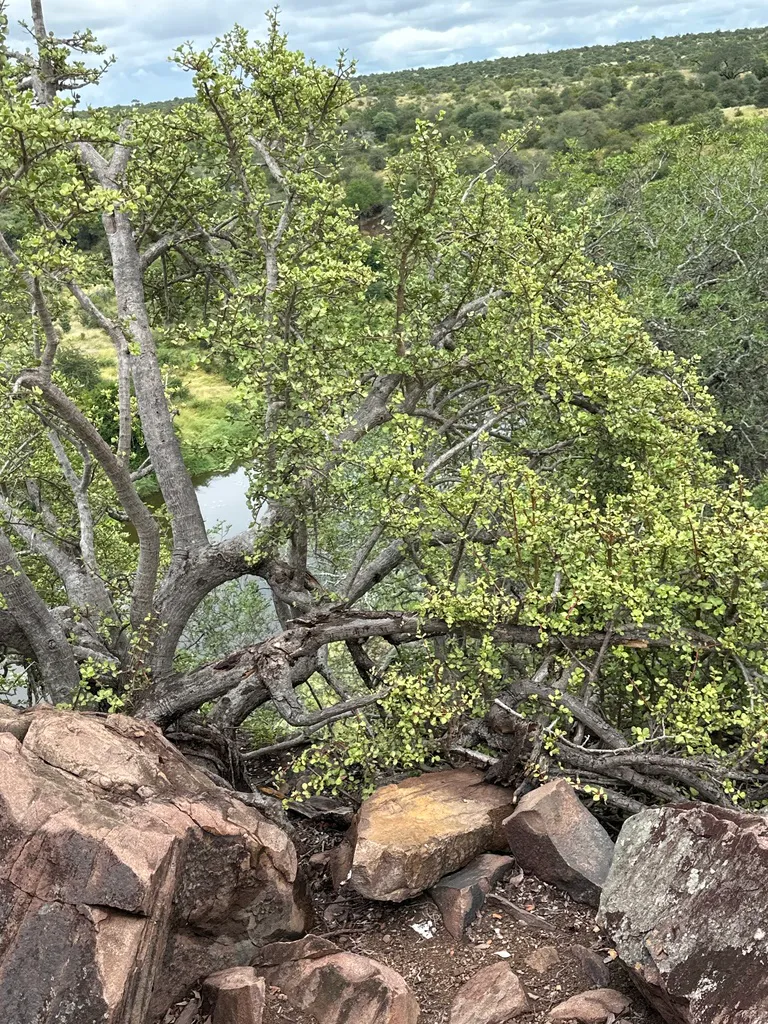
Elephant bush grows on warm rocky slopes, in thicket and along dry valleys in southern Africa, extending into Mozambique. Mature shrubs form dense canopies. Browsed or fallen branches can root against the ground, helping a stand spread and recover through vegetative growth.
Habitat sources: [1]
What growth can look like
 What growth can look like
- Stage 1
Extend shoots
New red stems lengthen and add opposite pairs of leaves.
- Stage 2
Build branches
Side shoots fill out the canopy as older stems become woody.
- Stage 3
Develop a shrub
An established plant can form a dense, irregular framework.
Pruning just above a leaf pair encourages a denser canopy and helps keep the low echeveria in the shared box exposed to light.
Growth sources: [2]
Flowers
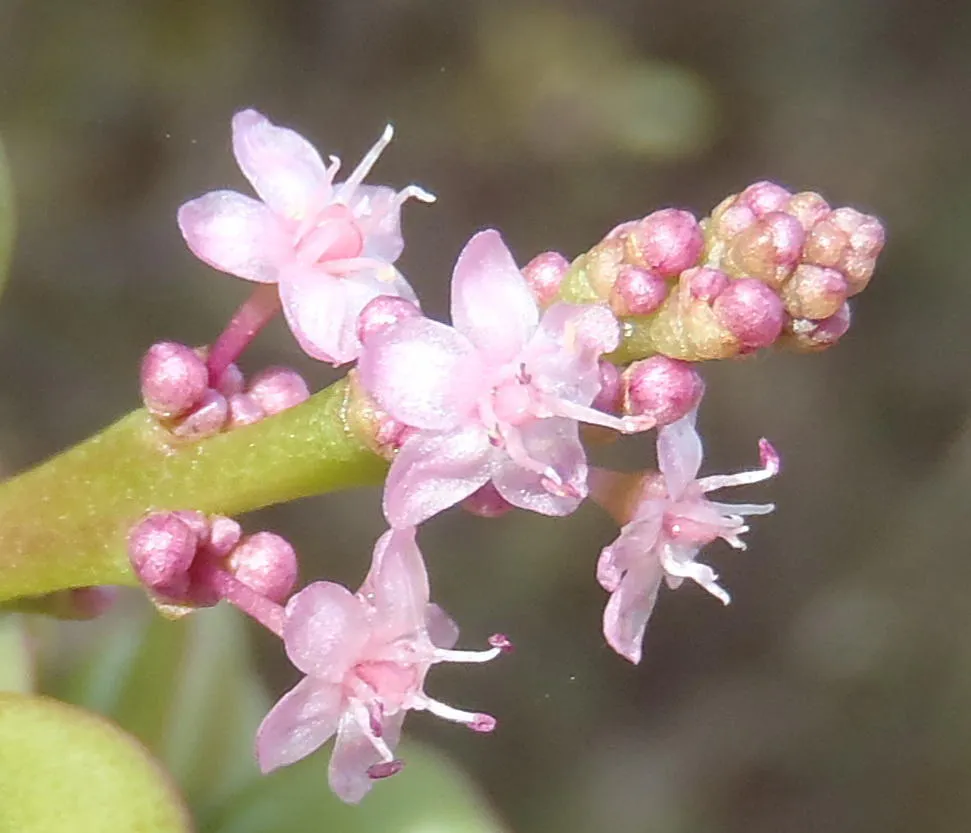
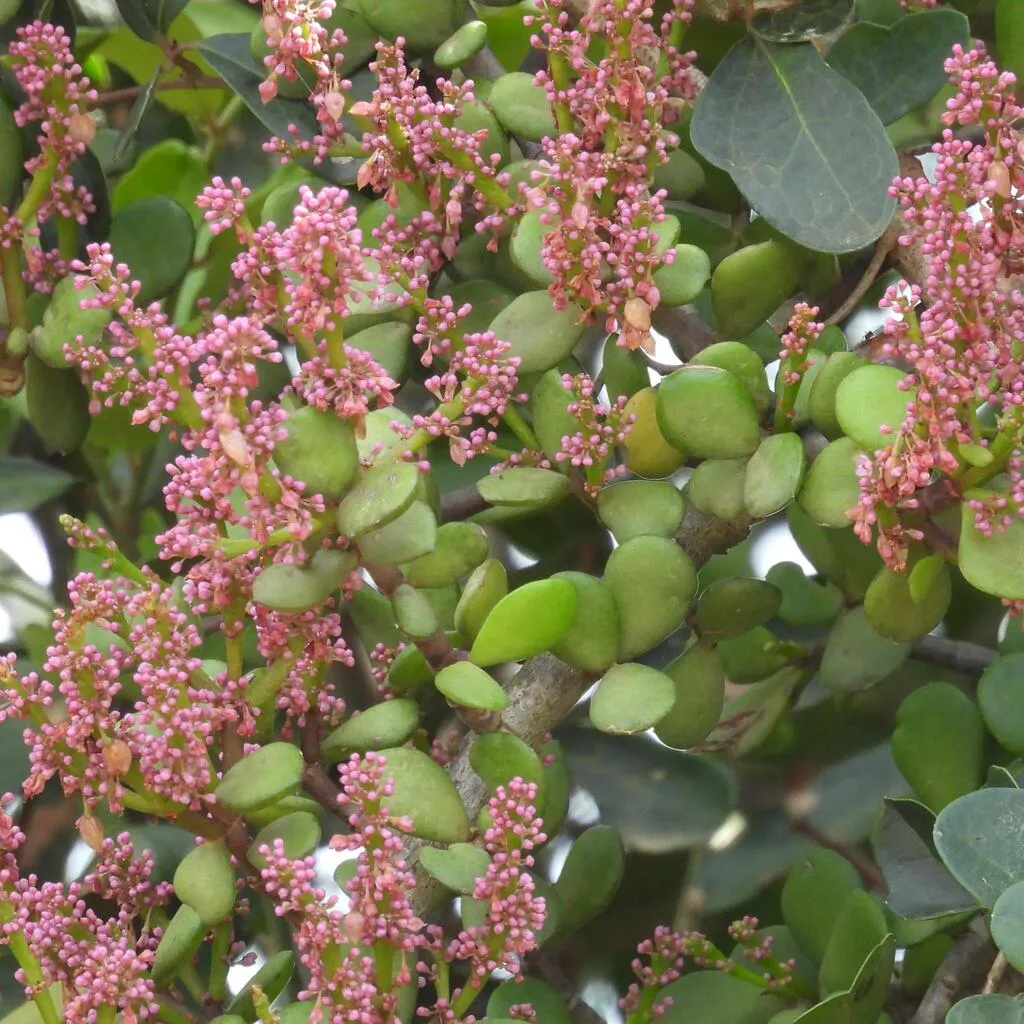
Tiny pink or whitish flowers cluster at branch tips. Each has five pointed petals and prominent stamens; successful pollination produces a small dry fruit containing one seed. Flowering is irregular in cultivation.
As it matures
SANBI describes shrubs or small trees reaching 2–5 m, commonly smaller in gardens. Containers and pruning keep the fine branching framework compact indoors.
Sources: [1]
Behind the name
The name afra refers to Africa. Elephants also help explain its common name: broken branches left after browsing can root and contribute to new growth in the thicket.
Sources: [1]
Similar plants, useful clues
Jade plant (Crassula ovata)
Elephant bush usually has smaller, closer-set leaves on thinner red shoots. Both can become woody, so trunk appearance alone is less useful than leaf and shoot proportions.
Comparison sources: [2]
This plant in the collection
Its story so far
Joined the collection
Acquired at Gerych's Greenhouse as one member of the shared P20 / #2 succulent box.
Collection record ↗
Then and now
Explore the sources
 Explore the sources
Names and identity
| Kind | Name |
|---|---|
| Accepted botanical name | Portulacaria afra Jacq. |
| Common names | Elephant bush, spekboom, porkbush, elephant's food, purslane tree, dwarf jade |
| Possible collection form | A yellow-green selection such as 'Aurea'; no cultivar label is available |
| Important distinction | “Dwarf jade” is a resemblance name; this is not Crassula ovata |

Small round leaves grow in opposite pairs on reddish shoots. SANBI describes the cultivated 'Aurea' form as turning yellow in sun; chartreuse tips can also reflect leaf age and growing conditions.
Origin, ecology, and unusual physiology
Spekboom is native to southern Africa and is especially characteristic of dry thicket in South Africa's Eastern Cape. In habitat it becomes a densely branched shrub or small tree several metres high. Tiny starry pink flowers can cover mature plants after favorable conditions, although flowering is uncommon indoors. Each flower has five pointed petals and prominent stamens; pollinated flowers produce small dry fruits with one seed.
It is unusually flexible in how it fixes carbon. Under favorable water conditions it can behave mainly as a C3 plant; under drought stress it can increase crassulacean acid metabolism (CAM), opening stomata more at night to conserve water. This flexibility helps it conserve water when its surroundings dry.
Elephants browse from above, breaking stems that can root where they land and helping maintain spekboom thicket. Heavy goat browsing from below can prevent regeneration. This interaction made the species important in landscape restoration.
The sour leaves have a history of culinary use. Do not taste the collection plant unless the ID is certain and it has had no systemic pesticide or unsafe top-dressing exposure.
Care in the shared planter

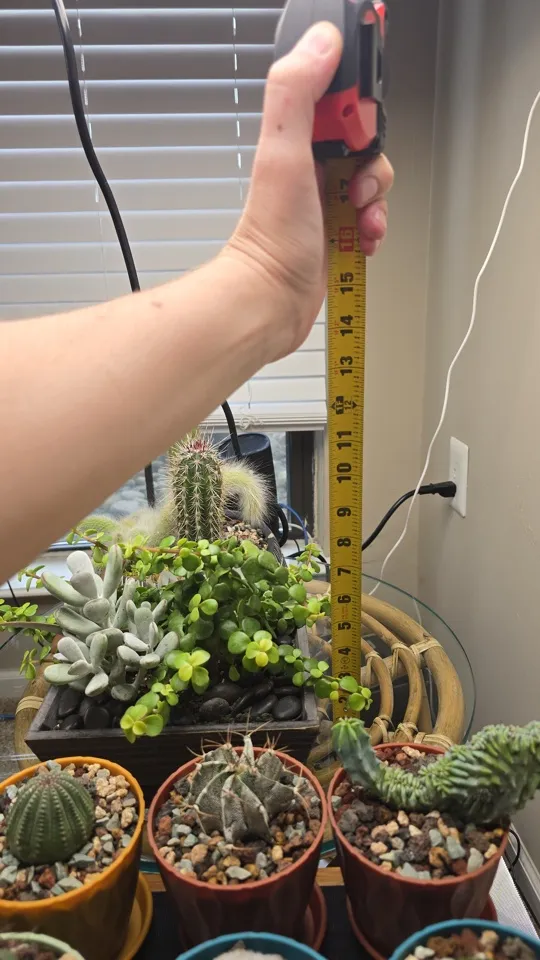
The square wooden planter has a plastic liner and an approximately one-inch drainage hole through both the bottom and liner, documented September 20, 2026. Keep the opening clear and let the shared root zone dry before watering.
| Topic | Practical approach |
|---|---|
| Grow-light position | Rear right, toward window · Mixed. September 15 rear wooden tables, facing the window. Keep the low Echeveria exposed beneath the taller Portulacaria and Kalanchoe foliage. See the current placement guide. |
| Water | Water thoroughly once the shared planter dries. During warm active growth it may use water sooner than the cacti, but its leaves store a useful buffer. |
| Pruning | Pinch or cut long stems above a leaf pair to keep the echeveria unshaded and encourage branching. |
| Temperature | Warm growth is fastest; protect this African succulent from frost. |
| Feeding | Sparse balanced fertilizer during active growth. Too much produces long, fragile internodes. |


Strong compact growth has short gaps between leaf pairs. Long bare reaches and small widely spaced leaves point to inadequate light. A little red edging or stem color can be normal in strong light; crisp beige patches after a move are sunburn.
Propagation and watch points
- Stem cuttings root readily. Let a fresh cut dry briefly, then place it in an airy medium and delay heavy watering until roots begin.
- It is very suitable for bonsai-style pruning, but wired branches scar easily.
- Dropping many plump green leaves at once often follows a sudden environmental change or wet roots; gradual wrinkling usually indicates use of stored water.
- Scale and mealybugs favor woody branch junctions.
- This species will eventually outgrow the shared planter unless it is pruned or moved.
Sources

-
Owner observations, September 20, 2026: P20 / #2 wooden planter with a plastic liner and an approximately one-inch drainage hole through both layers.
Through the seasons
Plant Photo History
Recent photographs of this plant. Open a photo or its collection for the complete history.
Botanical reference photos
Reference Gallery
Portulacaria afra species forms
Form and growth

Look closer

Flowers and buds

_(25614360547).jpg)
In the landscape
_(26614280578).jpg)
Research Trail
- Collection Notes on GitHub
- Complete Photo Archive and Credits
- iNaturalist Observations — Species observations