


Older planter and archive
Plant 41 / 45 Older planter and archive
 Plant 41 / 45

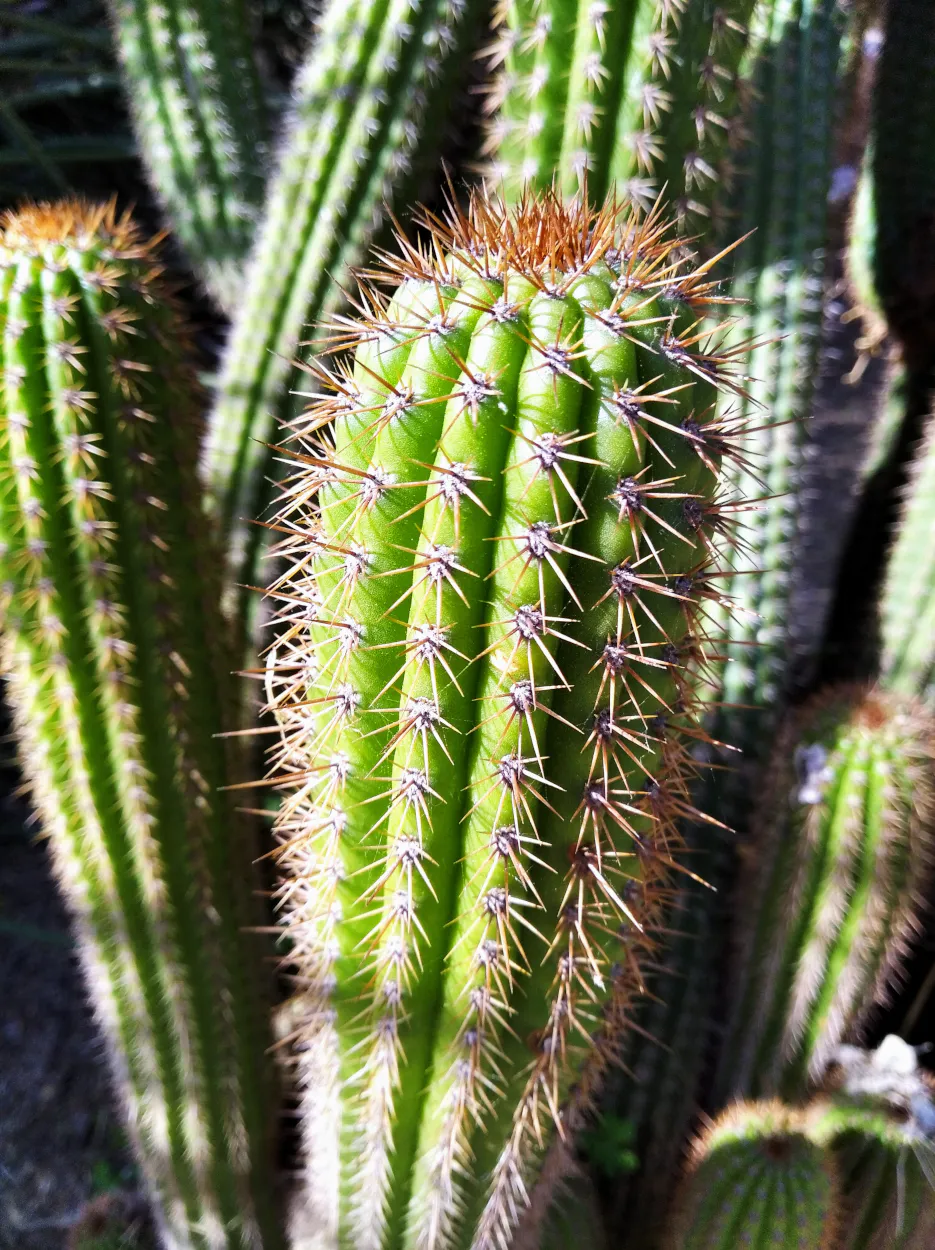
Species reference · Consultaplantas · CC BY-SA 4.0 · Photo Source ↗
Shared container · P19 · #1
Shared rehab cactus planter · P19
 Shared rehab cactus planter · P19
3 botanical profiles · one container history
 Variegated blue torch cactusprobable variegated Pilosocereus pachycladusLikely Match
 Monkey tail cactusCleistocactus colademononisStrong Match
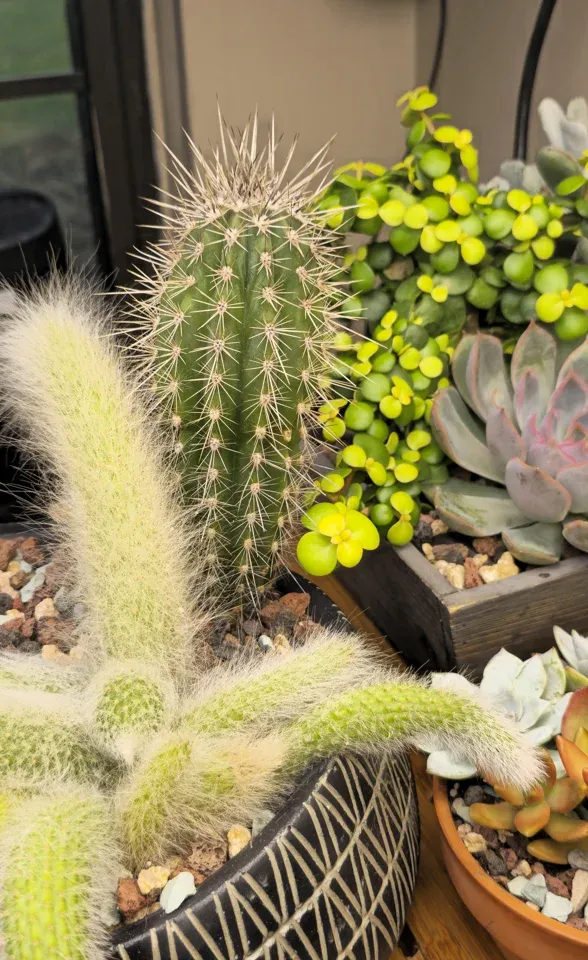
 Golden torch cactusprobable Echinopsis spachianaLikely MatchThis profile
Three cactus profiles share one root volume and one watering and weight history. Inspect each cactus, then judge the whole container before watering; a concern with one member is not a separate watering instruction.
One care record: log watering, feeding, weighing, and repotting once for P19. Include a plant's name when an observation concerns just that member.
 Collection Record
- Rehab-03
 Permanent Label
#1 Identification
 Status
 Acquired From
- Gerych's Design, Fenton, Michigan, as part of the shared cactus planter
 Acquired On
- 2023-06-21
 Google Sheets ID
- P19 ↗
 Photo History
- 5 captures · newest ↓
Measurements and Care History
 Measurements and Care History
Weights, watering, events, and charts for P19.
Spot it
 Spot it
What it looks like
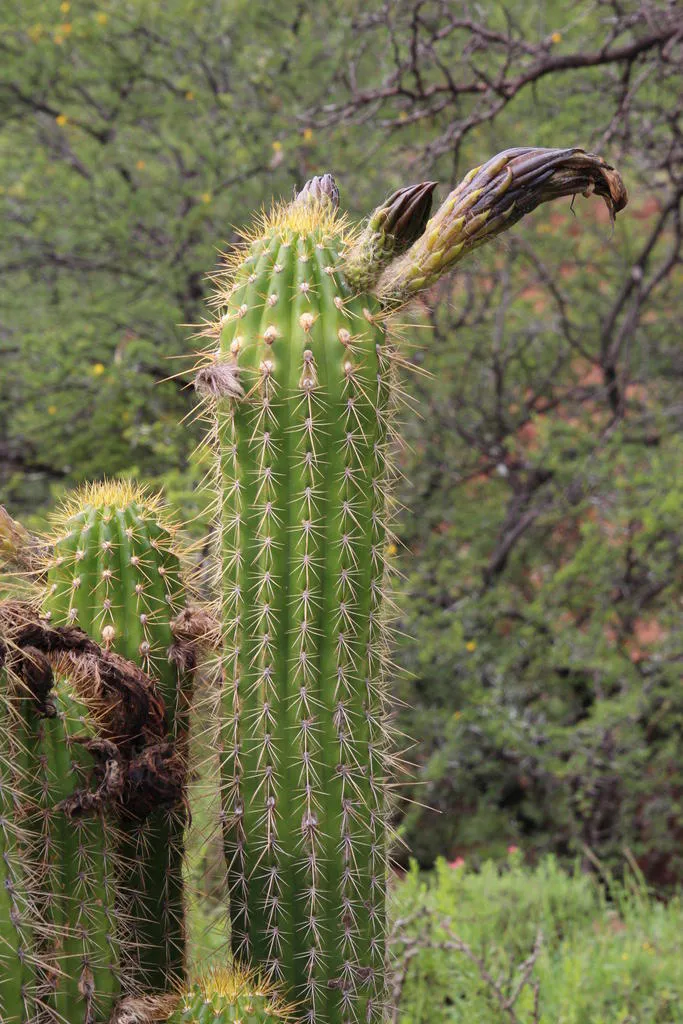
An upright green column divided by strong vertical ribs, with close golden-brown spine clusters tracing each rib from base to tip like parallel dotted lines.
One curious thing
 One curious thing
Did you know?
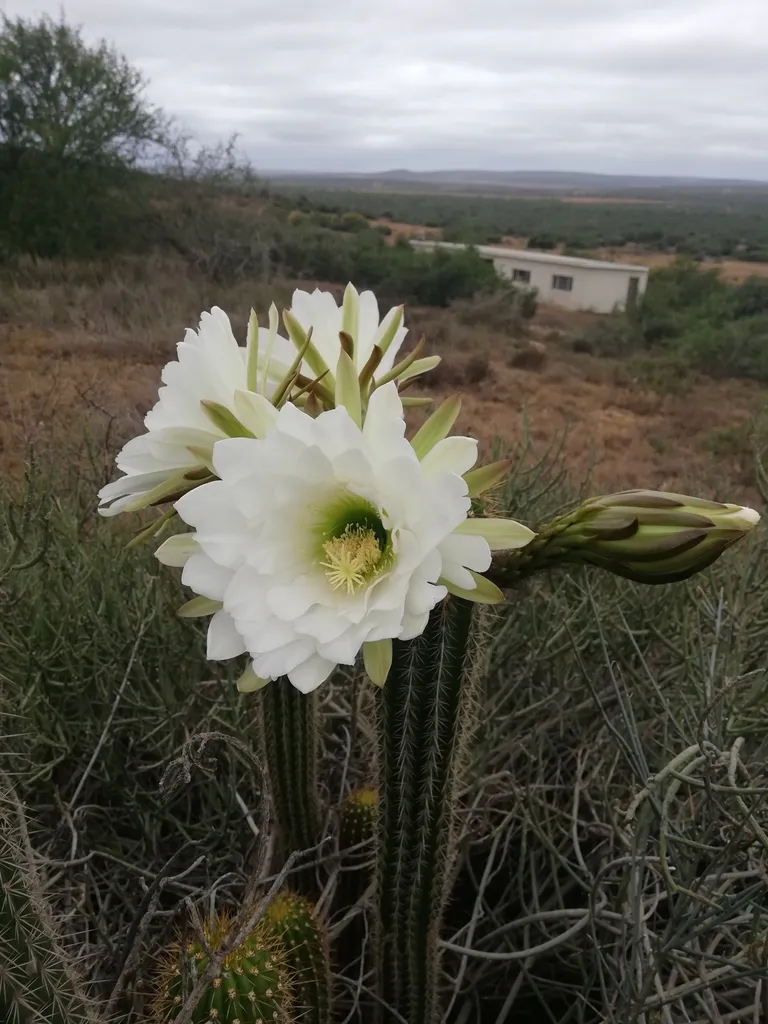
Golden torch combines two very different horticultural roles: a mature column can open a large white flower at night, while vigorous stems are also used as grafting stock for other cacti.
Explore This Plant
A closer look
How this plant works
 How this plant works
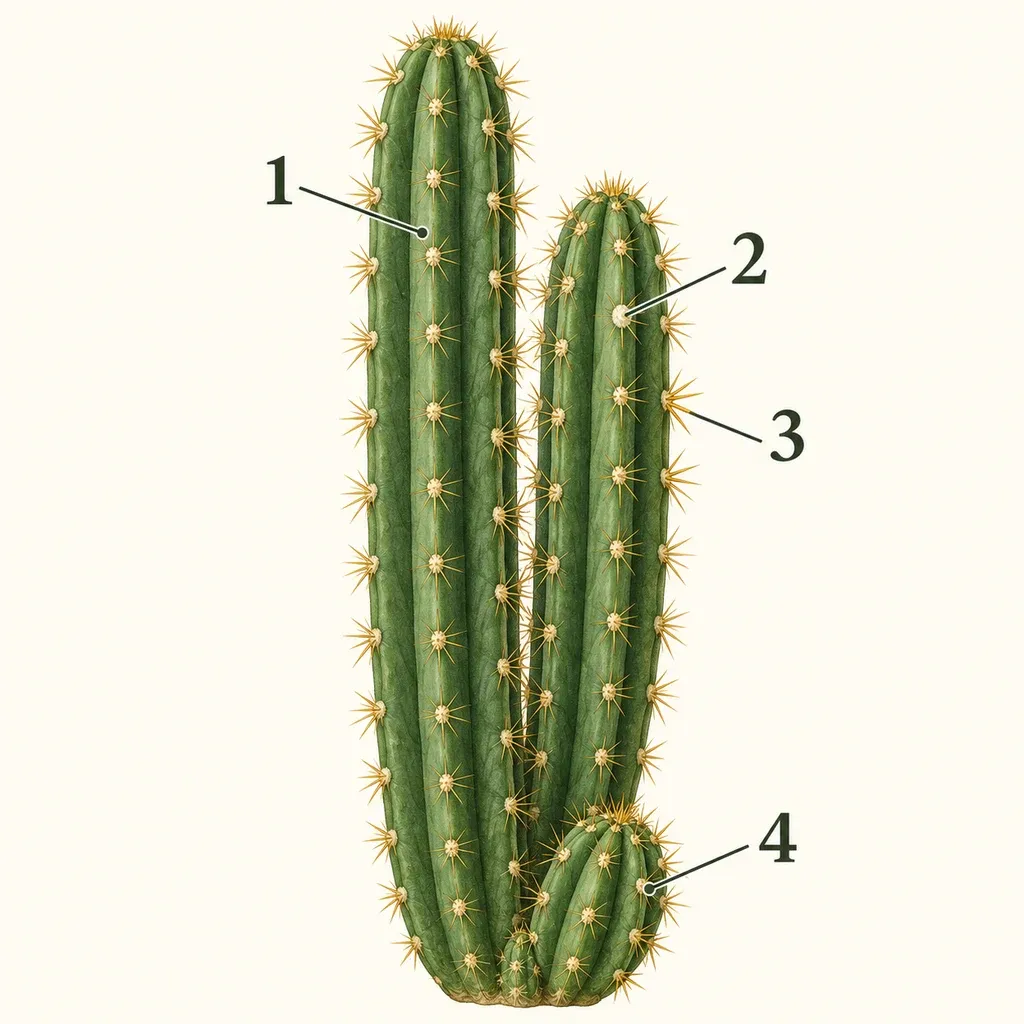
Vertical ribs support rows of golden spine clusters, while basal shoots build new columns.
Habitat and origins
 Habitat and origins
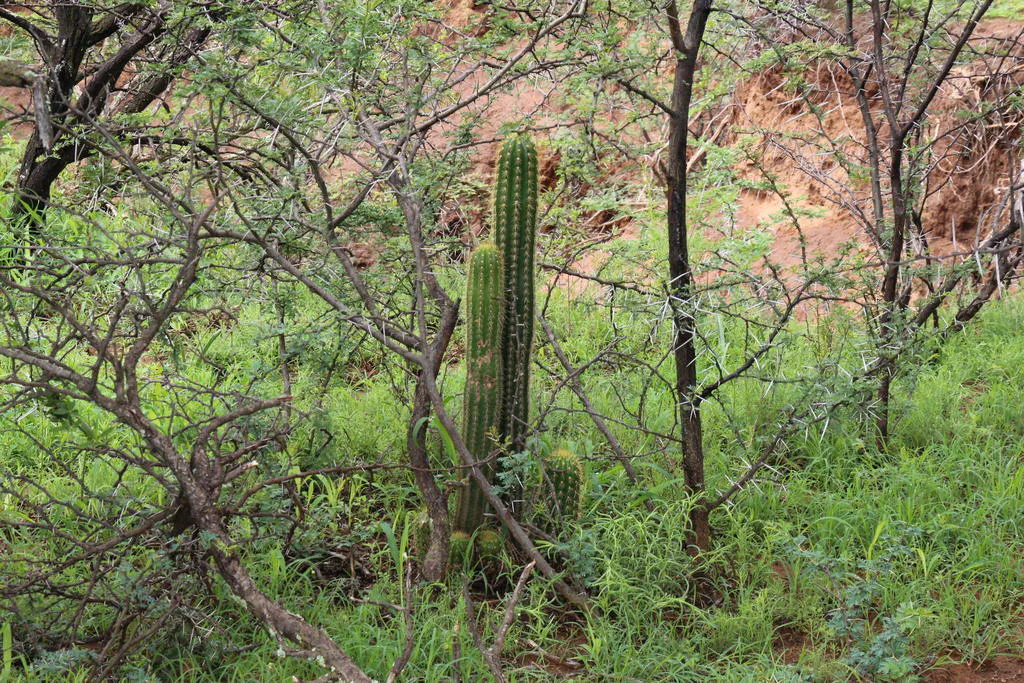
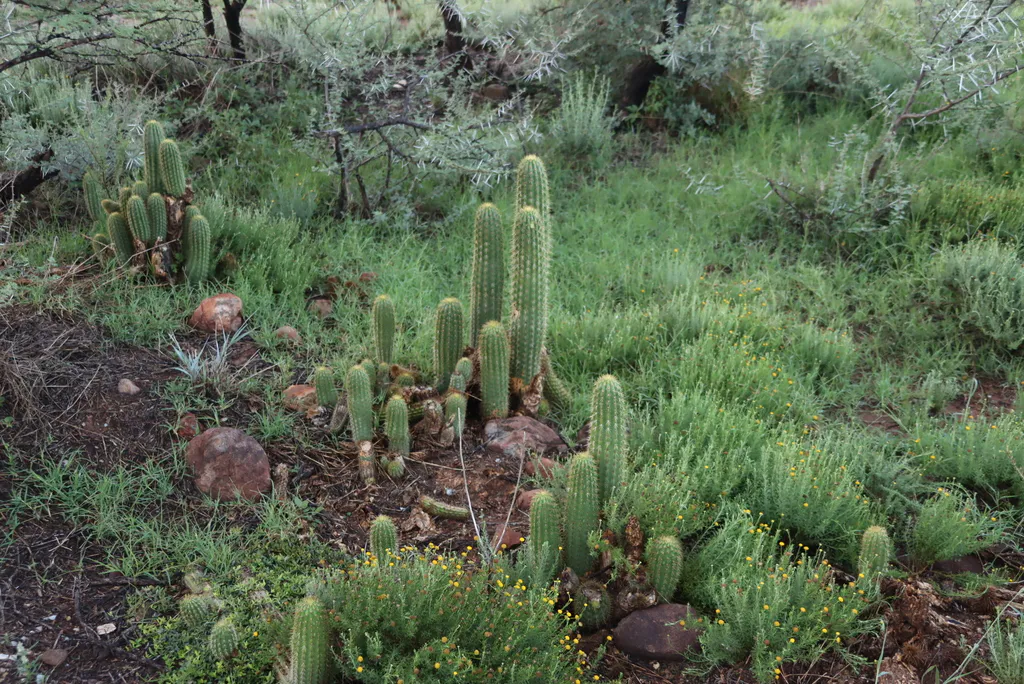
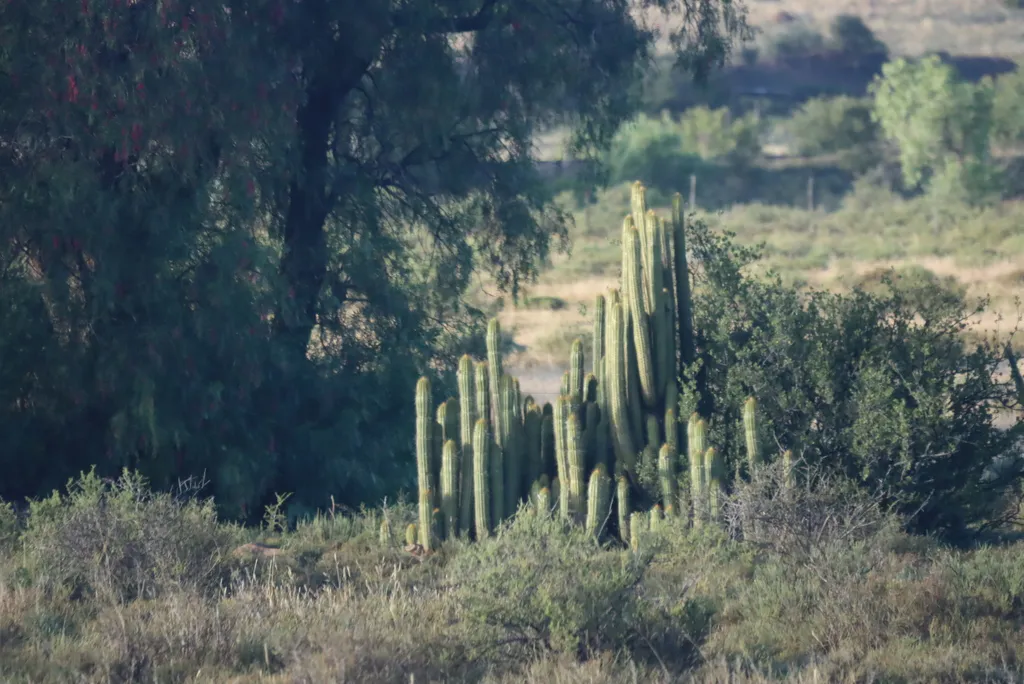
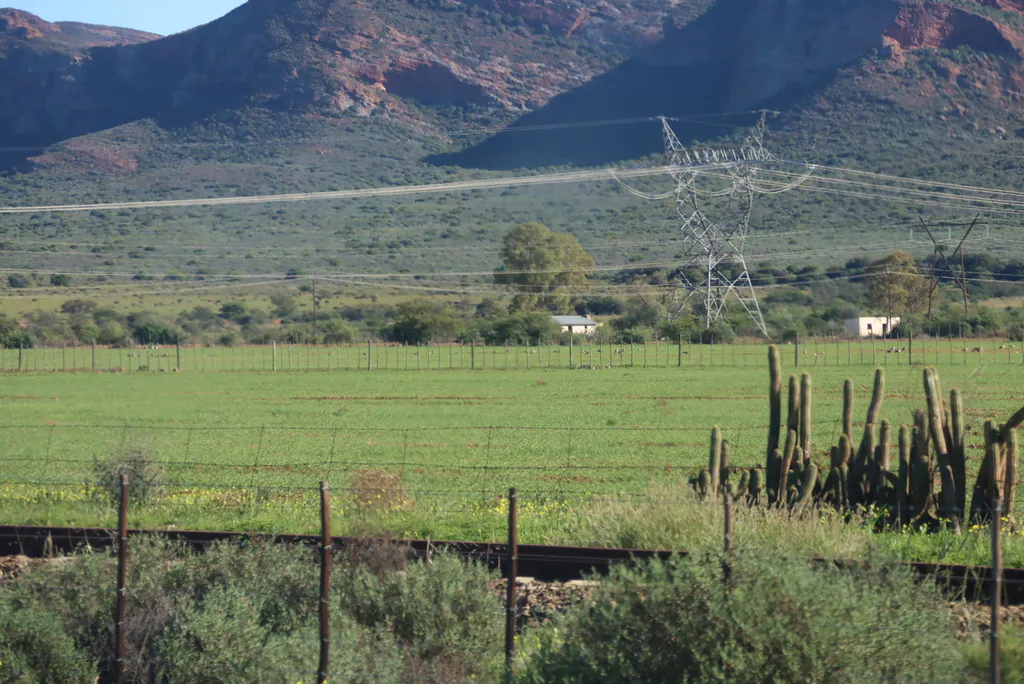
Echinopsis spachiana comes from Bolivia and northwestern Argentina, in desert and dry shrubland. It grows as an upright branching cactus with green ribbed stems.
Habitat sources: [1]
What growth can look like
 What growth can look like
- Stage 1
Single column
A young stem forms a narrow upright tower.
- Stage 2
Basal branching
New columns emerge near the base.
- Stage 3
Mature shrub
Several stems build a taller, potentially flowering framework.
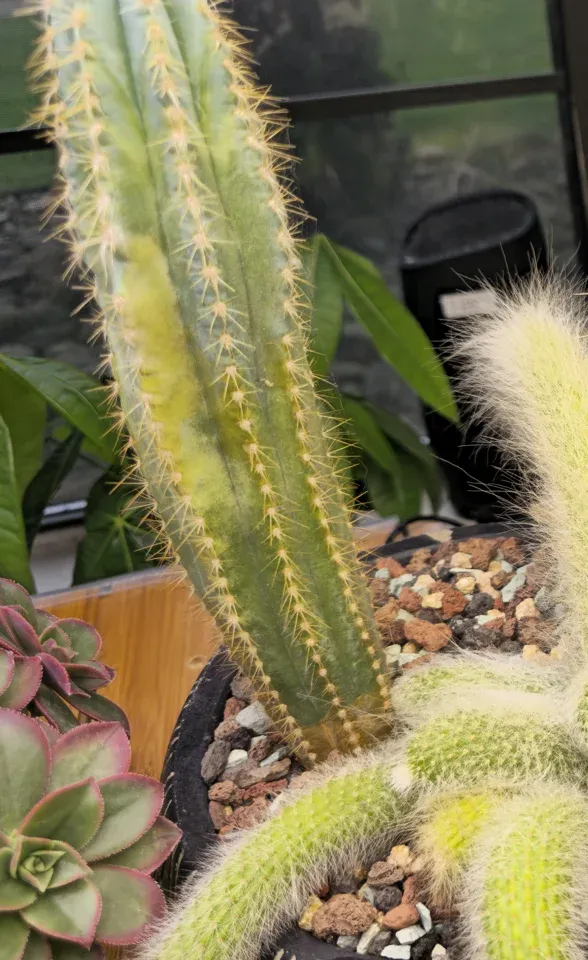
Young areoles are yellow and fade toward gray with age, creating a visible contrast between fresh and older stem sections.
Growth sources: [2]
Flowers
Large white flowers open at night on mature stems, contrasting with the side-borne red flowers of the monkey tail nearby.
Sources: [2]
As it matures
A mature plant forms a multi-stemmed shrub reaching roughly 2 m, with new columns arising from the base.
Sources: [2]
Behind the name
The species was first named Cereus spachianus in 1839; the Echinopsis combination followed in 1974.
Sources: [1]
Similar plants, useful clues
Variegated blue torch ↗
Blue torch has a bluer surface, cream sectors on this specimen, and a different areole appearance; golden torch stays greener with more uniformly golden spines.
This plant in the collection
Its story so far
Arrived in the shared planter
Acquired from Gerych's Design in the cactus planter now tracked as P19.
Collection record ↗
Then and now
Explore the sources
 Explore the sources
Names and identification
| Kind | Name |
|---|---|
| Best working ID | Echinopsis spachiana (Lem.) H.Friedrich & G.D.Rowley |
| Common names | Golden torch cactus, white torch cactus, golden column |
| Frequent synonyms | Trichocereus spachianus, Soehrensia spachiana |
Continuous vertical ribs, a green column, and golden radial-spine clusters give this cactus its golden-torch appearance.
Origin, taxonomy, and mature form
Kew accepts E. spachiana as native from Bolivia into northwestern Argentina, where it grows in seasonally dry shrubland. Charles Lemaire first published the species in 1839. Friedrich and Rowley made the currently accepted Echinopsis combination in 1974. The genus boundaries around Echinopsis, Trichocereus, and Soehrensia have changed repeatedly, so all three names remain easy to find.
Mature plants make multiple upright stems, commonly around 5–6 cm thick and up to roughly 2 m tall. Large white flowers open at night along the upper stem and are associated with moth pollination. The species grows vigorously enough that it is also used as grafting stock for slower or chlorophyll-deficient cacti.
Rehabilitation and grow-light care

| Topic | Practical approach |
|---|---|
| Current status | The tip is green and alive. Judge recovery by the diameter and spine spacing of new growth above the older lean and narrow sections. |
| Grow-light position | Photo-matched rear center · Mixed. September 15, 2026 photo reference: rear wooden tables, facing the window. Compare both tall columns and trailing monkey tail; pale tissue and short neighbors need separate attention. See the current placement guide; exact exposure remains unmeasured. |
| Outdoor light | Increase direct sun gradually. Earlier growth in bright outdoor shade does not make an indoor plant ready for all-day sun. |
| Water | Soak and drain after the planter dries in warm growth. Keep cool roots dry. |
| Support | A weak old section may need a loose stake while stronger new growth develops; do not cinch wire against the skin. |


A healthy new column should maintain or increase diameter and develop stronger, more compact spine rows. Rotating the planter occasionally can balance indoor growth alongside sufficient overhead light.
Propagation and watch points
- Basal offsets and stem cuttings are easy propagation material. Let cut ends callus completely before rooting.
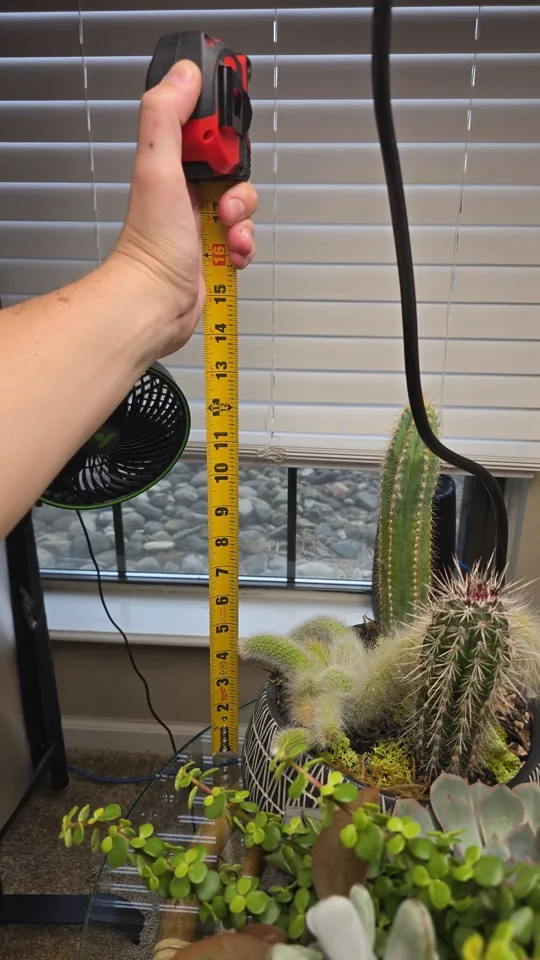
- A tall narrow stem creates leverage in the shallow mixed bowl. This is a good candidate for its own deeper, stable pot when the planter is rehabilitated.
- Watch the old base beneath moss for corking versus active rot. Firm tan tissue may be age or scarring; soft dark spreading tissue is not.
- Spider mites can scar the growing tip, while scale and mealybugs sit under areoles.
- Strong growth can be quick; do not mistake vigor for a need for constantly wet soil.
Sources

Through the seasons
Plant Photo History
Recent photographs of this plant. Open a photo or its collection for the complete history.
Botanical reference photos
Reference Gallery
Form and growth

Look closer


Flowers and buds
.jpg)
In the landscape
Research Trail
- Collection Notes on GitHub
- Complete Photo Archive and Credits
- iNaturalist Observations — Species comparisons