


Cactus collection
Plant 12 / 45 Cactus collection
 Plant 12 / 45


Species reference · Hugo Hulsberg · CC0 · Photo Source ↗
 Collection Record
- Starter-10
 Permanent Label
D3 Identification
 Status
 Acquired From
- Altman Reserve
 Acquired On
- 2026-07-15
 Google Sheets ID
- P12 ↗
 Photo History
- 4 captures · newest ↓
Measurements and Care History
 Measurements and Care History
Weights, watering, events, and charts for P12.
Spot it
 Spot it
What it looks like
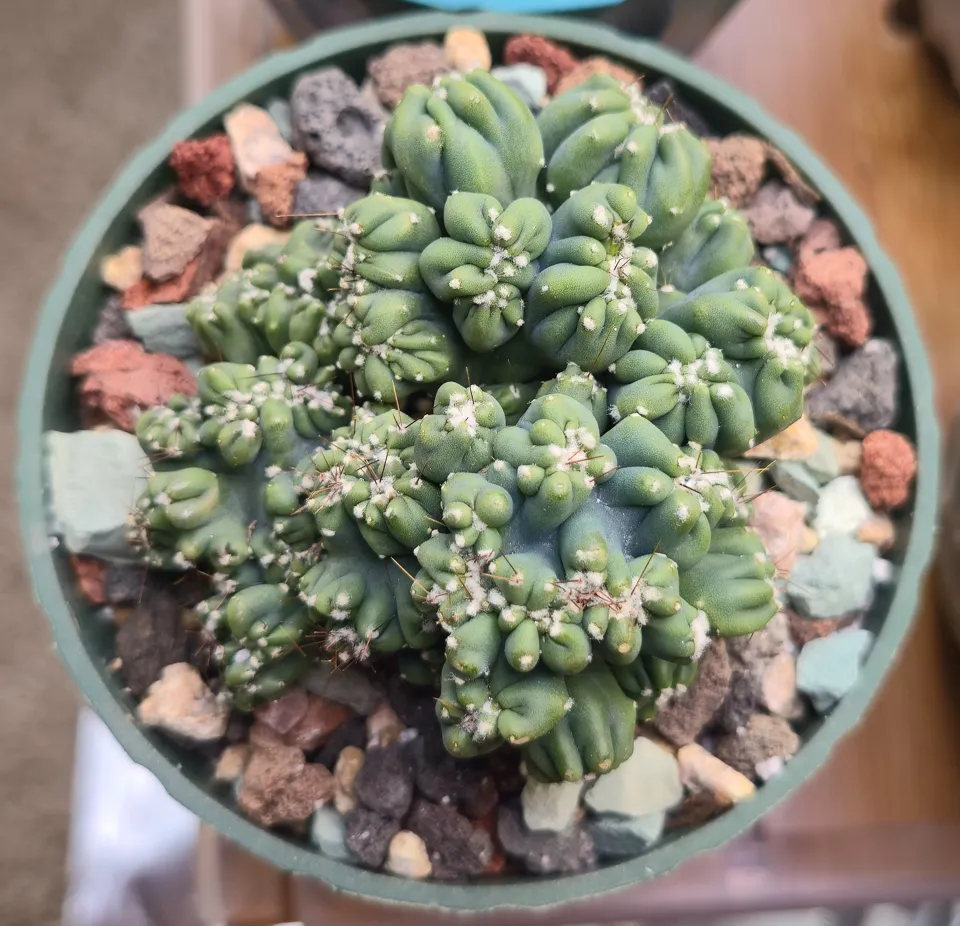
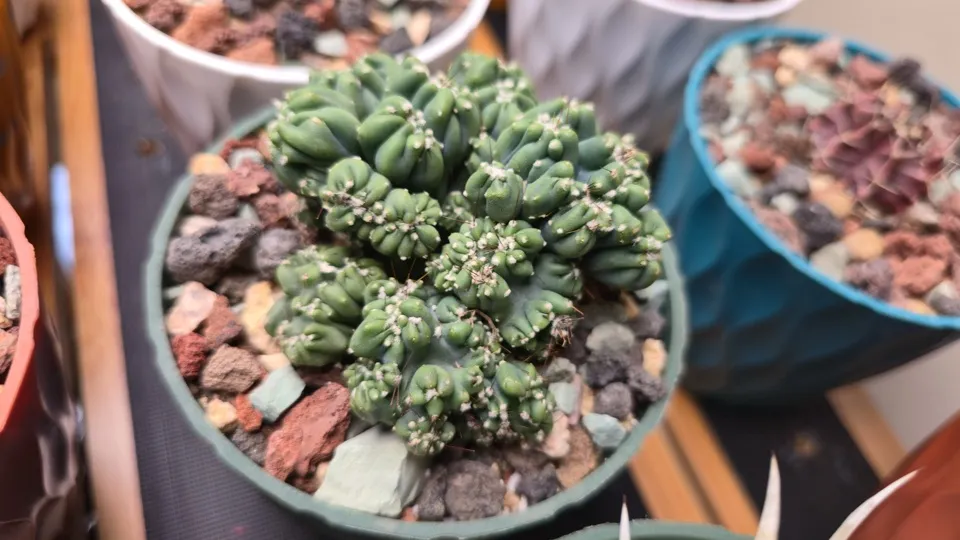
A dense blue-green cluster of knobby, brainlike stems with no single regular column, each lobe folding into the next to create the cultivar's compact monstrose texture.
One curious thing
 One curious thing
Did you know?
The strange form is not always permanent in every growing point: a 'Ming Thing' can occasionally revert and send out a normal-looking Cereus shoot from the monstrose mass.
Explore This Plant
A closer look
How this plant works
 How this plant works
Ming Thing distributes its growth across a collection of irregular clubs.
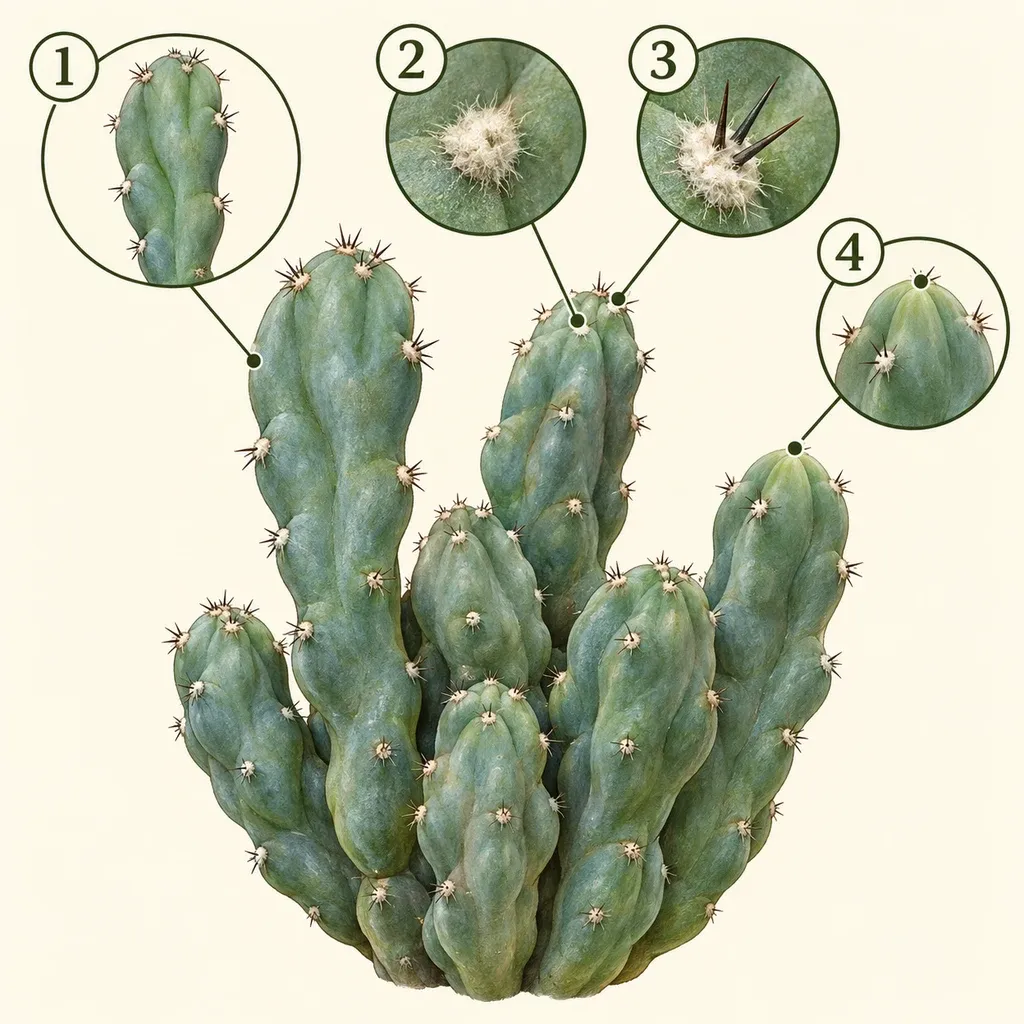
Club-shaped stem
The fleshy blue-green lobe is stem tissue; its uneven outline reflects monstrose growth.
Woolly areole
A small pale cushion is the growing structure from which spines arise.
Short dark spines
These sparse, stiff projections distinguish the areoles from bare surface bumps.
Growing tip
Each rounded lobe tip can extend, adding to the uneven branching silhouette.
Habitat and origins
 Habitat and origins
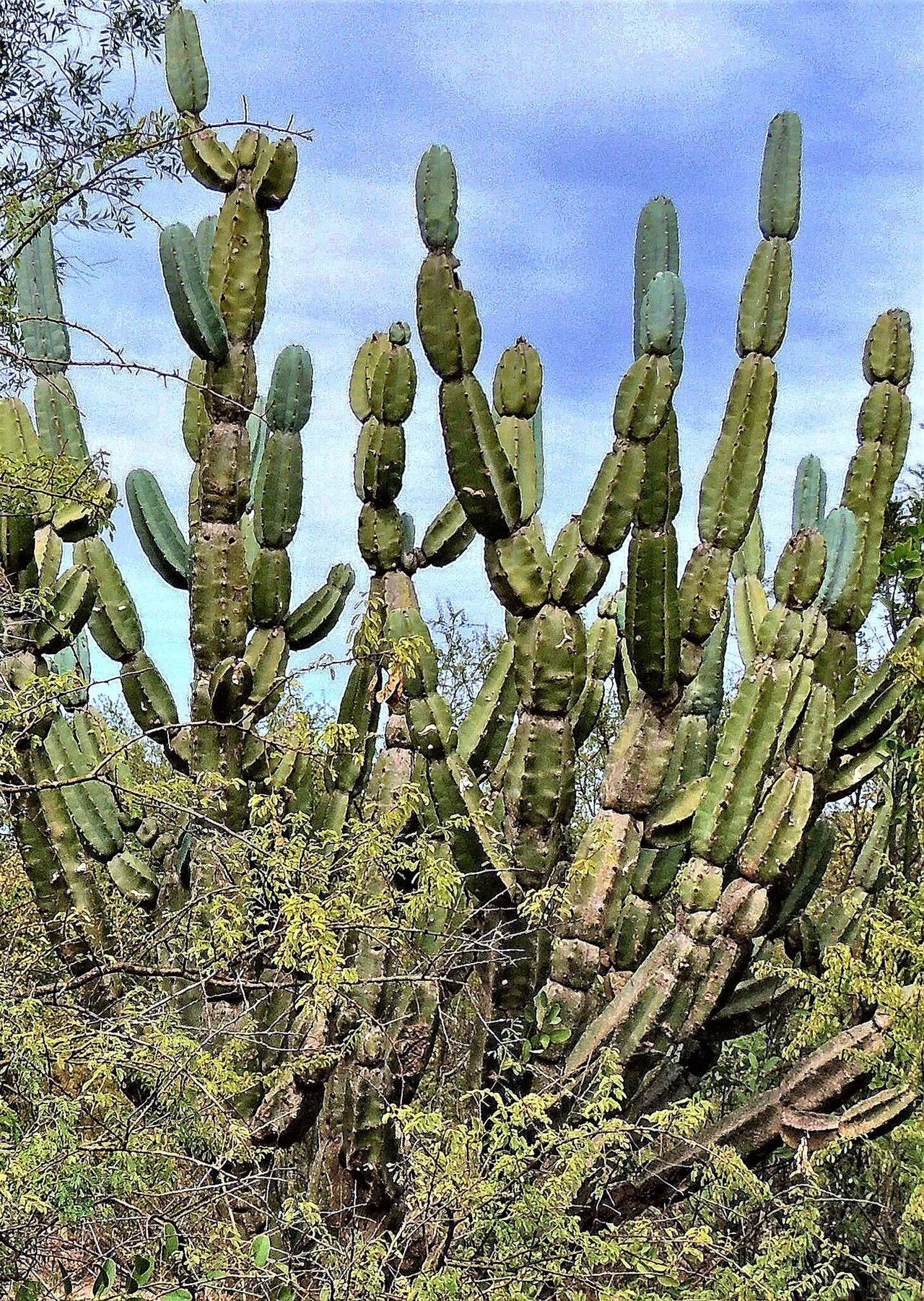
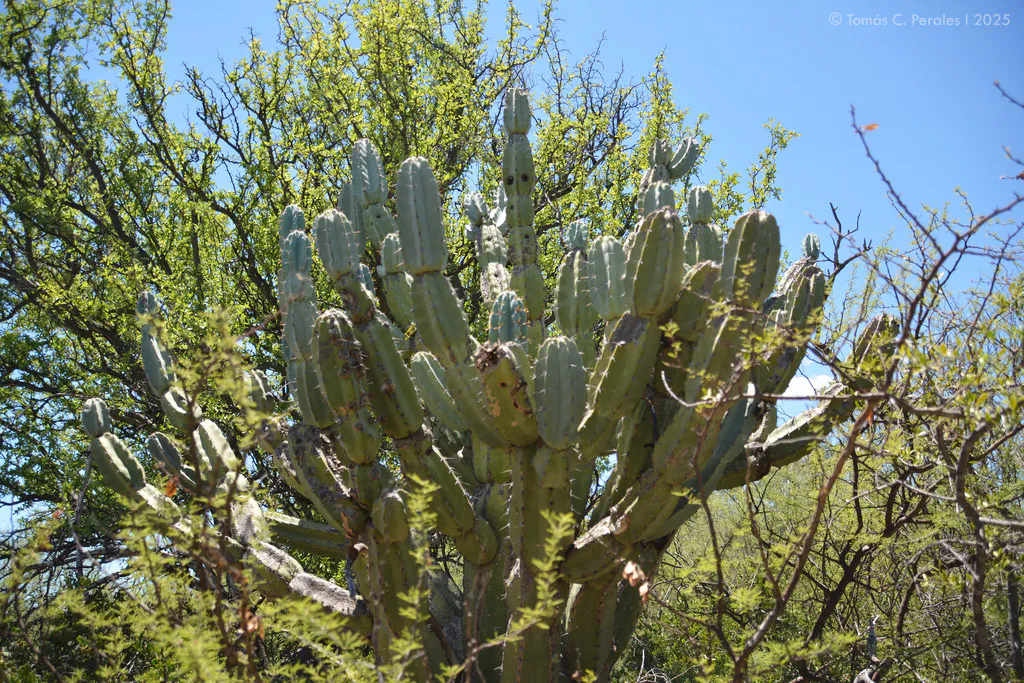
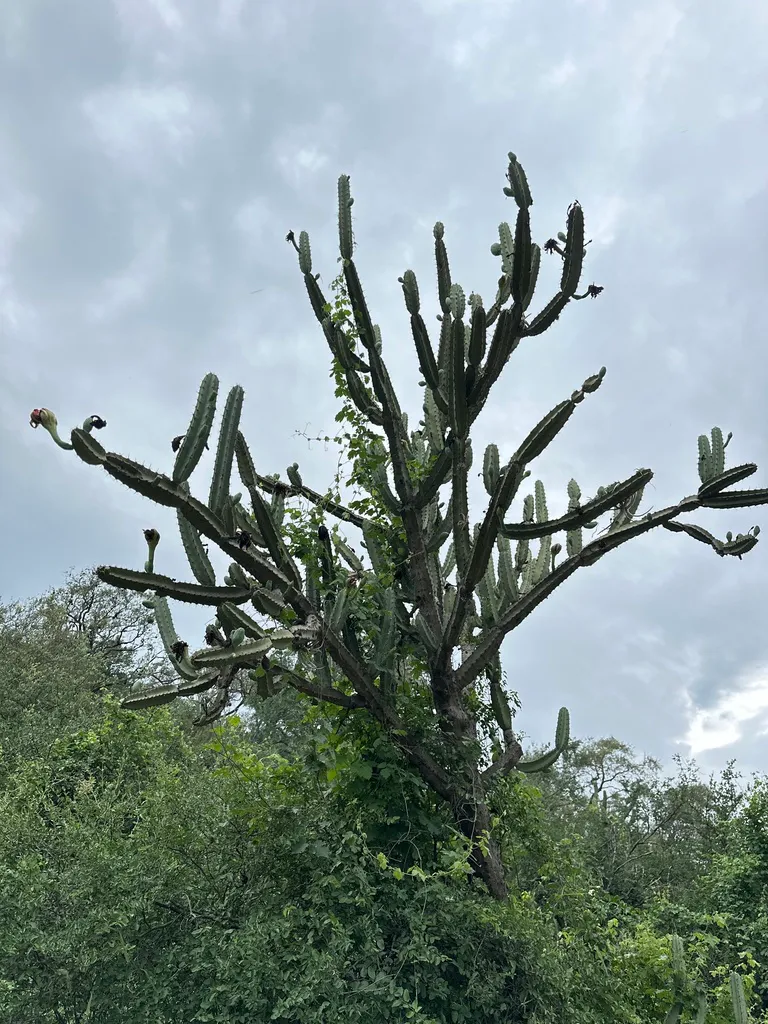
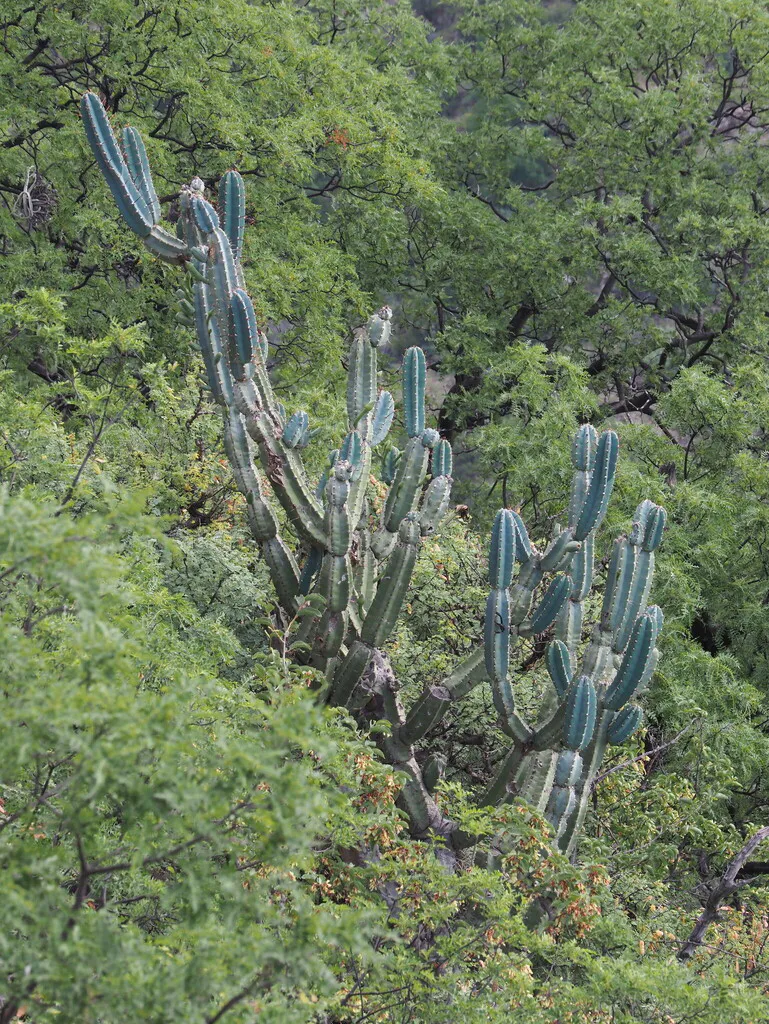
The wild species grows in dry shrubland from Bolivia through Paraguay into northern Argentina, eventually becoming a branching cactus tree. Ming Thing is its compact cultivated monstrose form.
What growth can look like
 What growth can look like
- Stage 1
Small club
The young form starts with a few thick, irregular lobes.
- Stage 2
Sculptural clump
Additional growing points produce more knobs and clubs.
- Stage 3
Older mound
The slow-growing cultivar builds a denser outline rather than matching the wild tree.
Multiple growing points produce the knobby outline, with woolly areoles and short black spines at the tops of the clubs.
Flowers
Ming Thing rarely flowers. The underlying species opens large white funnels, sometimes tinged purple, at night; their sweet fragrance attracts moths and other night-flying insects.
Sources: [2]
As it matures
NC State describes this slow-growing cultivar at about 15–30 cm tall and 8–15 cm wide, forming a dense collection of blue-green clubs.
Behind the name
The epithet forbesii commemorates a Mr. Forbes, head gardener at Woburn Abbey in England. The cultivated form’s name sits on top of that older botanical dedication.
Sources: [2]
Similar plants, useful clues
Normal Cereus forbesii
The ordinary species forms a ribbed, tree-like cactus. Ming Thing develops many short clubs and knobs where the normal species extends long columns.
This plant in the collection
Its story so far
Then and now
Explore the sources
 Explore the sources
Identification and names
| Kind | Name |
|---|---|
| Best working ID | Cereus forbesii 'Ming Thing' |
| Trade names | Ming Thing, monstrose Cereus forbesii |
| Underlying accepted species | Cereus forbesii C.F.Först. |
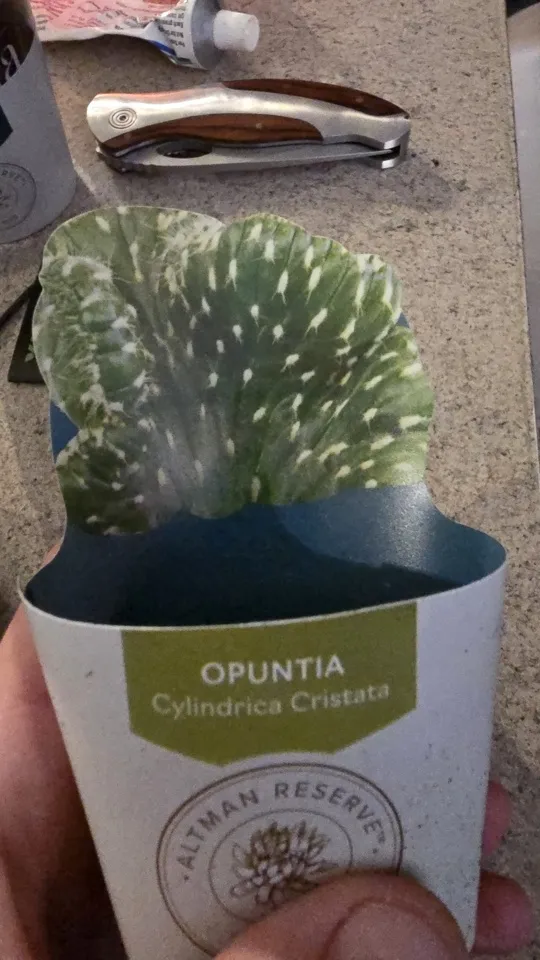
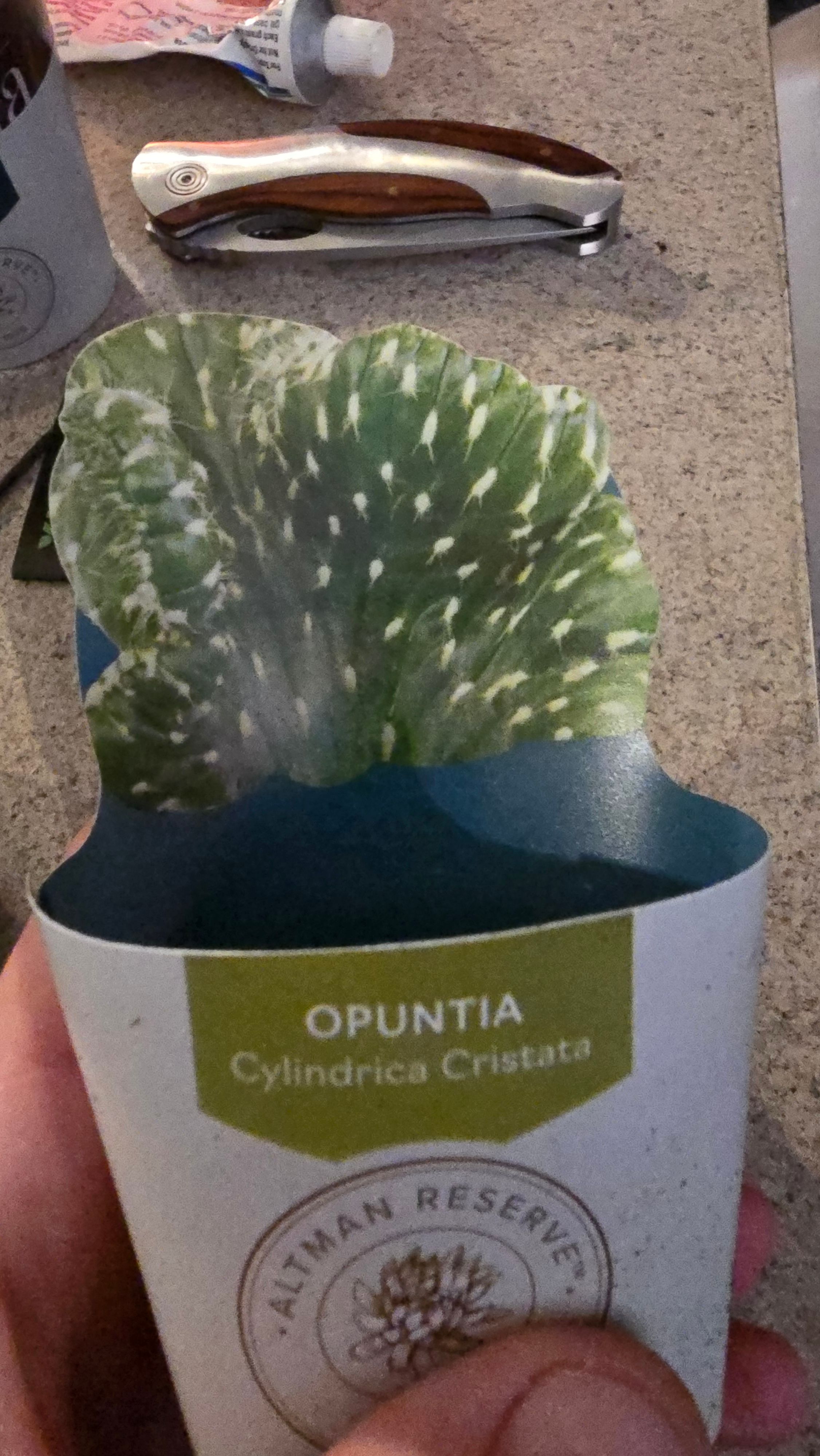
| Rejected nursery label | “Opuntia cylindrica cristata” or similar |
The original Opuntia label does not fit. Opuntia relatives show jointed segments and distinctive glochid-bearing areoles; this plant makes dense, knobby rib fragments characteristic of 'Ming Thing'.
Species background

Normal Cereus forbesii is a branching columnar cactus native from Bolivia through Paraguay into north-central Argentina. It grows in seasonally dry shrubland, eventually becoming a small cactus tree. Large pale nocturnal flowers and colored fleshy fruits look nothing like the tiny distorted growing points of the nursery cultivar.
Charles Förster published the species in 1846. Kew accepts it and includes Cereus hankeanus, another name common in older horticulture, in its synonymy. The normal species is assessed as Least Concern.
NC State Extension describes 'Ming Thing' as a naturally occurring monstrose mutation with multiple growing points. It rarely flowers. In the normal species, the large night-opening flowers produce a sweet fragrance that attracts moths and other nighttime pollinators.
What monstrose growth means
Growth is distributed among many irregular growing points. That creates miniature towers, fans, and lumps. Shape changes are normal from one season to the next. Health is better judged by firmness, color, roots, and compact new growth than by symmetry.
Care in this collection

| Topic | Practical approach |
|---|---|
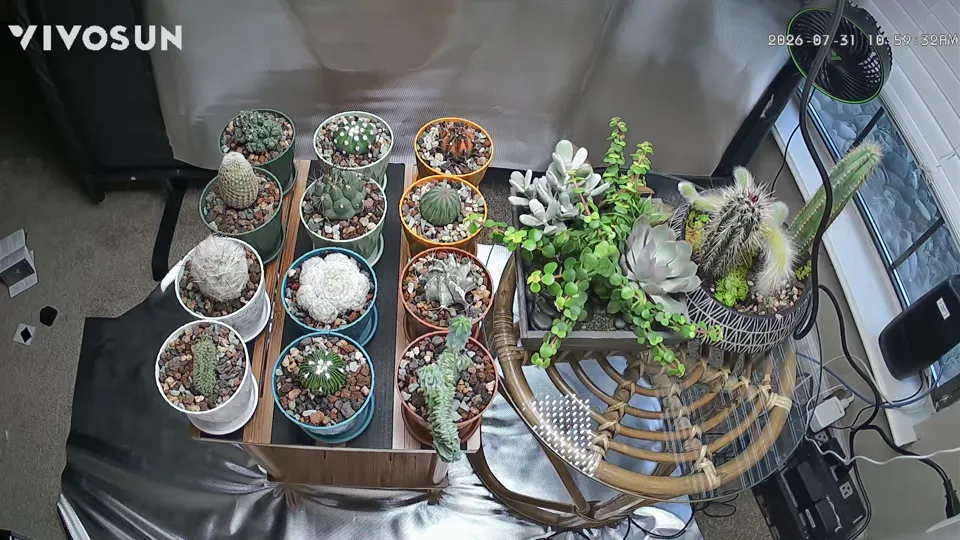
| Grow-light position | R1C1 · Gentler. September 15, 2026 photo layout, facing the window (six columns, four rows). Front-left; acclimate the exposed ridges to overhead and reflected light. See the current placement guide. |
| Water | Soak and drain, then wait until the full pot is dry. Deep folds and slow growth give overwatering more downside than slight delay. |
| Light acclimation | Increase gradually; high ridges can bleach while shaded valleys still look dark green. |
| Pot and mix | A small breathable root volume and fast drainage are useful. Keep grit out of crevices at the body base. |
| Feeding | Dilute feed during obvious warm-season growth only. |


Propagation and watch points
- A clean monstrose piece can be rooted after a complete callus, preserving the form vegetatively.
- Straight normal growth is a reversion, not etiolation if it is thick and well-spined. It can outgrow the monstrose portion.
- Mealybugs and scale can disappear into the maze of growth points. Photograph the same angle monthly so newly white or brown material stands out.
- Water left between knobs encourages localized rot. Water the mix and maintain airflow rather than misting the body.
- A small dead knob can dry in place without threatening the whole plant; a soft spreading discolored area requires prompt inspection.
Sources

Through the seasons
Plant Photo History
Recent photographs of this plant. Open a photo or its collection for the complete history.
From the nursery
Nursery Labels
Original nursery labels and packaging.
Botanical reference photos
Reference Gallery
Cereus forbesii: regular and monstrose forms
Form and growth

Look closer

Flowers and buds


In the landscape


Research Trail
- Collection Notes on GitHub
- Complete Photo Archive and Credits
- iNaturalist Observations — Species forms behind Ming Thing