


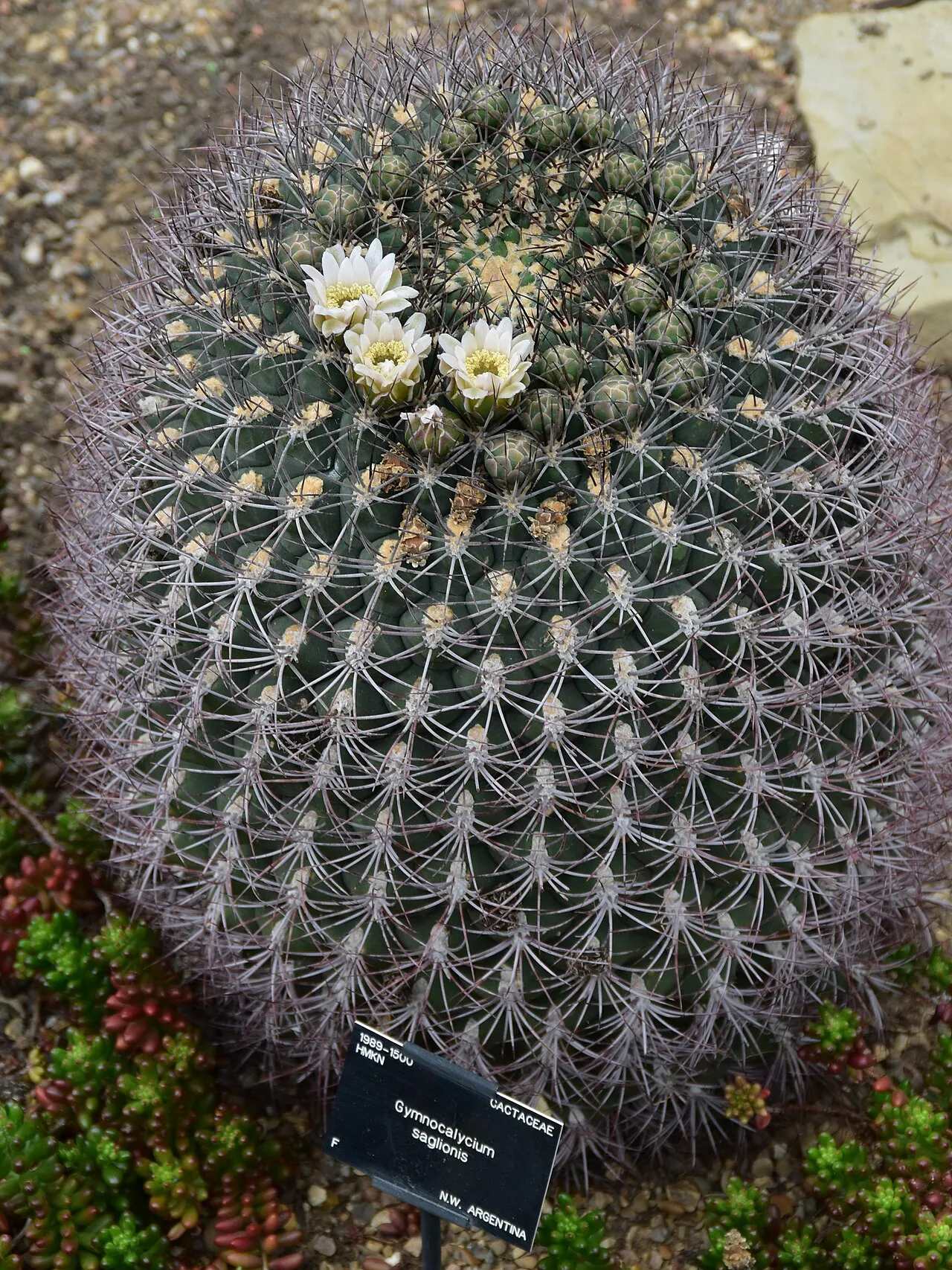
Cactus collection
Plant 07 / 45 Cactus collection
 Plant 07 / 45


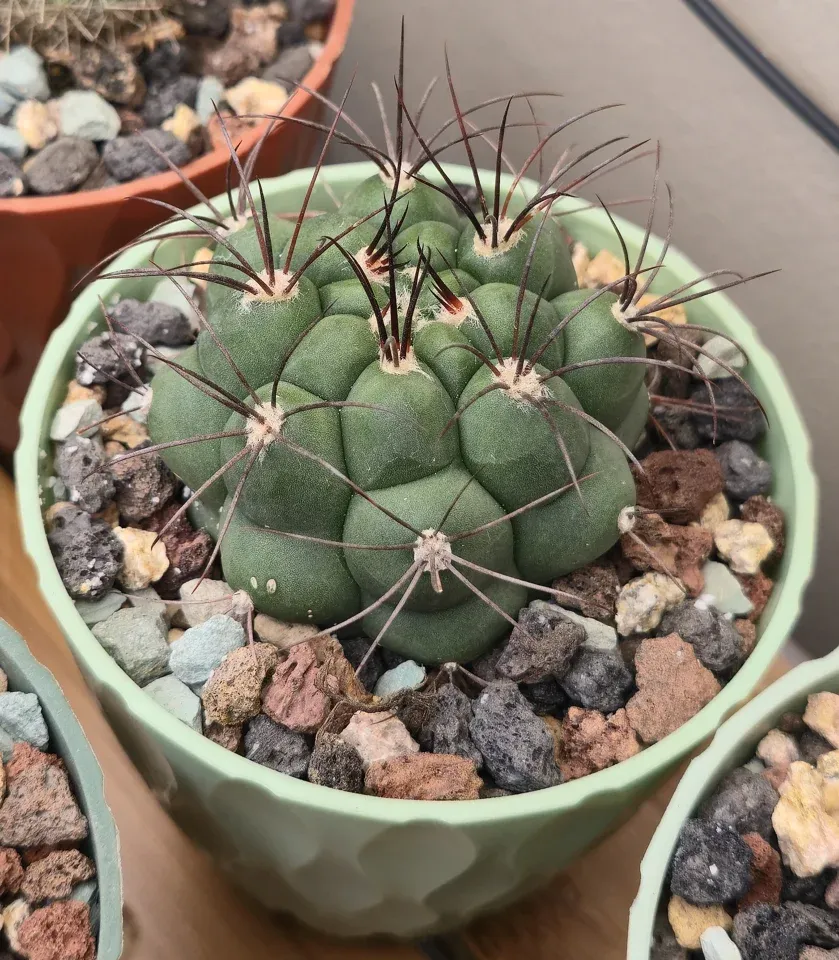
Species reference · NasserHalaweh · CC BY-SA 4.0 · Photo Source ↗
 Collection Record
- Starter-08
 Permanent Label
C1 Identification
 Status
 Acquired From
- Costa Farms
 Acquired On
- 2026-07-23
 Google Sheets ID
- P07 ↗
 Photo History
- 4 captures · newest ↓
Measurements and Care History
 Measurements and Care History
Weights, watering, events, and charts for P07.
Spot it
 Spot it
What it looks like
A broad blue-green globe with deep heavy ribs and stout brown spines that curve back toward the body, giving the young plant the architecture of a much larger barrel cactus.
One curious thing
 One curious thing
Did you know?
The proportions become increasingly surprising with age: the body can grow massive, but its flowers remain relatively small instead of scaling up with the cactus.
Explore This Plant
A closer look
How this plant works
 How this plant works
Rounded rib segments and substantial curved spines give this cactus its heavy-built outline.
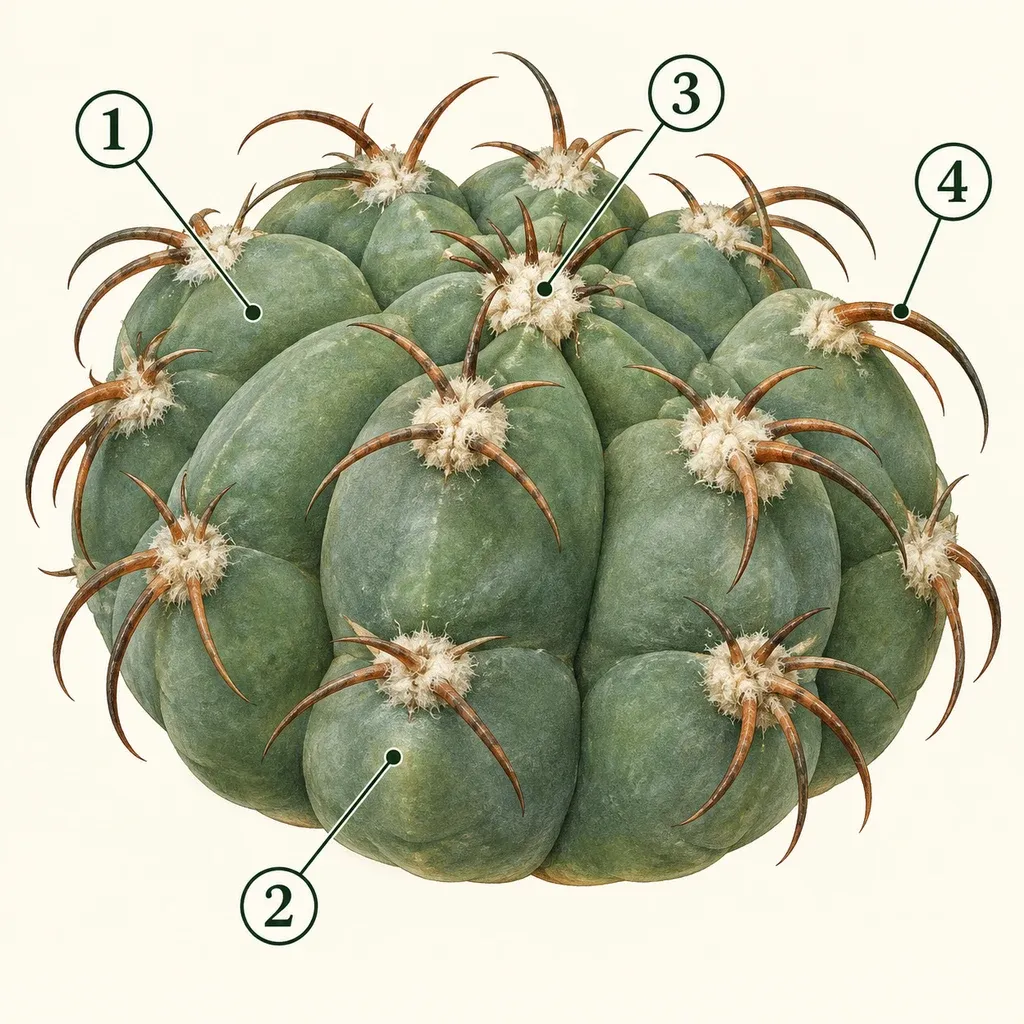
Broad rib
The raised green ridge is part of the photosynthetic stem.
Chin-like tubercle
A rounded swelling divides the rib into a series of prominent segments.
Woolly areole
The pale growing cushion carries a cluster of spines.
Curved spine
A stout, curved spine projects beyond the green body from the areole.
Habitat and origins
 Habitat and origins
This is a northwestern Argentine species; Kew places it in the subtropical biome. Its broad green or bluish stem and stout spines belong to a succulent subshrub, despite the common name giant chin cactus. The regional origin helps distinguish it from the smaller Paraguay-associated moon cactus sharing its genus in this collection.
What growth can look like
 What growth can look like
- Stage 1
Low globe
The young cactus is broad and relatively flattened.
- Stage 2
Heavier body
The ribs and their rounded segments become more substantial as the plant enlarges.
- Stage 3
Flowering adult
Mature plants can carry small funnels around the upper body.
The broad ribs divide into rounded tubercles as the body enlarges, giving the older plant its strongly sculpted surface.
Growth sources: [2]
Flowers
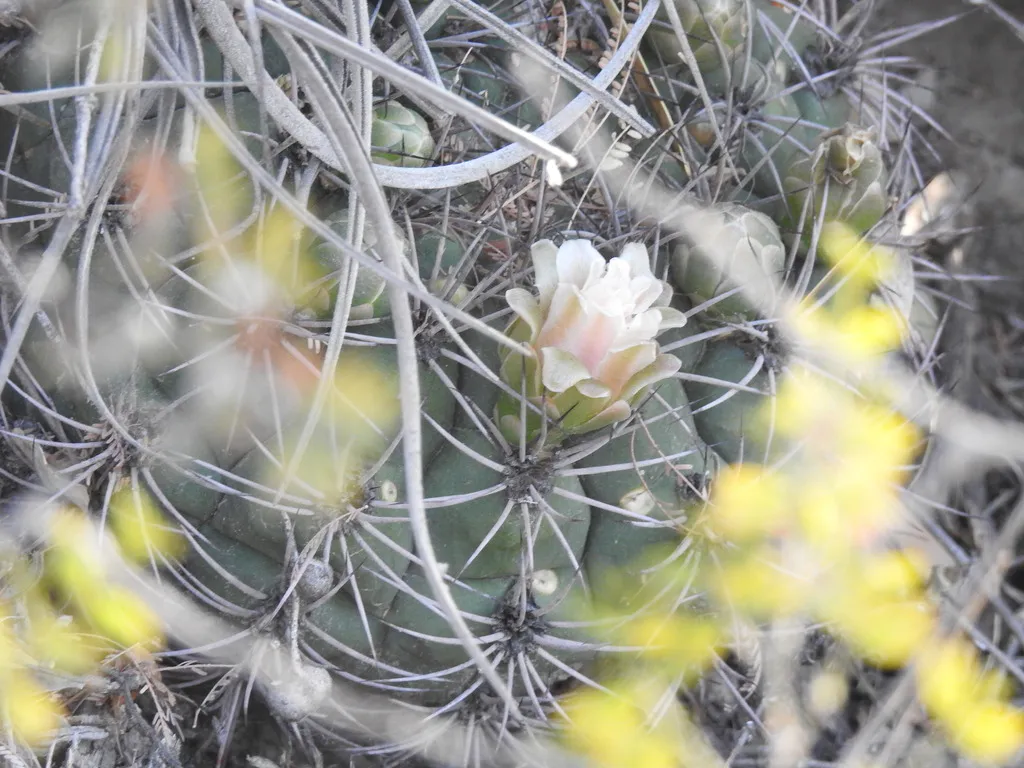
Pale pink funnels are about 2 cm across in the RHS description. Their small scale contrasts with the broad ribbed body and heavy spines.
Sources: [2]
As it matures
RHS lists a cultivated spread of 10–50 cm. The rounded body can carry 10–30 or more tubercled ribs, each lined with stout curved spines.
Sources: [2]
Behind the name
Kew traces the species to Echinocactus saglionis, published in 1847, with the Gymnocalycium combination following in 1922. Older reference names refer to the same botanical history.
Sources: [1]
Similar plants, useful clues
Variegated moon cactus ↗
Both have notched Gymnocalycium ribs, but giant chin cactus develops broader tubercles and much stouter spines than the smaller moon cactus.
This plant in the collection
Its story so far
Then and now
Explore the sources
 Explore the sources
Names and identity
| Kind | Name |
|---|---|
| Accepted botanical name | Gymnocalycium saglionis (Cels) Britton & Rose |
| Common names | Giant chin cactus, giant Gymnocalycium |
| Original name | Echinocactus saglionis Cels |
| Dedication | Named for French cactus collector Joseph Saglio |
The broad body, blunt ribs, and bundles of heavy curved spines suit this name: it is one of the larger members of a genus often sold as small windowsill cacti. The “chins” are the projecting portions of each rib immediately beneath the areoles.
Origin, history, and mature form
The species is native to northwestern Argentina, where it grows in seasonal dry shrubland and rocky valleys. A mature plant can become a broad, flattened globe roughly 30–40 cm across and later a short column. That scale takes years, but it is worth planning for before placing it permanently among tiny species.
Its spines radiate outward and curve back toward the body; new spines may be reddish-brown and fade gray. An entertaining diagnostic detail is that wet spines can look much more strongly red. Pale pinkish-white flowers form near the crown. Later fruits split across the side rather than opening neatly at the tip.
Jean-François Cels published the species in 1847 as an Echinocactus. Britton and Rose transferred it to Gymnocalycium in 1922. The genus name refers to its smooth, hairless flower tube.
Care in this collection

| Topic | Practical approach |
|---|---|
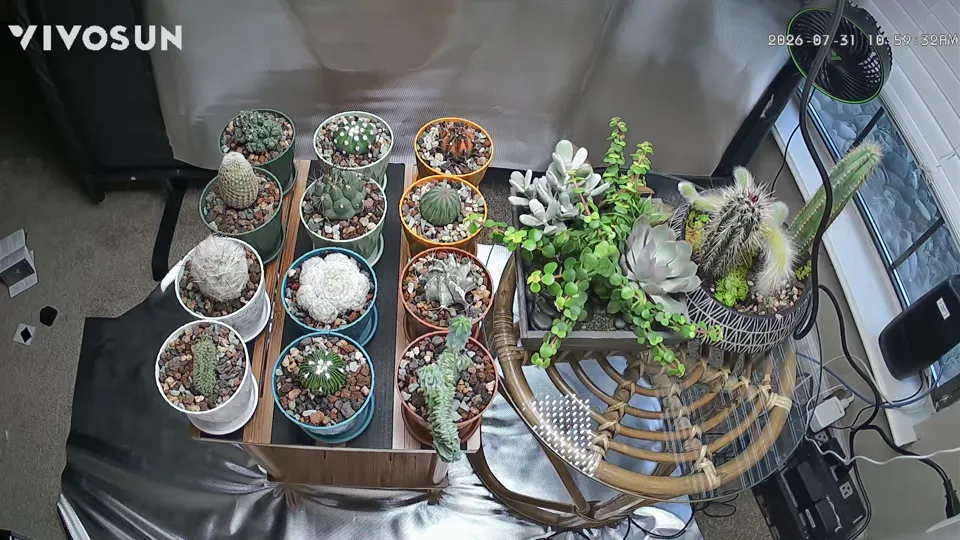
| Grow-light position | R3C6 · Bright. September 15, 2026 photo layout, facing the window (six columns, four rows). Keep a clear light path to the growing tip. See the current placement guide. |
| Outdoor light | Bright light with gradual direct-sun exposure to acclimate the nursery-grown skin. |
| Water | Full soak, complete drainage, then dry through. Reduce water sharply during cool slow growth. |
| Pot | Do not jump straight to a mature-size container. Move up one practical size when roots or body crowd the current pot. |
| Mix | Open, fast draining, and not excessively rich. Keep the body-to-soil line visible. |


The plant may flatten or contract modestly in a dry rest. That is safer than trying to maintain maximum summer plumpness in cool indoor conditions. Active new growth should preserve its broad diameter and produce stout spine clusters.
Propagation and watch points
- Seed is the normal propagation method; the species usually remains solitary.
- Long recurved spines catch sleeves and adjacent plants. Give it increasing clearance as it grows.
- A large future plant becomes heavy. Eventually use a stable pot and lift from underneath, never by gripping the body.
- Check rib valleys and the crown for scale, mealybugs, and stagnant moisture.
- Old basal corking can be normal on a mature specimen; rapidly advancing soft brown tissue is not.
Sources

Through the seasons
Plant Photo History
Recent photographs of this plant. Open a photo or its collection for the complete history.
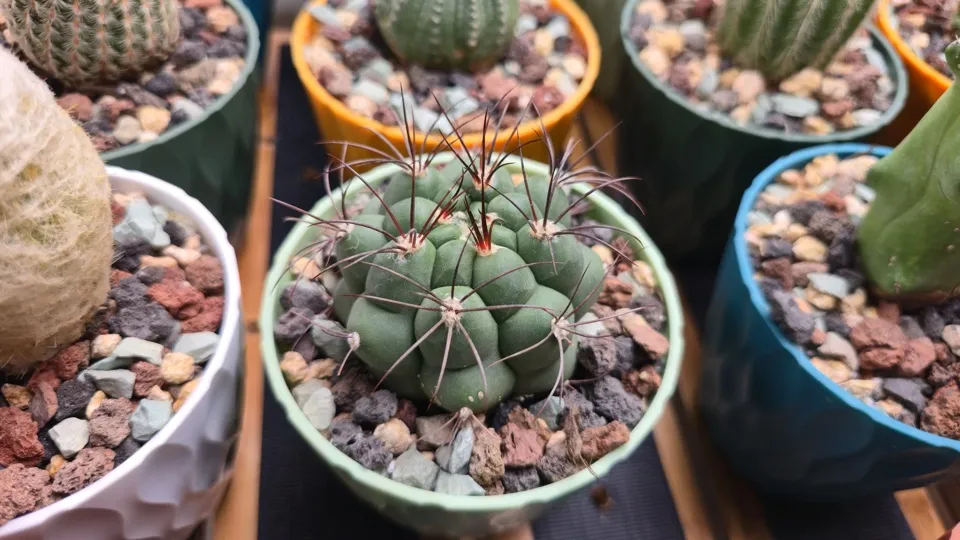
From the nursery
Nursery Labels
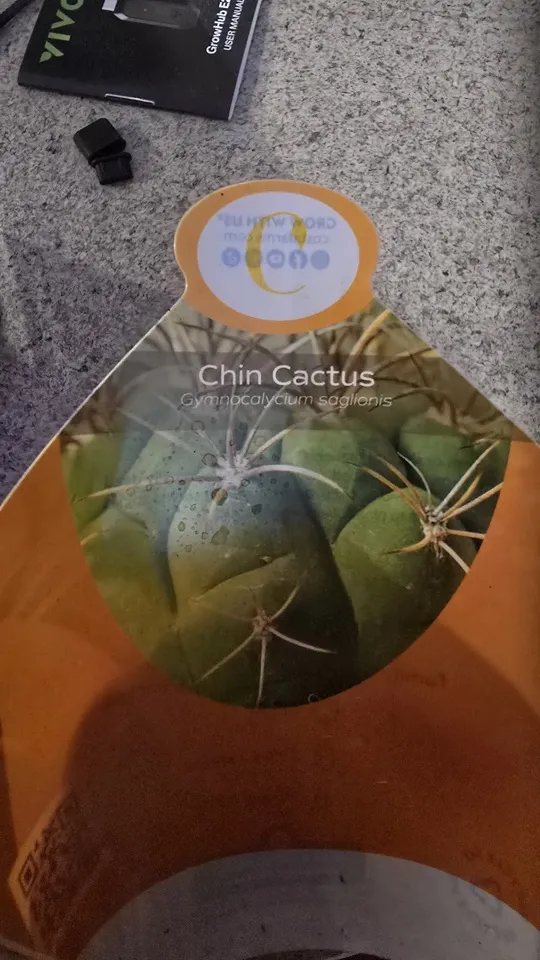
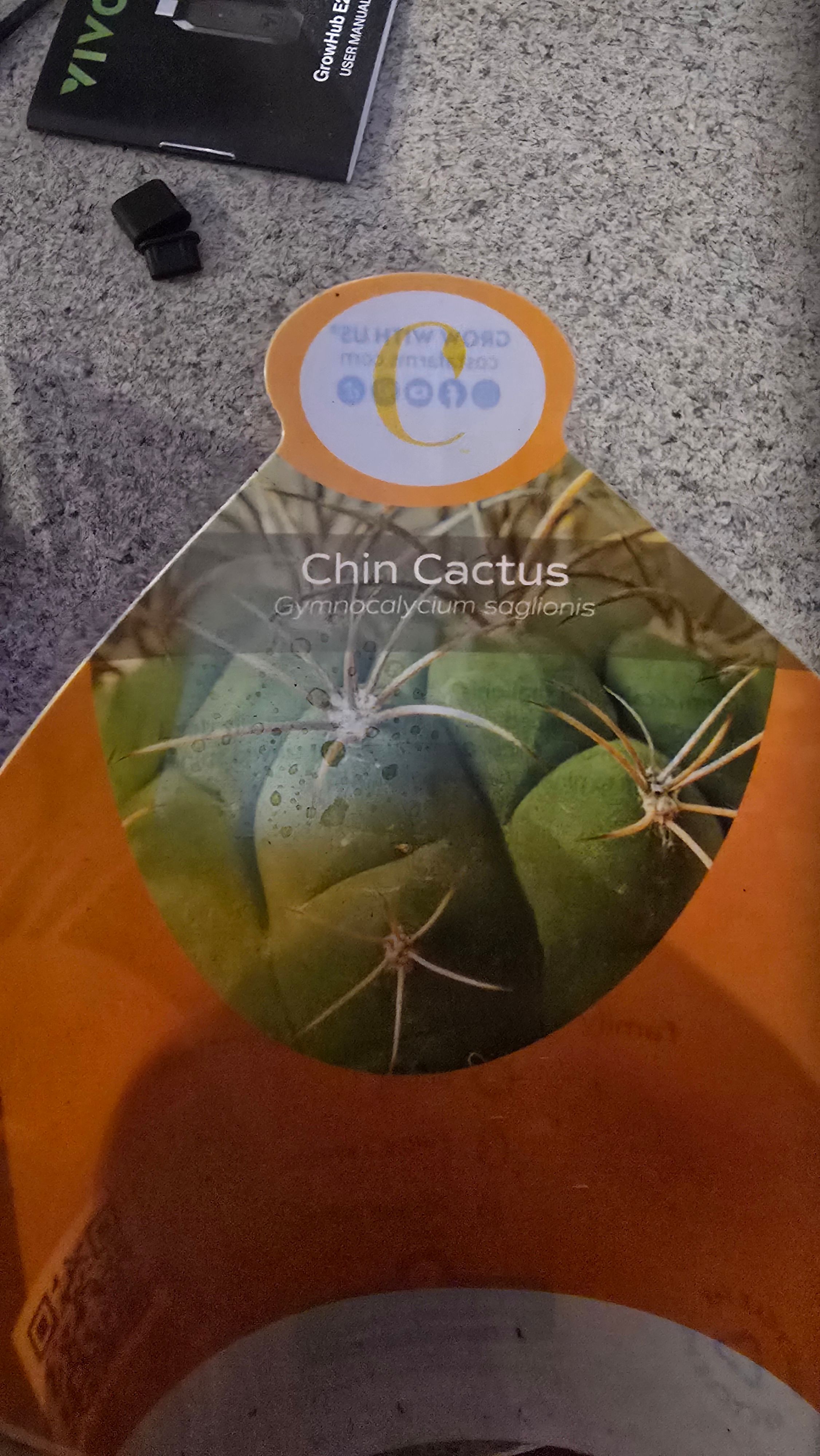
Original nursery labels and packaging.


Botanical reference photos
Reference Gallery
Form and growth

Flowers and buds


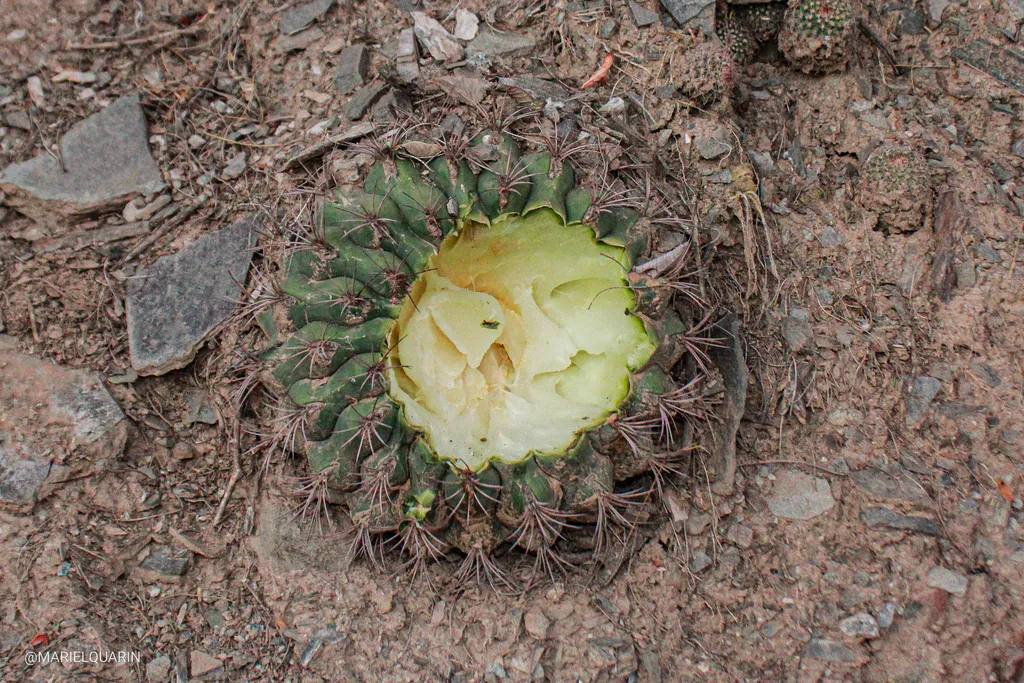
In the landscape
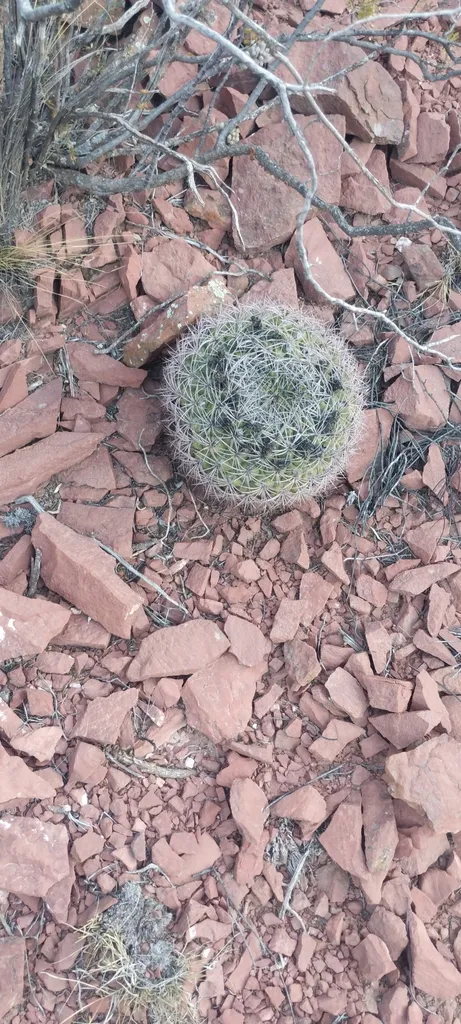
Research Trail
- Collection Notes on GitHub
- Complete Photo Archive and Credits
- iNaturalist Observations — Species observations