


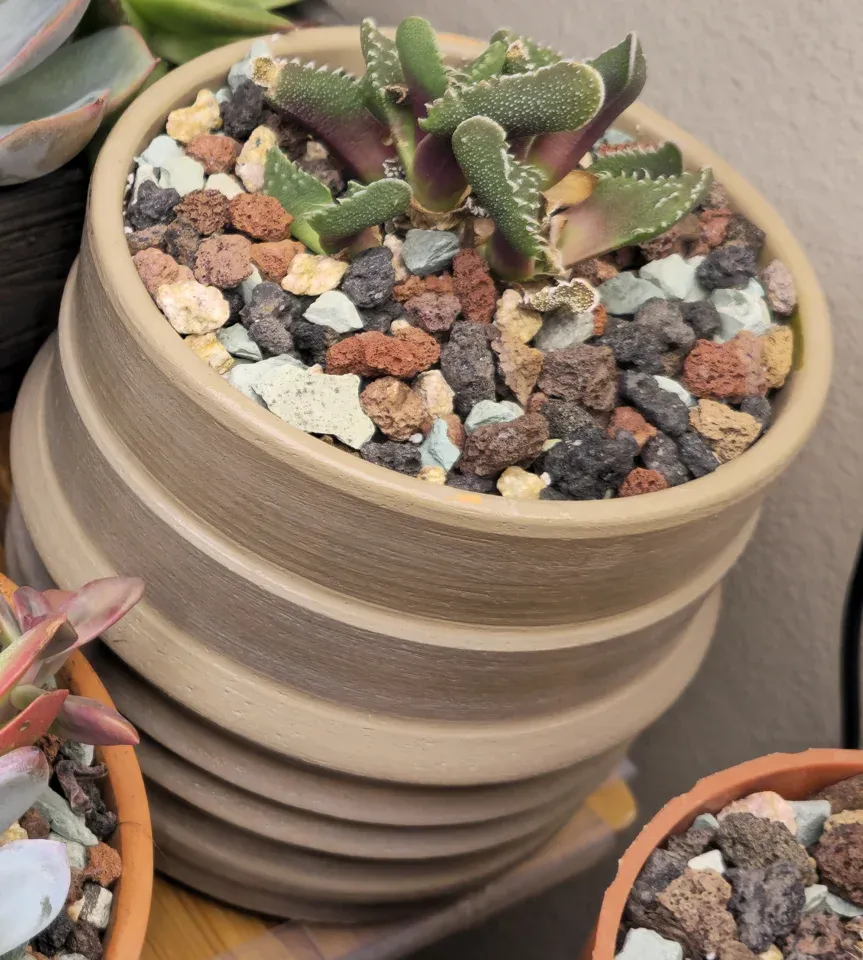
Shared planter and individual succulents
Plant 30 / 45 Shared planter and individual succulents
 Plant 30 / 45
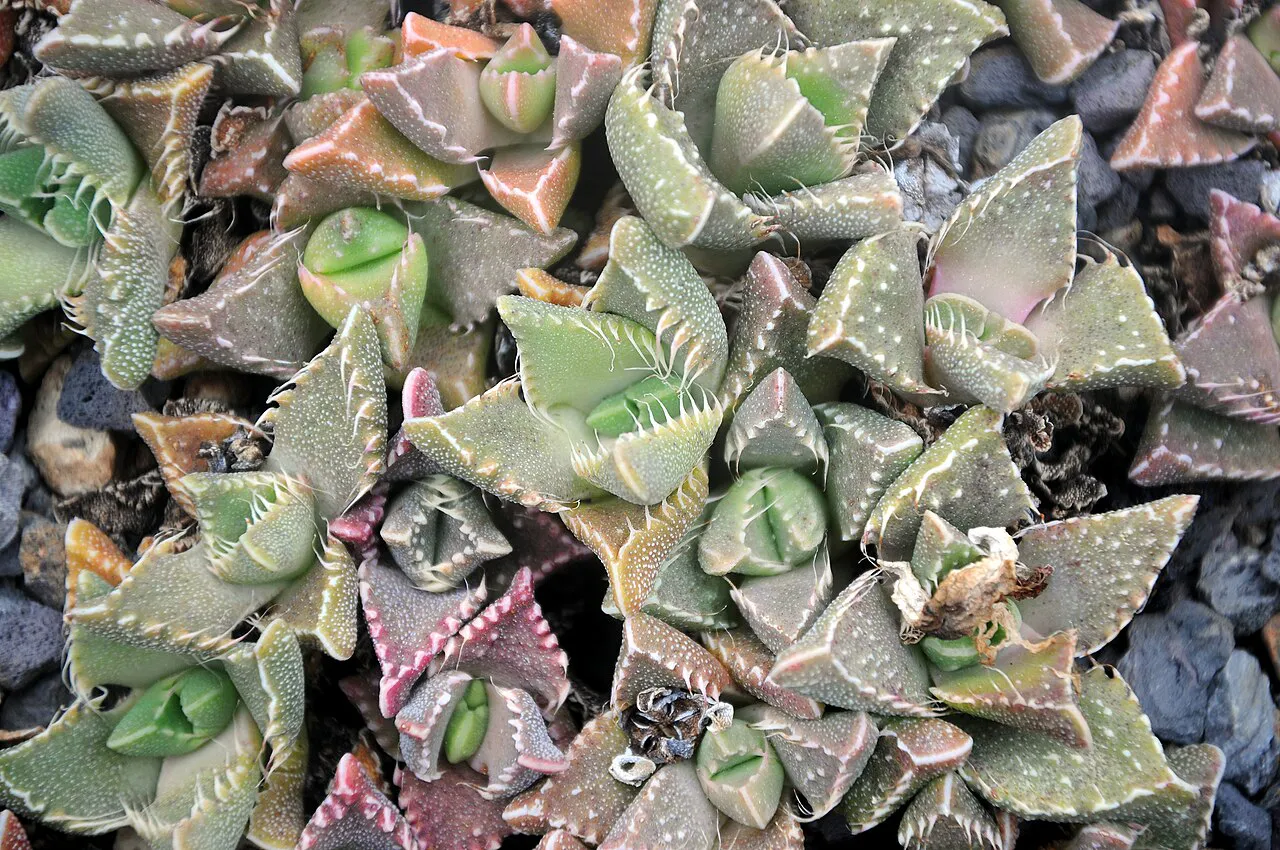
 probable Faucaria tuberculosa
Tuberculate tiger jaws


Species reference · Amada44 · CC BY 3.0 · Photo Source ↗
 Collection Record
- Succulent-09
 Permanent Label
#5 Identification
 Status
 Acquired From
- Home Depot; grown by Altman Plants under Smart Planet Home branding; exact store not recorded
 Acquired On
- 2026-09-02
 Google Sheets ID
- P29 ↗
 Photo History
- 6 captures · newest ↓
Measurements and Care History
 Measurements and Care History
Weights, watering, events, and charts for P29.
Spot it
 Spot it
What it looks like
A compact mesemb with paired triangular green leaves, soft white marginal teeth, rough pale spots, and conspicuous raised white tubercles across the upper leaf surfaces.
One curious thing
 One curious thing
Did you know?
The raised white leaf bumps vary naturally: botanical descriptions range from a single tubercle to an almost completely bumpy surface.
Explore This Plant
A closer look
How this plant works
 How this plant works
Paired fleshy leaves carry two different textures: marginal teeth and raised face tubercles.
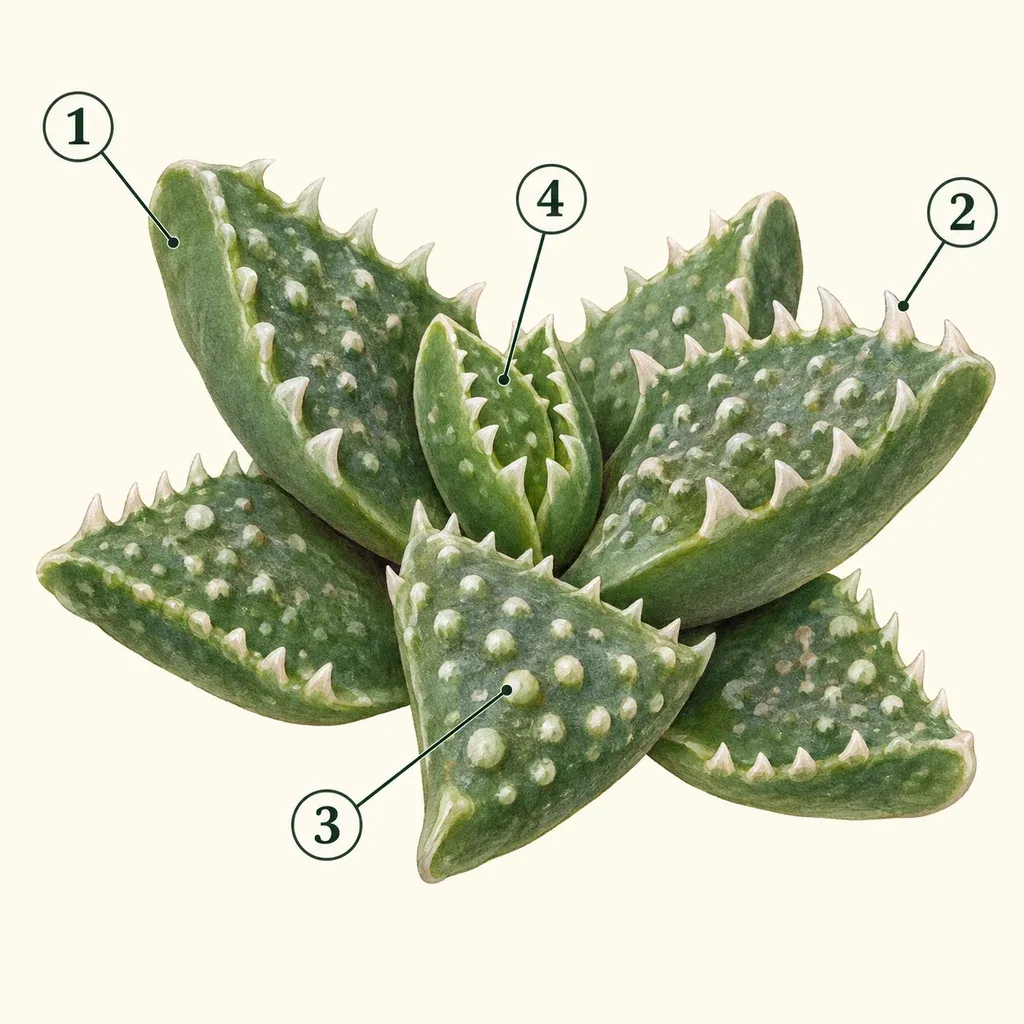
Thick leaf blade
The compact triangular to rhomboid blade stores water.
Marginal teeth
Short pale projections line the leaf edge; they are not cactus areoles.
Raised tubercles
Blunt whitish bumps rise above the flatter pale dots on the upper surface.
Central leaf pair
New paired leaves expand from the short shoot's center.
Habitat and origins
 Habitat and origins
Faucaria tuberculosa comes from the Fort Beaufort area of South Africa’s Cape Provinces. This subtropical succulent stays close to the ground, growing as a single compact crown or a cluster. Its thick leaves present two conspicuous textures: pale teeth along the edges and blunt raised bumps across the upper faces.
What growth can look like
 What growth can look like
- Stage 1
Add paired leaves
The central shoot develops another opposed pair.
- Stage 2
Form a compact crown
Several thick leaves make the low, jaw-like rosette.
- Stage 3
Develop a clump
Additional shoots can broaden a mature plant beyond a single crown.
The published description allows anything from one raised tubercle to a densely bumpy upper surface, so bump coverage varies naturally.
Flowers
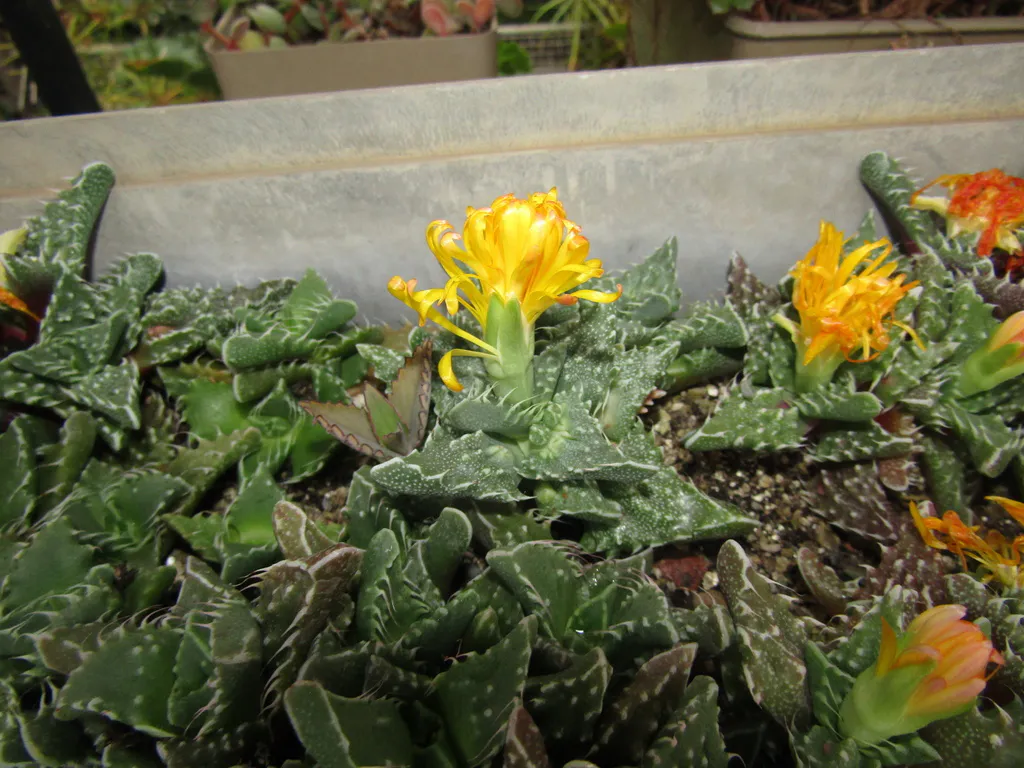
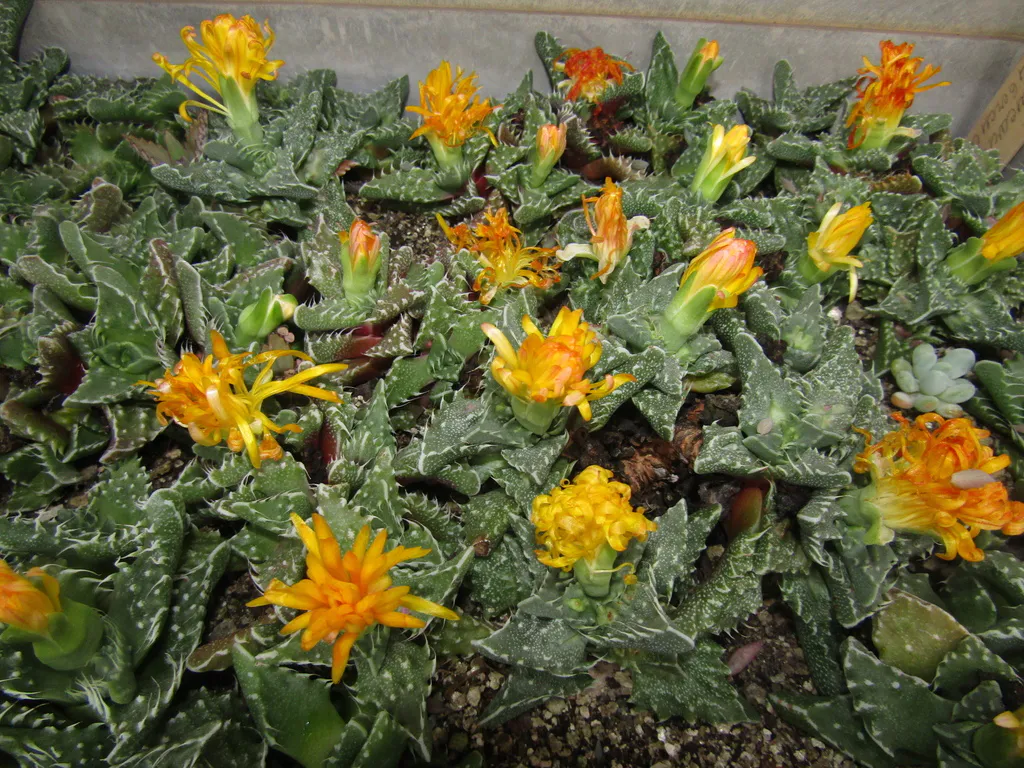
The flowers are yellow. Because F. tigrina also flowers yellow, the raised leaf tubercles and shorter marginal teeth are more useful comparison features than bloom color alone.
As it matures
Plants can remain solitary or develop clumps. Each rosette typically carries 4–8 leaves, with individual blades about 15–20 mm long and wide.
Sources: [1]
Behind the name
Faucaria felina subsp. tuberculosa is another name listed by Kew for this plant, reflecting earlier treatment as a subspecies.
Sources: [2]
Similar plants, useful clues
Faucaria tigrina
Tigrina has conspicuous soft, thread-tipped marginal teeth and white spotting. Tuberculosa's raised blunt bumps on the leaf faces and shorter teeth support the current probable identification.
This plant in the collection
Its story so far
Joined the collection
Purchased from Home Depot with an Altman Plants 'Tiger Jaws' / F. tigrina label; assigned P29 / #5.
Collection record ↗Repot entered
Repot logged at 12:23 a.m. EDT after the September 2 care session, into setup 2 described as '4.25 round, 4.25 deep'.
Collection record ↗
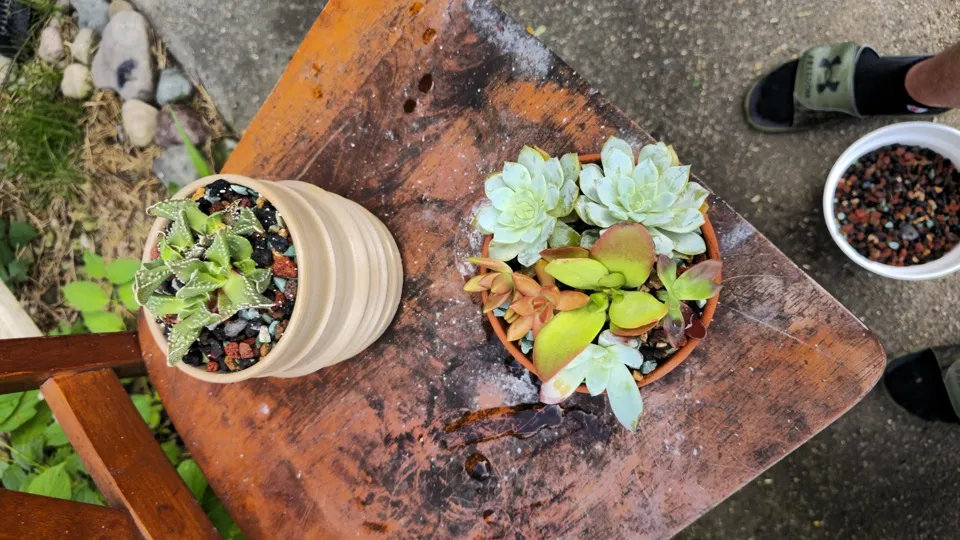
Then and now
Explore the sources
 Explore the sources
Names and identification
| Kind | Name |
|---|---|
| Best working ID | Faucaria tuberculosa (Rolfe) Schwantes |
| Common name | Tuberculate tiger jaws |
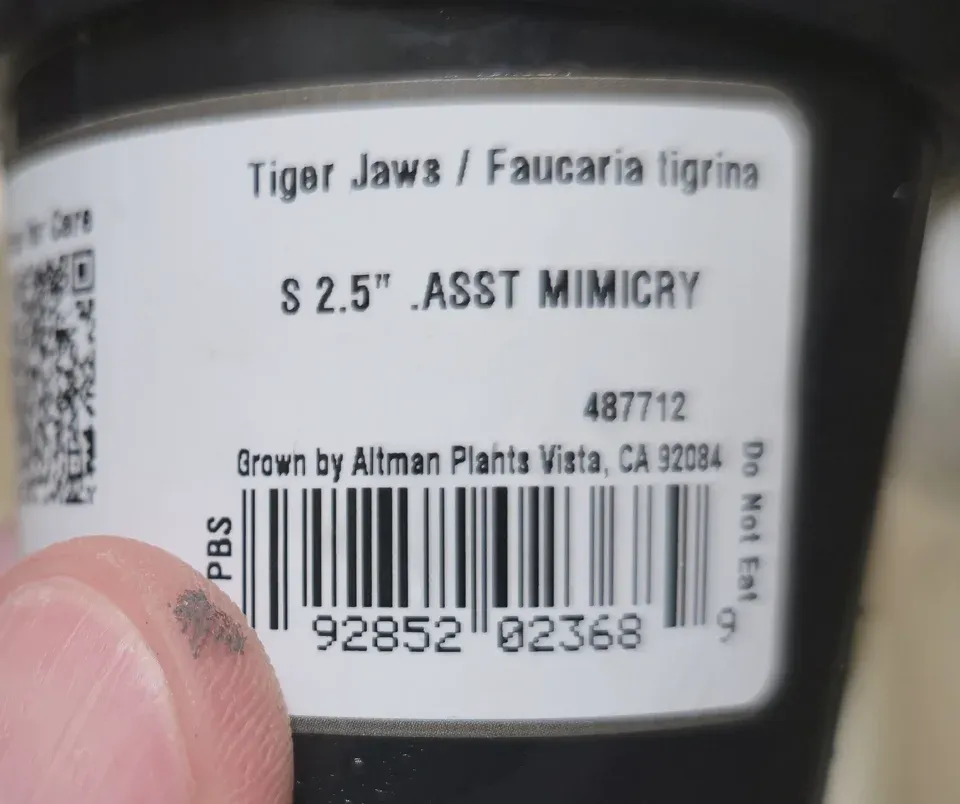
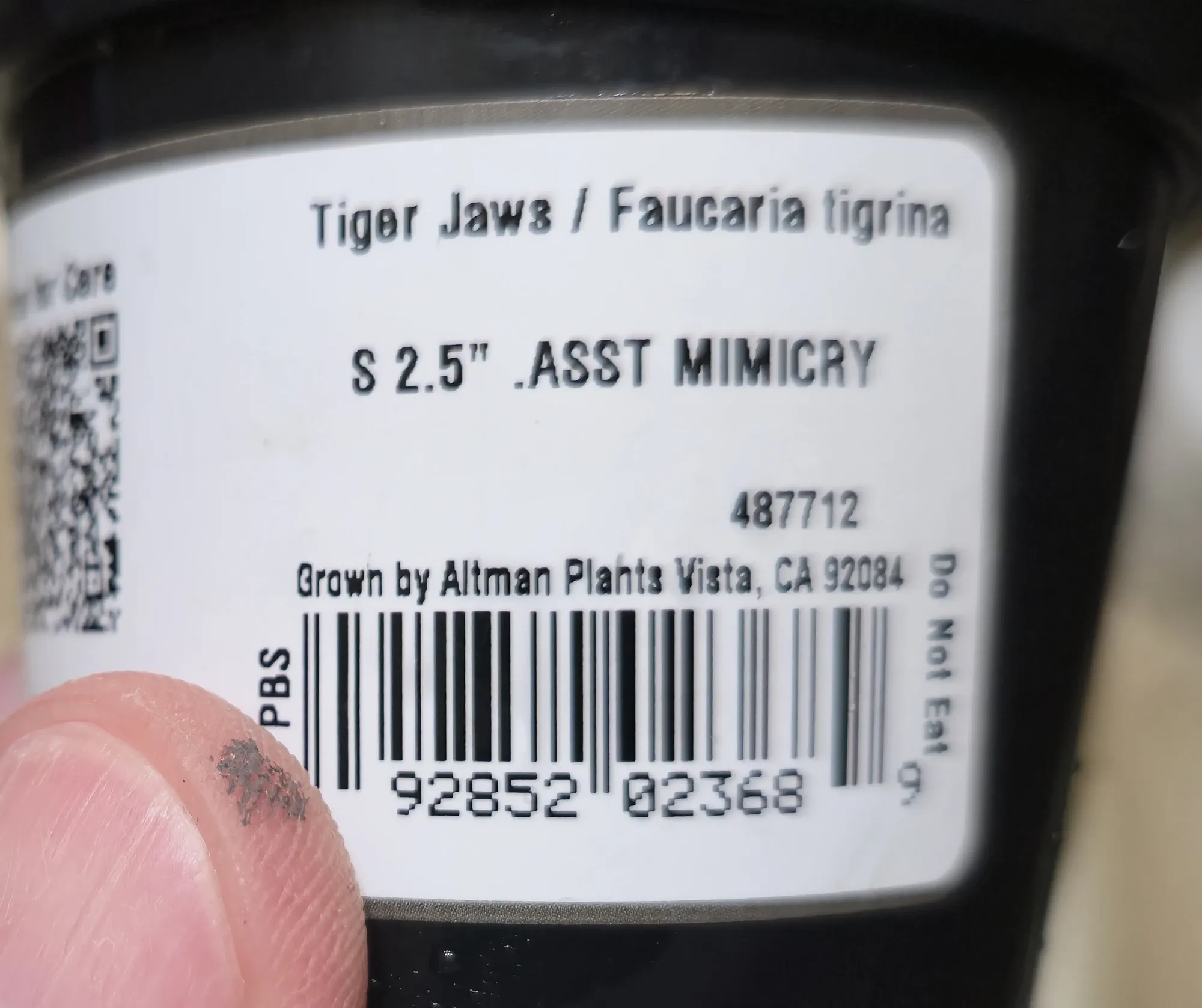
| Visible seller label | Tiger Jaws — Faucaria tigrina; Altman Plants assortment code 487712 |
| Main identification cue | Raised white tubercles scattered across the leaf faces |
The triangular leaves carry pale marginal teeth and prominent raised tubercles on their faces. Compare both textures: F. tuberculosa has shorter marginal teeth and blunt face bumps, while F. tigrina is noted for longer threadlike teeth and finer spotting.
Acquisition and photo evidence
The owner purchased this plant from Home Depot and assigned #5 / P29 on
2026-09-02. The readable front label says “Tiger Jaws,”
Faucaria tigrina, S 2.5" ASST MIMICRY, Altman Plants, and code 487712.
The reverse carries Smart Planet Home branding, a generic care QR, full-to-part
sun and 35 °F seller guidance, and a printed 4 oz / 118 mL container-capacity
marking.
The photo gallery shows its arrival condition, repotted form, leaf tubercles and original nursery tag.
The plant was repotted on acquisition day. The photographed label establishes a 2.5-inch retail assortment. The repot was logged at September 3, 2026, 12:23 a.m. EDT, with the setup-2 pot described as “4.25 round, 4.25 deep” and its medium as 80% Molly's Succulent Mix / 20% perlite with top dressing.
Origin and growth form
Kew accepts Faucaria tuberculosa and records it as a succulent subshrub native to South Africa's Cape Provinces, with a more specific Fort Beaufort-area native range. The name was first published as Mesembryanthemum tuberculosum before being combined in Faucaria. The opposing leaves form short clustered shoots rather than the persistent woody stems of many ordinary houseplants.
SANBI describes F. tuberculosa with 4–8 thick leaves per rosette and variable numbers of blunt white tubercles. Plants can remain solitary or form clumps; the flowers are yellow.
Care in this collection

| Topic | Practical starting approach |
|---|---|
| Grow-light position | Photo-matched rear right, in front of the square box · Bright. September 15 rear wooden tables, facing the window. Compare light at leaf height. See the current placement guide. |
| Water | Soak only after the mix has dried through and the pot-weight trend supports it, then drain completely. Do not use a fixed calendar or misting routine. |
| Pot and mix | Setup 2 records “4.25 round, 4.25 deep” and 80% Molly's Succulent Mix / 20% perlite with top dressing. Keep the paired-leaf crown above wet top dressing. |
| Temperature | Favor warm active-growth conditions, airflow, and protection from cold wet roots. Let visible growth and drying rate guide seasonal adjustments. |
| Feeding | If established growth is visible, use only the collection's dilute succulent feeding approach during a normal watering; do not feed a stressed or still-wet plant. |


Rotation, propagation, and watch points
- Use a consistent orientation in comparison photographs; rotate as needed for even growth.
- Distinguish ordinary old-leaf drying from translucent, spreading softness at the crown or base. The latter deserves a root and rot inspection rather than more water.
- Do not pull attached leaves or teeth merely because they look dry. Remove material only when it is fully detached or when a documented health problem requires intervention.
- Offsets can gradually form a cluster; separate them only when they have an established root system and the plant is healthy.
Sources

Through the seasons
Plant Photo History
Recent photographs of this plant. Open a photo or its collection for the complete history.
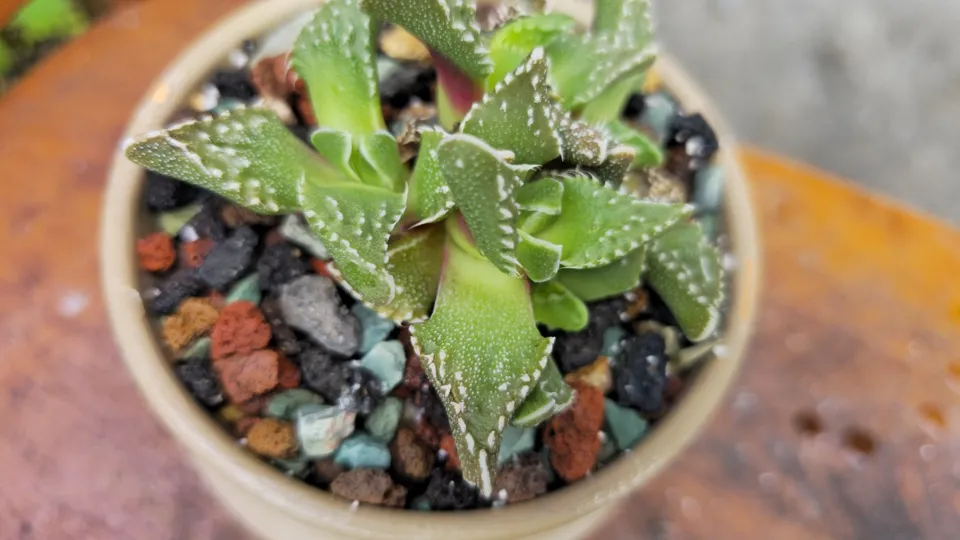
From the nursery
Nursery Labels
Original nursery labels and packaging.


Botanical reference photos
Reference Gallery
Form and growth

Look closer


Flowers and buds


.jpg)
Research Trail
- Collection Notes on GitHub
- Complete Photo Archive and Credits
- iNaturalist Observations — Species comparisons