


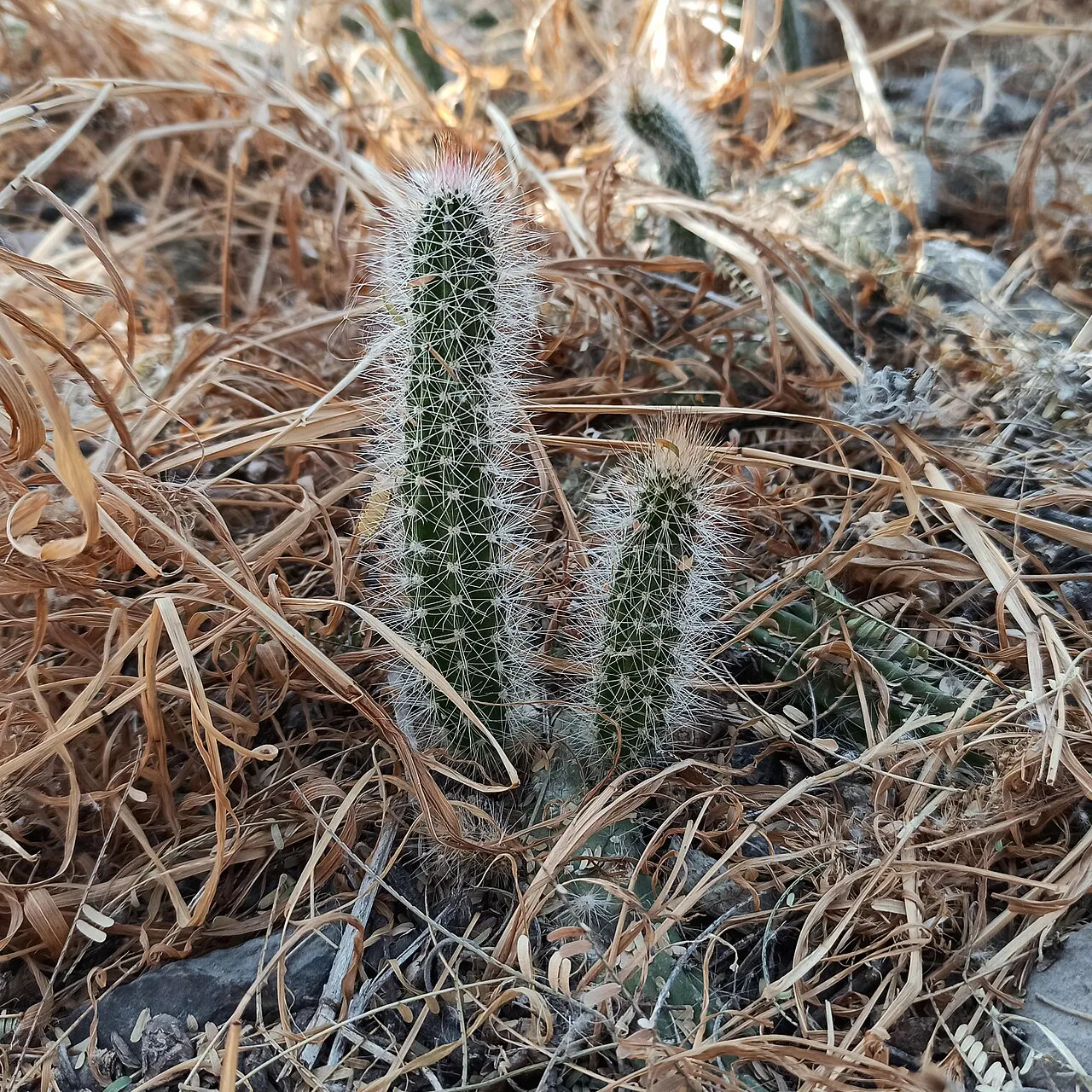
Cactus collection
Plant 03 / 45 Cactus collection
 Plant 03 / 45


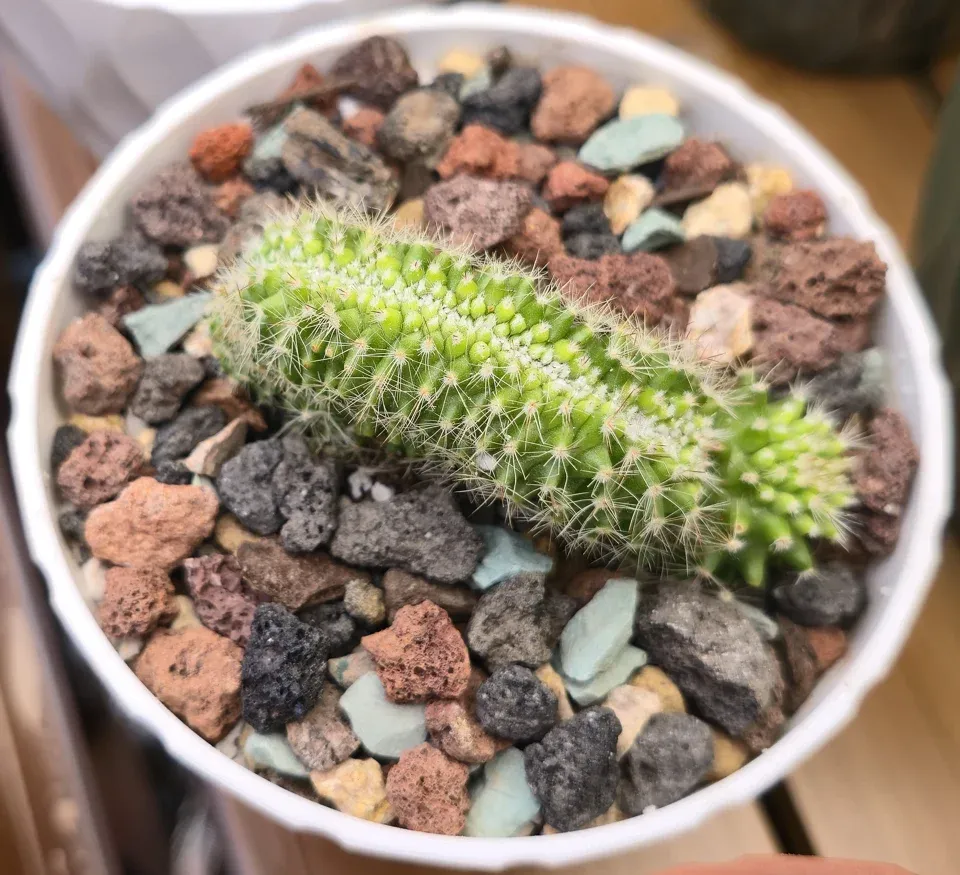
Species reference · Juan Carlos Fonseca Mata · CC BY-SA 4.0 · Photo Source ↗
 Collection Record
- Starter-04
 Permanent Label
A3 Identification
 Status
 Acquired From
- Costa Farms
 Acquired On
- 2026-07-23
 Google Sheets ID
- P03 ↗
 Photo History
- 4 captures · newest ↓
Measurements and Care History
 Measurements and Care History
Weights, watering, events, and charts for P03.
Spot it
 Spot it
What it looks like
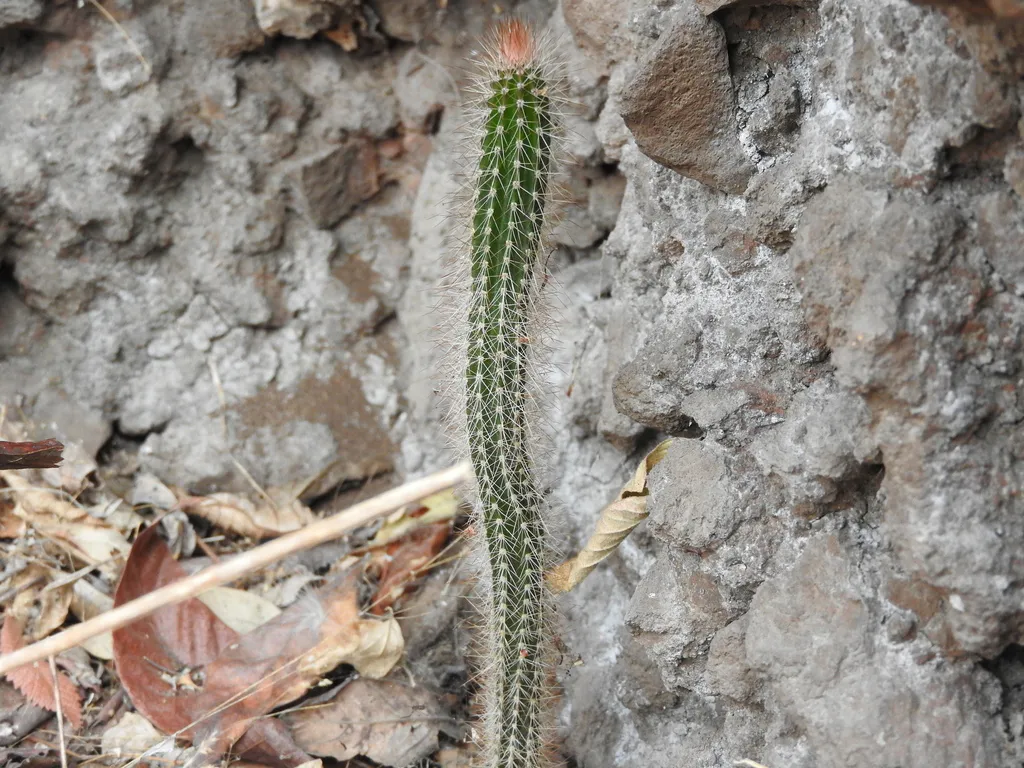
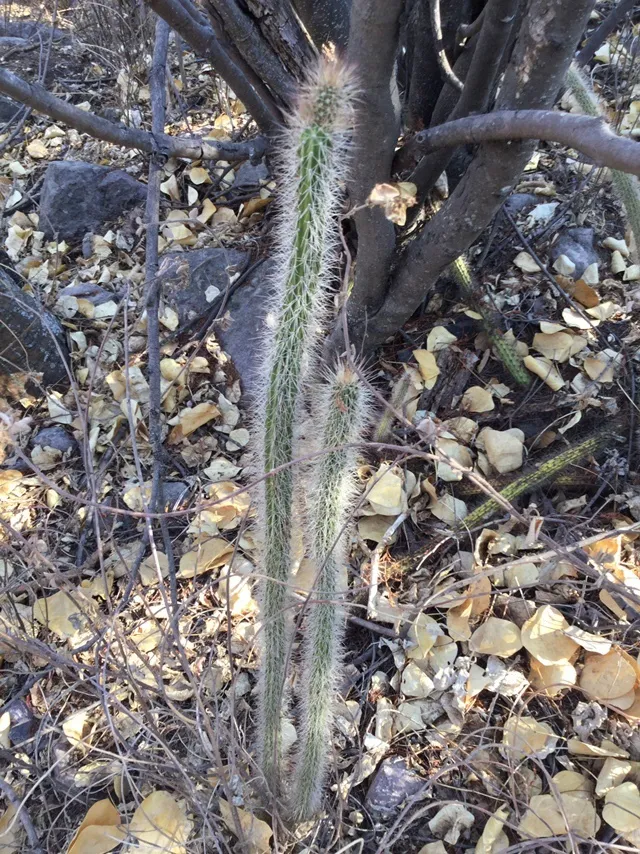
A slender branching green stem with shallow ribs, close white areoles, and sharp radiating spines, giving each narrow section a bristled, almost rope-like outline.
One curious thing
 One curious thing
Did you know?
Its long flowers open at night, a behavior reflected in the genus name Nyctocereus—literally “night cereus.”
Explore This Plant
A closer look
How this plant works
 How this plant works
Slender ribbed stems branch and lengthen into a scrambling plant.
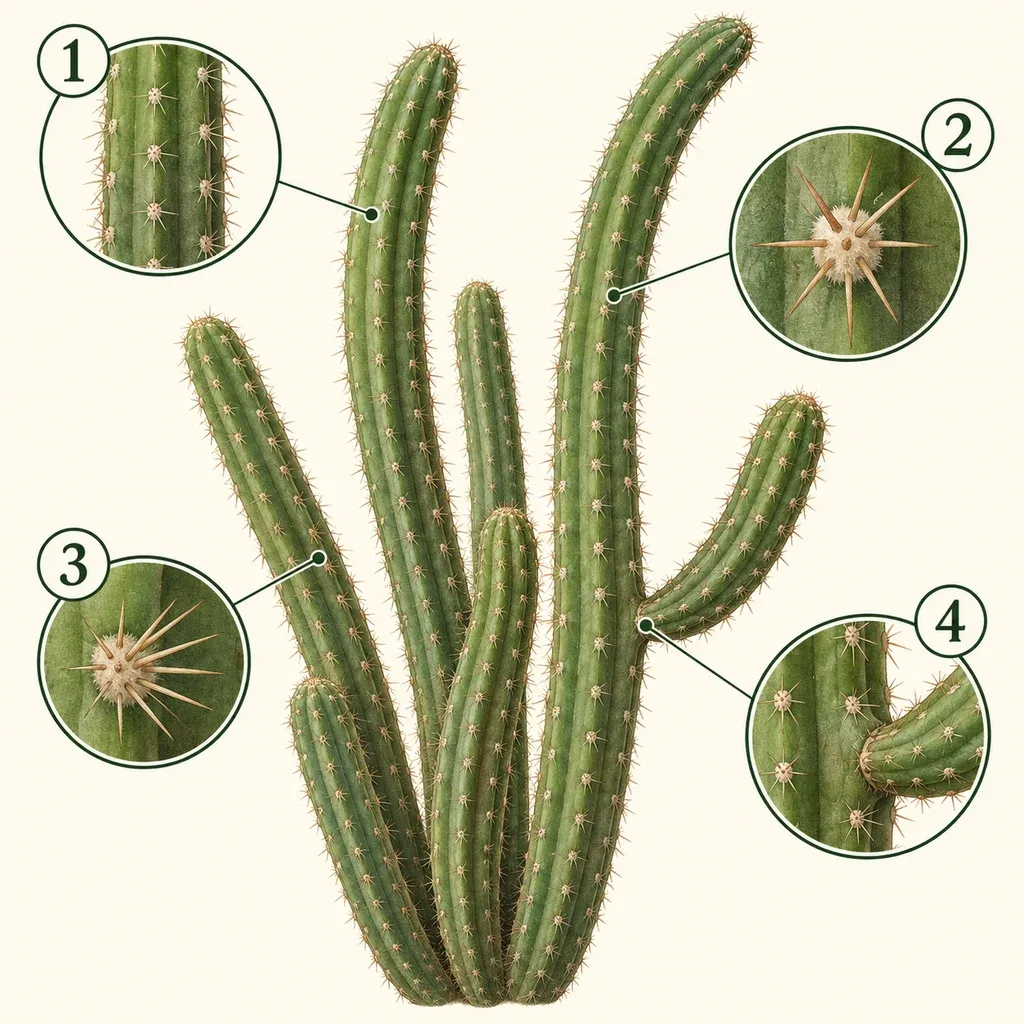
Slender stem
The green cylindrical stem carries a series of low ribs.
Areole
Small felted growing cushions sit closely together along the ribs.
Radial spines
Fine pale-to-brown spines radiate from the areoles.
Side branch
A new branch adds another extending stem to the scrambling plant.
Anatomy sources: [2]
Habitat and origins
 Habitat and origins
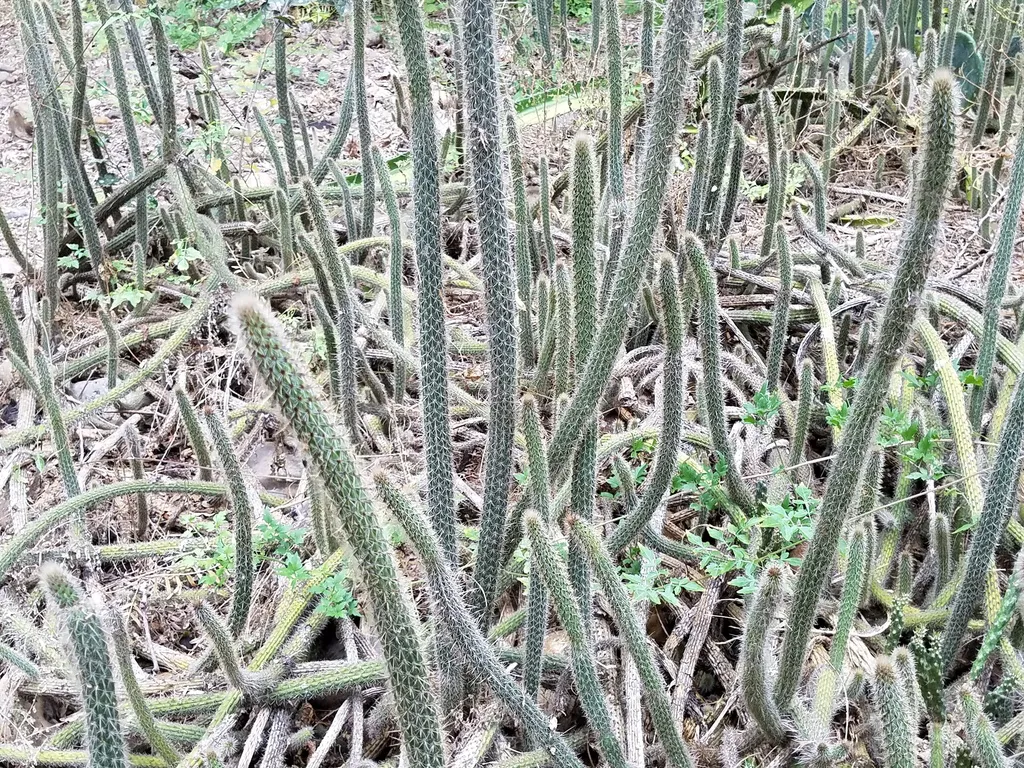
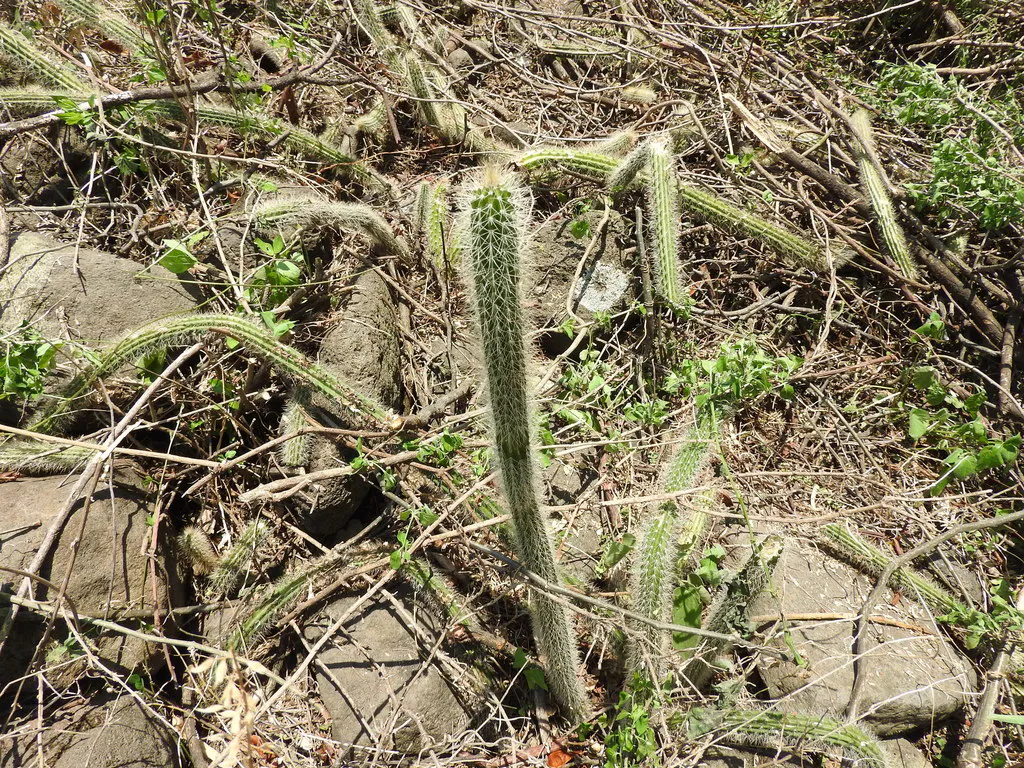
Serpent cactus is native to Mexico, where Kew describes it as a scrambling succulent shrub of seasonally dry tropical habitats. Its slender stems are built for a different life from a compact barrel cactus: the classic botanical description records stems climbing through bushes, trailing over walls or hanging when support is absent.
What growth can look like
 What growth can look like
- Stage 1
Upright start
Young stems can stand upright in a compact group.
- Stage 2
Extending branches
Longer stems branch and begin to lean or arch.
- Stage 3
Scrambling adult
With age, stems can clamber through supports or trail when unsupported.
The long, narrow stems eventually lean and scramble, giving an established plant its serpentine outline.
Growth sources: [2]
Flowers
White flowers roughly 15–19 cm long emerge near the upper areoles and are followed by red fruits. The fruit’s spines are deciduous: they fall away as the fruit develops.
Sources: [2]
As it matures
Developed stems can reach around 3 m long while remaining only about 2–5 cm thick, producing a slender, sprawling plant.
Sources: [2]
Behind the name
Kew accepts Nyctocereus serpentinus and lists Peniocereus serpentinus as a synonym. Both names are common in cactus references.
Sources: [1]
Similar plants, useful clues
Ming Thing ↗
Ming Thing grows in thick irregular clubs. Serpent cactus develops long, narrow ribbed stems that lean and scramble.
This plant in the collection
Its story so far
Then and now
Explore the sources
 Explore the sources
Names and identity
| Kind | Name |
|---|---|
| Accepted botanical name | Nyctocereus serpentinus (Lag. & Rodr.) Britton & Rose |
| Common names | Serpent cactus, snake cactus, night-blooming cereus |
| Important synonym | Peniocereus serpentinus |
| Name clue | Nyctocereus refers to night flowering; serpentinus describes the long, snake-like stems |
Kew currently accepts Nyctocereus as a one-species genus. Other taxonomic treatments place this plant in Peniocereus, so both names appear in serious references.
Origin, form, and flowers
This species is native across large parts of Mexico and grows in seasonally dry tropical vegetation. Unlike a compact desert ball cactus, it is a scrambling shrub: slender ribbed stems can reach several metres by leaning through other plants. Underground, established specimens may develop enlarged roots that store water and energy through dry periods.
Large funnel-shaped flowers open at night. They are white to pale pink, strongly scented, and can be roughly 15–20 cm long. Red ovoid fruits follow successful pollination and are reported as edible. Their spines fall away as the fruits develop. The combination of a relatively plain skinny stem and extravagant short-lived flower is typical of several unrelated plants sold loosely as “night-blooming cereus.”
The species was first described in 1801, then placed in Nyctocereus by Britton and Rose in 1909. Kew lists it as Least Concern in the wild and records introductions beyond Mexico, including parts of Australia and South Africa.
Care in this collection

| Topic | Practical approach |
|---|---|
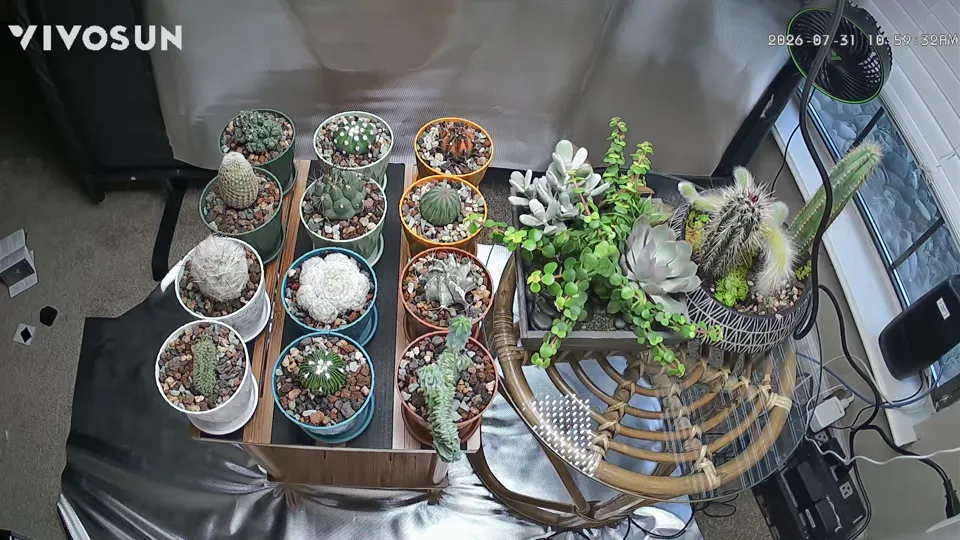
| Grow-light position | R3C4 · Bright. September 15, 2026 photo layout, facing the window (six columns, four rows). Interior-right upright plant. Keep its stems from shading the adjacent low H1 and G3. See the current placement guide. |
| Growth habit | Give it a stake, trellis, or eventual hanging route. A horizontal stem is not automatically unhealthy; unsupported scrambling is normal. |
| Water | During warm active growth it can use water more regularly than the small globular cacti, but still wait for the pot to dry. Reduce sharply when growth slows. |
| Mix and pot | Fast drainage remains essential. An established tuberous root system may eventually justify a deeper pot, but do not overpot a small specimen. |
| Temperature | Favor warmth during growth and protect from frost. Keep a cool plant dry. |


Judge light by the new stem: it should emerge with a useful diameter, regular ribs, and normal spine spacing. A thin pale extension means it wants more light; fresh yellow or tan patches mean the increase was too abrupt.
Propagation and watch points
- Stem cuttings root readily after the cut end has dried and callused. Seed preserves genetic variation and can eventually form the characteristic storage root.
- Long stems make leverage. Secure the pot before a top-heavy stem pulls on the root ball.
- The plant can be pruned for space. A healthy removed section can become a cutting rather than being discarded.
- Night flowers may be missed if the plant is only checked during the day. Swelling buds are a reason to look after dusk and again early in the morning.
- Watch warm crevices for mealybugs and the base for softness.
Sources

Through the seasons
Plant Photo History
Recent photographs of this plant. Open a photo or its collection for the complete history.
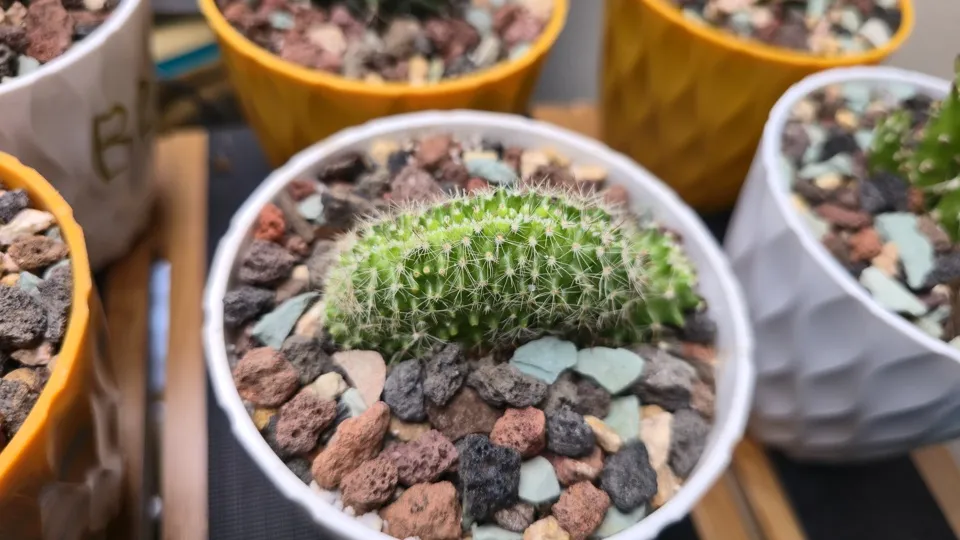
From the nursery
Nursery Labels
Original nursery labels and packaging.
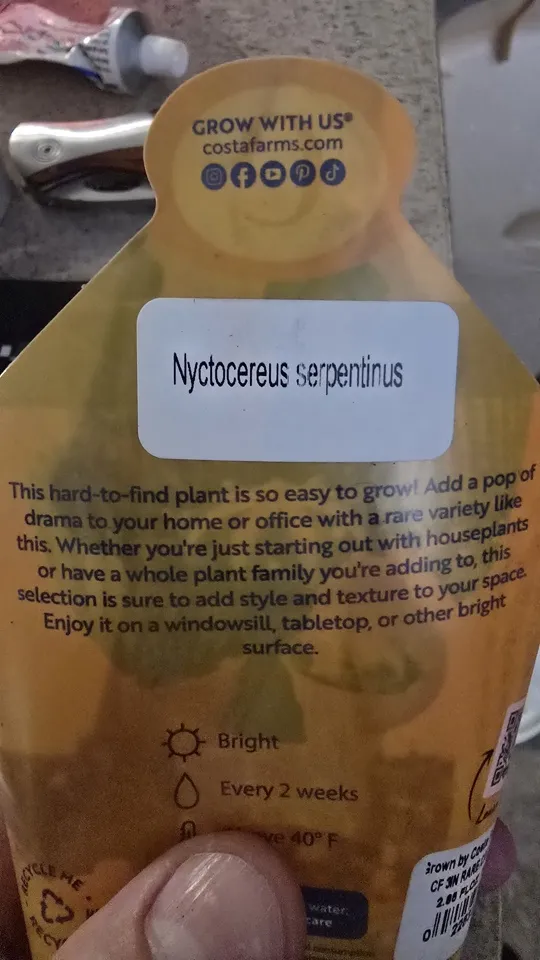
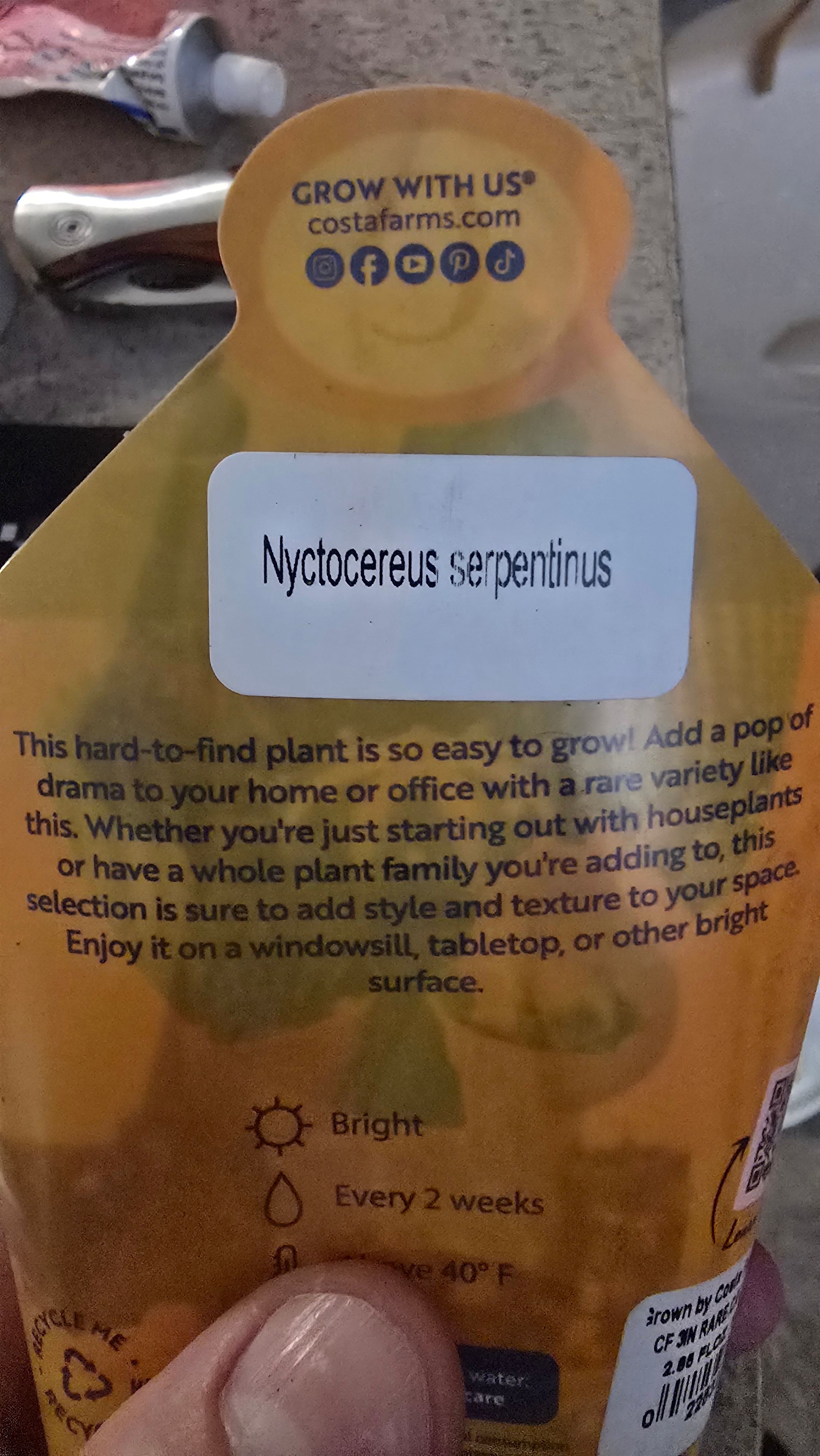
Botanical reference photos
Reference Gallery
Flowers and buds

In the landscape
.jpg)
_in_Guanajuato.jpg)


.jpg)
Research Trail
- Collection Notes on GitHub
- Complete Photo Archive and Credits
- iNaturalist Observations — Species observations under the currently used genus name