


Cactus collection
Plant 16 / 45 Cactus collection
 Plant 16 / 45
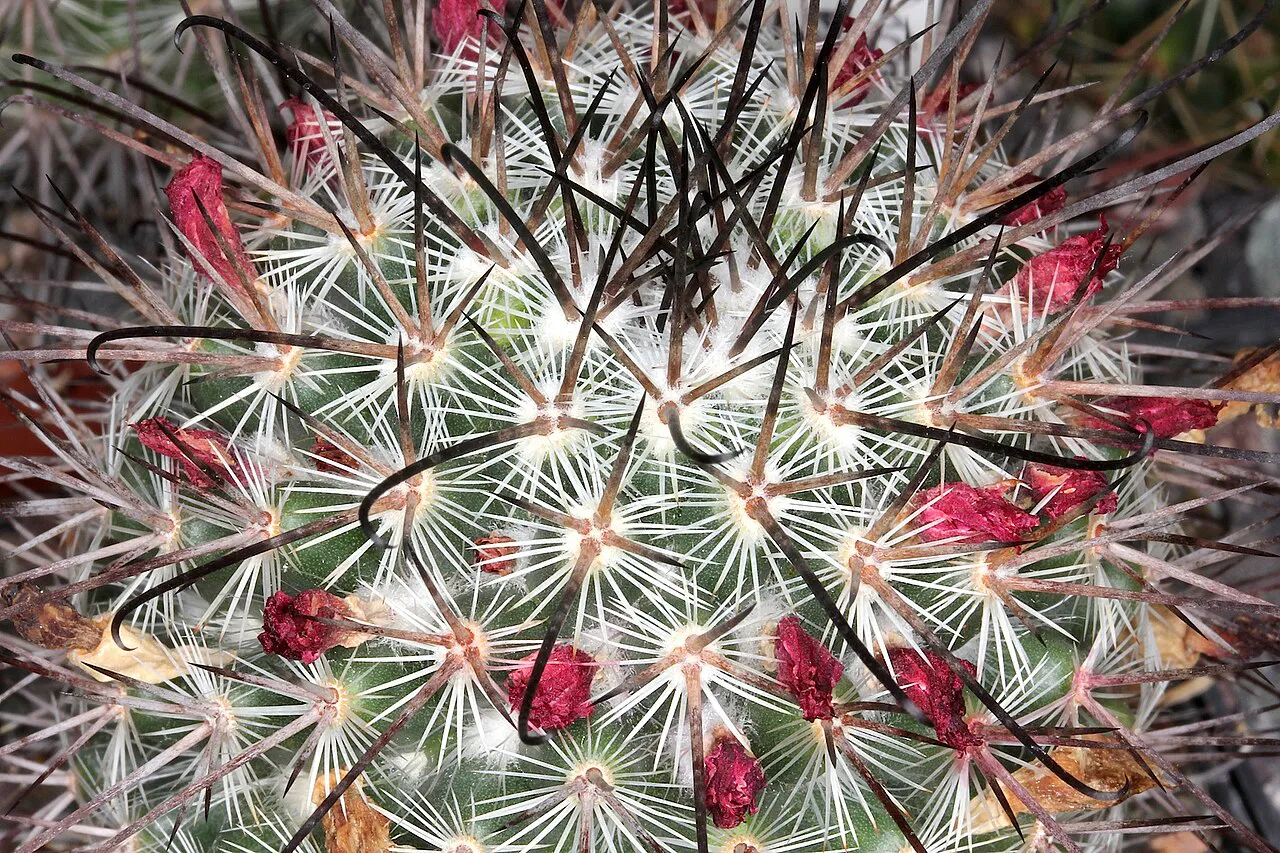
 Mammillaria cf. rekoi
Hook-spined pincushion cactus


Species reference · Peter A. Mansfeld · CC BY 3.0 · Photo Source ↗
 Collection Record
- Cactus-06
 Permanent Label
F1 Identification
 Status
 Acquired From
- Carlsons' Greenhouse, Torrey Road, Fenton, Michigan
 Acquired On
- 2026-08-10
 Google Sheets ID
- P16 ↗
 Photo History
- 3 captures · newest ↓
Measurements and Care History
 Measurements and Care History
Weights, watering, events, and charts for P16.
Spot it
 Spot it
What it looks like
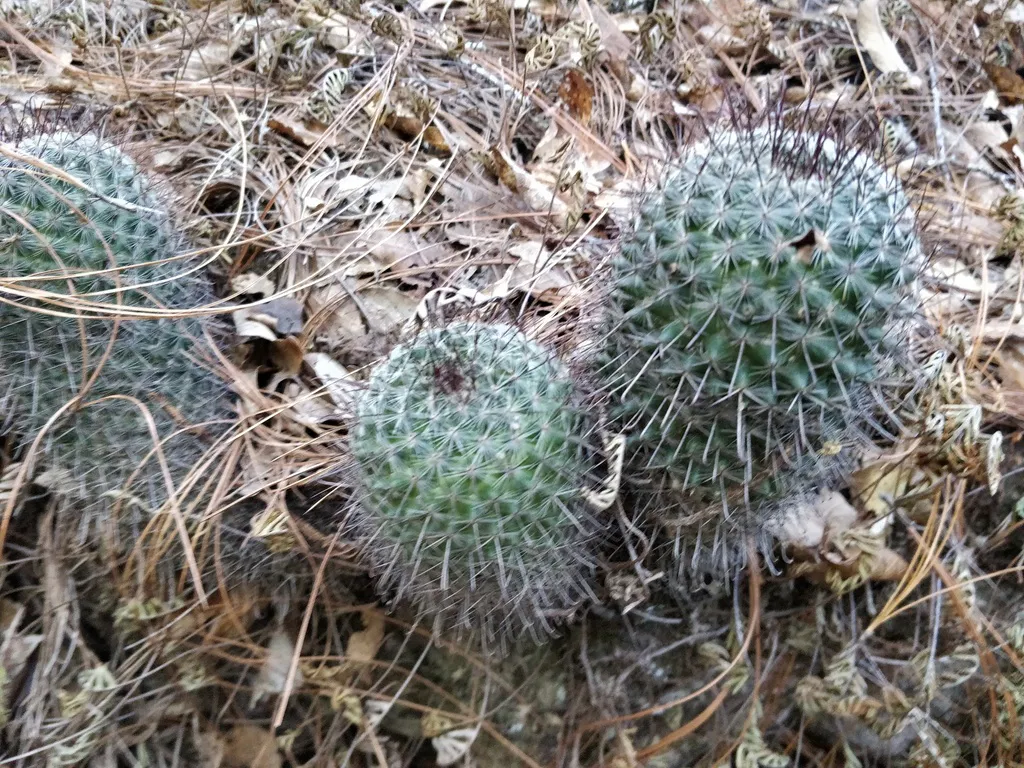
A green globe patterned with close-set tubercles, fine pale radial spines, and scattered darker central spines whose hooked tips break the otherwise tidy surface.
One curious thing
 One curious thing
Did you know?
Those hooked central spines act like tiny grappling hooks and readily catch skin or fabric, even though the surrounding pale radial spines make the plant look delicate.
Explore This Plant
A closer look
How this plant works
 How this plant works
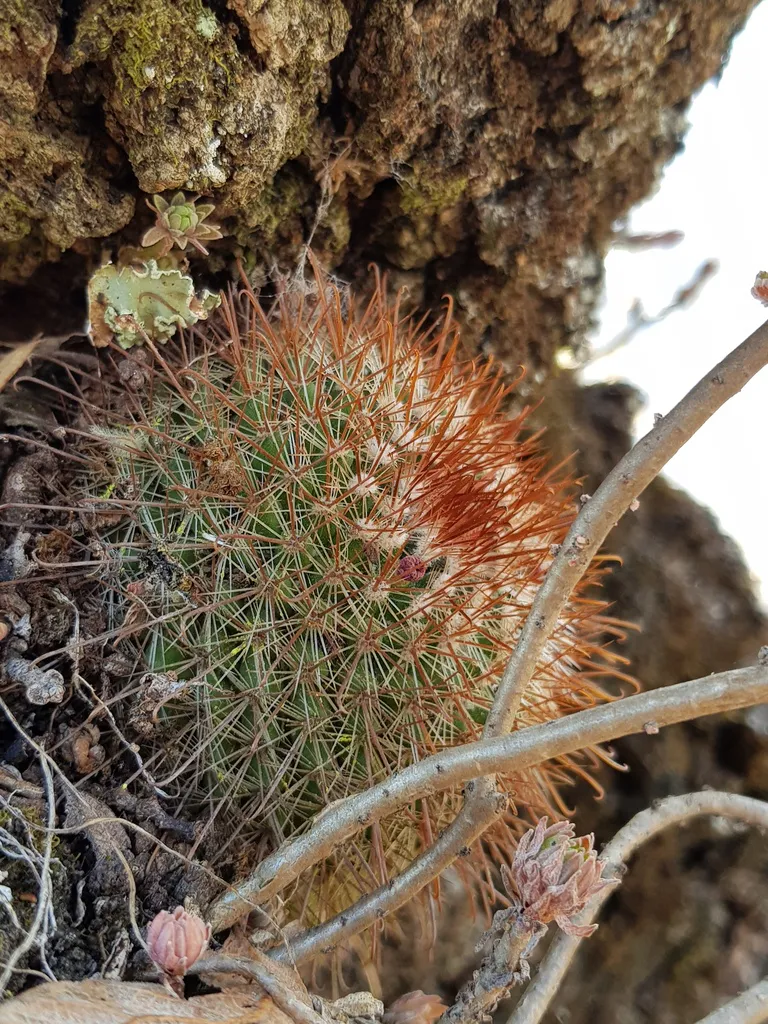
Fine radial spokes and stronger hooked central spines form two distinct layers around the tubercles.
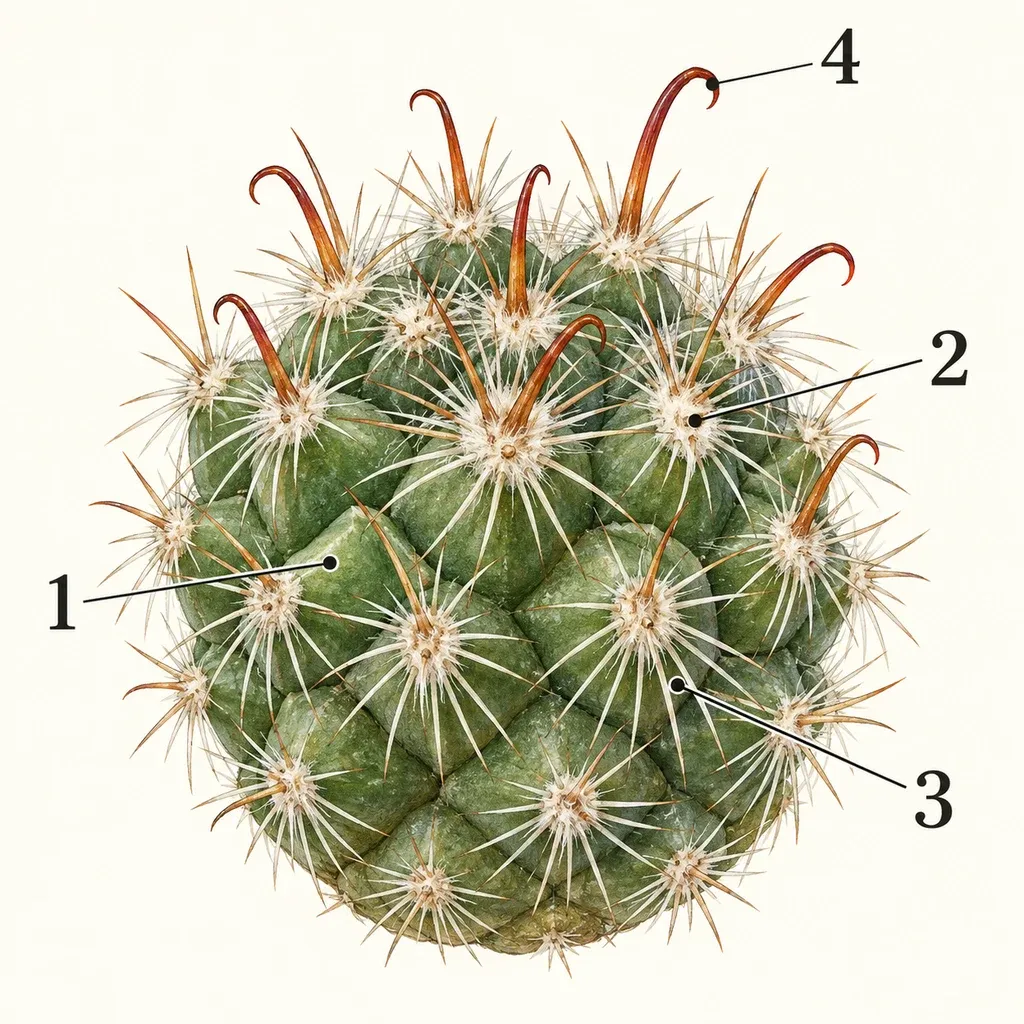
Tubercle
A raised green mound forms part of the water-storing stem.
Areole
Spines emerge from the specialized cushion at the tubercle's tip.
Radial spines
Numerous fine pale spokes partly screen the green body.
Hooked central spine
A stronger amber-brown spine projects outward with a curved tip.
Habitat and origins
 Habitat and origins
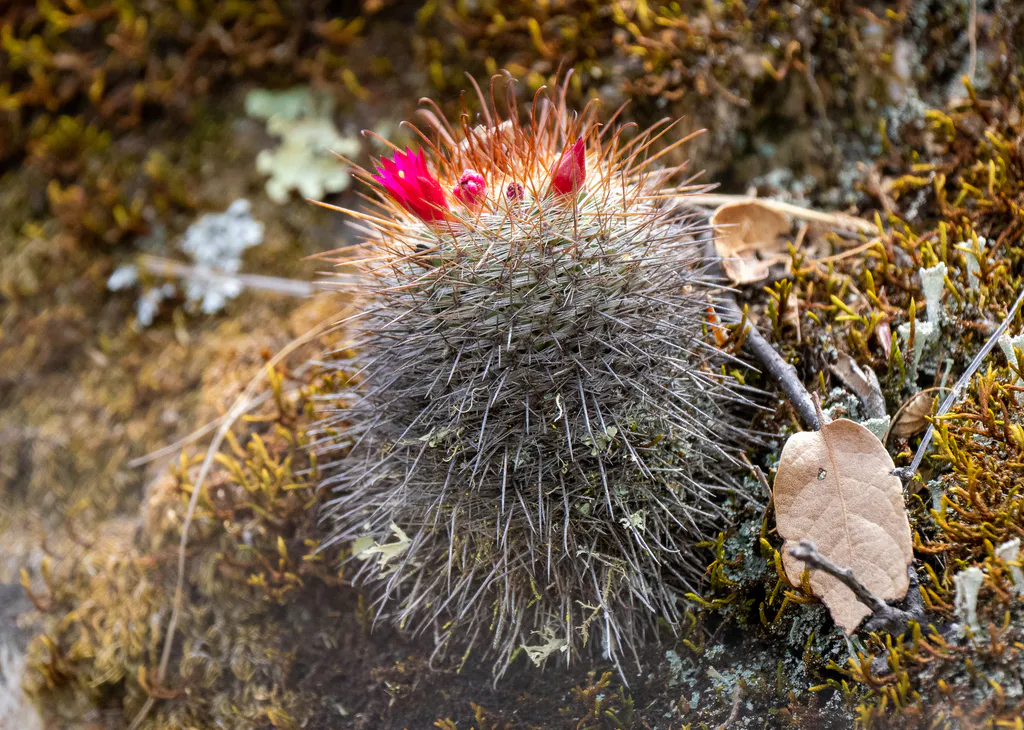
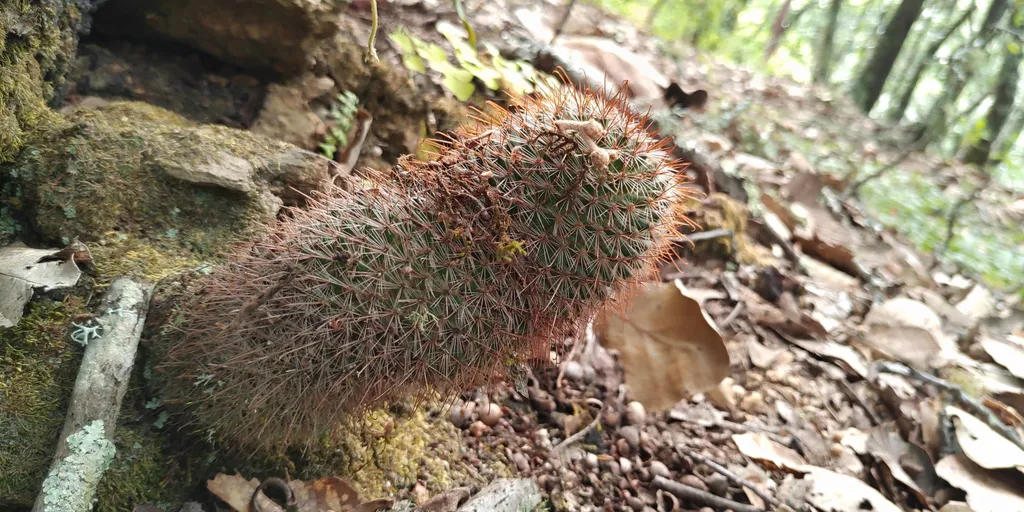
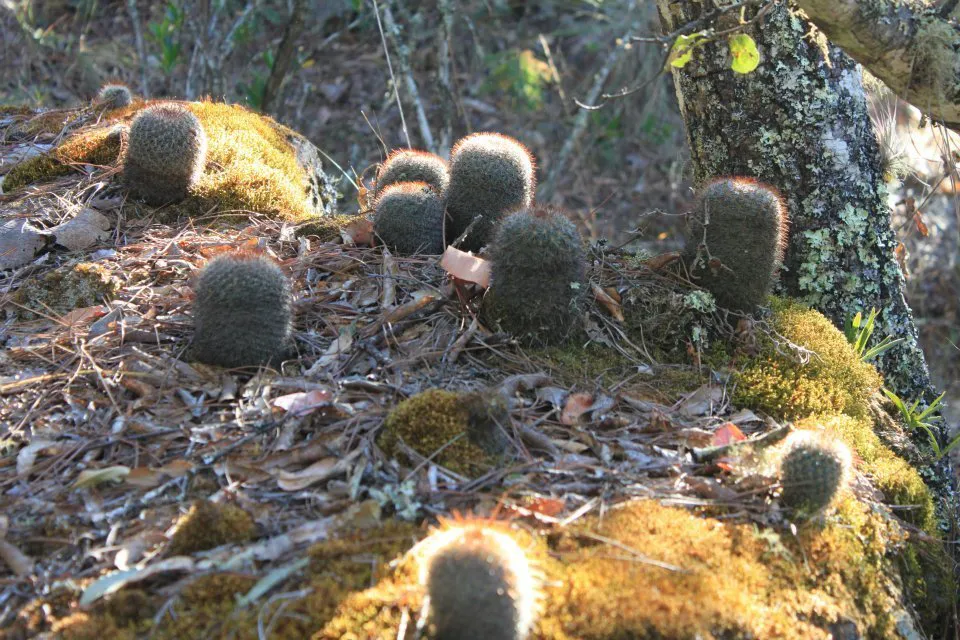
Mammillaria rekoi grows in Morelos, Puebla, and Oaxaca, Mexico. It occurs in dry shrubland and can grow on rock, with small globose to short-cylindrical stems.
What growth can look like
 What growth can look like
- Stage 1
Bristly globe
A small rounded body carries tightly arranged tubercles.
- Stage 2
Short cylinder
The stem can elongate while retaining its dense spine covering.
- Stage 3
Possible clump
Some forms produce offsets in cultivation, although wild plants may remain solitary.
New tubercles appear near the crown. Flowers develop between the tubercles, separate from the spine clusters at their tips.
Flowers
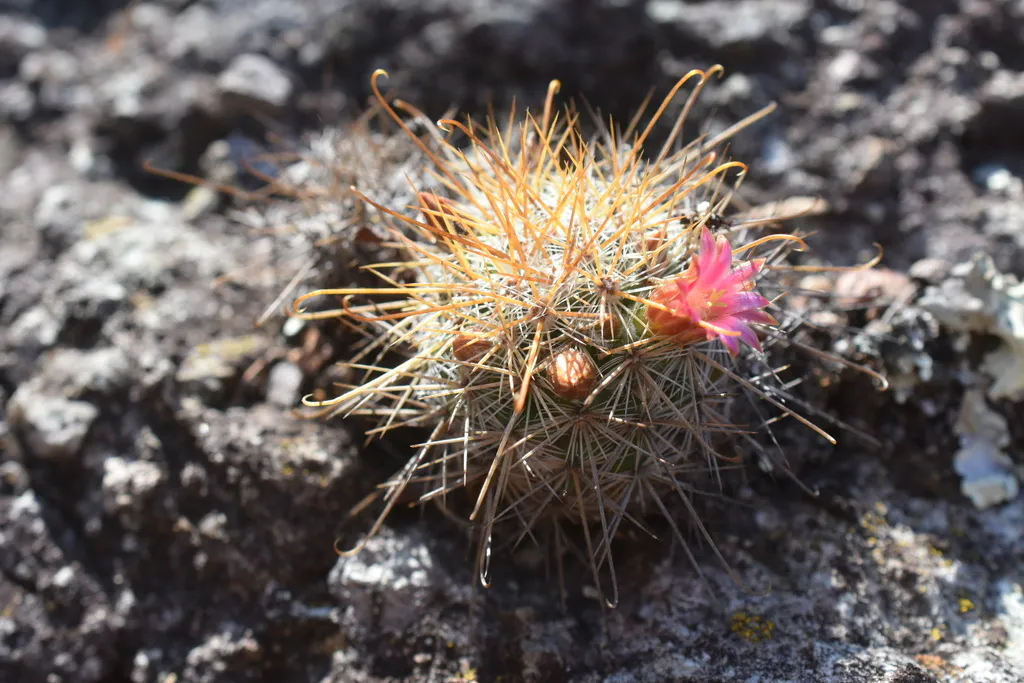
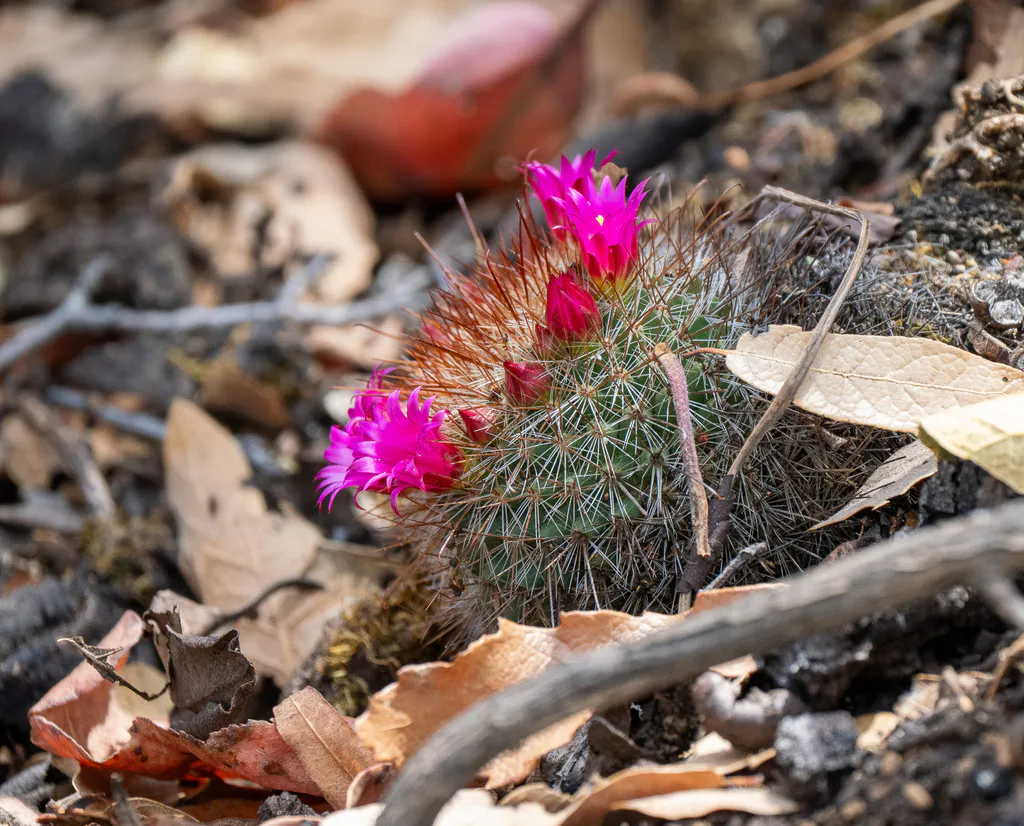
M. rekoi has small deep pink to purple-pink flowers with darker midribs. The petal tips flare back, giving the little flowers a distinctive outline.
As it matures
The species has stems roughly 12–15 cm tall and 5–6 cm across. Some forms offset into small clusters.
Sources: [2]
Behind the name
The species began as Neomammillaria rekoi in 1923 and was transferred to Mammillaria in 1925.
Sources: [1]
Similar plants, useful clues
Silken pincushion cactus ↗
M. bombycina has a heavier white woolly coat and commonly makes a cluster of cylindrical heads; both can have brown hooked spines.
This plant in the collection
Its story so far
Joined the collection
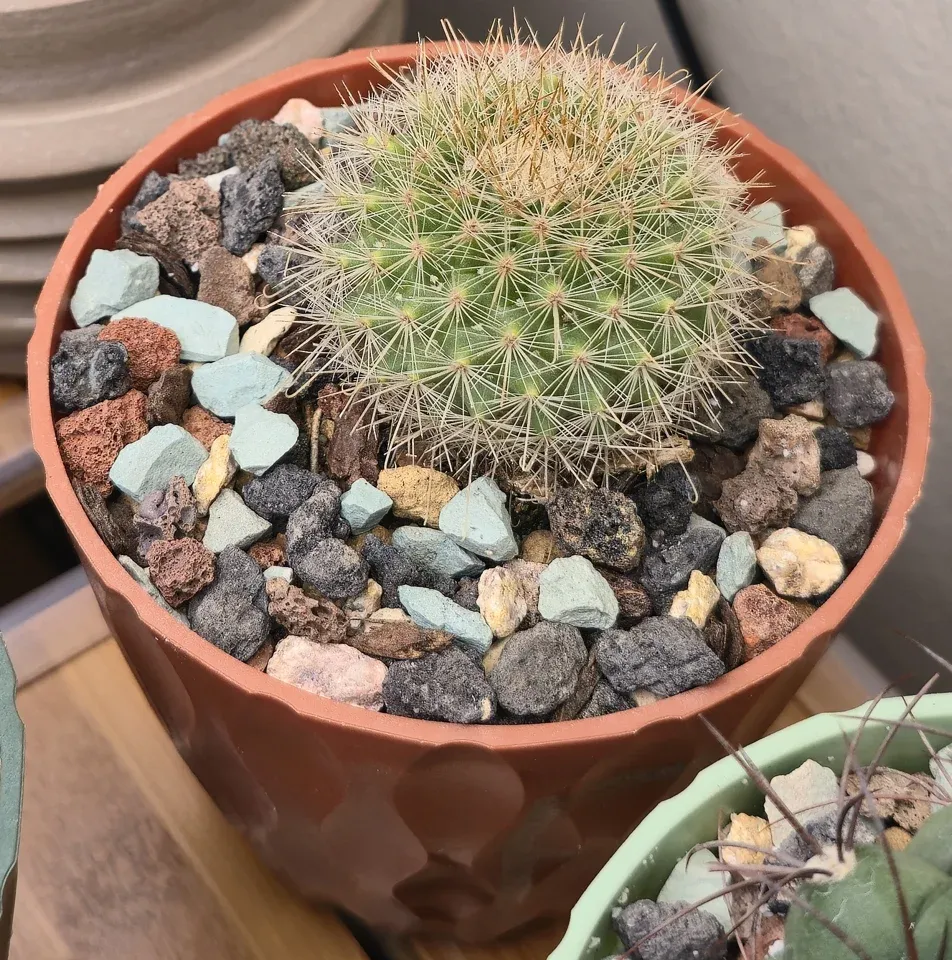
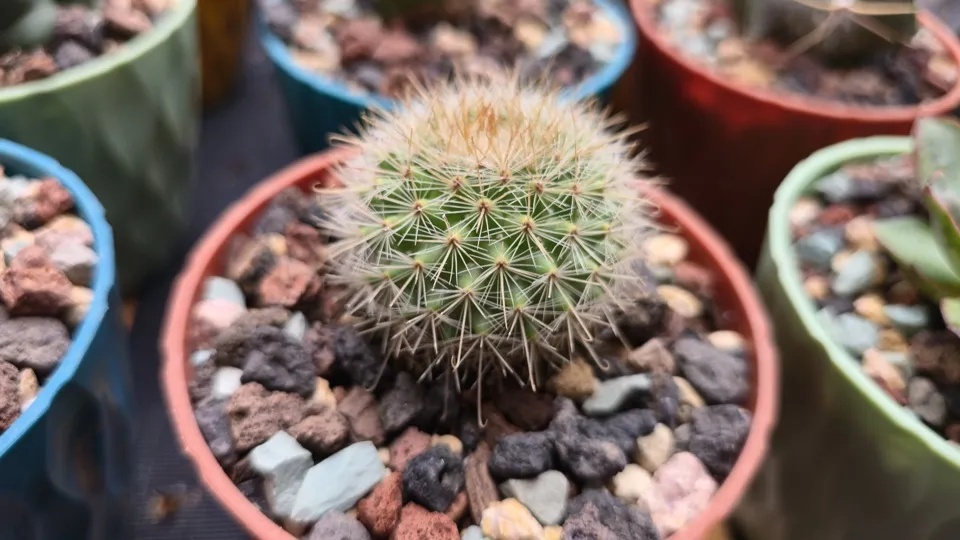
Purchased at Carlsons' Greenhouse in a 4-inch individual pot.
Collection record ↗Hooked-spine comparison
Close observations recorded a green rounded body, pale radial spines, and tan-to-red central spines with hooked tips.
Collection record ↗
Then and now
Explore the sources
 Explore the sources
Names and identity
| Kind | Name |
|---|---|
| Working identification | Mammillaria cf. rekoi |
| Common name | Hook-spined pincushion cactus |
| Permanent-label form | PROB. M. rekoi |
| Main alternatives | M. zeilmanniana / M. crinita; possible hybrid |


Close photographs reviewed on August 11, 2026 showed a green globose body, fine white radial spines, tan-to-reddish central spines, and hooked spines low on the body. The diagnostic close-ups are no longer available.
M. moelleriana was also considered, although its denser spination is a less convincing match.
Origin, form, and publication
Kew accepts Mammillaria rekoi, first published in its current combination in 1925, and places its native range in Morelos, Puebla, and Oaxaca, Mexico.
Care in this collection

| Topic | Practical approach |
|---|---|
| Grow-light position | Photo-matched R4C6 · Bright. September 15, 2026 photo reference: six-column/four-row front grid, facing the window. Back-right corner of the small-pot zone. Check for shadows from taller rear pots. See the current placement guide. |
| Water | Soak, drain, and allow a complete dry-down. Avoid leaving a cool crown wet. |
| Pot and mix | The 4-inch pot is suitable until offsets or roots crowd it; keep the body above the top dressing. |
| Identification | Flowers, fruit, and mature areoles are more useful for refining the probable species than body color alone. |


Rotation, propagation, and watch points
- Rotate 90° clockwise during the normal Sunday rotation.
- Offsets and seed are practical propagation routes if the plant produces them.
- Hooked spines catch fabric and skin; move the pot by its rim.
- Check the axils and crown for mealybugs before assuming new white material is normal wool.
Sources

Through the seasons
Plant Photo History
Recent photographs of this plant. Open a photo or its collection for the complete history.
Botanical reference photos
Reference Gallery
Form and growth

Look closer


Flowers and buds
In the landscape
Research Trail
- Collection Notes on GitHub
- Complete Photo Archive and Credits
- iNaturalist Observations — Mammillaria rekoi comparisons