


Latest reviewed report · All reports
The daily garden note
Your garden,
one good round.
Friday, Sep 18, 2026
No plateau-confirmed watering today. #4 has crossed its dry reference but remains on hold. Weigh G2 and #2; check G3’s leaf cycle, H3’s strands and #3’s upper mix. The ten overnight weigh-ins are already accounted for.
Workbook read Sep 18, 9:50 AM Eastern · a recorded snapshot
Complete review · 30 pots
What to grab
Today's quick list
Water candidates have a confirmed plateau; water only if your usual moisture/readiness check confirms they are ready. Dry-reference-only pots stay out of the Water list.
No watering candidates with a confirmed plateau today.
Weigh each pot you actually water after it drains.
Open the compact pocket list ↓Choose the right pitcher
Watering mixes
No watering mix to prepare from this review.
The reason behind the round
Your pots, at a glance
Dry reference reached — waiting for plateau 1
The historical reference is reached, but a sustained plateau is not confirmed. Hold watering; these pots are separate from the Water list.
 #4P22Kiwi aeoniumDry reference reached — waiting for plateau−6.8g/day
Hold watering: the historical dry reference is reached, but plateau is not yet supported. The 2:25 a.m. September 18 reading satisfies yesterday’s follow-up; do not repeat it today. A useful next reading is September 19 morning or evening, at least about a day later. Assess much of the mix and active versus resting rosettes before any later watering decision.
- 🕒 Last reading
- 984.5 g · Sep 18, 2:25 AM ET
- 💧 Last watered
- Not included in this report
- ⚖️ Weight change
- 992 → 984.5 g; −7.5 g over 1.10 days (−6.8 g/day)
- 🎯 Dry reference
- 991.5 g · −7 g from reference
- 📊 Plateau
- Not yet supported
The selected tail is 1,014.5 → 1,001.5 → 992 → 984.5 g over 5.04 days. Its regression loss is 5.94 g/day versus 14.13 earlier, and the latest interval still loses 6.80 g/day. The 7 g reference undershoot is not a plateau or proof of dry soil. The +150.5 g dry-stone correction is already included; do not apply it again. Last-three mean: 989.50 g; signed change over their actual span: -6.76 g/day.
📷 Photo observations
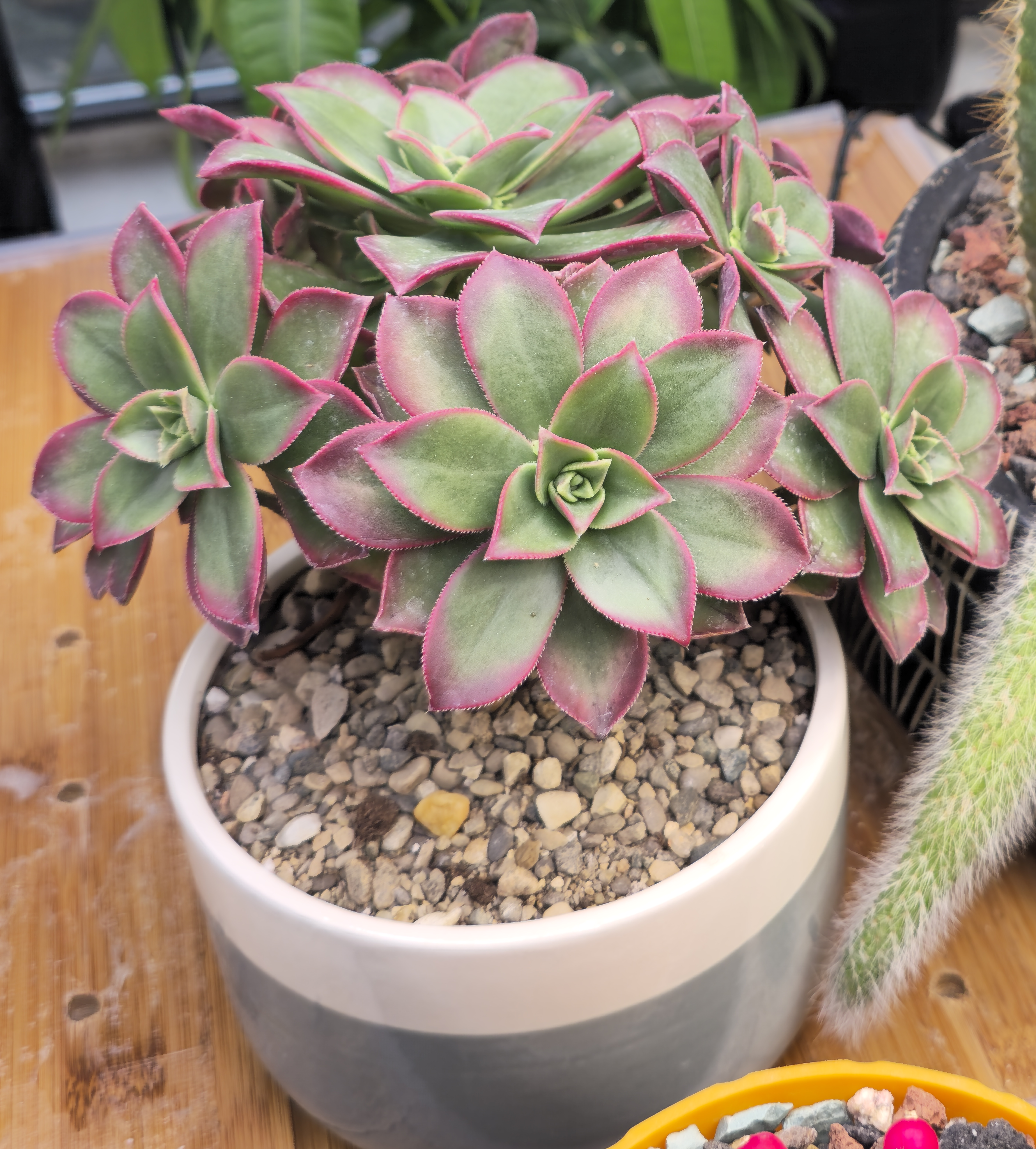
📷 Captured
#4 · Plant view · September 16
- Green-cream rosettes have pink-red margins and folded central leaves; outer leaves spread outward.
- No broad crisp tan patch or generalized collapse is apparent on the exposed foliage.
- Comparison: retain this angle to follow rosette openness, color and leaf loss.
Photo notes
AI photo-only review. Lower leaves and stems are partly hidden; central leaves do not establish active growth or a resting state. Root-zone moisture, tissue firmness and root health were not measured.
Priority weigh-ins 2
Readings that resolve a missing reference or help with the next care decision.
 G2P23Paper spine cactusPriority weigh-ins—g/day
Weigh once this evening, honoring the September 18 follow-up already requested. The sole current-cycle reading is 406.5 g on September 15, 56.5 g above reference. The earliest historical window begins September 19 evening, so a current observation is useful now. Hold watering.
- 🕒 Last reading
- 406.5 g · Sep 15, 4:29 PM ET
- 💧 Last watered
- Not included in this report
- ⚖️ Weight change
- Unavailable
- 🎯 Dry reference
- 350 g · +56.5 g from reference
- 📊 Plateau
- Unavailable
Only one eligible current-cycle reading is available, so last-two change and sustained-plateau assessment are unavailable. This weight predates the September 16 drainage-opening modification; any unmeasured pot or medium loss must not be called water loss. The new weight will provide the first measured point after the modification, not a clean water-loss rate across it.
📷 Photo observations
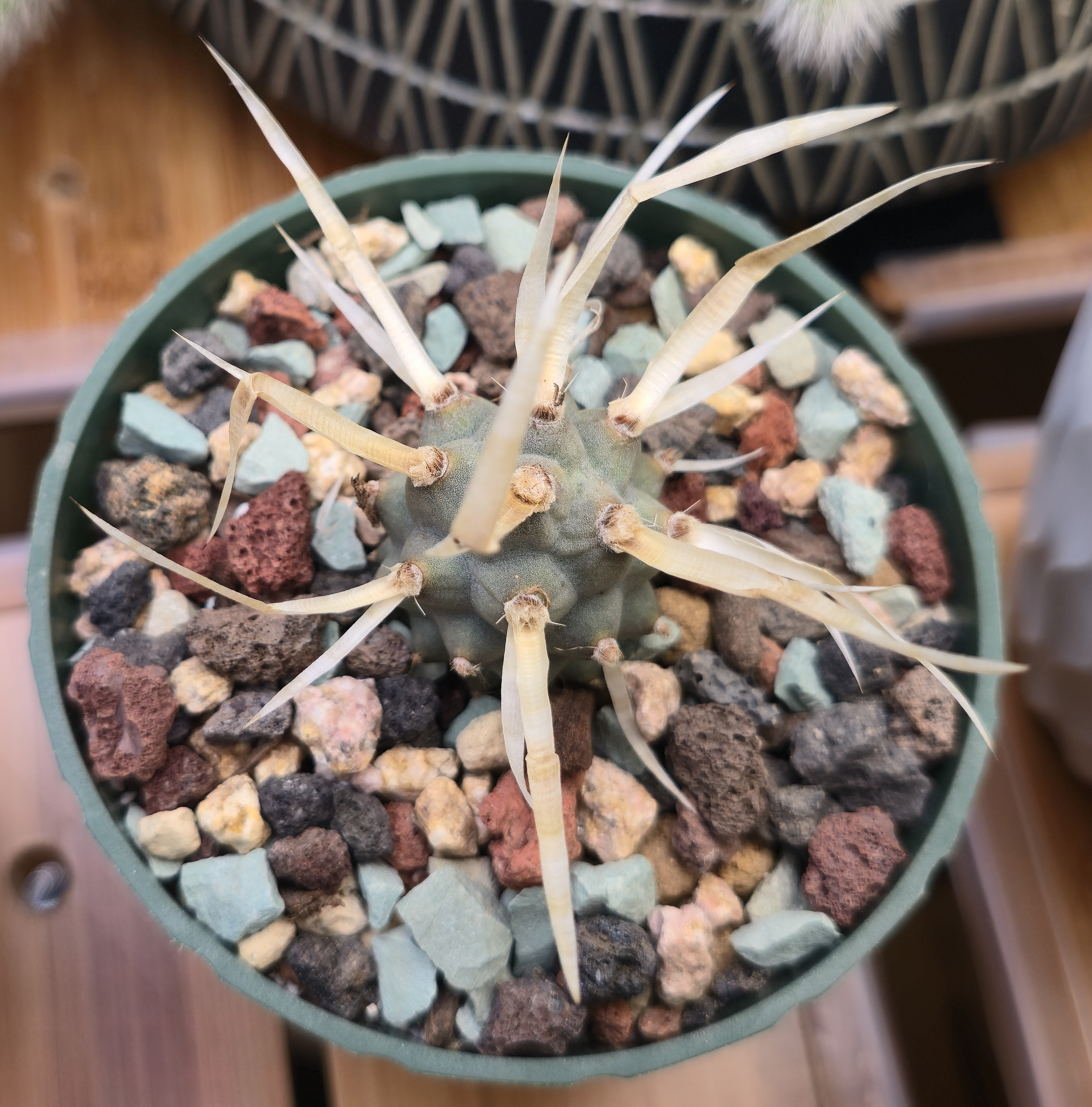
📷 Captured
G2 · Plant view · September 16
- A rounded gray-green joint carries broad cream-tan papery spines.
- Some spines curve and have tan bases; these are not identified pest deposits.
- Comparison: retain a view of the joint and its base.
Photo notes
AI photo-only review. Basal tissue is partly hidden; the photograph does not assess firmness. Root-zone moisture, tissue firmness and root health were not measured.
 #2P20Shared succulent planterPriority weigh-ins−58.54g/day
Weigh once today, preferably this evening, within the established September 18–19 follow-up window. The last measured 1,729 g is 205 g above reference, but the actual recent decline was 58.54 g/day. This will locate the pot before relying on its more distant forecast. Hold watering; the extra photo health concern remains withdrawn.
- 🕒 Last reading
- 1,729 g · Sep 16, 11:48 PM ET
- 💧 Last watered
- Not included in this report
- ⚖️ Weight change
- 1,959 → 1,729 g; −230 g over 3.93 days (−58.54 g/day)
- 🎯 Dry reference
- 1,524 g · +205 g from reference
- 📊 Plateau
- Not yet supported
The last measurement is September 16 at 11:48 p.m. The four-point tail still loses 63.53 g/day versus 76.11 earlier, not a sustained plateau. One shared container requires one weigh-in; no active problem was established from the surface differences in its dated photograph. Last-three mean: 1929.33 g; signed change over their actual span: -61.76 g/day.
📷 Photo observations
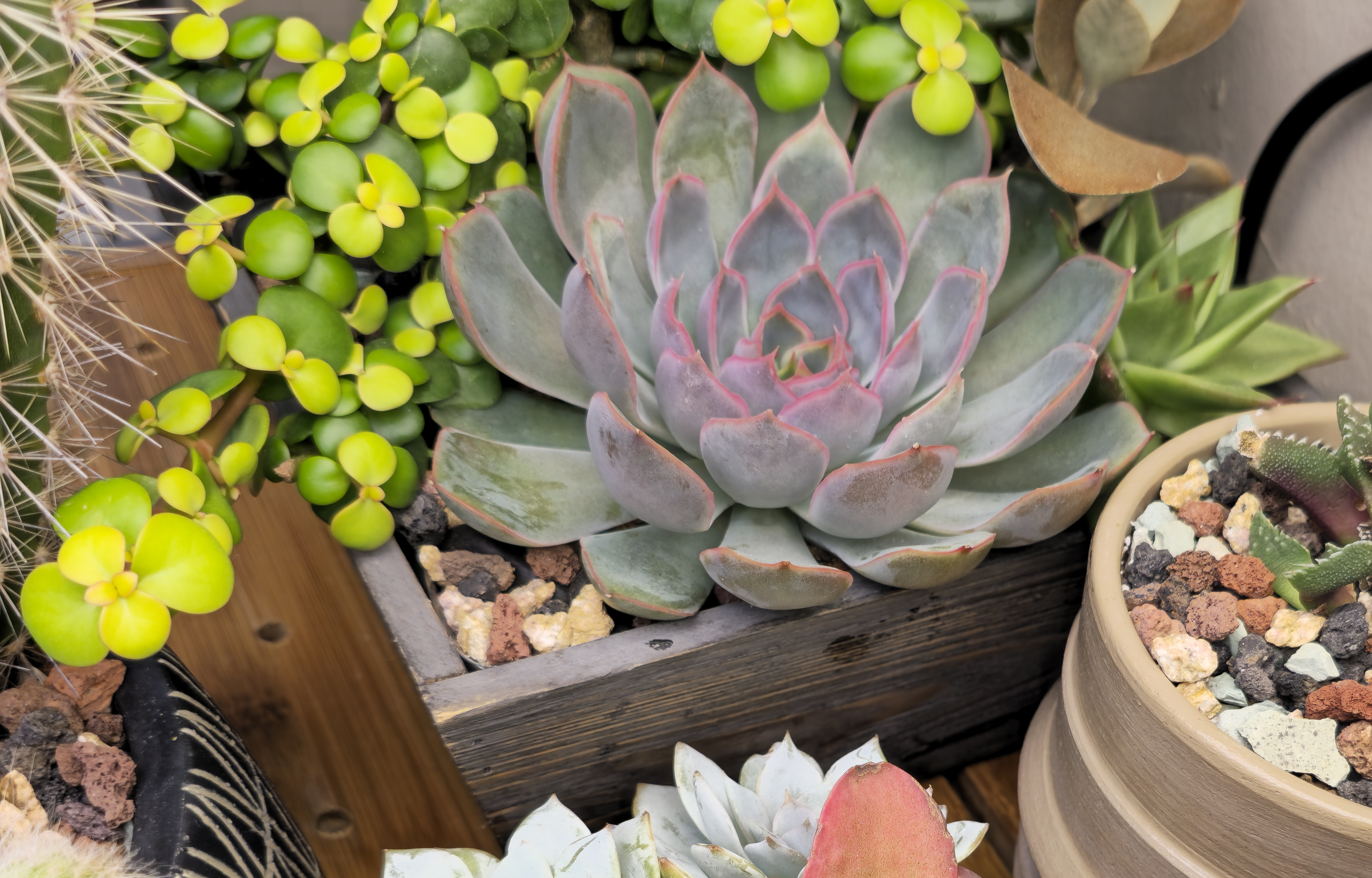
📷 Captured
#2 · Shared planter · September 16
- The echeveria rosette and round-leaved elephant bush are visible; rear components are partly hidden.
- Bronze-brown surface areas are visible on the lower/front echeveria leaves, clearest near the pointed tip of the outer leaf just right of centre.
- AI follow-up review: the image does not establish an active health problem. The extra inspection request is withdrawn; retain the photo as a comparison baseline.
Photo notes
Surface colour differences are visible, but their cause and progression cannot be established from this still image. Rear components remain partly hidden. Root-zone moisture, tissue firmness and root health were not measured in this photo review.
Check only 3
The plant's condition needs attention before a watering decision.
 G3P28Royal Flush split rockCheck only−0.58g/day
Check the emerging inner leaves gently for firmness and compare whether the older outer leaves are shrinking. Hold watering and feeding while this leaf-cycle uncertainty remains. The September 16 photos show the emerging pair and outer leaves retaining volume, but cannot establish firmness. Do not weigh merely to chase the old dry reference.
- 🕒 Last reading
- 334 g · Sep 15, 4:28 PM ET
- 💧 Last watered
- Not included in this report
- ⚖️ Weight change
- 334.5 → 334 g; −0.5 g over 0.86 days (−0.58 g/day)
- 🎯 Dry reference
- 336 g · −2 g from reference
- 📊 Plateau
- Not yet supported
The last weight, 334 g on September 15, is 2 g below the completed reference. The latest interval is −0.5 g over 0.86 days (−0.58 g/day), but the four-point tail still loses 3.78 g/day versus 11.26 earlier; plateau is not supported. The reading predates the drainage-opening change. Leaf-cycle evidence controls the care decision. Last-three mean: 336.83 g; signed change over their actual span: -3.04 g/day.
📷 Photo observations
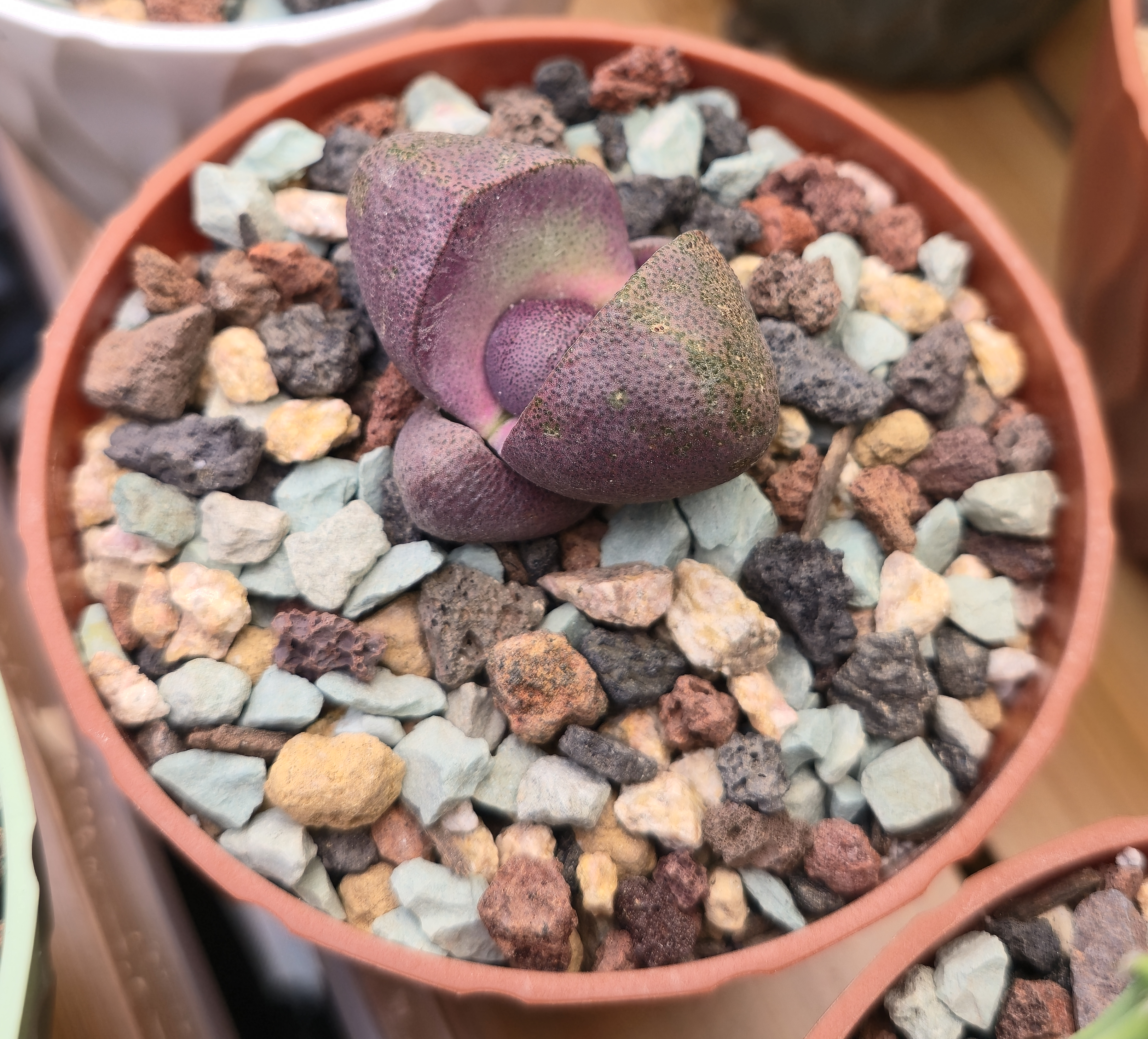
📷 Captured
G3 · Leaf overview · September 16
- Purple speckled outer leaves open around smaller rounded growth visible in the central split.
- The larger leaves retain volume and show small tan marks; a lower older leaf is also visible.
- Companion view: use the inner-leaf detail alongside this overview when following leaf replacement.
Photo notes
AI photo-only review. Appearance is not a firmness measurement. The complete pair count, mark causes and rate of leaf absorption remain unknown. Root-zone moisture, tissue firmness and root health were not measured.
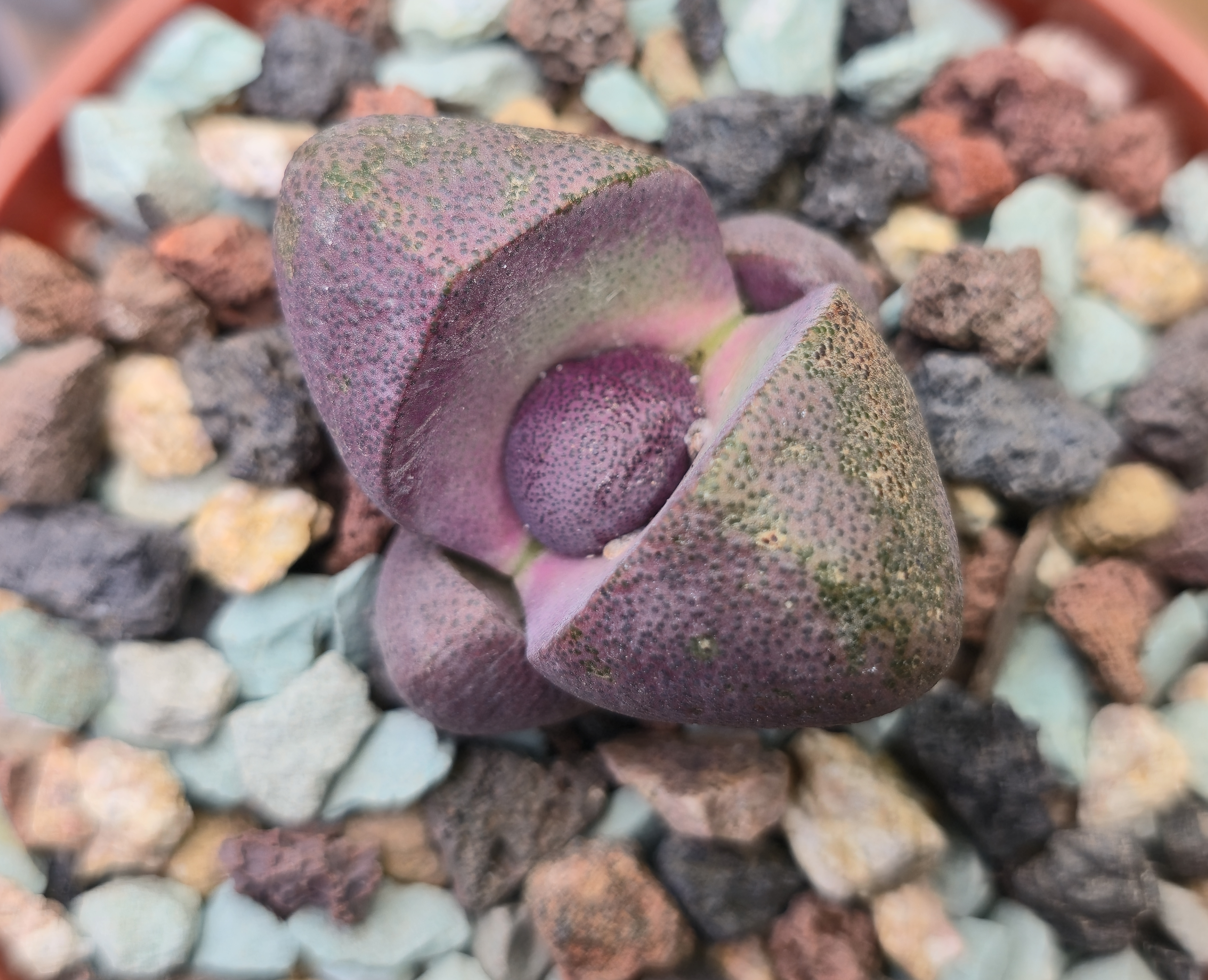
📷 Captured
G3 · Inner-leaf detail · September 16
- The detail view shows smaller rounded purple inner growth between the larger speckled leaves, supporting the reported emerging pair.
- Outer leaves still retain volume, a lower older leaf is visible, and some outer surfaces have tan marks.
- Next check: assess inner-leaf firmness physically and compare whether old leaves are shrinking; hold watering under the current report.
Photo notes
AI photo-only review. Appearance is not a firmness measurement. The complete pair count, mark causes and rate of leaf absorption remain unknown. Root-zone moisture, tissue firmness and root health were not measured.
 H3P26Eve's needle cactusCheck only—g/day
Check the fine strands around the leaves and areoles, including leaf undersides and axils. The dated photograph resolves no insect or mite; ordinary silk or debris remains possible. No treatment or watering is recommended. A weight is not needed just because you inspect it; keep the intermediate weigh-in on September 19.
- 🕒 Last reading
- 446.5 g · Sep 16, 3:31 AM ET
- 💧 Last watered
- Not included in this report
- ⚖️ Weight change
- Unavailable
- 🎯 Dry reference
- 327.5 g · +119 g from reference
- 📊 Plateau
- Unavailable
The September 16 446.5 g post-water reading is still the only current-cycle point, so last-two change and plateau assessment are unavailable. It predates the drainage-opening change. No later Check resolves the strand observation; H2’s normal-condition clarification applies to a different pot.
📷 Photo observations
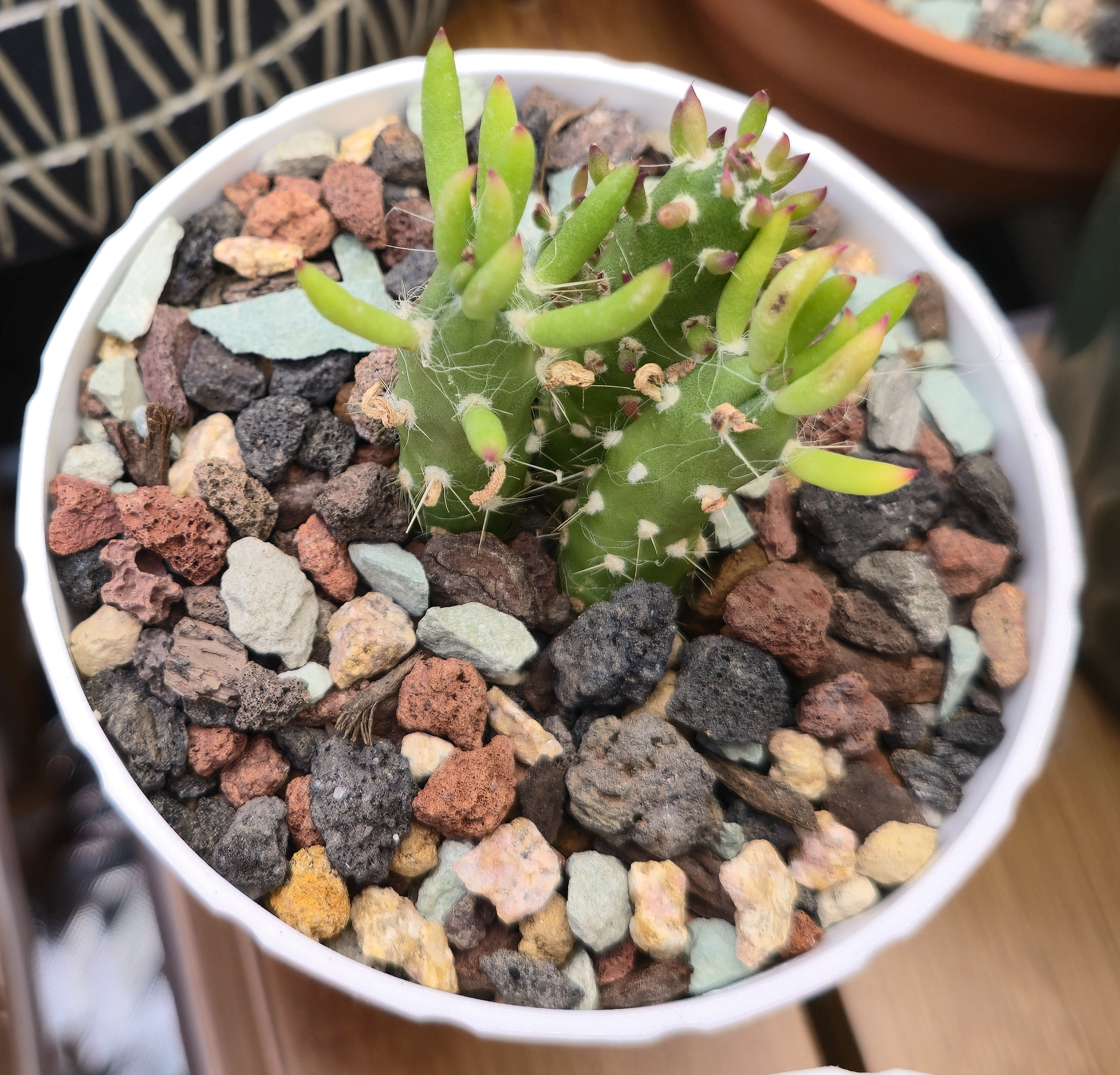
📷 Captured
H3 · Plant view · September 16
- Upright green branches carry narrow lime-green leaves with pink-purple tips and some curled tan older remnants.
- Fine strands span leaves or areoles; a small brown mark is visible on an upper-right leaf.
- Next check: inspect strands, leaf undersides and axils with magnification before assigning a pest cause.
Photo notes
AI photo-only review. No insect or mite is resolved; ordinary silk or debris remains possible. Root-zone moisture, tissue firmness and root health were not measured.
 #3P21Money tree (Pachira cf. glabra)Check only−32.77g/day
Check the upper roughly 2 inches of actual mix beneath the dressing and compare the leaflet angle and pale marks with the September 16 photo. No repeat weighing or watering is requested from today’s evidence. The money tree uses upper-mix readiness, not cactus-level dryness; leaf angle alone does not establish thirst.
- 🕒 Last reading
- 1,710 g · Sep 18, 2:20 AM ET
- 💧 Last watered
- Not included in this report
- ⚖️ Weight change
- 1,746 → 1,710 g; −36 g over 1.10 days (−32.77 g/day)
- 🎯 Dry reference
- 1,637 g · +73 g from reference
- 📊 Plateau
- Unavailable
The new 1,746 → 1,710 g pair is genuinely time-spaced: −36 g over 1.10 days (−32.77 g/day). Only two separated tail readings exist, so plateau assessment is unavailable. Earlier weights already contain the +108 g dry-stone correction. The recovered wet reference was measured about 3.19 days after Water, not immediately after drainage. Last-three mean: 1734.00 g; signed change over their actual span: -32.53 g/day.
📷 Photo observations
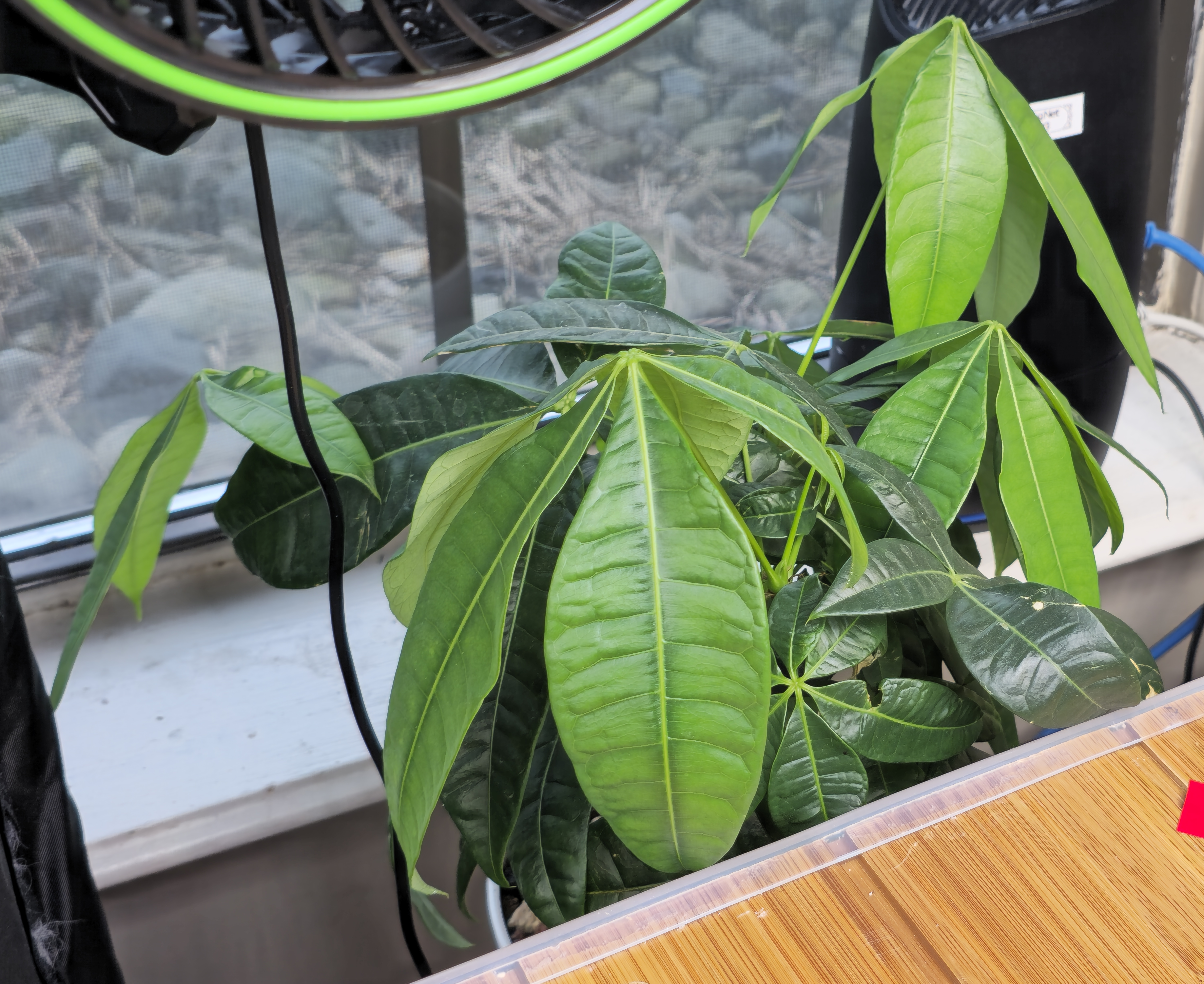
📷 Captured
#3 · Foliage · September 16
- Light-green upper leaflets hang downward above darker lower leaves on the windowsill.
- Small pale marks are visible on a darker right-side leaflet.
- Follow-up from the September 16 photo: compare the pale marks and leaflet angle at a similar time of day. The previously missing post-water weight has now been recorded; it is separate from the visual assessment.
Photo notes
AI photo-only review. The pot, substrate and most of the trunk are hidden. Leaf angle does not establish thirst, excess moisture or light injury. Root-zone moisture, tissue firmness and root health were not measured.
Nothing today 24
These reviewed pots have no recommended action today.
 A1P01Variegated moon cactusNothing today−13.64g/day
The 2:28 a.m. September 18 reading satisfies the requested follow-up. No repeat weighing or watering today. The latest 397 g remains 35.5 g above the dry reference. Follow up September 19 to check whether the continuing post-modification decline slows.
- 🕒 Last reading
- 397 g · Sep 18, 2:28 AM ET
- 💧 Last watered
- Not included in this report
- ⚖️ Weight change
- 412 → 397 g; −15 g over 1.10 days (−13.64 g/day)
- 🎯 Dry reference
- 361.5 g · +35.5 g from reference
- 📊 Plateau
- Unavailable
The newest 412 → 397 g interval spans 1.10 days and both readings follow the drainage-opening change. It lost 13.64 g/day; three suitably separated tail readings are still insufficient for the four-point plateau assessment. Last-three mean: 411.50 g; signed change over their actual span: -14.59 g/day.
📷 Photo observations
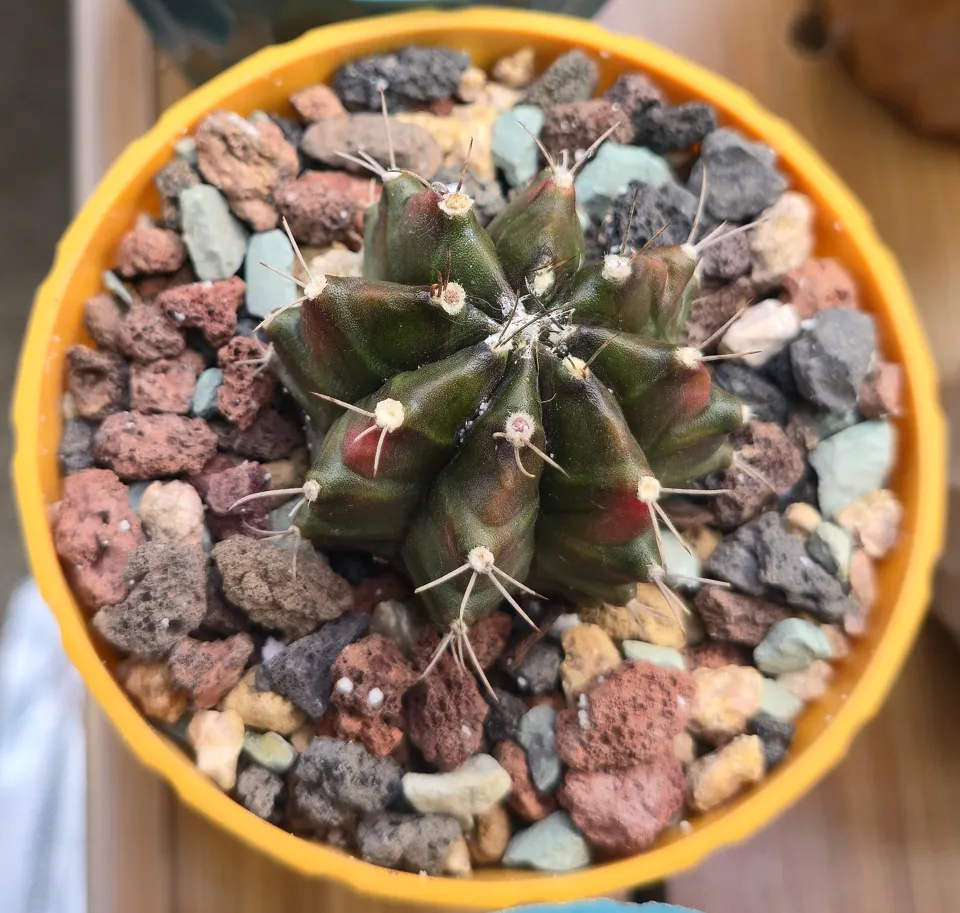
📷 Captured
A1 · Plant view · September 16
- Dark-green ribbed globe with bronze and red sectors, pale areoles and sparse long spines.
- Color alone does not establish a new stress problem in this variegated plant.
- Comparison: retain the same face and lighting to judge future color or shape changes.
Photo notes
AI photo-only review. The base is hidden; one view cannot establish changes in color or size. Root-zone moisture, tissue firmness and root health were not measured.
 A2P02Feather cactusNothing today−28.37g/day
Already weighed at 2:28 a.m.; no repeat today. The latest 375.5 g is only 28 g above its reference, so take the next time-spaced sample September 19 rather than relying only on the historical forecast. Hold watering.
- 🕒 Last reading
- 375.5 g · Sep 18, 2:28 AM ET
- 💧 Last watered
- Not included in this report
- ⚖️ Weight change
- 444 → 375.5 g; −68.5 g over 2.41 days (−28.37 g/day)
- 🎯 Dry reference
- 347.5 g · +28 g from reference
- 📊 Plateau
- Unavailable
The latest interval crosses the September 16 drainage-opening modification. Pot or medium loss was not measured; the calculated mass change is not necessarily all water loss. Only two suitably separated current-cycle points exist, so the plateau assessment is unavailable.
📷 Photo observations
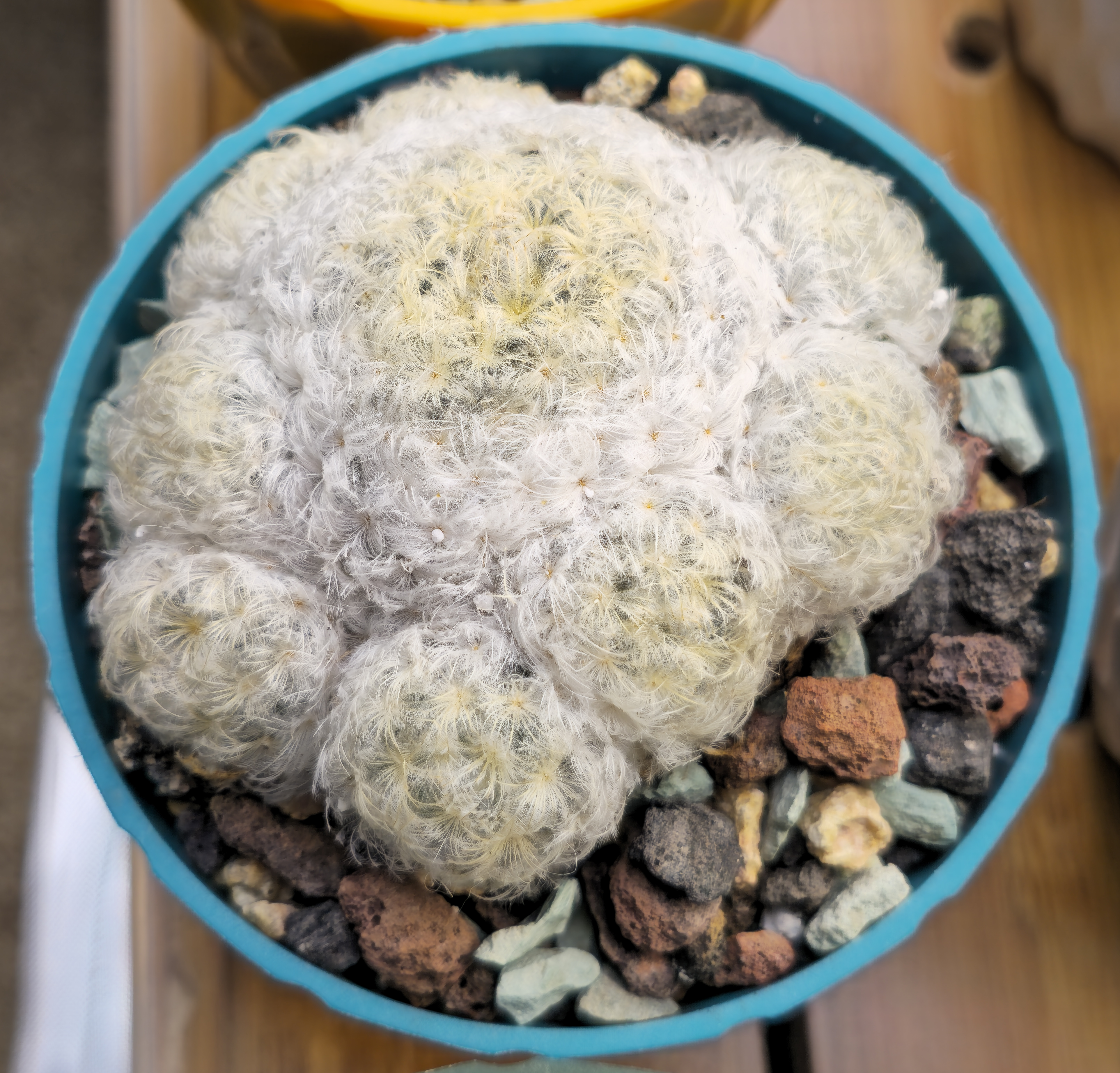
📷 Captured
A2 · Plant view · September 16
- Rounded clustered heads carry dense white featherlike spines and cream crown areas.
- The spine coat conceals most of the skin and the bases.
- Comparison: watch for a new localized patch or change in head shape, rather than judging wool color alone.
Photo notes
AI photo-only review. Spines hide the skin and bases; hidden pests or damage cannot be excluded. Root-zone moisture, tissue firmness and root health were not measured.
 A3P03Serpent cactusNothing today—g/day
No watering or weighing is requested today. Keep the intermediate sample anchored to September 19, within the already planned September 18–19 window. This will establish a reading after the drainage-opening modification; do not wait unobserved until the broad historical forecast.
- 🕒 Last reading
- 414 g · Sep 15, 4:36 PM ET
- 💧 Last watered
- Not included in this report
- ⚖️ Weight change
- Unavailable
- 🎯 Dry reference
- 321.5 g · +92.5 g from reference
- 📊 Plateau
- Unavailable
Only one eligible current-cycle reading is available, so last-two change and sustained-plateau assessment are unavailable. This weight predates the September 16 drainage-opening modification; any unmeasured pot or medium loss must not be called water loss.
📷 Photo observations
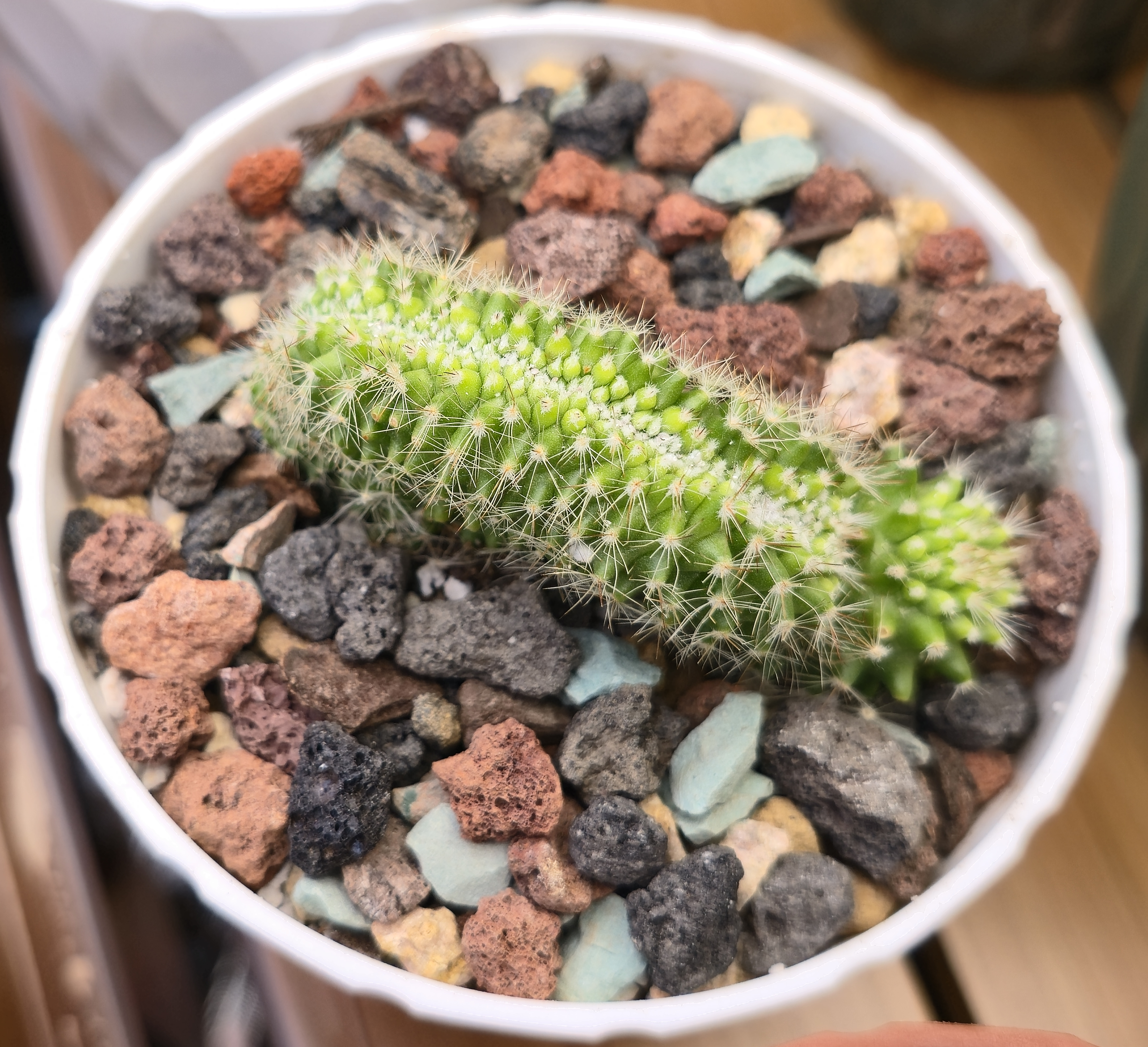
📷 Captured
A3 · Plant view · September 16
- The sideways green body has pale areoles, thin spines and a brighter ridge and tip.
- This unusual outline is also present in the archived August photograph.
- Comparison: use the same angle to follow the growing ridge; differing views do not measure growth.
Photo notes
AI photo-only review. Hidden surfaces are unassessed; differing camera angles prevent a growth measurement. Root-zone moisture, tissue firmness and root health were not measured.
 B1P04Grass-blade cactusNothing today—g/day
No watering or weighing is requested today. Keep the intermediate sample anchored to September 19, within the already planned September 18–19 window. This will establish a reading after the drainage-opening modification; do not wait unobserved until the broad historical forecast.
- 🕒 Last reading
- 404 g · Sep 15, 4:30 PM ET
- 💧 Last watered
- Not included in this report
- ⚖️ Weight change
- Unavailable
- 🎯 Dry reference
- 317.5 g · +86.5 g from reference
- 📊 Plateau
- Unavailable
Only one eligible current-cycle reading is available, so last-two change and sustained-plateau assessment are unavailable. This weight predates the September 16 drainage-opening modification; any unmeasured pot or medium loss must not be called water loss.
📷 Photo observations
📷 Captured
B1 · Plant view · September 16
- A green globe has closely folded ribs, regular white areole wool and red-to-tan spines.
- The crown retains its visible structure; regular wool is not itself a pest finding.
- Comparison: check any new irregular material separately from the normal areole tufts.
Photo notes
AI photo-only review. Only upper surfaces are shown; the base and lower side are hidden. Root-zone moisture, tissue firmness and root health were not measured.
 B2P05Old Man of the AndesNothing today—g/day
No watering or weighing is requested today. Keep the intermediate sample anchored to September 19, within the already planned September 18–19 window. This will establish a reading after the drainage-opening modification; do not wait unobserved until the broad historical forecast.
- 🕒 Last reading
- 490 g · Sep 15, 4:34 PM ET
- 💧 Last watered
- Not included in this report
- ⚖️ Weight change
- Unavailable
- 🎯 Dry reference
- 380.5 g · +109.5 g from reference
- 📊 Plateau
- Unavailable
Only one eligible current-cycle reading is available, so last-two change and sustained-plateau assessment are unavailable. This weight predates the September 16 drainage-opening modification; any unmeasured pot or medium loss must not be called water loss.
📷 Photo observations
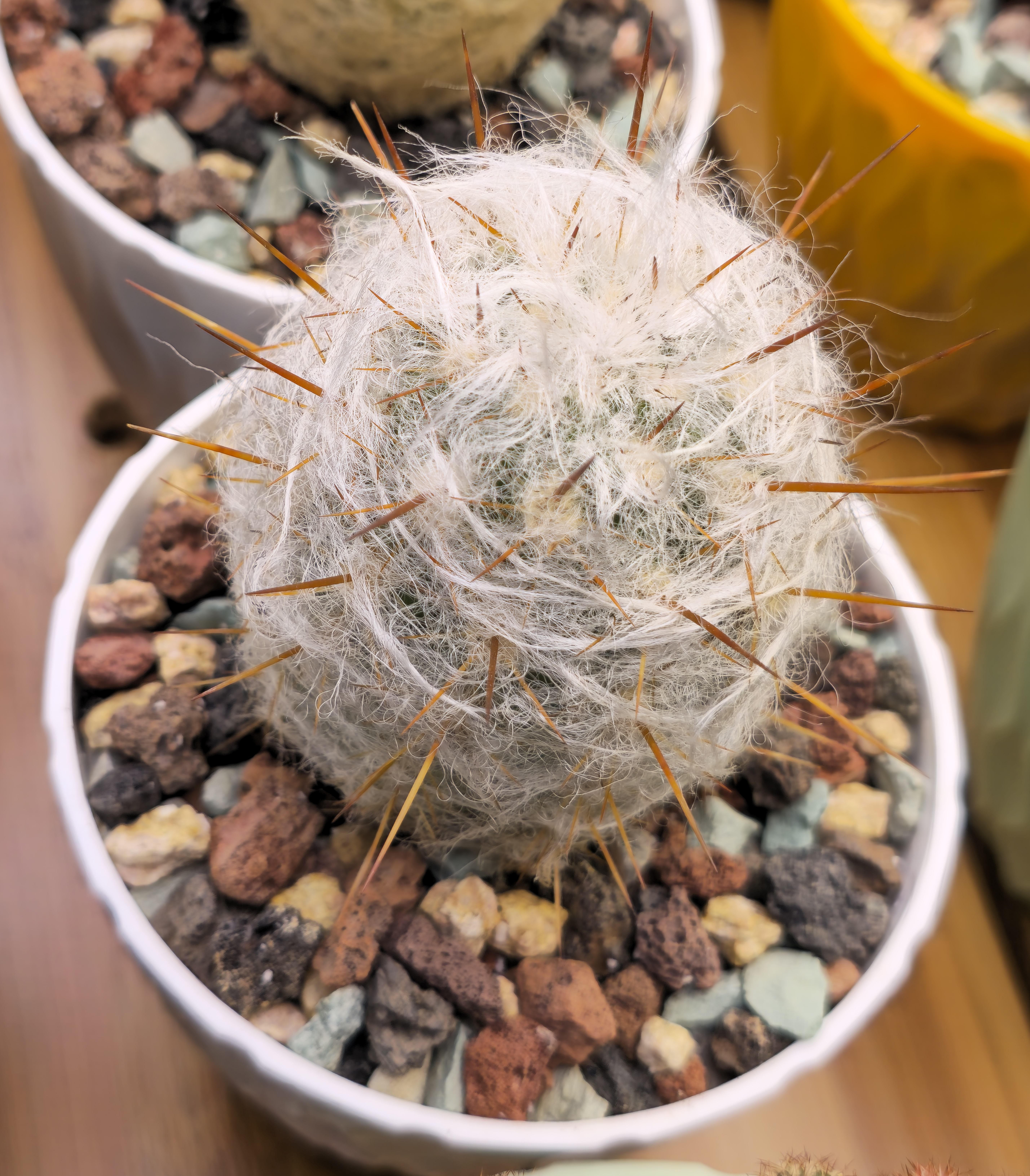
📷 Captured
B2 · Plant view · September 16
- An upright column has long white hairs, orange-brown central spines and glimpses of green skin.
- Much of the stem is covered by the hair coat.
- Comparison: retain this view for changes in exposed tissue, crown shape or localized patches.
Photo notes
AI photo-only review. Dense hair hides most of the stem and base. Root-zone moisture, tissue firmness and root health were not measured.
 B3P06Indigo WaveNothing today−23.16g/day
The 2:29 a.m. reading completes the intermediate sample. No repeat weight or watering today. At 393.5 g it remains 50 g above reference; a follow-up September 19–20 can begin a rate based entirely on readings after the modification.
- 🕒 Last reading
- 393.5 g · Sep 18, 2:29 AM ET
- 💧 Last watered
- Not included in this report
- ⚖️ Weight change
- 449.5 → 393.5 g; −56 g over 2.42 days (−23.16 g/day)
- 🎯 Dry reference
- 343.5 g · +50 g from reference
- 📊 Plateau
- Unavailable
The latest interval crosses the September 16 drainage-opening modification. Pot or medium loss was not measured; the calculated mass change is not necessarily all water loss. Only two suitably separated current-cycle points exist, so the plateau assessment is unavailable.
📷 Photo observations
📷 Captured
B3 · Plant view · September 16
- Blue-green fan-shaped ridges and upright shoots have greener tips and surface patches.
- The large left fan projects over the pot rim; the irregular form is documented for this plant.
- Comparison: preserve the full silhouette when following future shape changes.
Photo notes
AI photo-only review. The photograph cannot establish the cause of greener patches or measure growth. Root-zone moisture, tissue firmness and root health were not measured.
 C1P07Giant chin cactusNothing today—g/day
No special photo inspection or watering is requested. The owner considers the tan marks likely physical damage from shipping or store handling. Keep the intermediate weigh-in on September 19 and retain the dated photograph as the comparison baseline.
- 🕒 Last reading
- 463.5 g · Sep 15, 4:22 PM ET
- 💧 Last watered
- Not included in this report
- ⚖️ Weight change
- Unavailable
- 🎯 Dry reference
- 361 g · +102.5 g from reference
- 📊 Plateau
- Unavailable
Only one eligible current-cycle reading is available, so last-two change and sustained-plateau assessment are unavailable. This weight predates the September 16 drainage-opening modification; any unmeasured pot or medium loss must not be called water loss.
📷 Photo observations
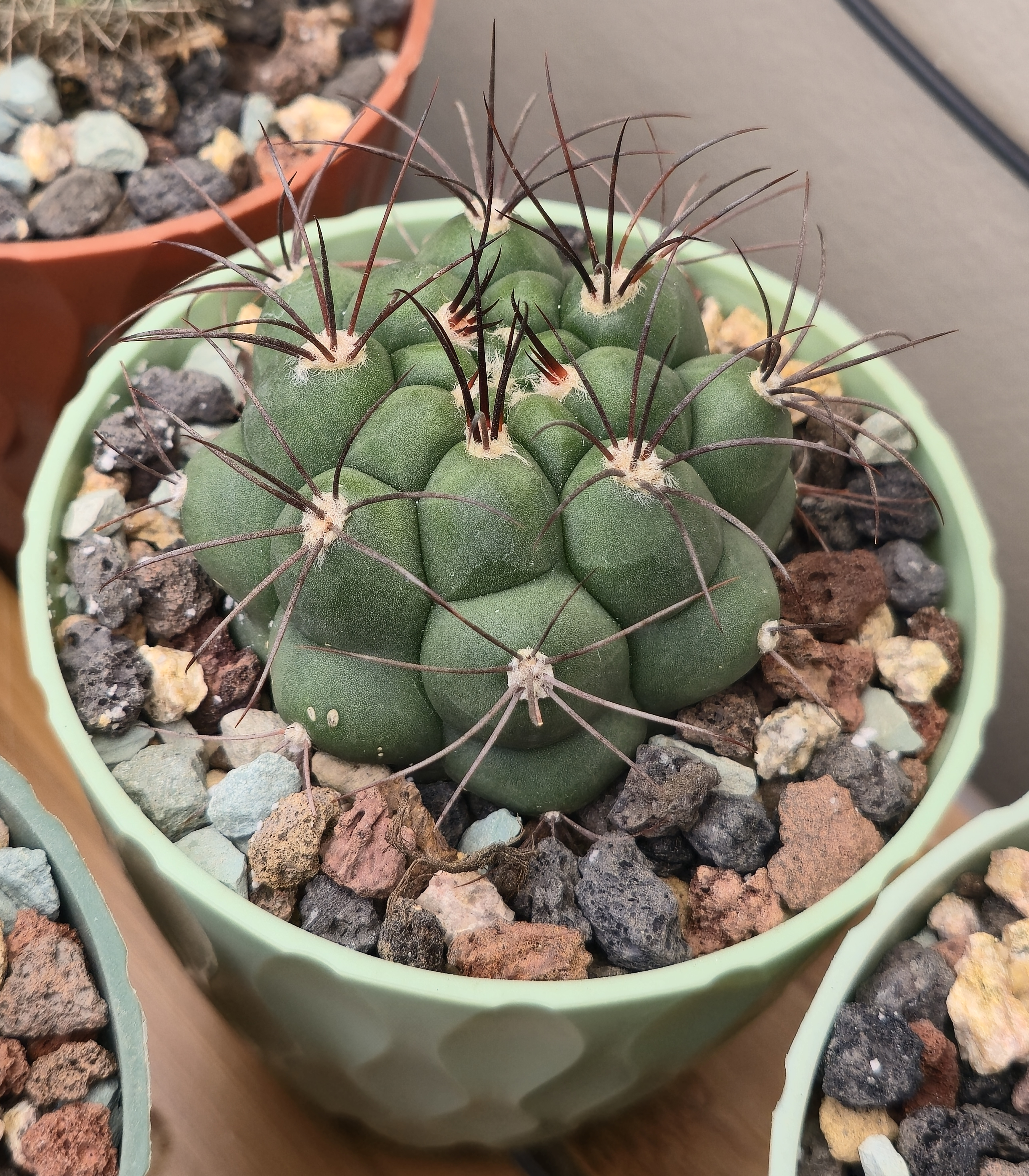
📷 Captured
C1 · Plant view · September 16
- Dark-green rounded ribs surround the crown, with long curved dark spines.
- Small cream-to-tan oval marks are visible low on the front-left rib.
- Owner clarification, September 16: the tan spots are probably physical damage from shipping or the store. This is the owner's likely explanation, not a confirmed diagnosis.
- Retain this dated photograph as a baseline; no separate inspection is requested today.
Photo notes
Photo interpretation supplemented by the owner's likely explanation. Cause and progression have not been independently established. Root-zone moisture, tissue firmness and root health were not measured in this photo review.
 C2P08Rainbow hedgehog cactusNothing today—g/day
No watering or weighing is requested today. Keep the intermediate sample anchored to September 19, within the already planned September 18–19 window. This will establish a reading after the drainage-opening modification; do not wait unobserved until the broad historical forecast.
- 🕒 Last reading
- 473.5 g · Sep 15, 4:32 PM ET
- 💧 Last watered
- Not included in this report
- ⚖️ Weight change
- Unavailable
- 🎯 Dry reference
- 380.5 g · +93 g from reference
- 📊 Plateau
- Unavailable
Only one eligible current-cycle reading is available, so last-two change and sustained-plateau assessment are unavailable. This weight predates the September 16 drainage-opening modification; any unmeasured pot or medium loss must not be called water loss.
📷 Photo observations
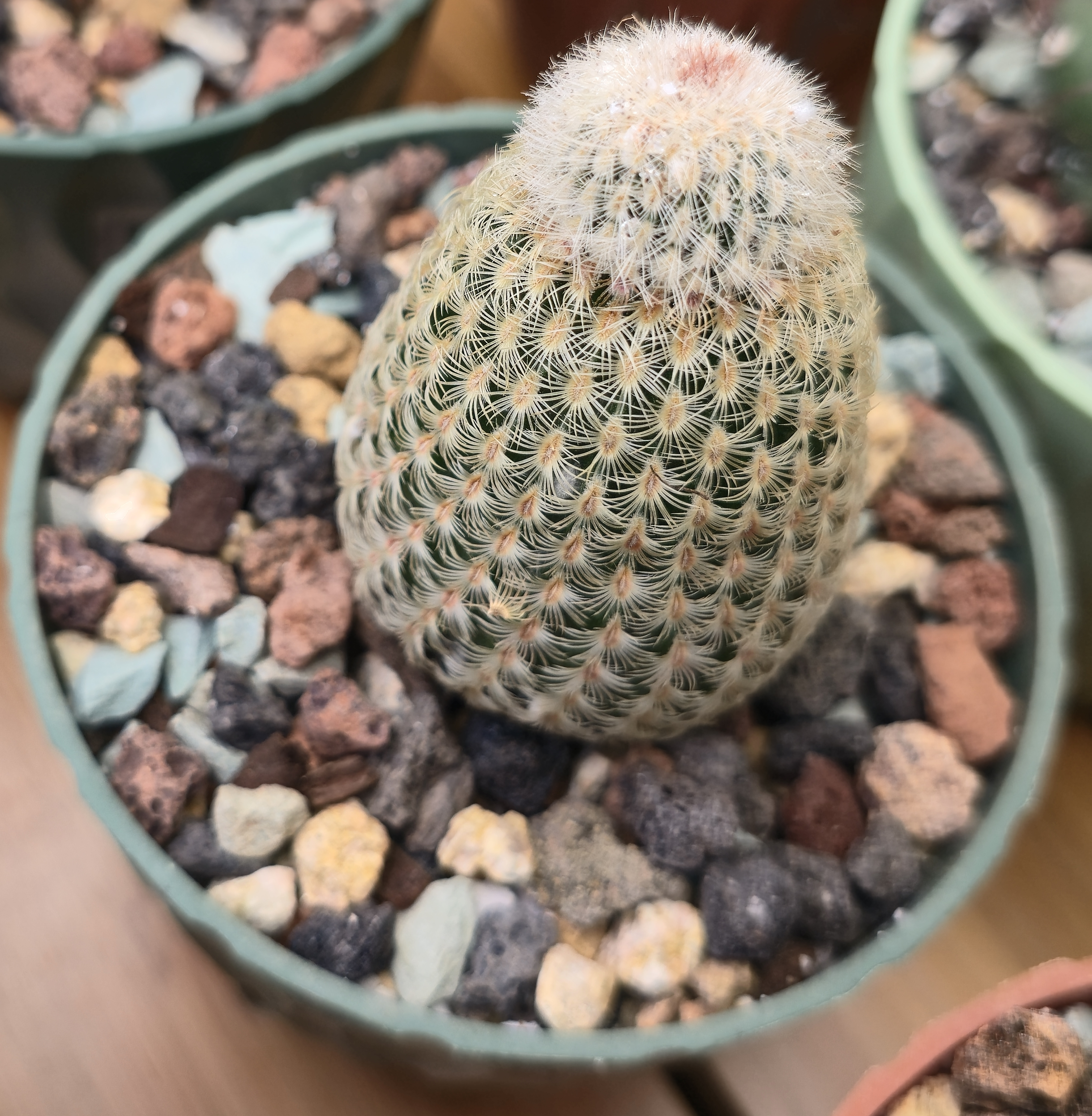
📷 Captured
C2 · Plant view · September 16
- An upright oval body has dense pale radial spines and pink-red coloring near the crown.
- Green tissue is visible between some spine rows.
- Comparison: use a similar angle to follow crown and body proportions.
Photo notes
AI photo-only review. Spines cover much of the skin, and the base is hidden. Root-zone moisture, tissue firmness and root health were not measured.
 C3P09Monk's hood cactusNothing today—g/day
No watering or weighing is requested today. Keep the intermediate sample anchored to September 19, within the already planned September 18–19 window. This will establish a reading after the drainage-opening modification; do not wait unobserved until the broad historical forecast.
- 🕒 Last reading
- 429.5 g · Sep 15, 4:26 PM ET
- 💧 Last watered
- Not included in this report
- ⚖️ Weight change
- Unavailable
- 🎯 Dry reference
- 340.5 g · +89 g from reference
- 📊 Plateau
- Unavailable
Only one eligible current-cycle reading is available, so last-two change and sustained-plateau assessment are unavailable. This weight predates the September 16 drainage-opening modification; any unmeasured pot or medium loss must not be called water loss.
📷 Photo observations
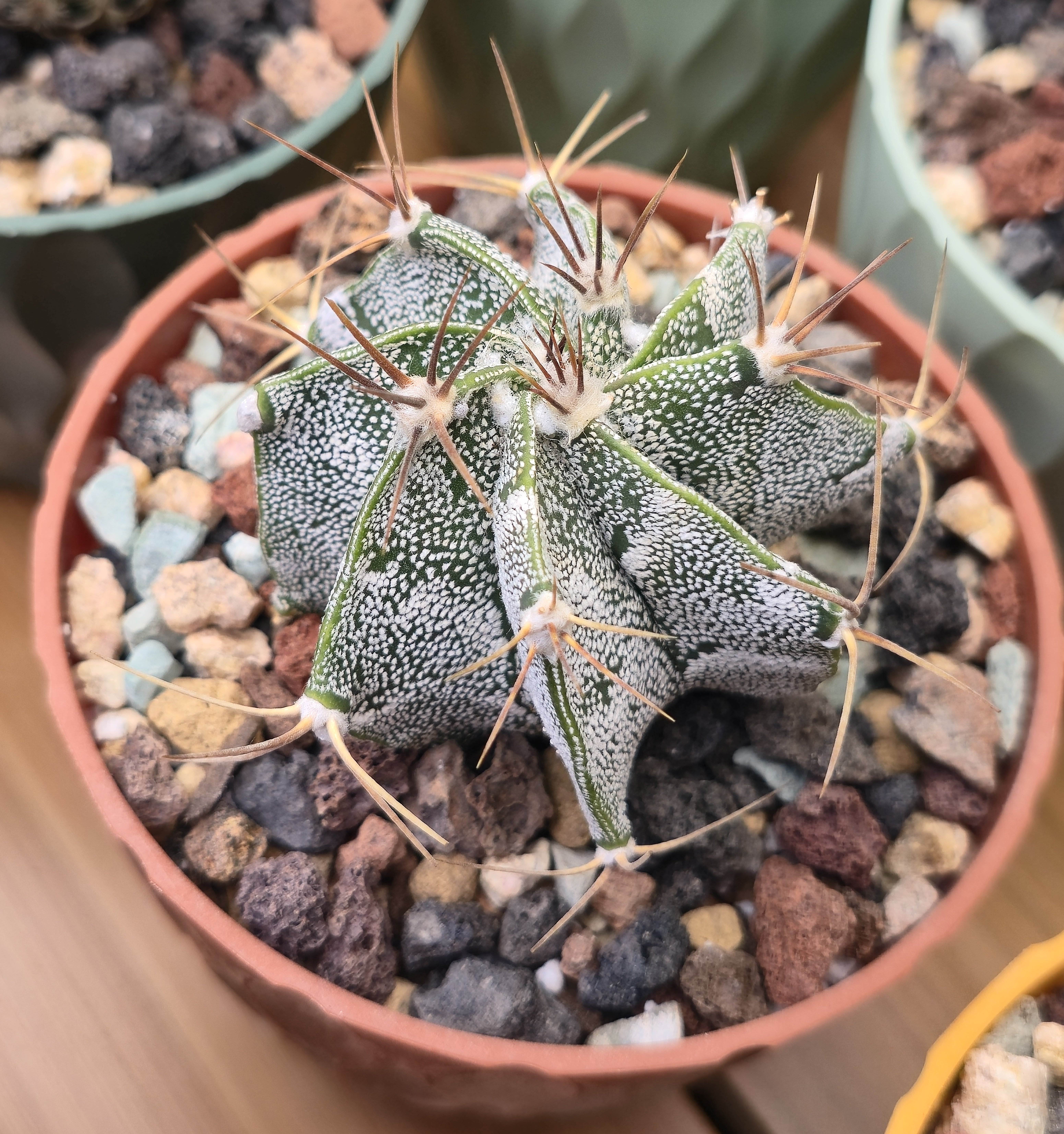
📷 Captured
C3 · Plant view · September 16
- The green star-ribbed body carries white flecks, pale woolly areoles and long tan-brown spines.
- White flecks and regular areole wool match the documented appearance.
- Comparison: retain this view of the crown and lower visible ribs.
Photo notes
AI photo-only review. Hidden surfaces and tissue beneath the dressing are unassessed. Root-zone moisture, tissue firmness and root health were not measured.
 D1P10Dragon's Egg (probable Euphorbia obesa-type hybrid)Nothing today—g/day
No watering or weighing is requested today. Keep the intermediate sample anchored to September 19, within the already planned September 18–19 window. This will establish a reading after the drainage-opening modification; do not wait unobserved until the broad historical forecast.
- 🕒 Last reading
- 448.5 g · Sep 15, 4:28 PM ET
- 💧 Last watered
- Not included in this report
- ⚖️ Weight change
- Unavailable
- 🎯 Dry reference
- 363 g · +85.5 g from reference
- 📊 Plateau
- Unavailable
Only one eligible current-cycle reading is available, so last-two change and sustained-plateau assessment are unavailable. This weight predates the September 16 drainage-opening modification; any unmeasured pot or medium loss must not be called water loss.
📷 Photo observations
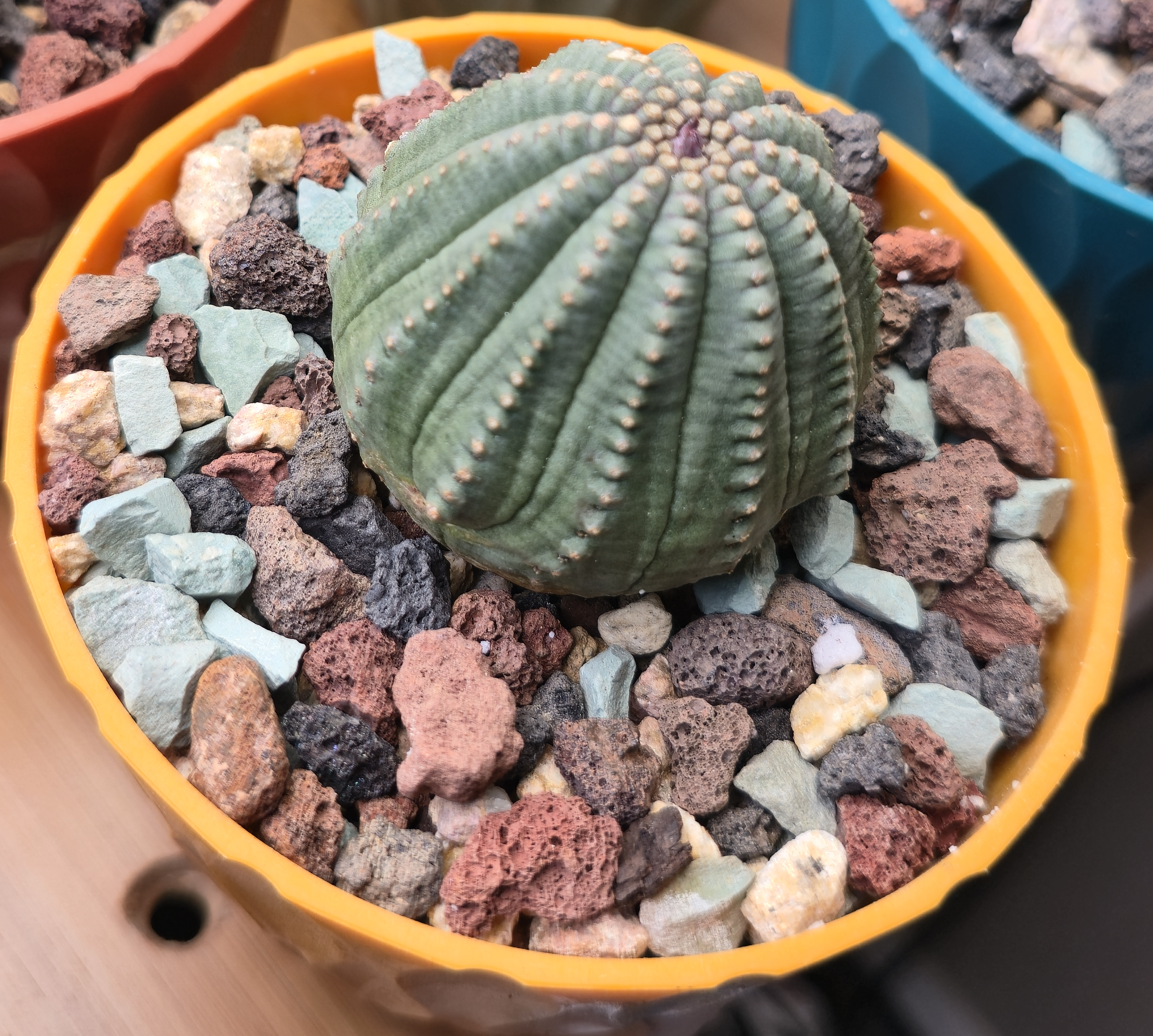
📷 Captured
D1 · Plant view · September 16
- The rounded gray-green body has regular ribs, tan rib structures and a small purplish crown area.
- The regular tan structures are not an identified pest finding.
- Comparison: use similar future views to follow crown and base appearance.
Photo notes
AI photo-only review. The base is partly hidden; this view cannot identify every surface structure. Root-zone moisture, tissue firmness and root health were not measured.
 D2P11Domino cactusNothing today—g/day
No watering or weighing is requested today. Keep the intermediate sample anchored to September 19, within the already planned September 18–19 window. This will establish a reading after the drainage-opening modification; do not wait unobserved until the broad historical forecast.
- 🕒 Last reading
- 473 g · Sep 15, 4:23 PM ET
- 💧 Last watered
- Not included in this report
- ⚖️ Weight change
- Unavailable
- 🎯 Dry reference
- 369 g · +104 g from reference
- 📊 Plateau
- Unavailable
Only one eligible current-cycle reading is available, so last-two change and sustained-plateau assessment are unavailable. This weight predates the September 16 drainage-opening modification; any unmeasured pot or medium loss must not be called water loss.
📷 Photo observations
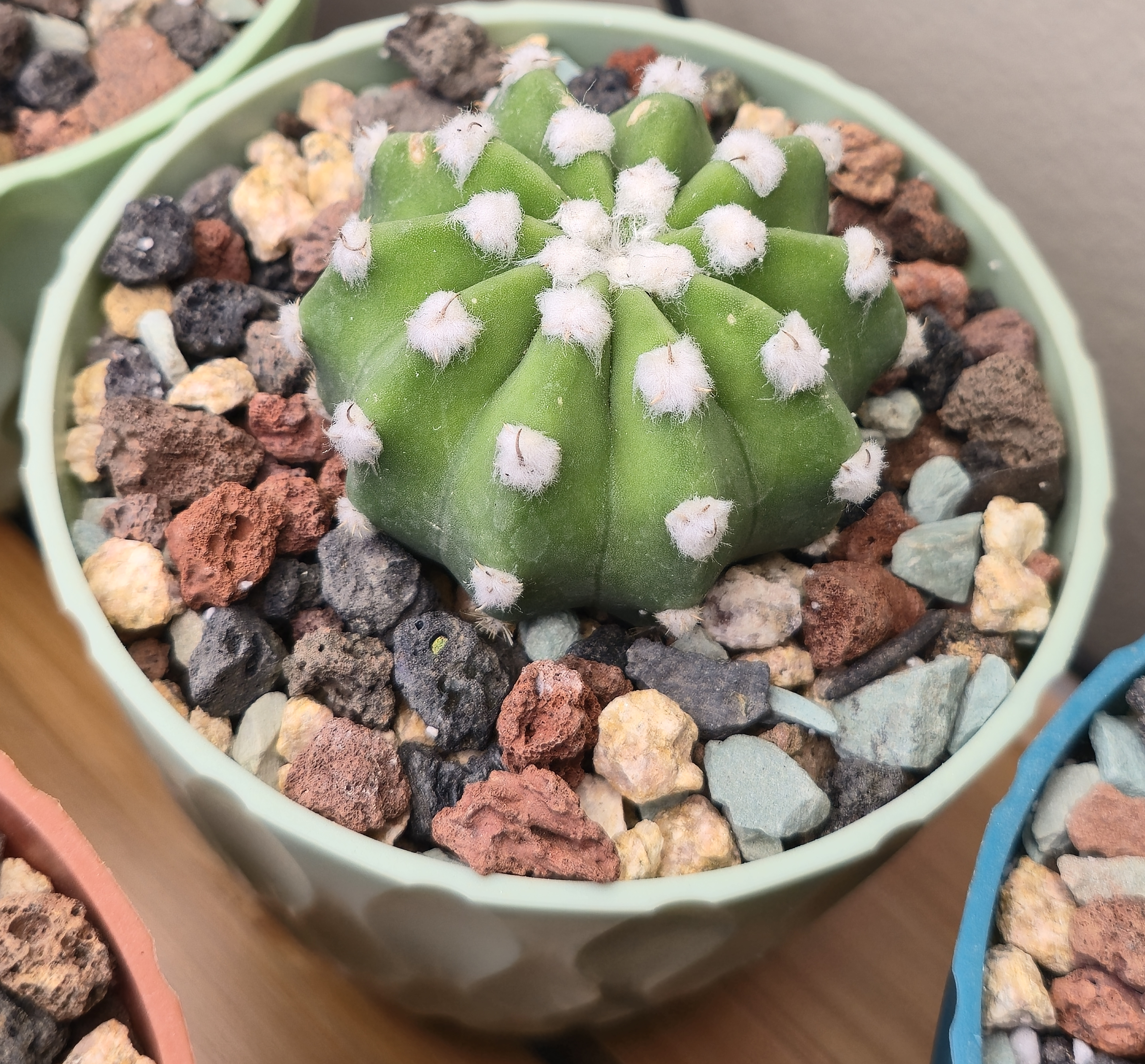
📷 Captured
D2 · Plant view · September 16
- A compact green ribbed body has regular white woolly areoles and an intact-looking crown.
- A few small tan or pale marks are visible on the upper ribs.
- Comparison: obtain a closer image if a discrete mark changes.
Photo notes
AI photo-only review. The base and lower side are partly hidden; mark causes are unknown. Root-zone moisture, tissue firmness and root health were not measured.
 D3P12Ming ThingNothing today−17.01g/day
The 2:27 a.m. reading supplies the intermediate sample. No repeat weight or watering today. It remains 79 g above reference; September 20 is a useful next sample, before the broad historical window and without restarting daily weighing automatically.
- 🕒 Last reading
- 396.5 g · Sep 18, 2:27 AM ET
- 💧 Last watered
- Not included in this report
- ⚖️ Weight change
- 437.5 → 396.5 g; −41 g over 2.41 days (−17.01 g/day)
- 🎯 Dry reference
- 317.5 g · +79 g from reference
- 📊 Plateau
- Unavailable
The latest interval crosses the September 16 drainage-opening modification. Pot or medium loss was not measured; the calculated mass change is not necessarily all water loss. Only two suitably separated current-cycle points exist, so the plateau assessment is unavailable.
📷 Photo observations
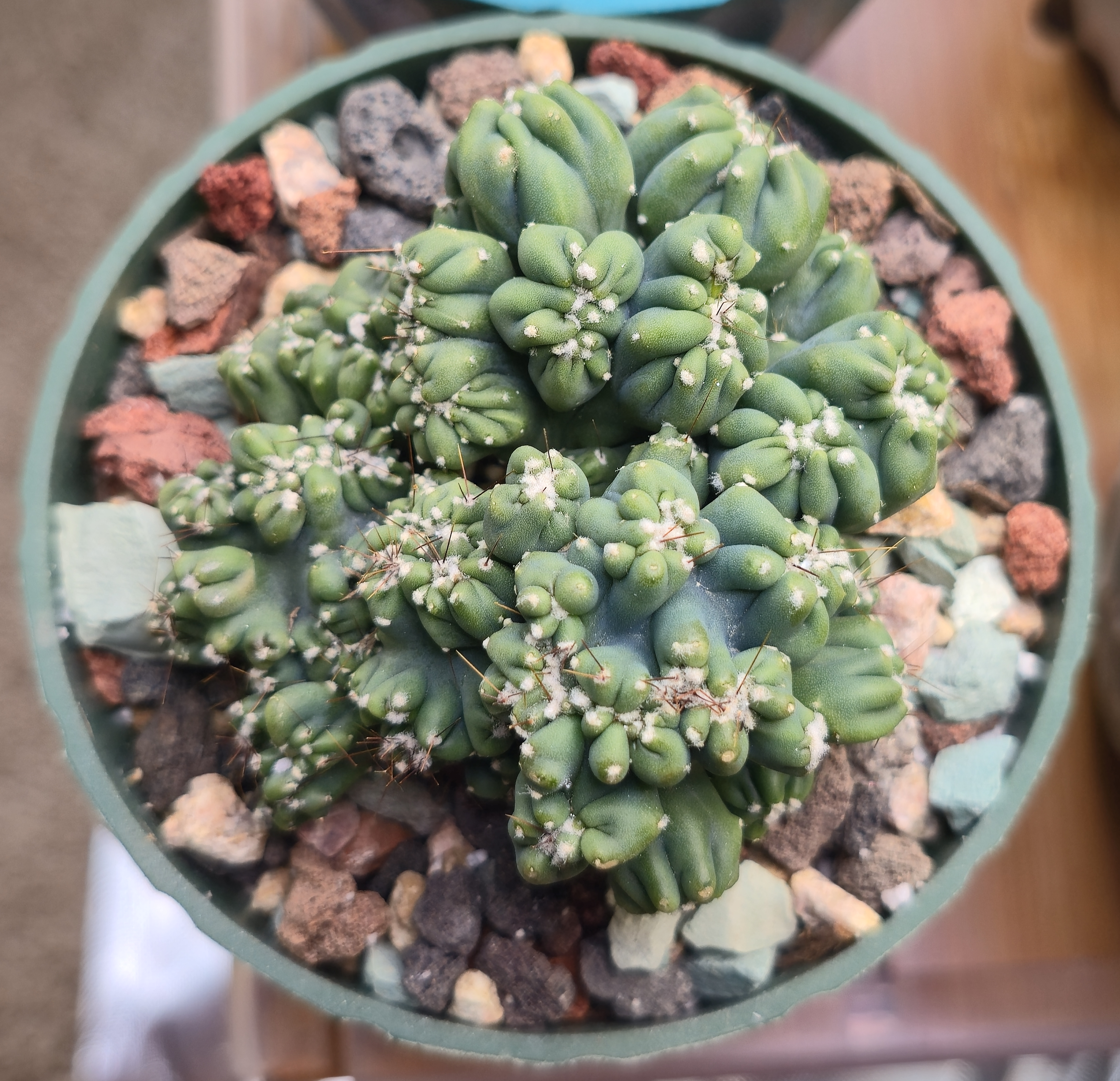
📷 Captured
D3 · Plant view · September 16
- Dense blue-green knobby stems have rounded tips and regularly placed pale areoles.
- The exposed cluster retains its shape in this upper view.
- Comparison: use this as a dated baseline for localized color or shape changes.
Photo notes
AI photo-only review. Inner folds and stem bases are partly hidden. Root-zone moisture, tissue firmness and root health were not measured.
 E1P13Dwarf old man cactus (likely Espostoa melanostele subsp. nana)Nothing today—g/day
No watering or weighing is requested today. Keep the intermediate sample anchored to September 19, within the already planned September 18–19 window. This will establish a reading after the drainage-opening modification; do not wait unobserved until the broad historical forecast.
- 🕒 Last reading
- 439.5 g · Sep 15, 4:32 PM ET
- 💧 Last watered
- Not included in this report
- ⚖️ Weight change
- Unavailable
- 🎯 Dry reference
- 366 g · +73.5 g from reference
- 📊 Plateau
- Unavailable
Only one eligible current-cycle reading is available, so last-two change and sustained-plateau assessment are unavailable. This weight predates the September 16 drainage-opening modification; any unmeasured pot or medium loss must not be called water loss.
📷 Photo observations
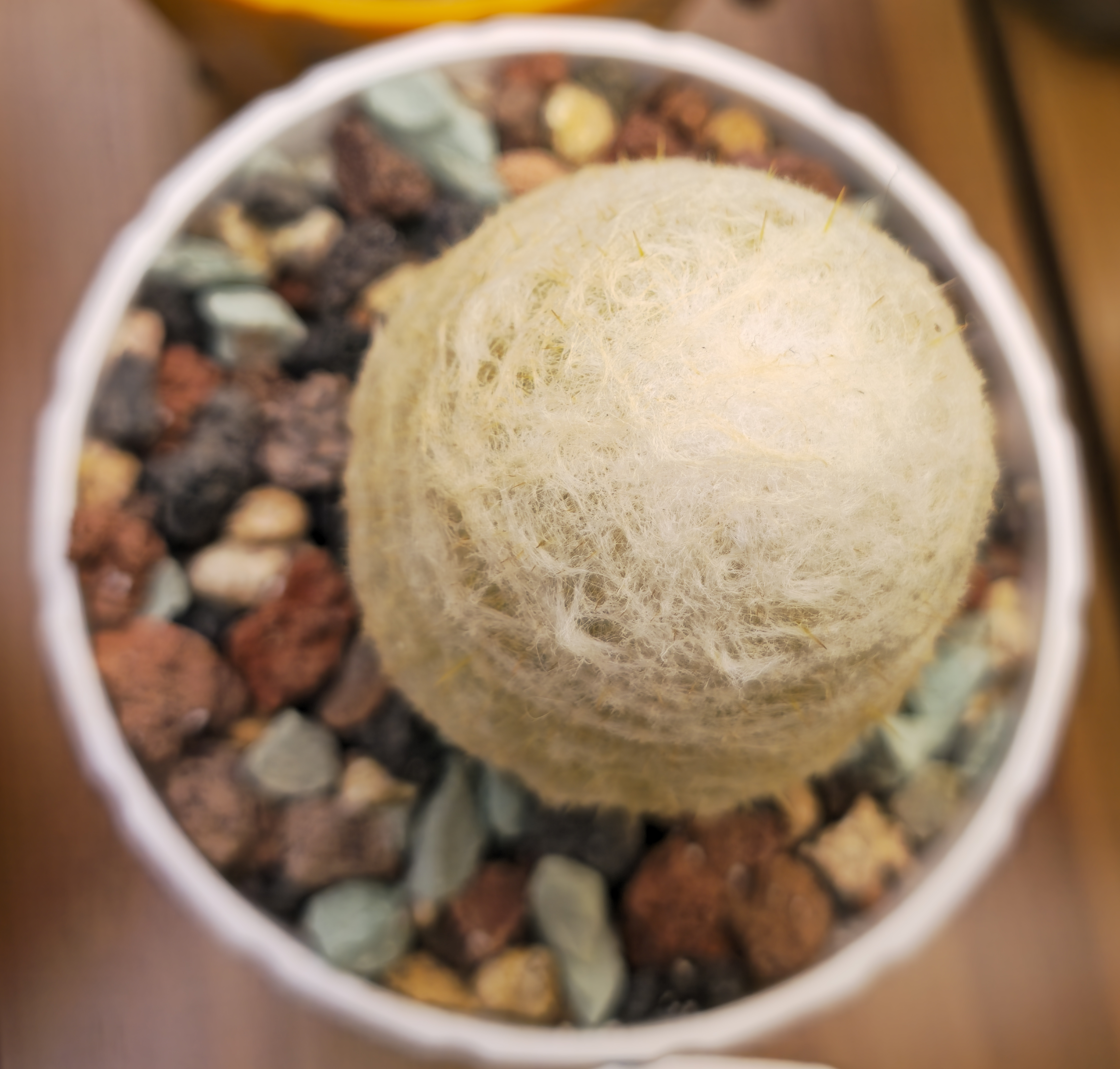
📷 Captured
E1 · Plant view · September 16
- A compact upright column has a continuous cream-white wool coat and a rounded crown.
- The wool is a documented feature of this plant.
- Comparison: obtain a sharper side or base view if a localized concern appears.
Photo notes
AI photo-only review. Soft focus and dense wool obscure most of the skin and base. Root-zone moisture, tissue firmness and root health were not measured.
 E2P14Chamaelobivia / peanut cactus hybridNothing today—g/day
No watering or weighing is requested today. Keep the intermediate sample anchored to September 19, within the already planned September 18–19 window. This will establish a reading after the drainage-opening modification; do not wait unobserved until the broad historical forecast.
- 🕒 Last reading
- 434 g · Sep 15, 4:22 PM ET
- 💧 Last watered
- Not included in this report
- ⚖️ Weight change
- Unavailable
- 🎯 Dry reference
- 325 g · +109 g from reference
- 📊 Plateau
- Unavailable
Only one eligible current-cycle reading is available, so last-two change and sustained-plateau assessment are unavailable. This weight predates the September 16 drainage-opening modification; any unmeasured pot or medium loss must not be called water loss.
📷 Photo observations
📷 Captured
E2 · Plant view · September 16
- A crowded green cluster combines short rounded stems with several longer leaning stems.
- Regular pale-to-tan spines cover the visible stems.
- Comparison: follow the longer tips in later photographs before inferring a change in growth shape.
Photo notes
AI photo-only review. The crowded interior and stem bases are hidden; no matched growth comparison was made. Root-zone moisture, tissue firmness and root health were not measured.
 E3P15Woolly nipple cactusNothing today—g/day
No watering or weighing is requested today. Keep the intermediate sample anchored to September 19, within the already planned September 18–19 window. This will establish a reading after the drainage-opening modification; do not wait unobserved until the broad historical forecast.
- 🕒 Last reading
- 404 g · Sep 15, 4:25 PM ET
- 💧 Last watered
- Not included in this report
- ⚖️ Weight change
- Unavailable
- 🎯 Dry reference
- 319 g · +85 g from reference
- 📊 Plateau
- Unavailable
Only one eligible current-cycle reading is available, so last-two change and sustained-plateau assessment are unavailable. This weight predates the September 16 drainage-opening modification; any unmeasured pot or medium loss must not be called water loss.
📷 Photo observations
📷 Captured
E3 · Plant view · September 16
- Seven red club-shaped fruits are visible among green tubercles, spines and regular white wool.
- Seven is the visible count, not a complete plant total or an open-flower count.
- Comparison: track fruit persistence and appearance without removing them solely because they are present.
Photo notes
AI photo-only review. Hidden fruit and attachment undersides are not shown. Root-zone moisture, tissue firmness and root health were not measured.
 F1P16Hook-spined pincushion cactus (Mammillaria cf. rekoi)Nothing today—g/day
No watering or weighing is requested today. Keep the intermediate sample anchored to September 19, within the already planned September 18–19 window. This will establish a reading after the drainage-opening modification; do not wait unobserved until the broad historical forecast.
- 🕒 Last reading
- 424.5 g · Sep 15, 4:24 PM ET
- 💧 Last watered
- Not included in this report
- ⚖️ Weight change
- Unavailable
- 🎯 Dry reference
- 340 g · +84.5 g from reference
- 📊 Plateau
- Unavailable
Only one eligible current-cycle reading is available, so last-two change and sustained-plateau assessment are unavailable. This weight predates the September 16 drainage-opening modification; any unmeasured pot or medium loss must not be called water loss.
📷 Photo observations
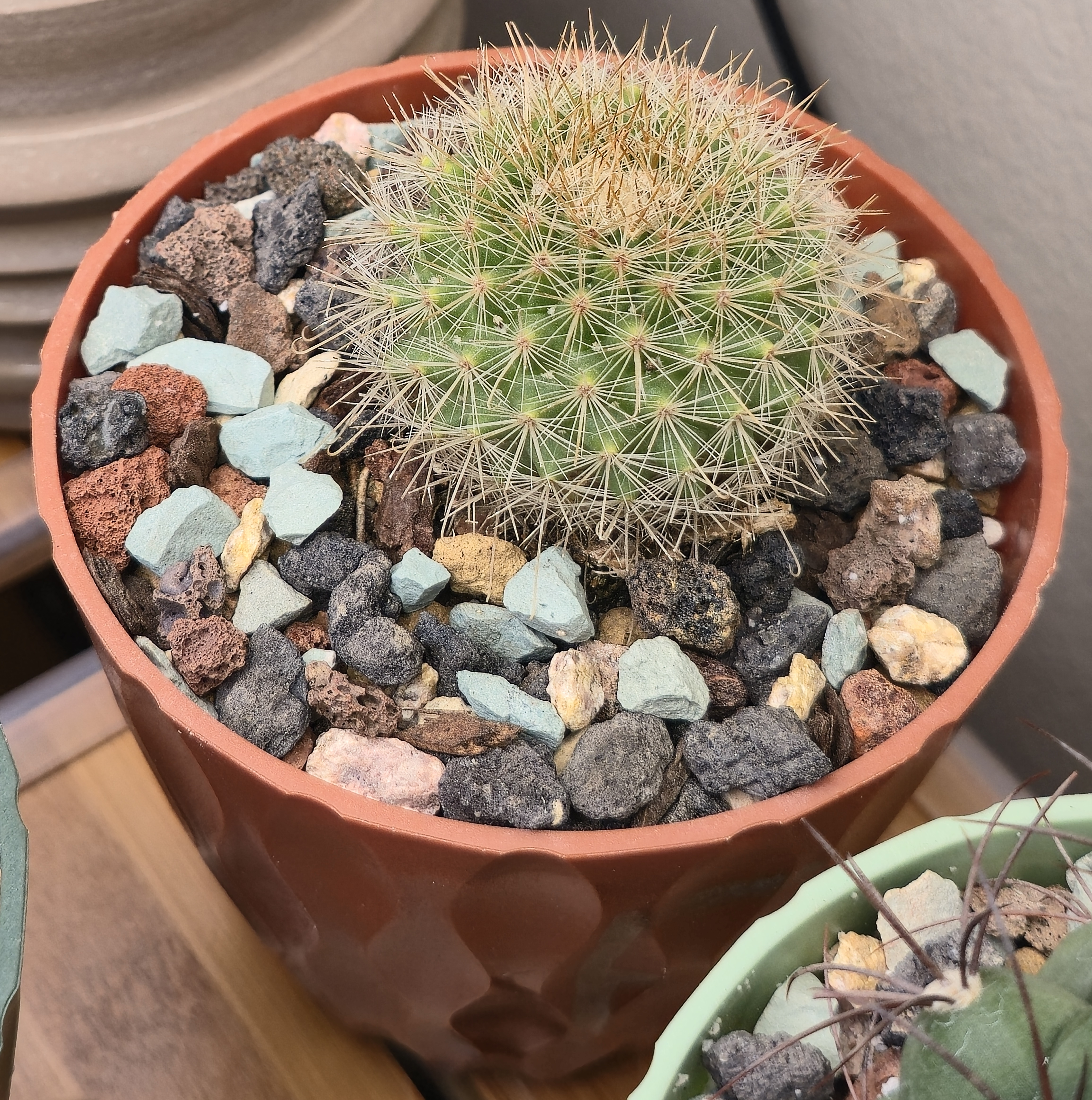
📷 Captured
F1 · Plant view · September 16
- A rounded green body carries pale radial spines and a golden-tan crown.
- Brown material is visible low among the spines and dressing.
- Comparison: obtain a lower-side close-up if the discoloration changes; retain the cf. rekoi identity qualifier.
Photo notes
AI photo-only review. Spines obscure the skin; the low material cannot be identified from this view. Root-zone moisture, tissue firmness and root health were not measured.
 F2P17Boobie cactusNothing today−12.4g/day
The 2:29 a.m. reading completes the requested intermediate sample. No repeat weighing, watering or special photo inspection today. The owner considers the tan marks likely old physical damage. Follow up September 19–20 to assess the 42.5 g remaining reference margin with a comparable interval.
- 🕒 Last reading
- 381.5 g · Sep 18, 2:29 AM ET
- 💧 Last watered
- Not included in this report
- ⚖️ Weight change
- 411.5 → 381.5 g; −30 g over 2.42 days (−12.4 g/day)
- 🎯 Dry reference
- 339 g · +42.5 g from reference
- 📊 Plateau
- Unavailable
The latest interval crosses the September 16 drainage-opening modification. Pot or medium loss was not measured; the calculated mass change is not necessarily all water loss. Only two suitably separated current-cycle points exist, so the plateau assessment is unavailable.
📷 Photo observations
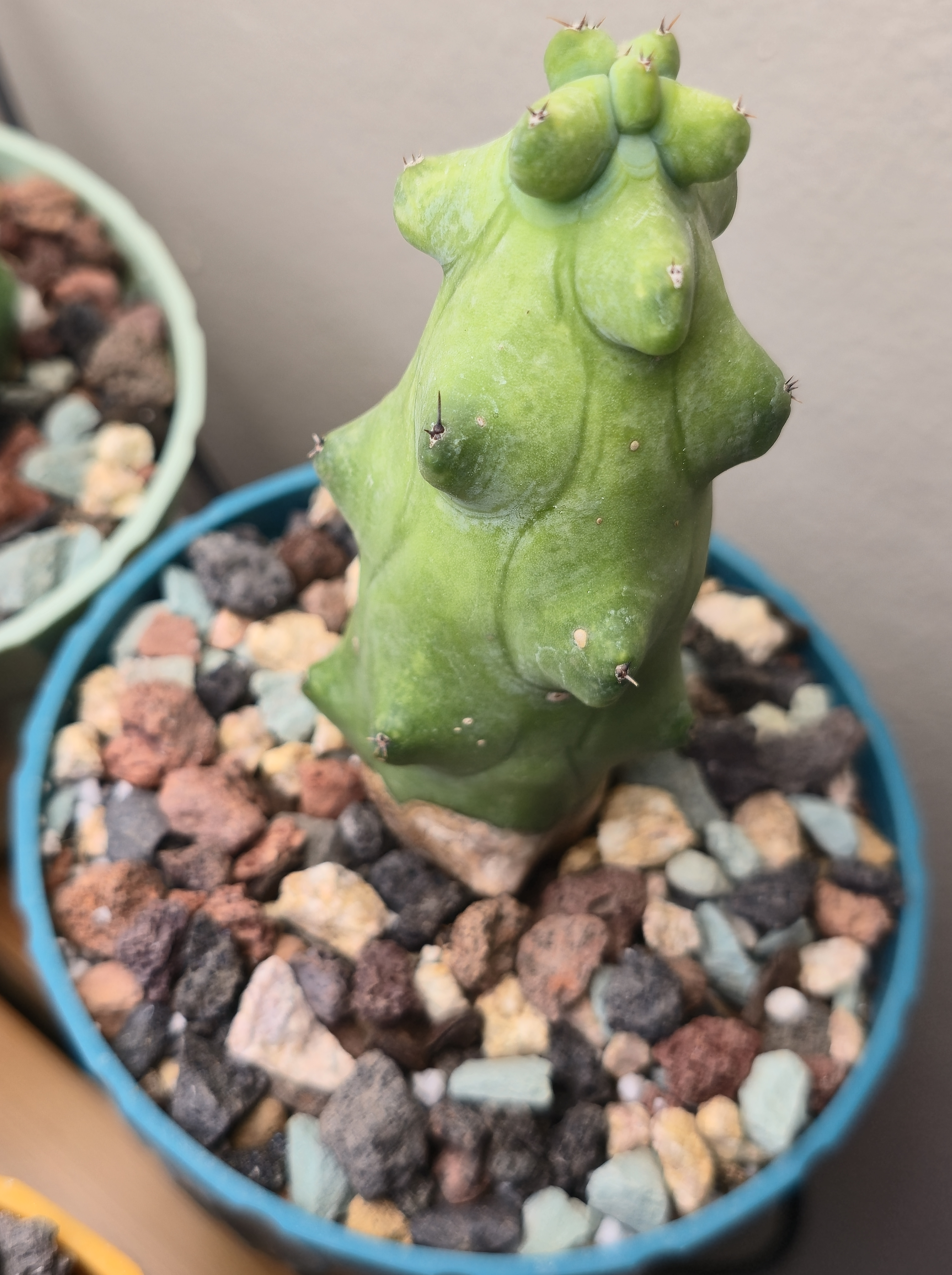
📷 Captured
F2 · Plant view · September 16
- An upright green lobed column has a lighter apex and a tan band at the dressing line.
- Scattered small tan-beige spots and uneven pale surface coating are visible.
- Owner clarification, September 16: the tan spots are probably physical damage from shipping or the store. This is the owner's likely explanation, not a confirmed diagnosis.
- Retain this dated photograph as a baseline; no separate inspection is requested today.
Photo notes
Photo interpretation supplemented by the owner's likely explanation. Cause and progression have not been independently established. Root-zone moisture, tissue firmness and root health were not measured in this photo review.
 F3P18Yellow tower cactusNothing today—g/day
No watering or weighing is requested today. Keep the intermediate sample anchored to September 19, within the already planned September 18–19 window. This will establish a reading after the drainage-opening modification; do not wait unobserved until the broad historical forecast.
- 🕒 Last reading
- 422.5 g · Sep 15, 4:21 PM ET
- 💧 Last watered
- Not included in this report
- ⚖️ Weight change
- Unavailable
- 🎯 Dry reference
- 339 g · +83.5 g from reference
- 📊 Plateau
- Unavailable
Only one eligible current-cycle reading is available, so last-two change and sustained-plateau assessment are unavailable. This weight predates the September 16 drainage-opening modification; any unmeasured pot or medium loss must not be called water loss.
📷 Photo observations
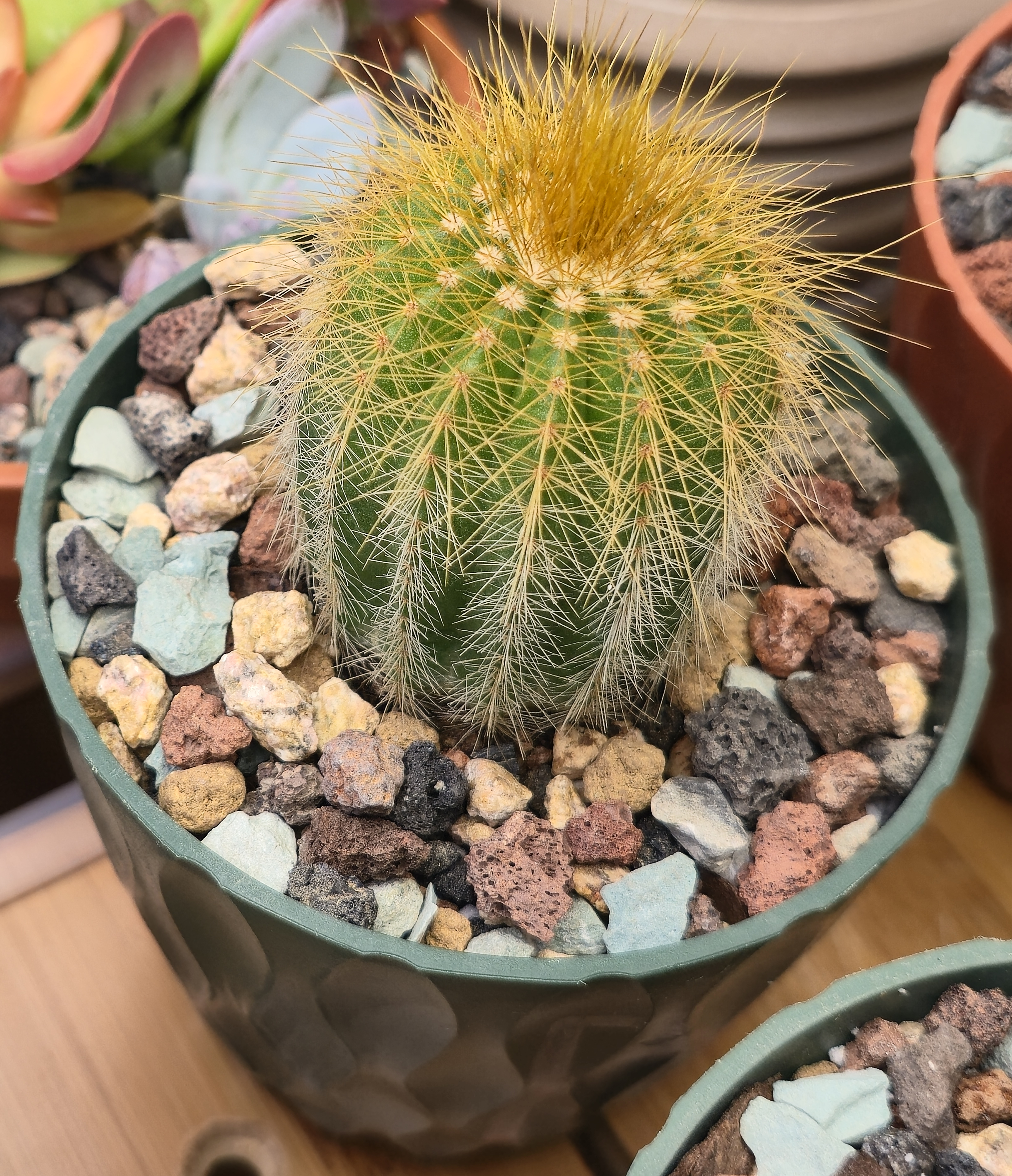
📷 Captured
F3 · Plant view · September 16
- An upright green ribbed column carries yellow-gold spines and a denser golden crown.
- The visible silhouette is intact; neighboring white-haired stems belong to the shared planter.
- Comparison: retain the crown and exposed-side view as a baseline.
Photo notes
AI photo-only review. The back and tissue below the dressing are hidden. Root-zone moisture, tissue firmness and root health were not measured.
 G1P27Black Widow chin cactusNothing today−13.24g/day
The 2:28 a.m. reading already satisfies today’s planned sample. No repeat or watering today. At 379 g it is 29.5 g above reference; follow up September 19 so the next interval is entirely after the drainage modification, ahead of the updated historical window beginning September 20.
- 🕒 Last reading
- 379 g · Sep 18, 2:28 AM ET
- 💧 Last watered
- Not included in this report
- ⚖️ Weight change
- 411 → 379 g; −32 g over 2.42 days (−13.24 g/day)
- 🎯 Dry reference
- 349.5 g · +29.5 g from reference
- 📊 Plateau
- Unavailable
The latest interval crosses the September 16 drainage-opening modification. Pot or medium loss was not measured; the calculated mass change is not necessarily all water loss. Only two suitably separated current-cycle points exist, so the plateau assessment is unavailable.
📷 Photo observations
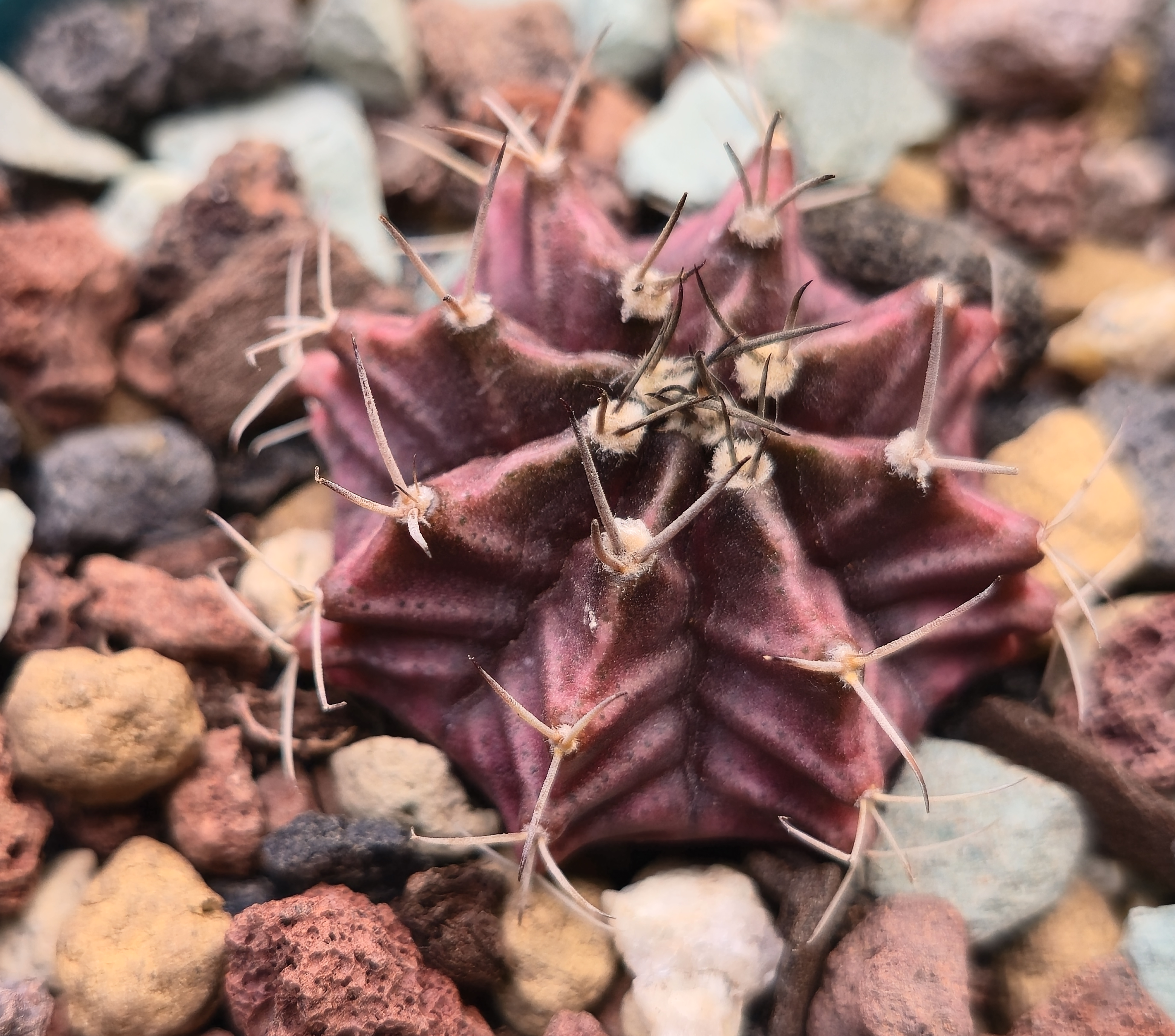
📷 Captured
G1 · Plant view · September 16
- A low burgundy-purple globe has angular ribs, projecting spines and pale crown areoles.
- Purple color and folded ribs alone do not establish injury or dehydration.
- Comparison: use a consistent angle to follow localized changes.
Photo notes
AI photo-only review. A neighboring stem crosses the background; the base and roots are hidden. Root-zone moisture, tissue firmness and root health were not measured.
 H1P24Coconut Crystal hens and chicksNothing today—g/day
No watering, weighing or special inspection today. H1’s white material is perlite, as identified by the owner. Keep the intermediate sample on September 19, ahead of the earliest historical window on September 20; the latest reading remains 102.5 g above reference.
- 🕒 Last reading
- 428.5 g · Sep 16, 3:30 AM ET
- 💧 Last watered
- Not included in this report
- ⚖️ Weight change
- Unavailable
- 🎯 Dry reference
- 326 g · +102.5 g from reference
- 📊 Plateau
- Unavailable
Plain watering September 16 at 2:53 a.m. has a recorded 428.5 g weight at 3:30 a.m. Only one current-cycle point is available, so last-two change and plateau assessment are unavailable. The weight precedes the drainage-opening modification.
📷 Photo observations
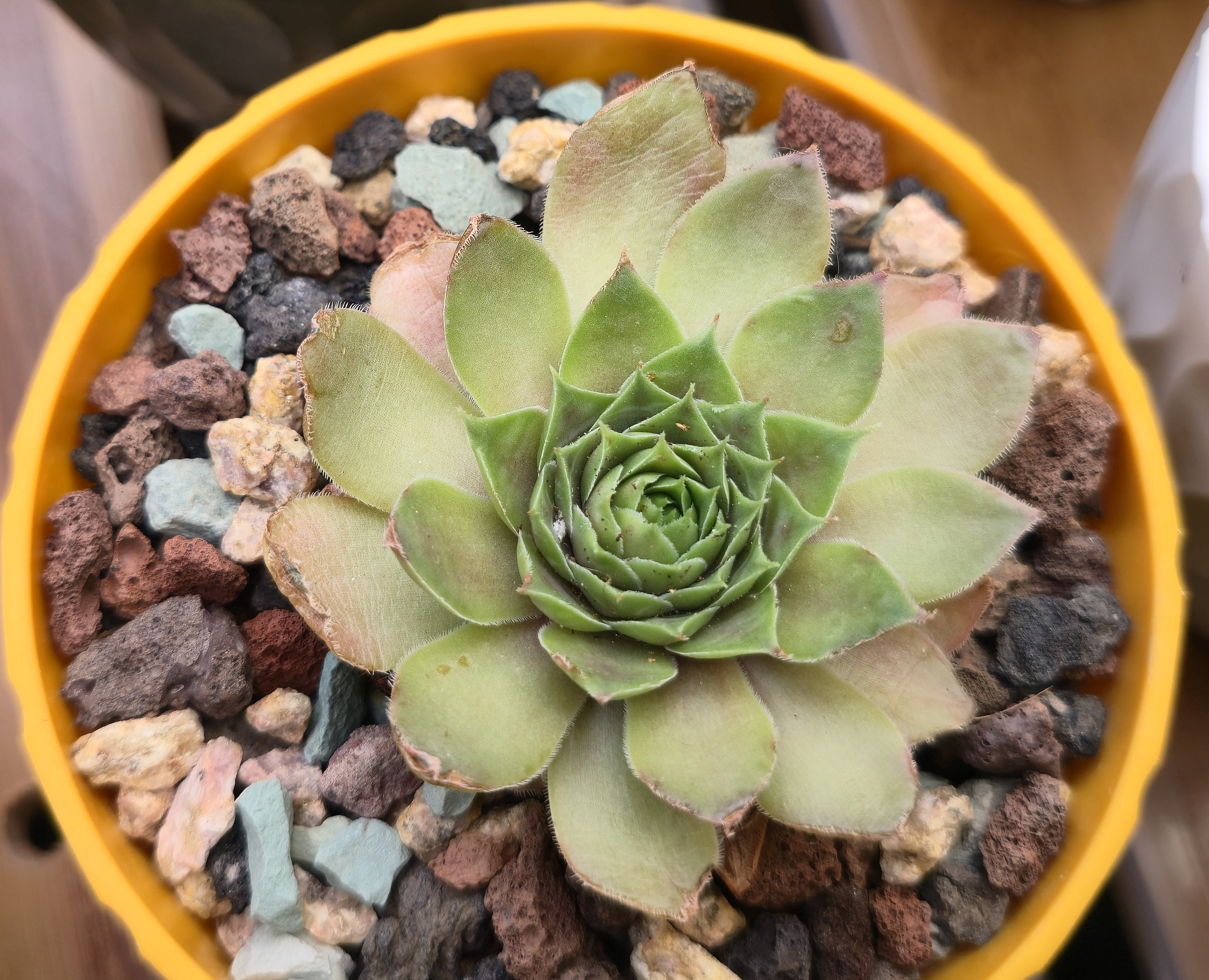
📷 Captured
H1 · Plant view · September 16
- The green central rosette is surrounded by paler outer leaves with brown-pink edges, damaged-looking tips and small tan marks.
- Owner clarification, September 16: the white material between the inner leaves is perlite.
- The earlier request to inspect that material is resolved. Keep the image as a dated comparison baseline.
Photo notes
The perlite identification is owner-reported; the image alone did not establish it. Root-zone moisture, tissue firmness and root health were not measured in this photo review.
 H2P25Raindrops echeveriaNothing today—g/day
No watering, weighing or special inspection today; the owner reports H2 is normal. Keep the intermediate sample on September 19, ahead of the earliest historical window on September 20. Its latest 425 g remains 108.5 g above reference.
- 🕒 Last reading
- 425 g · Sep 16, 3:30 AM ET
- 💧 Last watered
- Not included in this report
- ⚖️ Weight change
- Unavailable
- 🎯 Dry reference
- 316.5 g · +108.5 g from reference
- 📊 Plateau
- Unavailable
The September 16 plain watering is followed by one eligible 425 g reading at 3:30 a.m. Last-two change and plateau assessment are unavailable; never compare it with a reading before that Water. It also predates the drainage-opening change.
📷 Photo observations
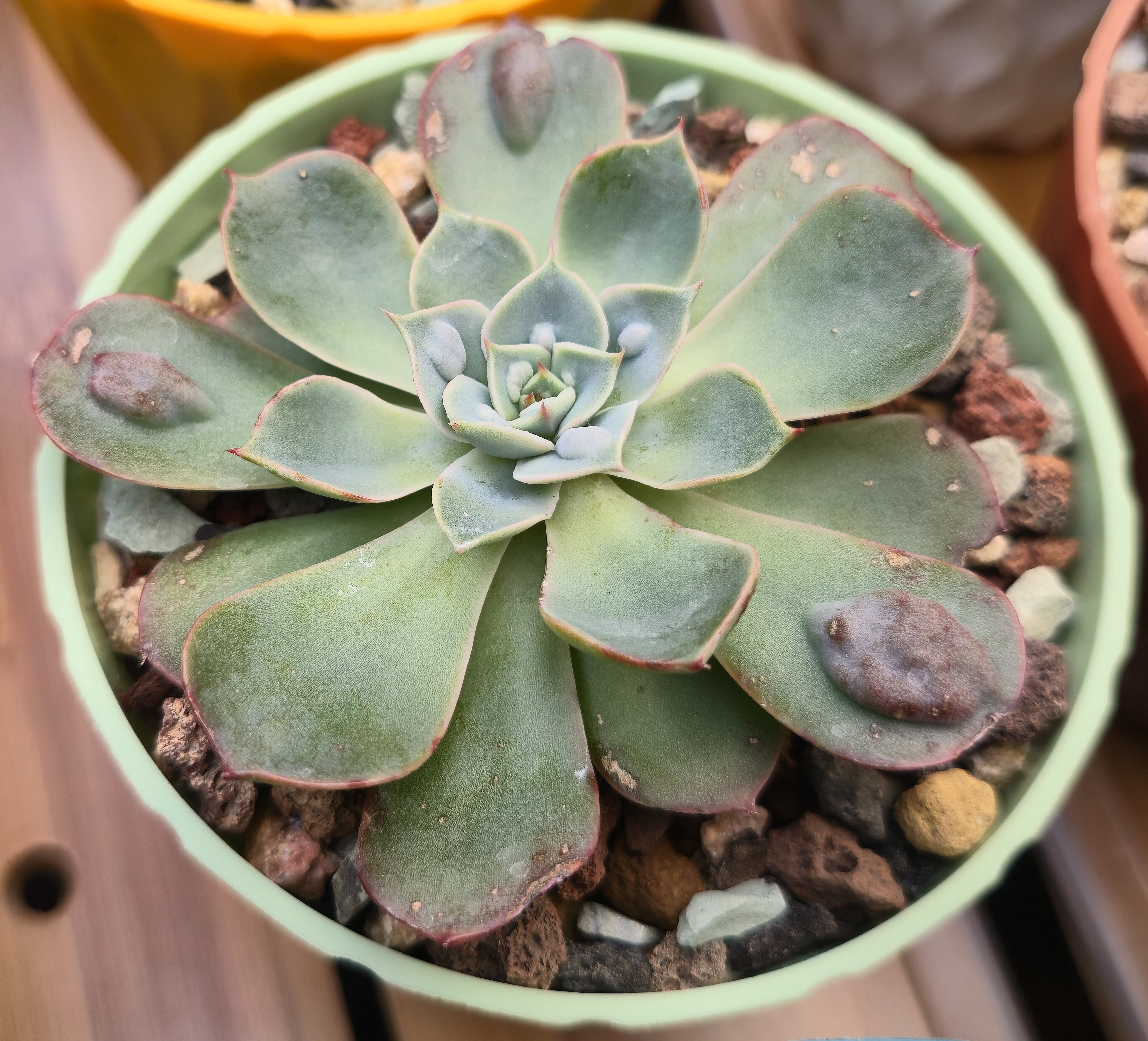
📷 Captured
H2 · Plant view · September 16
- The blue-green rosette has a powdery coating, pink-red margins and raised purple caruncles on older leaves.
- Owner clarification, September 16: H2 is normal.
- Keep this photograph as a baseline; no extra inspection is requested for its visible surface features.
Photo notes
Photo interpretation supplemented by the owner's assessment that H2 is normal. Root-zone moisture, tissue firmness and root health were not measured in this photo review.
 #1P19Shared rehab cactus planterNothing today−58.29g/day
No watering or weighing today. Keep the next intermediate sample on September 19, anchored to the September 16 late-night reading. The latest 4,189 g remains 497 g above reference; all three cactus components share this one container.
- 🕒 Last reading
- 4,189 g · Sep 16, 11:49 PM ET
- 💧 Last watered
- Not included in this report
- ⚖️ Weight change
- 4,418 → 4,189 g; −229 g over 3.93 days (−58.29 g/day)
- 🎯 Dry reference
- 3,692 g · +497 g from reference
- 📊 Plateau
- Not yet supported
The latest interval lost 229 g over 3.93 days (58.29 g/day). The selected tail still loses 54.08 g/day versus 61.22 earlier, so a sustained plateau is not supported. The distant model window does not justify waiting until October for another sample. Last-three mean: 4380.67 g; signed change over their actual span: -57.60 g/day.
📷 Photo observations
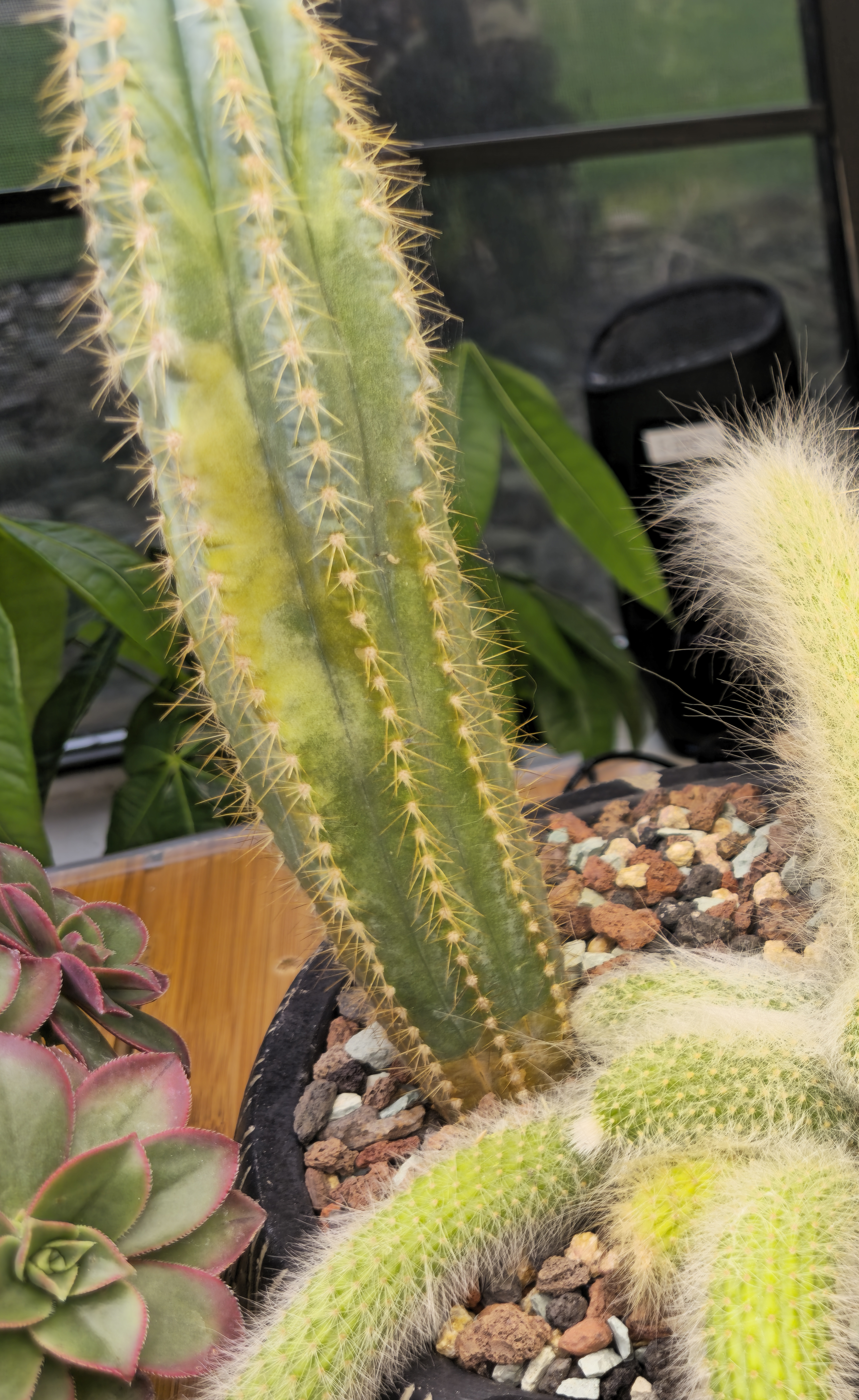
📷 Captured
#1 · Shared planter, left panel · September 16
- The left panel shows the green-yellow blue-torch column and part of the white-haired monkey-tail group.
- Yellow sectors are a documented feature of this variegated column; the tallest tip was already clipped by the original photograph.
- Read with the overlapping right panel to review this shared container as one pot.
Photo notes
AI photo-only review. This is one of two overlapping panels from the same photograph; read both together. The original frame clips the tallest tip and lower tails, and neighboring pots partly overlap the view. Root-zone moisture, tissue firmness and root health were not measured.
📷 Captured
#1 · Shared planter, right panel · September 16
- The right panel shows the green golden-torch column and the overlapping monkey-tail stems.
- Some monkey-tail stem areas have tan marks; white hair is a documented feature, and this photograph does not establish the cause or progression of the marks.
- Future comparison: these panels document the single shared-container Check recorded September 16. A later full-height view can help compare any changing tan areas; no new photograph or physical check is requested today.
Photo notes
AI photo-only review. This is one of two overlapping panels from the same photograph; read both together. The original frame clips the tallest tip and lower tails, and neighboring pots partly overlap the view. Root-zone moisture, tissue firmness and root health were not measured.
 #5P29Tuberculate tiger jaws (probable Faucaria tuberculosa)Nothing today−6.31g/day
The 2:26 a.m. September 18 weight satisfies the next-sample request. No repeat weight or watering today. Follow up September 19–20 to track the continuing decline; a completed dry reference remains unavailable. Preserve the probable Faucaria identification and do not water merely to create calibration.
- 🕒 Last reading
- 1,032 g · Sep 18, 2:26 AM ET
- 💧 Last watered
- Not included in this report
- ⚖️ Weight change
- 1,039 → 1,032 g; −7 g over 1.11 days (−6.31 g/day)
- 🎯 Dry reference
- Unavailable
- 📊 Plateau
- Not yet supported
The latest interval is 1,039 → 1,032 g over 1.11 days (−6.31 g/day). The selected four-point tail still loses 6.34 g/day versus 17.90 earlier, so plateau is not supported. The dated photo does not measure firmness, moisture or root health. Last-three mean: 1044.33 g; signed change over their actual span: -5.96 g/day.
📷 Photo observations
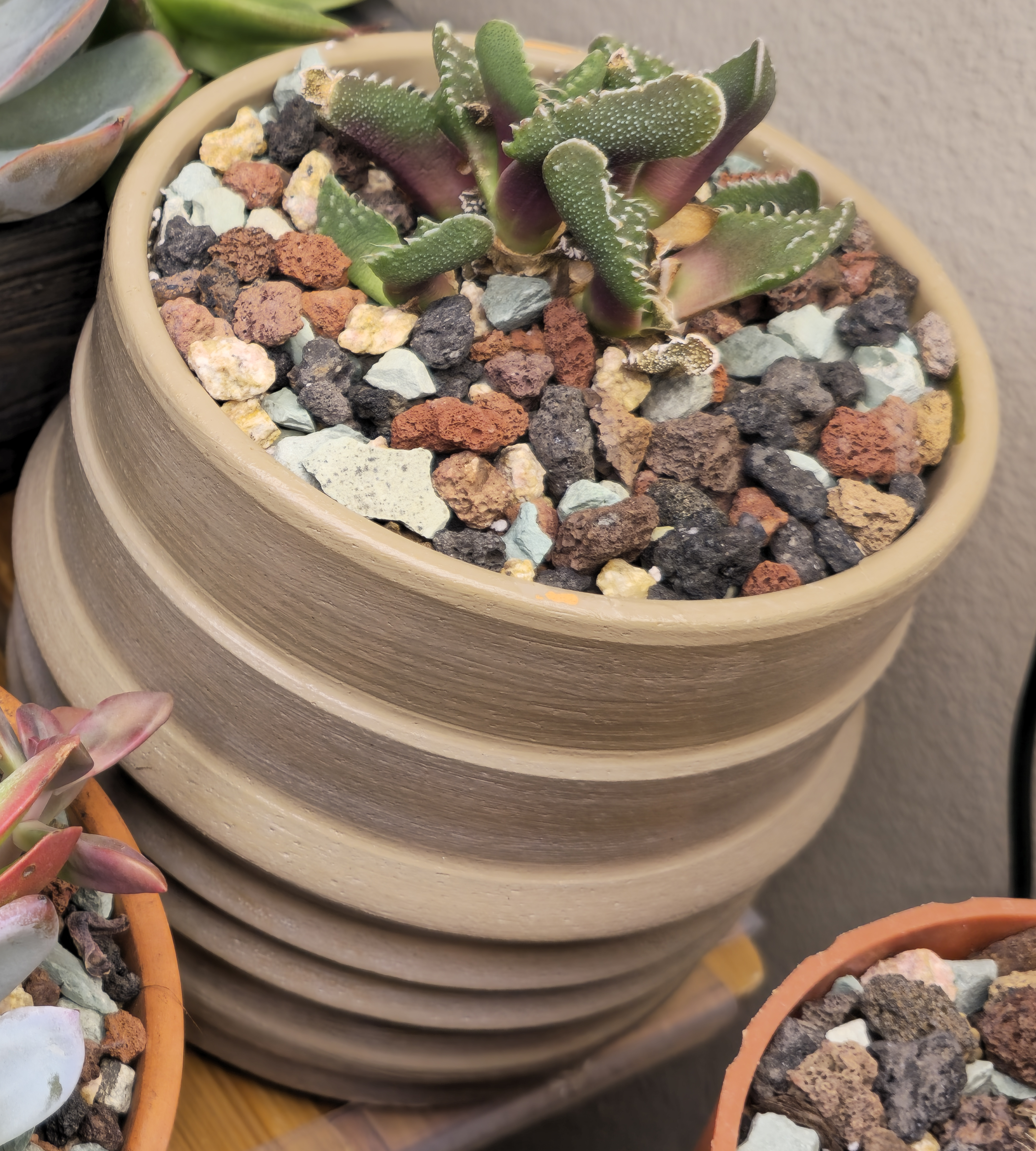
📷 Captured
#5 · Plant view · September 16
- Paired triangular green leaves have pale teeth or tubercles and purple-red lower or side coloring.
- Small lower leaf remnants are tan and shriveled.
- Comparison: follow the leaf centers and any changing tan area; retain the probable identification.
Photo notes
AI photo-only review. Overlap hides some bases; one photo cannot distinguish ordinary leaf turnover from stress. Root-zone moisture, tissue firmness and root health were not measured.
 #6P30Tiny mixed succulent planter (component taxa unresolved)Nothing today−1.8g/day
The 2:26 a.m. September 18 reading completes yesterday’s follow-up; no repeat weighing or watering today. Take the next useful reading September 19. A slower curve is present, but the detector still does not confirm a plateau and the shared root volume and all components need readiness assessment before watering.
- 🕒 Last reading
- 400.5 g · Sep 18, 2:26 AM ET
- 💧 Last watered
- Not included in this report
- ⚖️ Weight change
- 402.5 → 400.5 g; −2 g over 1.11 days (−1.8 g/day)
- 🎯 Dry reference
- Unavailable
- 📊 Plateau
- Not yet supported
The latest interval is 402.5 → 400.5 g over 1.11 days (−1.80 g/day), faster than the preceding −0.89 g/day interval. The four-point tail is 408.5 → 406 → 402.5 → 400.5 g over 7.12 days: 1.07 g/day versus 8.13 earlier, but its 8 g spread still fails the shared plateau test. No completed dry reference is available. Last-three mean: 403.00 g; signed change over their actual span: -1.09 g/day.
📷 Photo observations
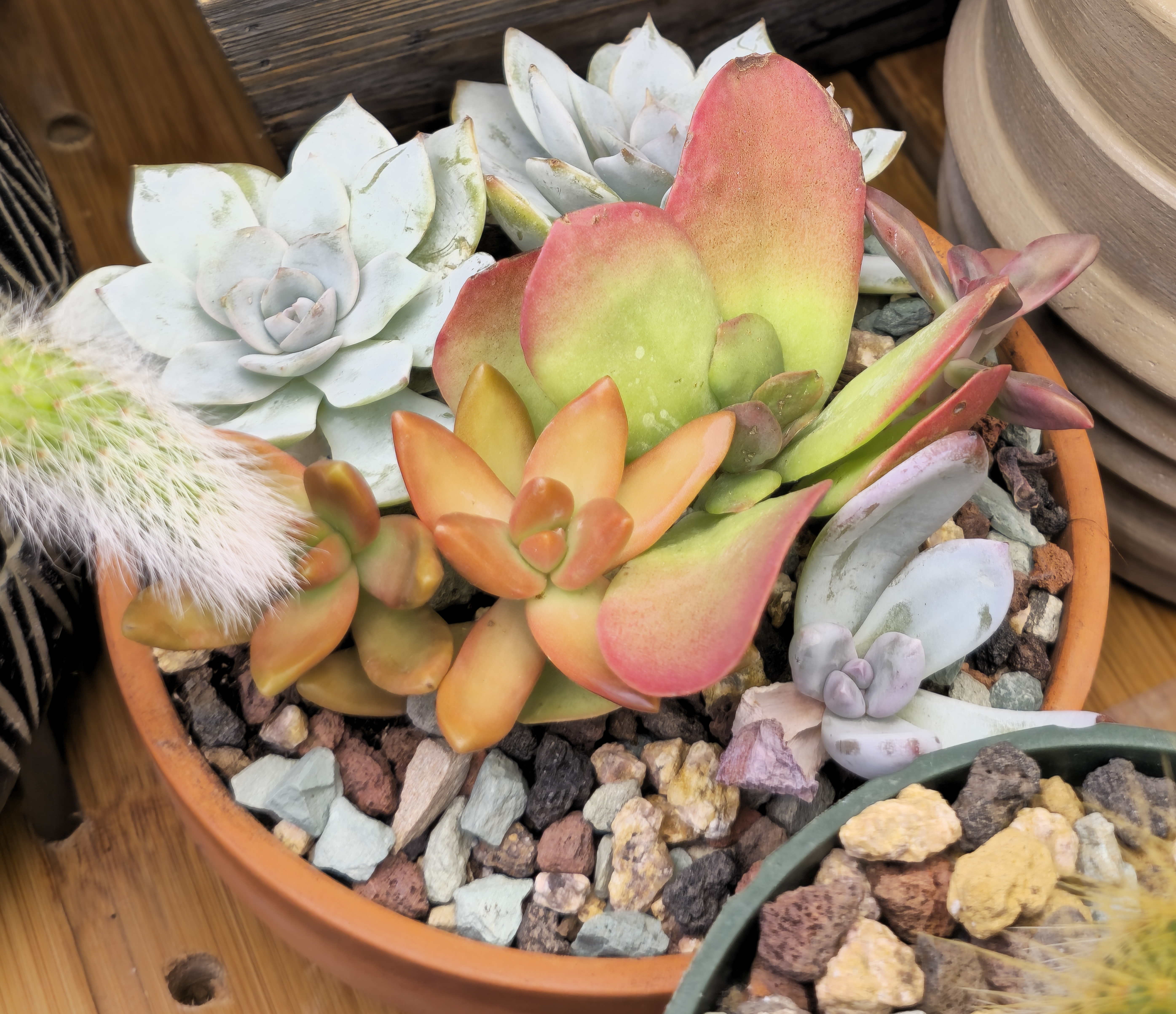
📷 Captured
#6 · Plant view · September 16
- Several differently colored rosettes and broad paddle-like leaves share one orange pot.
- A tan-brown older leaf and patchy surface marks are visible; a neighboring monkey-tail stem crosses the view.
- Comparison: retain component positions when following leaf changes; continue treating this as one container.
Photo notes
AI photo-only review. Crowding hides some bases. Mark causes and exact component taxa remain unresolved. Root-zone moisture, tissue firmness and root health were not measured.
No pots match. Try a different name, label, or filter.
Friday, Sep 18, 2026
Your pocket list
⏳ Dry reference only means hold watering while plateau evidence is unconfirmed. Water candidates still need your usual readiness check. Weigh pots you actually water after draining.
💧 Water: None
⏳ Dry reference only: #4
⚖️ Weigh · priority: G2, #2
👀 Check only: G3, H3, #3
⏸️ Nothing today: A1, A2, A3, B1, B2, B3, C1, C2, C3, D1, D2, D3, E1, E2, E3, F1, F2, F3, G1, H1, H2, #1, #5, #6
A second look at the evidence
🤖 AI recommendation
A separate assessment of this report's data. Any difference from the main list is explained below.
💧 I would water none from the reviewed evidence today, and I would add no fertilizer. No pot has a confirmed plateau; the dated photographs and current curves do not support an earlier watering exception.
⏳ I would hold #4: it is 7 g below its corrected reference but still loses 6.80 g/day over the latest interval. I would also hold #6: its broader curve is slower, yet the newest interval increased to 1.80 g/day and its four-point spread still fails the plateau test. Their next useful weights are September 19, not another repeat today.
⚖️ I would weigh G2 and #2 this evening. G2 needs its promised sample before the earliest historical window; #2’s measured 58.54 g/day decline makes a current position more useful than waiting for its forecast date.
⚖️ I would skip repeat weighing for A1, A2, B3, D3, F2, G1, #3, #4, #5 and #6 after the overnight readings. Keep the remaining intermediate samples anchored to September 19; A1, A2 and G1 also merit follow-up then because their reference margins are narrowing.
👀 I would check #3’s upper mix beneath the dressing and compare its leaflets, keep G3 on the inner-firmness/outer-shrinkage leaf-cycle check, and inspect H3’s strands before assigning a cause. H1’s perlite, H2’s normal condition, the likely old C1/F2 marks and the withdrawn #2 concern do not need added health tasks.